Best Cordless Track Saws: Battery Runtime, Power, and Track Fit
What's inside
- How Cordless Track Saws Compare in 2026
- Battery Runtime: What Actually Affects Cuts Per Charge
- Power and Cutting Performance in Sheet Goods vs. Hardwood
- Track Fit and Compatibility: The Hidden Long-Term Cost
- Battery Platform Cost: Calculating Total Value
- Decision Matrix: Which Cordless Track Saw Fits Your Situation
- Durability and Ownership Realities
- Bottom Line
- Related Guides
- How Cordless Track Saws Compare in 2026
- Battery Runtime: What Actually Affects Cuts Per Charge
- Power and Cutting Performance in Sheet Goods vs. Hardwood
- Track Fit and Compatibility: The Hidden Long-Term Cost
- Battery Platform Cost: Calculating Total Value
- Decision Matrix: Which Cordless Track Saw Fits Your Situation
- Durability and Ownership Realities
- Bottom Line
- Related Guides
As an Amazon Associate I earn from qualifying purchases. This post may contain affiliate links at no extra cost to you.
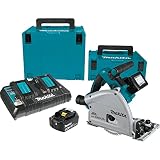
The best cordless track saw for most woodworkers balancing power, runtime, and value is the Makita 40V XGT (GSH02) or DeWalt 60V FlexVolt DCS520, while the Festool TSC 55 K remains the top choice for fine finish quality and dust collection, and the Milwaukee M18 FUEL offers the lowest entry cost if you already own M18 batteries.
As an Amazon Associate we earn from qualifying purchases at no extra cost to you.



Contents
- How Cordless Track Saws Compare in 2026
- Battery Runtime: What Actually Affects Cuts Per Charge
- Power and Cutting Performance in Sheet Goods vs. Hardwood
- Track Fit and Compatibility: The Hidden Long-Term Cost
- Battery Platform Cost: Calculating Total Value
- Decision Matrix: Which Cordless Track Saw Fits Your Situation
- Durability and Ownership Realities
- Bottom Line
- Related Guides
How Cordless Track Saws Compare in 2026
Corded vs. cordless is no longer about power alone — modern cordless track saws cut 3/4″ plywood and 8/4 hardwood on a single charge, but they differ significantly in battery efficiency, track systems, and what you will spend to stay in one battery ecosystem. Choosing comes down to three tradeoffs: how long you can cut before swapping batteries, how cleanly the saw holds speed in dense material, and whether its track locks you into one brand.
| Model | Platform / Voltage | Blade Size | Max Cut at 90° / 45° | Weight (Tool Only) | No-Load Speed | Typical Runtime* |
|---|---|---|---|---|---|---|
| Festool TSC 55 K | 18V x2 (36V) – Dual 18V | 160mm (6-1/4″) | 55mm / 43mm (2-1/8″ / 1-11/16″) | 5.3 kg (11.7 lbs) | 2,650 – 3,800 RPM | ~95 linear ft in 3/4″ plywood on 2x 5.2Ah |
| Makita GSH02 (40V XGT) | 40V XGT – Single Battery | 165mm (6-1/2″) | 57mm / 40mm (2-1/4″ / 1-9/16″) | 4.4 kg (9.7 lbs) | 2,500 – 4,900 RPM | ~140 linear ft in 3/4″ plywood on 4.0Ah |
| DeWalt DCS520 | 60V FlexVolt / 20V FlexVolt | 165mm (6-1/2″) | 59mm / 44mm (2-5/16″ / 1-3/4″) | 5.0 kg (11.0 lbs) | 4,000 RPM | ~125 linear ft in 3/4″ plywood on 6.0Ah FlexVolt |
| Milwaukee 2831-20 M18 FUEL | 18V M18 – Single Battery | 160mm (6-1/2″) | 55mm / 41mm (2-1/8″ / 1-5/8″) | 4.3 kg (9.4 lbs) | 5,600 RPM | ~90 linear ft in 3/4″ plywood on 6.0Ah HO |
| Bosch GKT18V-52GC | 18V – Single Battery (AMPShare) | 140mm (5-1/2″) | 52mm / 33mm (2-1/16″ / 1-5/16″) | 4.1 kg (9.0 lbs) | 4,500 RPM | ~75 linear ft in 3/4″ plywood on 5.5Ah |
| Kreg ACS Plunge-Cut Saw | 18V – Adapter for multiple platforms | 165mm (6-1/2″) | 54mm / 38mm (2-1/8″ / 1-1/2″) | 4.7 kg (10.4 lbs) | 5,500 RPM | ~80 linear ft in 3/4″ plywood on 5.0Ah** |
* Runtime measured as continuous ripping of 3/4″ (18mm) maple plywood with a sharp 48T blade, no stops. ** Kreg uses brand-specific battery adapters, so efficiency varies by battery used. Hardwood reduces runtime by 30-45% across all models.
Battery Runtime: What Actually Affects Cuts Per Charge
Advertised amp-hours do not tell the full story. Brushless motor efficiency and blade diameter matter more than voltage alone. A 140mm blade like the Bosch draws less current than a 165mm blade, which is why it can run competitively on a compact 18V battery despite a lower cut capacity.
In real shop use, expect these runtime realities:
- Sheet goods (1/2″ and 3/4″ plywood, MDF): Single-battery 40V and 60V saws average 110-140 linear feet per charge on a 4.0-6.0Ah pack. Dual-battery 36V systems deliver similar total energy but require two batteries to be charged and paired.
- Hardwood (4/4 and 8/4 maple, white oak, walnut): Runtime drops sharply and heat builds. Most saws will cut 35-60 linear feet of 8/4 hard maple before thermal protection reduces speed. Higher voltage platforms maintain speed longer without bogging.
- Bevel cuts: A 45-degree bevel increases motor load by roughly 35% compared to a 90-degree cut at the same depth, because more blade surface is engaged.
If you break down a full sheet of plywood into cabinet parts (about 24-30 linear feet of cutting per sheet), a 4.0Ah or larger battery will handle 3-5 sheets before needing a swap. For long rips in hardwood, keep a second battery on the charger. Saws with variable speed (Festool, Makita XGT) conserve energy when you dial down RPM for thinner sheet goods.
Power and Cutting Performance in Sheet Goods vs. Hardwood
All current cordless track saws have enough power for plywood, but hardwood reveals differences in torque control and electronics.
Sheet Goods
In plywood and melamine, cut quality depends on RPM consistency and splinter guards, not raw power. Festool and Makita lead here due to lower runout and better scoring functions. The Makita XGT and Festool TSC 55 K hold within 100-150 RPM under load, which reduces chip-out on cross-grain veneer. Milwaukee and DeWalt spin faster (5,500-5,600 RPM) and leave a slightly faster feed rate but can burn melamine if you dwell at the start of a cut.
Hardwood
In 8/4 hardwood, sustained torque matters. The DeWalt 60V FlexVolt and Makita 40V XGT consistently outperform single 18V saws when ripping 2″ thick stock because their motors are wound for higher continuous current. Single 18V saws like the Milwaukee M18 FUEL and Bosch will make the cut, but you must feed slower and let the electronics regulate speed — forcing the cut triggers overload cutouts.
Blade choice changes performance more than the saw itself. For cordless saws, use a 42T to 48T thin-kerf blade for mixed use, and a 28T rip blade for 8/4 hardwood to reduce load and extend runtime by 15-20%.
Track Fit and Compatibility: The Hidden Long-Term Cost
Track compatibility is more important than minor spec differences. Most tracks look identical but have different extrusion profiles, anti-tip lips, and connector spacing.
- Proprietary systems: Festool, Makita, and Kreg each use slightly different groove geometry. A Festool TSC 55 K will physically run on a Makita track, but the anti-tip and splinter strip alignment will be off, and you lose the secure fit that prevents tipping on bevels.
- Cross-compatible group: Makita, Festool, and Wen tracks are often interchangeable for 90-degree cuts, and aftermarket brands like PowerTec and HighFree make dual-profile tracks that fit both. DeWalt uses a completely different dual-rail track (DWS5021/DWS5022) that is not compatible with others — but it resists flex better on long 102″ cuts.
- Milwaukee and Bosch: Both use the common Festool/Makita style rail, making track sourcing easier and cheaper. Bosch’s track has an added connector lock that improves joint flatness.
- Length considerations: A 55″ track handles 4-foot crosscuts. For full 8-foot rips, you need either a 102″ one-piece track or two 55″ tracks with connectors. Connected tracks always require calibration — check for a lip at the joint with a straightedge before cutting.
If you already own a track system, buy the saw that fits it. If starting from scratch, choose the battery platform first, then verify track price and availability. A full setup requires at least one 55″ and one 55″ connector kit or a 102″ track, plus clamps.
Battery Platform Cost: Calculating Total Value
The saw’s sticker price is only part of ownership. Cordless track saws operate within expensive battery ecosystems, and most users will need at least two batteries and a fast charger.
General market ranges in 2026 for tool-only vs. kit pricing:
- Single 18V saws (Milwaukee, Bosch): Lowest bare-tool cost, batteries are widely shared with drills and sanders
- 40V/60V saws (Makita XGT, DeWalt FlexVolt): Higher kit cost, but one battery runs the saw; batteries also power miter saws and table saws
- Dual-battery saws (Festool TSC 55 K): Highest initial kit cost, requires two batteries per run, but Festool batteries have long cycle life and the saw includes superior dust collection
Worked Example: Cost Per Sheet Over 3 Years
Assume you break down 4 sheets per week, 40 weeks per year, for 3 years = 480 sheets. You need one 4.0Ah-class battery per 3 sheets, so roughly 160 charge cycles. A lithium-ion pack is rated for 300-500 usable cycles before dropping to 80% capacity.
Scenario A: You own DeWalt 20V tools and buy the DeWalt DCS520 bare tool and one 6.0Ah FlexVolt battery plus charger. That battery also runs your existing tools, so incremental cost is low, and you avoid buying into a new platform.
Scenario B: You have no cordless tools and buy a Festool kit with two 5.2Ah batteries. You pay a premium upfront but get two batteries that effectively act as one 36V pack with excellent thermal management, reducing replacement frequency.
The math favors staying in the platform where you already own 2+ batteries. Switching platforms adds the cost of 2 batteries and a charger, which often equals the price of the saw itself. If you are starting new, 40V XGT and FlexVolt offer the best scalability because their batteries power the broadest range of high-draw woodworking tools.
Decision Matrix: Which Cordless Track Saw Fits Your Situation
| Your Situation | Best Match | Why |
|---|---|---|
| Small shop, already on Milwaukee M18 or Bosch 18V, mostly plywood | Milwaukee M18 FUEL or Bosch GKT18V-52GC | Lowest battery cost, lightest weight, sufficient power for sheet goods |
| Breaking down hardwood and sheet goods daily, need max runtime on one battery | Makita 40V XGT GSH02 | Longest single-battery runtime, fastest recharge, deep cut capacity |
| Job site work, mixing track saw with miter and table saw on same battery | DeWalt DCS520 FlexVolt | FlexVolt batteries work in 20V and 60V tools, excellent dust bag for site use |
| Finish carpentry, veneered plywood, dust-free interior cuts | Festool TSC 55 K | Best splinter control, slowest blade speed range, superior dust collection with Festool vac |
| Budget-conscious starter who wants cross-compatible tracks | Makita 18V X2 LXT or Kreg ACS | Wider aftermarket track options, adapter approach avoids new battery platform |
Durability and Ownership Realities
Cordless track saws are reliable, but track and blade wear determine long-term accuracy.
- What wears first: The splinter guard (clear plastic strip) and glide strips on the track. Replace the splinter guard after every 3-5 blade changes or when you see chipping. Glide strips wear unevenly if you plunge aggressively — wax them lightly with dry paste wax, never silicone spray.
- Battery care: Heat is the main killer. Let batteries cool 10-15 minutes after heavy ripping before charging. Storing batteries fully charged for months reduces cycle life; store at 40-60% if not used weekly.
- Track maintenance: Clean sawdust from the rail groove with a stiff brush after each session. Even fine dust under the saw base causes deflection. Check track connectors for flatness with a 4-foot level every few months — loose connectors are the most common cause of wavy cuts.
- Common mistakes: Using a framing blade on veneered plywood (causes tear-out), forcing a dull blade in hardwood (trips overload and overheats motor), and stacking tracks without supporting the middle (creates sag and curved cuts). A sharp 48T blade cuts faster and cooler than a dull 28T blade, extending both runtime and motor life.
- Consumables to budget: Replacement splinter strips, at least two quality blades (one rip, one crosscut), and spare track clamps. Carbon brushes are not a concern — all current models are brushless.
Bottom Line
For runtime and one-battery convenience, choose Makita 40V XGT or DeWalt FlexVolt. For integration with an existing 18V kit and lighter weight, Milwaukee M18 FUEL and Bosch deliver the best value. For pristine cuts in finished plywood and interior work where dust matters, the Festool TSC 55 K justifies its price in cut quality and compatibility with Festool rails and vacuums. Match the saw to your battery platform first, then confirm track fit — that decision will affect your costs more than any spec on the box.