Best Stationary Table Saws for High-Accuracy Joinery
What's inside
As an Amazon Associate I earn from qualifying purchases. This post may contain affiliate links at no extra cost to you.
Contents
Best Stationary Table Saws for High-Accuracy Joinery
High-accuracy joinery depends less on raw motor power than on the saw’s table, fence, arbor, and ability to hold alignment. A saw that cuts a clean 90-degree edge but moves 1/32 inch when the fence is locked will produce loose dados, uneven case parts, and joints that change size from one workpiece to the next.
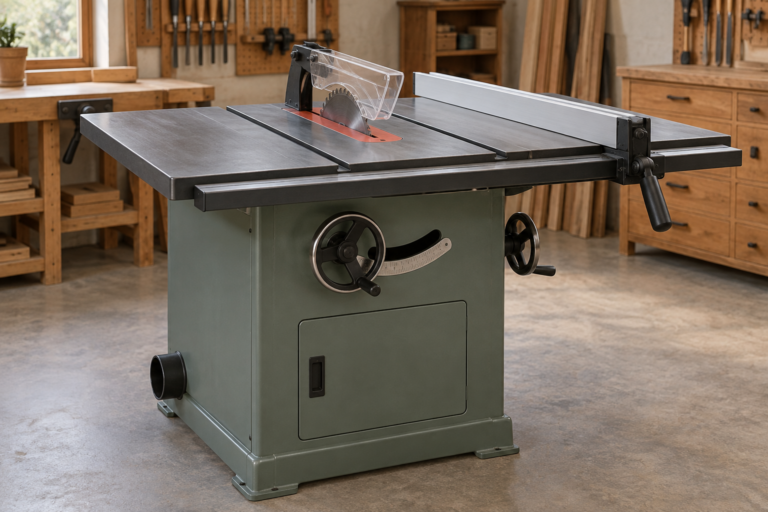
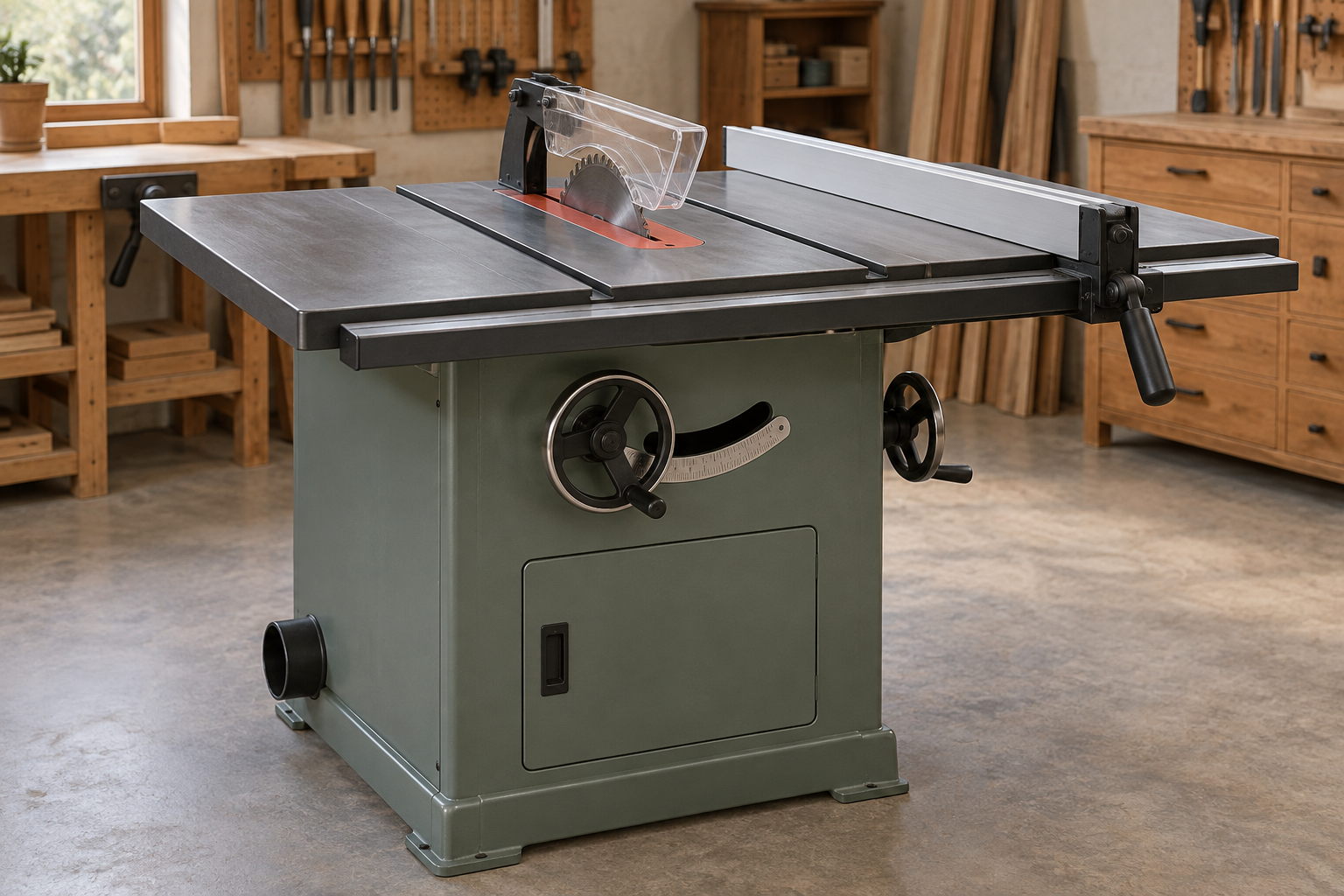
For a permanent shop, the best choice is usually a 10-inch cabinet saw with a rigid cast-iron top, a reliable rip fence, and a 1- to 2-horsepower motor on a 120-volt circuit or a 3-horsepower motor on 240 volts. A well-tuned contractor or hybrid saw can also produce excellent joinery, especially for smaller shops and occasional furniture work.
As an Amazon Associate we earn from qualifying purchases at no extra cost to you.
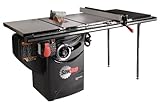

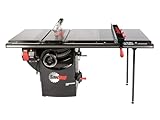
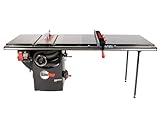
What Makes a Table Saw Accurate
The table must be flat enough that a straightedge does not rock or show obvious gaps. Minor casting variation can be corrected, but a visibly twisted top is a permanent nuisance. Cast iron also adds mass, reducing vibration as the blade enters hardwood.
The fence is just as important. For joinery, it should lock parallel to the miter slot and remain square to the table. A fence that shifts only 1/64 inch at the far end can change a tenon shoulder or a cabinet side noticeably. Look for a full-length, rigid fence with a smooth adjustment system rather than a thin fence that flexes when pushed.
The arbor should run without noticeable radial play. A clean blade should cut a straight edge; if the cut wanders despite a parallel fence, check arbor runout, blade tension, and whether the blade is properly seated. Many apparent saw problems are actually caused by a warped blade or pitch buildup on the teeth.
Which Saw Type Fits Your Work?
| Saw type | Best use | Main strengths | Main compromises |
|---|---|---|---|
| Cabinet saw | Frequent furniture and cabinet work | Rigid, quiet, powerful, excellent dust collection | Heavy, expensive, usually needs a dedicated circuit |
| Hybrid saw | Serious hobby shops | Good accuracy and value, often 120-volt capable | Less mass and power than a cabinet saw |
| Contractor saw | Limited budgets or movable shops | Lower cost, portable enough for occasional relocation | More vibration and weaker stock fences are common |
A cabinet saw is the safest recommendation when the machine will be used weekly for hardwood joinery. Its enclosed base improves dust collection, and the heavier construction makes repeatable cuts easier. It is not automatically more accurate out of the box, however. You still need to align the blade to the miter slot and set the fence correctly.
A hybrid saw is often the sensible middle ground. It can be the better buy for a small shop cutting furniture parts under about 1-1/2 inches thick. The cheaper option is fine when your work consists mostly of plywood, softwood, and occasional hardwood panels, provided the fence locks consistently and the stand does not flex.
Contractor saws deserve consideration when the budget is tight. Replace a flimsy fence with a rigid aftermarket-style fence, verify the table is flat, and keep the saw on a stable stand. That setup can make accurate dados and square rips, but it will not feel as settled as a heavy cabinet machine during thick maple or oak cuts.
Features Worth Paying For
Prioritize a good fence over electronic features. A reliable fence is useful on every cut; a digital readout is only useful if it remains calibrated. A large cast-iron top and extension wings are valuable for breaking down wide panels, but make sure the extension surfaces are flush. A lip as small as 1/32 inch can catch a workpiece and spoil a long rip.
Choose a saw with a smooth blade-height wheel and a separate bevel lock that holds firmly. The blade should return to 90 degrees without needing repeated adjustment. Positive stops are convenient, but confirm them with a reliable square. For joinery, a 45-degree bevel that is actually 44.7 degrees is enough to leave an open miter or a compound-joint gap.
Dust collection matters for both health and accuracy. Fine dust on the table increases friction and can make a board hesitate during a cut. An enclosed cabinet connected to a 4-inch dust hose generally collects better than an open contractor-style base, though the blade guard and throat opening still affect performance.
For most shops, start with a quality 10-inch cabinet table saw if the machine will stay in one location. Consider a 10-inch hybrid table saw when circuit capacity, floor space, or budget is more limited.
Setup for Accurate Joinery
Before judging the saw, align the blade to the miter slot. Measure from the same tooth at the front and rear of the blade; the difference should be close to zero, with the rear very slightly farther from the slot if the manufacturer permits that adjustment. Then set the fence parallel to the slot, or just a fraction wider at the rear. A fence that toes inward can pinch the workpiece and cause burning or kickback.
Use a combination blade for general work and a sharp, high-tooth-count blade for crosscuts and finer plywood. For box joints and tenons, a stacked dado set can save time, but check that the arbor accepts it and that the throat plate provides adequate clearance. Make test cuts in scrap from the same stock before touching the project parts.
A practical accuracy test is to rip a board, flip one half end for end, and place the freshly cut edges together. A consistent gap indicates blade or fence misalignment. If the gap changes along the length, inspect the fence, stock movement, and blade runout rather than immediately blaming the motor.
What to Buy
Buy a cabinet saw for frequent production, thick hardwood, and maximum stability. Buy a hybrid saw for most serious home shops. Buy a contractor saw only when its lower price or movable format solves a real problem, and reserve part of the budget for a better fence, a straight blade, and dust collection. In every category, careful alignment and sharp blades will improve joinery more than an extra half-horsepower.