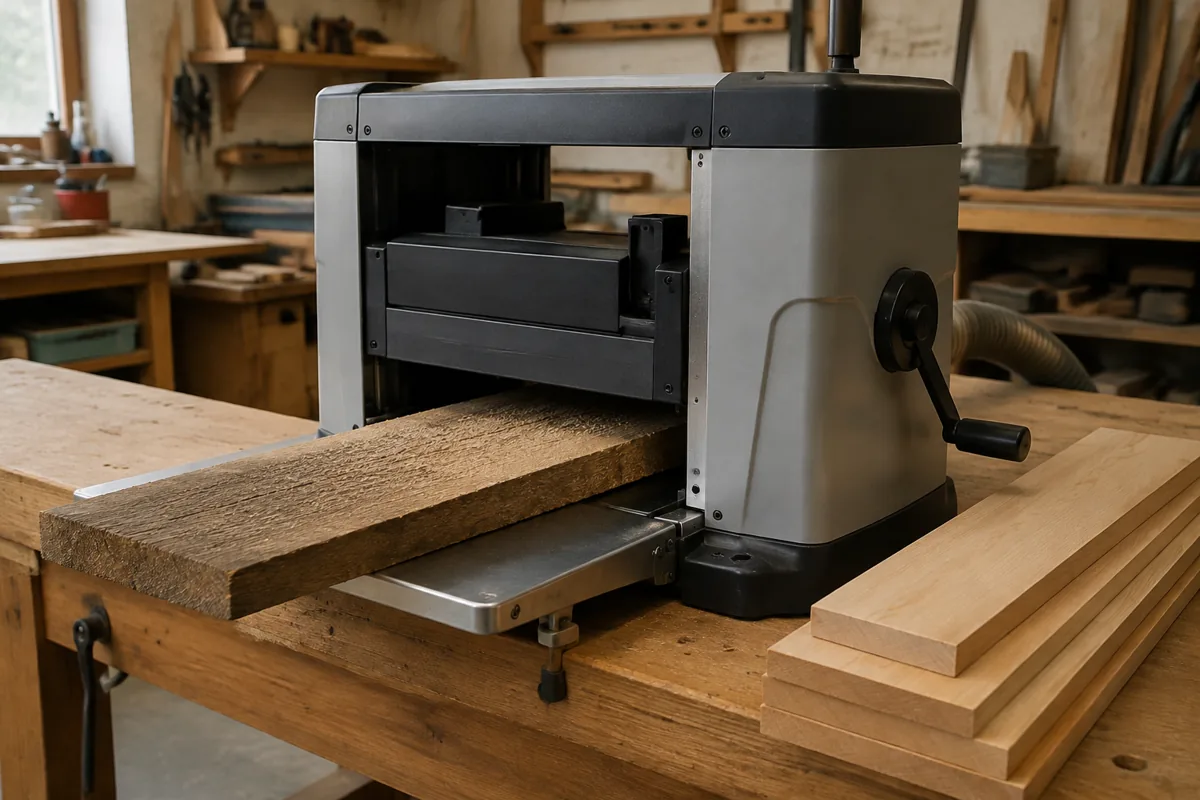
How to Lubricate a Stationary Planer Bed and Elevation Screws
What's inside
As an Amazon Associate I earn from qualifying purchases. This post may contain affiliate links at no extra cost to you.
A planer’s bed and elevation screws do not need much lubricant, but they do need the right lubricant in the right place. A sticky bed makes boards drag and can cause uneven feeding. Dirty elevation screws make the table difficult to raise, lower, or hold at a consistent setting. Too much oil or grease creates a dust paste that is worse than dry metal.
This procedure applies to portable and stationary thickness planers with a movable table, four elevation screws, and chain or geared synchronization. Always check the machine’s manual first. Some manufacturers specify grease on the screws, while others call for a dry lubricant or light machine oil.
Contents
Safety and Preparation
Unplug the planer before removing covers or reaching near the cutterhead. Lower the table enough to expose the elevation screws, but do not place your hands under a suspended table. If the machine is large, support the table according to the manufacturer’s instructions before disconnecting a chain or removing parts.
Remove the dust hood if it blocks access, then vacuum the inside of the planer. Brush packed chips away from the elevation screws, chain, sprockets, and table guides. Compressed air can force abrasive dust into bearings and switches, so vacuuming and a stiff nylon brush are safer choices.
Have clean rags, a small brush, a plastic scraper, and the lubricant specified in the manual ready. A disposable glove helps keep old black grease off the handwheel and height scale.
Choosing the Lubricant
The table surface and the elevation screws have different requirements. The table needs a very thin, dry, non-sticky film. The screws need a lubricant that can stay on their threads without turning sawdust into grinding compound.
| Location | Suitable choice | What to avoid |
|---|---|---|
| Planer table | Paste wax made for woodworking machinery, or a manufacturer-approved dry film | Wet oil, silicone spray, automotive grease |
| Elevation screws | Machine-specific grease, white lithium grease, or light machine oil if specified | Heavy tacky grease applied over dirt |
| Chain and sprockets | Only the lubricant called for by the manual; often a light oil in small amounts | Flooding the chain or spraying the table |
| Table guide posts | Light machine oil or dry lubricant when permitted | Thick grease that collects chips |
For a woodworker who does not already have supplies, a small container of woodworking machine paste wax is useful for the table. It is not a substitute for grease on a screw thread. If the manual allows it, a small tube of white lithium grease is an inexpensive choice for elevation screws.
Lubricating the Planer Bed
First scrape off pitch and glue with a plastic scraper. For stubborn residue, use a cleaner that is safe for the table’s finish. Do not use an aggressive solvent without checking whether it can damage paint or a cast-iron surface treatment.
Apply a small amount of paste wax to the clean bed with a cloth. A coat about the thickness of a fingerprint is enough; the surface should not look wet. Let it haze if the product requires that, then buff thoroughly. Pay attention to the infeed and outfeed areas, where friction is highest.
Wax reduces sliding friction and helps prevent rust, but it will not correct a table that is out of alignment. It also should not be used where the wax can transfer to workpieces that will later be glued or finished. If that is a concern, use a dry-film product approved for woodworking machinery instead, and test it on scrap.
Do not spray lubricant directly into the planer. Overspray can reach drive belts, brake surfaces, electrical components, or the cutterhead bearings. A dry, polished table is the goal—not a visibly oily one.
Cleaning and Lubricating Elevation Screws
Raise or lower the table to expose the threads in stages. Wipe each screw with a rag, then use a nylon brush to loosen compacted dust. Rotate the handwheel a little at a time so you can clean the full circumference. If the threads are heavily contaminated, a plastic scraper and vacuum may be necessary.
Inspect the screws while cleaning. Look for flattened threads, deep scoring, rust pits, or a section that is unusually shiny on one side. These signs can indicate misalignment, a bent screw, a worn nut, or a table that is loading one guide post more heavily than the others. Lubricant will not fix those problems.
Apply a thin bead of the specified grease along the working threads. Four elevation screws usually need less than a teaspoon in total. Spread it with a brush or gloved finger, then cycle the table through much of its travel several times. Wipe off any grease pushed toward the table, chain, or sprockets.
If the manual specifies oil, put a few drops on the threads rather than spraying them. Oil is cleaner and may be preferable in a dusty shop, but it can run off sooner and require more frequent servicing. Grease lasts longer, while dry lubricant attracts less dust. The manufacturer’s recommendation matters more than a general preference.
Checking Chain and Table Movement
After lubrication, operate the elevation handwheel through its normal range. The motion should be smooth and reasonably consistent. A tight spot that repeats at the same table height points to a mechanical issue, not a shortage of lubricant.
Check that all corners of the table move together. On many planers, a chain links the elevation sprockets. If the chain has jumped a tooth, one corner may rise while another lags. Do not compensate by forcing the handwheel; inspect the chain tension and synchronization procedure in the manual.
Reinstall covers and the dust hood before testing the planer. Run it empty briefly, then feed a scrap board. Listen for chain slap, clicking, or motor strain. If the table creeps under load, the locking mechanism may need adjustment, and adding more grease is unlikely to help.
Service Intervals and Buying Advice
Clean and inspect the bed whenever buildup becomes visible. In a typical small shop, waxing the bed every few months or after heavy use is reasonable. Elevation screws may need lubrication once or twice a year, but a high-dust shop or frequent production use can shorten that interval. Always clean before adding more lubricant.
A basic nylon parts-cleaning brush set is usually more useful than a specialized planer lubrication kit. Spend extra money on the correct manufacturer-specified grease only when the manual calls for it or the machine operates under heavy loads. For an occasional user, clean rags, a vacuum, paste wax, and a small amount of compatible grease are enough.
Never judge success by how much lubricant you applied. The bed should feel smooth and dry, the screws should move without binding, and no grease should fling onto the chain or workpiece. Those results indicate proper service; a thick, wet coating usually indicates that the machine is ready to collect dust.

