
Key takeaways
- The Narex Richter chisel set spans five bevel-edge sizes in cryo-treated steel with ash handles. See the full specs, best uses, and verdict in this review.
What's inside
As an Amazon Associate I earn from qualifying purchases. This post may contain affiliate links at no extra cost to you.
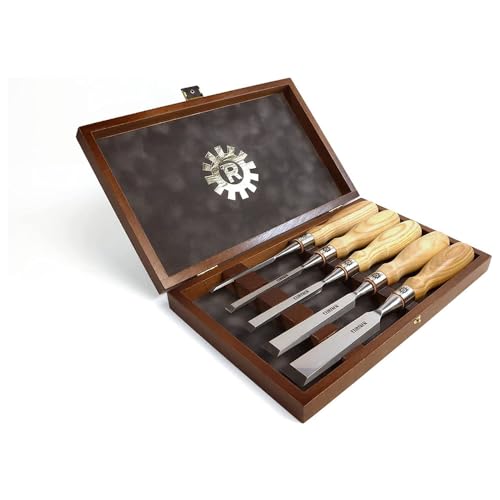
A set of bench chisels is among the first serious hand-tool purchases most woodworkers make, and the sizes in the set get used for everything from chopping mortises to paring dovetail pins. The Narex Richter set covers that ground with five bevel-edge chisels spanning 1/4 inch to 1 inch. The Richter line is built around cryogenically treated chrome-vanadium steel, ash handles, and stainless ferrules, a combination aimed at edge retention and durability at the bench.
This review examines what those specifications mean in daily use: how the bevel-edge profile helps in tight corners, why the steel treatment matters for sharpening intervals, and how the handles hold up to mallet work. It also sets out who benefits most from a matched five-piece set and who is better served by buying individual chisels or a different style altogether.
As an Amazon Associate, we earn from qualifying purchases.
Contents
Quick answer
The Narex Richter set pairs five bevel-edge chisels, from 1/4 inch to 1 inch, with cryogenically treated chrome-vanadium steel hardened to at least 62 HRc. Ash handles and stainless steel ferrules suit both hand pressure and mallet work. For woodworkers who want one matched set for joinery and general bench tasks, it covers the essential sizes in a durable build.
Key specs
| Specification | Detail |
|---|---|
| Brand | Narex |
| Model | 853600 |
| Set contents | 5 bevel-edge chisels |
| Size range | 1/4 in to 1 in |
| Blade steel | Cryogenically treated chrome-vanadium |
| Hardness | At least 62 HRc |
| Handles | Ash wood |
| Ferrules | Stainless steel |
Design and everyday use
The defining feature of these chisels is the bevel-edge profile. Instead of thick, square sides, the blade edges slope away, which lets the chisel reach into the acute corners of dovetails and clean up sockets where a square-sided blade would bind or bruise the wood. The profile also makes each chisel feel lighter and more maneuverable during paring cuts, where control matters more than force. For joinery-focused work, that geometry is a practical advantage rather than a styling detail.
The blades are chrome-vanadium steel that has been cryogenically treated and hardened to at least 62 HRc. In practical terms, the treatment and hardness support an edge that resists rolling and stays keen longer between honing sessions, which matters on a set that may handle several joints in a row. As with most new bench chisels, a short setup routine pays off: flattening the back and honing a clean edge before first use turns a good tool into a predictable one.
The handles are ash, a tough traditional handle wood, and each is capped with a stainless steel ferrule. The ferrule reinforces the end of the handle against mallet strikes and helps prevent splitting over years of use. The handles are shaped for a secure grip during hand-pressure paring as well as for struck work, so the same chisel moves comfortably between trimming a tenon shoulder and chopping out waste.
Who it’s for / who should skip
Who it’s for: Woodworkers building furniture and joinery by hand will use every size in this set. It suits anyone setting up a first quality bench set with a consistent feel across sizes, as well as experienced makers who want a matched set for dovetails, mortises, and general cleanup work without piecing together individual tools.
Who should skip: Carvers need gouges and sweeps, not flat bench chisels. Woodworkers who chop deep mortises all day may prefer dedicated mortise chisels with much thicker blades. And anyone who genuinely needs only one width is better served by a single chisel than by a five-piece set.
How it compares with alternatives
Budget chisel sets usually cut costs in the steel, and the difference shows up as edges that dull quickly and need constant attention on the stones. At the other end, premium chisels bought one at a time offer refined details but take longer to assemble into a working range of sizes. Socket chisels appeal to makers who like to turn their own handles, while Japanese bench chisels follow a different tradition of laminated steel and hollow-ground backs. The Richter set sits in a practical middle: five matched sizes, hardened cryo-treated steel, and handles built for mallet work, ready to cover most bench tasks from one purchase.
FAQ
What sizes are included in the Narex Richter set?
The set includes five bevel-edge chisels spanning 1/4 inch to 1 inch. That range covers the widths used most often in joinery, from narrow dovetail and mortise work up to wider paring and cleanup cuts, so most bench tasks can be handled without reaching for another tool.
Can these chisels be struck with a mallet?
Yes. The ash handles are reinforced with stainless steel ferrules that protect the striking end and help prevent splitting. A wooden or leather mallet is the usual partner for this kind of chisel, delivering controlled force for chopping while sparing the handle unnecessary damage.
What does cryogenically treated steel mean here?
Cryogenic treatment is a deep-cooling step in the heat-treatment process. Applied to the chrome-vanadium steel in these blades, it is used to improve wear resistance and stability, supporting the stated hardness of at least 62 HRc and helping the edges hold up longer between sharpening sessions.
Do the chisels need preparation before first use?
Like most bench chisels, they benefit from a brief setup: flattening the back of the blade and honing the bevel to a polished edge. That one-time routine makes the chisels cut predictably from the first joint onward, and regular light honing keeps them that way.
Final verdict
The Narex Richter set is a well-judged bench set: five useful bevel-edge sizes, cryogenically treated chrome-vanadium steel hardened to at least 62 HRc, and ash handles with stainless ferrules that stand up to mallet work. It covers the core of hand-tool joinery without forcing buyers to assemble a set piece by piece. For furniture makers and joinery-focused woodworkers, it is a strong foundation set; carvers and heavy mortise specialists should look at dedicated tools instead.
Related guides
More from Amazon
Programs that pair well with the guide above. Offers and eligibility are set by Amazon and may change.
A free business account with business pricing and bulk-buying tools for work, shop or home office.
Create a business accountFree shipping on eligible items, Prime Video and more. Eligible new members can start with a free trial.
Start a Prime free trialAudiobooks and podcasts to listen to on the go. Eligible new members can start with a free trial.
Try Audible freeAd-free music streaming. Eligible new subscribers can start with a free trial.
Try Music Unlimited freeAs an Amazon Associate we earn from qualifying purchases.





Write Your Review
No reviews yet. Be the first to share your experience!