How to Troubleshoot Band Saw Blade Slippage
What's inside
As an Amazon Associate I earn from qualifying purchases. This post may contain affiliate links at no extra cost to you.
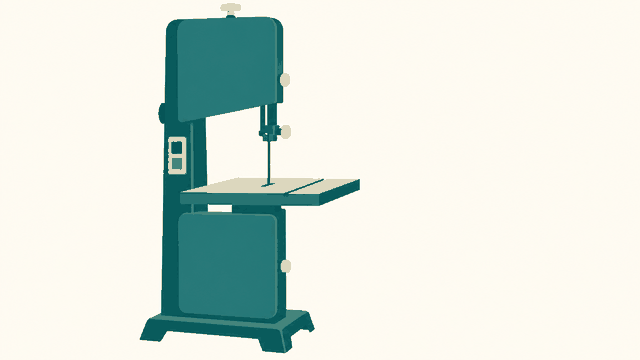
Blade slippage usually means the band saw blade is moving on the tire instead of tracking steadily around the wheels. You may hear a tick or scrape, see the blade drift toward the front or back of a wheel, or find that it will not stay in place after tensioning. Stop the saw before inspecting anything: unplug it, wait for the wheels to stop, and wear gloves when handling the blade.
Contents
Identify what is slipping
Watch the blade only while the machine is running with its doors closed and guards in place. If the blade wanders across a wheel, then settles or shifts again, suspect tracking, tension, tire condition, or a mismatched blade. If the blade stays centered but the cut stalls, the problem may instead be a dull blade, excessive feed pressure, or a blade that is too narrow or coarse for the job.
Do not run the saw with a door open to watch the wheels. If you cannot see the blade’s position through the machine’s normal viewing window, switch off and unplug it before checking. A blade that comes off a wheel can cause serious injury or damage the machine.
Check blade fit and condition
Compare the blade length, width, and tooth pitch with the saw manufacturer’s specifications. A blade that is too long may not tension properly; one that is too short can over-stress the frame or tension mechanism. Blade length is machine-specific, so check the manual or the label inside the cabinet before ordering. Width also matters: a narrow blade turns tighter, while a wider blade is more stable for straight cuts, but the saw’s guides and wheels must support the chosen size.
Inspect the blade for cracked welds, bent or kinked sections, missing teeth, and pitch buildup. A damaged blade may repeatedly jump or track poorly even after adjustment. Replace it rather than trying to straighten a kink. If you need a selection of common replacement widths and tooth pitches, compare woodworking band saw blades against your saw’s stated blade length and capacity.
Set tension and tracking
With the saw unplugged, release tension before fitting a new blade, then follow the manufacturer’s procedure to retension it. Use the saw’s tension scale as a starting point, not a universal measurement: scales can be inaccurate, and the correct setting depends on blade width and machine design. Too little tension lets the blade flex and slip under load; too much can strain the blade, bearings, and frame. Avoid the “deflection by finger pressure” method unless the manual gives a specific test and measurement.
Next, turn a wheel by hand and adjust the tracking knob in small increments until the blade sits where the manual specifies. Many saws track the blade near the center of the wheel crown, but some designs use a different position. Do not assume every wheel should be adjusted alike. Tighten the tracking lock if fitted, rotate the wheel several turns by hand, and confirm the blade stays put before closing the cabinet and testing the saw.
Inspect tires, guides, and alignment
Look for tires that are loose, cracked, hardened, glazed, or worn unevenly. A tire that has lifted from the wheel or has a damaged crown can let the blade shift despite correct tension and tracking. Clean off resin and dust with a method approved by the saw manufacturer; avoid solvents that can soften rubber or plastic. If a tire is loose or badly deteriorated, replace it. The right tire depends on wheel diameter and tire profile, so check those details before buying replacement band saw tires.
Check that thrust bearings and side guides are adjusted to the manual’s clearance. Guides that press hard against the blade can create heat and push it off line; guides set too far away fail to support the blade during a cut. Also check that the blade is installed with its teeth pointing in the cutting direction. If the wheels appear misaligned, do not compensate indefinitely with the tracking knob—alignment may need correction according to the service procedure.
Compare common causes
| Symptom | Likely cause | First check |
|---|---|---|
| Blade drifts on the wheel | Tracking, loose tension, worn tire | Manual tracking position and tire condition |
| Blade shifts only under load | Insufficient tension, dull blade, heavy feed | Blade condition and tension setting |
| Blade jumps or clicks once per rotation | Damaged weld, kink, debris, or tire defect | Inspect the full blade and wheel by hand |
| Blade heats or wanders near the guides | Guide clearance or alignment issue | Guide and thrust-bearing adjustment |
Test the repair safely
After adjustments, rotate the wheel by hand several turns. Confirm the blade tracks consistently and does not touch the cabinet, guards, or guides incorrectly. Refit and close all covers, reconnect power, and run the saw briefly without cutting. Stop it immediately if you hear scraping, see unusual vibration, or notice the blade shifting. Then unplug it and recheck the cause rather than continuing to cut.
Make a test cut in scrap wood using light, steady pressure. If the blade slips only during a demanding cut, reduce feed pressure and check whether the blade is sharp and suited to the material. A new blade or correctly adjusted tension often solves the problem at low cost. If the wheels wobble, the tension mechanism binds, or a correctly fitted blade will not hold tracking, stop using the saw and consult the service manual or a repair technician; replacing parts without diagnosing the underlying alignment problem can waste money and leave the saw unsafe.