
What's inside
- Contents
- What Matters Most in a Workbench
- Workbench Types Compared
- Tops and Materials
- Base, Joinery and Stability
- Workholding: Vises, Dogs and Clamps
- Height and Ergonomics
- Size and Placement
- Choosing by Type of Work
- Care, Flattening and Safety
- Buy or Build
- Common Mistakes
- Buying Checklist
- Frequently Asked Questions
- Conclusion
As an Amazon Associate I earn from qualifying purchases. This post may contain affiliate links at no extra cost to you.
Short answer: the best workbench is heavy enough not to move, flat enough to trust, sized for the space you really have and set at a height that suits your body and the work you do. For most home shops that means a thick solid top, a braced base that does not rack, a way to hold work (a vise, dog holes or both), and enough mass to stay put when you plane, chisel or hammer.
Contents
- Contents
- What Matters Most in a Workbench
- Workbench Types Compared
- Tops and Materials
- Base, Joinery and Stability
- Workholding: Vises, Dogs and Clamps
- Height and Ergonomics
- Size and Placement
- Choosing by Type of Work
- Care, Flattening and Safety
- Buy or Build
- Common Mistakes
- Buying Checklist
- Frequently Asked Questions
- Conclusion
Our Top Picks


Contents
- What matters most in a workbench
- Workbench types compared
- Tops and materials
- Base, joinery and stability
- Workholding: vises, dogs and clamps
- Height and ergonomics
- Size and placement
- Choosing by type of work
- Care, flattening and safety
- Buy or build
- Common mistakes
- Buying checklist
- FAQ
- Conclusion
What Matters Most in a Workbench
A workbench is a tool, and like any tool it does a few jobs well when it is designed for them. The job is to hold your work still, at a good height, on a surface you can trust. Everything else, including drawers, shelves, power strips and color, is secondary. Four qualities decide most of the rest: mass, surface, workholding and height.
Mass and stability
A bench that slides or rocks while you plane a board or cut a joint is tiring and unsafe. Weight is your friend. A heavy top, thick legs and a lower shelf you can load with sandbags, tools or lumber all keep the bench from moving. If you compare two benches that are otherwise similar, the heavier and better-braced one is usually the better choice for hand-tool work. Power-tool use, such as routing or sanding, also benefits from a steady bench, though lighter benches can work when the tool does the pushing.
Flat, durable surface
You do not need a perfectly flat bench for every task, but you need one flat enough to assemble and check work without guessing. Check a bench with a straightedge if you can. A top with a visible dip or twist will cause problems in glue-ups and layout.
Workholding
A bench is only as useful as what it can hold. Without ways to secure boards, you end up fighting your material. Vises, bench dogs, holdfasts and clamps all play a role, and a good bench supports more than one.
Height
The right height reduces strain and improves control. We cover this in detail below, but the short version is that your bench should suit your body and your habits, not a catalog average.
Workbench Types Compared
| Type | Best for | Strengths | Trade-offs |
|---|---|---|---|
| Traditional joinery bench | Hand tools, furniture making | Heavy, stable, designed for workholding | Takes space and time or money; hard to move |
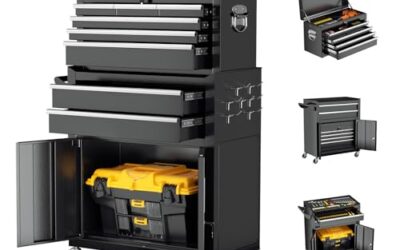
| Garage utility bench | General repair, assembly, power tools | Practical, often has storage | Quality varies; thin tops and weak bracing common |
| Folding or portable bench | Small spaces, job sites, occasional use | Stores flat, easy to carry | Less mass; may move under planing or hard chopping |
| Mobile bench on casters | Shared or tight shops | Moves where needed, doubles as assembly table | Needs locking casters; can feel less stable |
| Assembly or outfeed table | Large panels, glue-ups, support | Large flat area, often height adjustable | Not built for vises or heavy chopping |
| Wall-mounted or fold-down bench | Very small spaces | Disappears when not in use | Limited size and load; depends on wall strength |
If you can have only one bench, a sturdy utility or joinery style bench with a vise is the best all-rounder. If you have space for two surfaces, pair a heavy bench with a lighter mobile table for assembly and finishing.
Tops and Materials
| Top material | Advantages | Disadvantages | Suits |
|---|---|---|---|
| Solid hardwood, laminated | Durable, heavy, can be re-flattened | Costly; moves with humidity | Hand-tool and furniture work |
| Solid softwood | Affordable, easy to work, forgiving | Dents more readily | Beginners, general shop use |
| Butcher-block style | Flat, convenient, widely available | Surface finish may not suit glue and stain | General woodworking and assembly |
| Plywood or MDF layers | Stable, flat, economical | Can dent; MDF dislikes moisture | Sheet goods, assembly, power-tool work |
| Steel or metal top | Resists heat, sparks and chemicals | Hard on tool edges; noisy | Metalwork, repairs, mechanics |
| Particleboard with laminate | Low cost, smooth | Flexes, chips, weak for heavy joinery | Light assembly and electronics |
Thickness matters as much as material. A thin top, even a hardwood one, flexes and vibrates. Look for a top that stays firm under a hard push and does not ring like a drum when you strike it. Finishing a solid top with a thin coat of oil or wax protects it without making it slick. Avoid heavy film finishes that become slippery or flake when scarred.
Base, Joinery and Stability
The base determines whether a good top is useful. Thick legs joined to stretchers with strong joints, such as mortise and tenon, bolts or well-braced fasteners, resist racking, which is the sideways wobble that makes a bench feel weak. Push the bench hard at the corner. If it shifts, shudders or twists, it will do so when you are working.
Bolted-together benches should have bolts that can be tightened over time, since wood shrinks and swells. Knock-down benches are convenient for moving, but check that the fasteners are robust and that the frame feels solid when assembled. Metal frames can be sturdy, but thin tube legs can flex. Look for cross-bracing, gussets or welded joints.
A lower shelf gives you a place to put weight. Use it for heavy items such as bags of sand, toolboxes or stock, which lowers the center of gravity and adds mass. Make sure it is well supported. Footers or leveling feet help on uneven floors; a bench that rocks on one leg is a nuisance. If you use a bench against a wall, secure it to the wall or floor if it is tall and light, and consider whether you will need to access all sides.
Workholding: Vises, Dogs and Clamps
Workholding is the main difference between a bench and a table. A good bench lets you secure work in several ways:
- Face vise: a vise on the front edge, used to hold boards on edge for planing, sawing and chiseling.
- Tail or end vise: a vise at the end that works with bench dogs to clamp boards flat along the top.
- Dog holes and dogs: round or square holes along the top that accept pegs to stop or clamp boards.
- Holdfasts: traditional hold-downs that fit into holes in the top and grip with a tap of a mallet.
- Clamps: general-purpose clamps remain essential, so a top that allows clamping on its edges and surfaces helps.
- Planing stop: a simple stop, either a peg or a pop-up plate, prevents boards from sliding as you plane.
When you evaluate a bench, check whether it includes a vise or has mounting provision for one. Vises that wobble or have loose jaws are of little use. If a bench has no vise, make sure you can add one without major modification. Do not assume you can retrofit a vise to a thin top or a hollow frame; the vise needs a solid anchor point.
A bench vise or a set of bench clamps can upgrade a basic bench, though it is worth confirming that your top is thick enough to take them.
Height and Ergonomics
A common starting point is a top height near your wrist crease when you stand upright with your arms at your sides. Another way to find your height is to stand with your palms flat on the surface: your arms should rest comfortably without hunching. Neither rule is perfect, because height depends on what you do.
| Work style | Typical preference | Reason |
|---|---|---|
| Hand planing and heavy chopping | Slightly lower | Allows you to use body weight over the tool |
| Joinery, carving and detail | Higher | Brings work closer to your eyes and reduces bending |
| Power tool and assembly work | Mid to higher | Comfort for long sessions and control |
| Mixed use | Mid, adjustable | Compromise or adaptation with risers and platforms |
Adjustable-height legs help when more than one person uses the bench or when you want to change setups. If a fixed bench is too low, you can raise it with risers or add a plank on top. If it is too high, you can stand on a platform or trim the legs, though cutting legs is irreversible, so measure carefully.
Size and Placement
- Measure the space. Mark the footprint on the floor with tape and walk around it. Aim to leave enough room to move around at least three sides if possible.
- Consider your longest stock. The bench does not need to match board length, but you need outfeed room or supports. A roller stand or a second table can help.
- Think about width. A bench top about two feet deep is workable for many tasks. Deeper surfaces help with assembly but make it harder to reach the far side.
- Check access. Make sure doors, stairs and turns allow the bench to be carried in. Flat-pack or knock-down benches are easier to move.
- Decide where it sits. Against a wall, a bench uses less space and offers storage; free-standing, it provides access to all sides for clamping and assembly.
- Light and power. Place the bench near windows or good light, and near outlets if you use power tools. Keep cords out of walkways.
Choosing by Type of Work
The best bench for hand-tool woodworking is usually heavy, thick, with a face vise and dog holes. For general repairs, a garage utility bench with a thick top and storage is practical, especially if you also clamp metal or repair appliances. For metalworking, choose a steel-topped or heavy-duty bench that tolerates heat and sparks, and keep it away from wood dust. For a mixed shop, choose a bench that handles your most demanding task and add accessories for the rest.
Care, Flattening and Safety
Keep the top free of glue drips and stray finish, since lumps interfere with accurate work. Scrape off dried glue with a sharp scraper. Check flatness occasionally, using a straightedge, and flatten the top with a plane or sander if you have a solid wood top that needs it. Apply a light wax or oil finish and refresh it from time to time. Protect the top from solvents and moisture with a sacrificial board or mat when you finish work.
Safety on and around the bench is largely about stability and common sense. Clamp your work instead of holding it with one hand while cutting toward yourself. Keep tools organized so you do not reach across moving blades. Wear eye protection when cutting, chiseling or hammering, and use hearing and dust protection for power tools. Do not stack heavy tools on a light bench: check the weight rating for mounted equipment such as a bench grinder or miter saw, and use a stand or secure fixing if the bench is not rated for it.
Buy or Build
| Question | Buy | Build |
|---|---|---|
| Time | Ready in days | Weeks or months of weekends |
| Fit | Standard dimensions | Custom height, length and vise position |
| Cost | Known up front | Depends on lumber and hardware |
| Skills | None needed | Basic woodworking, flattening and joinery |
| Result | Quality varies by maker | You control the details |
Building a bench is a classic first big project and a good way to learn. It teaches accuracy and lets you tailor the bench to your body. It does require lumber, tools and a flat surface to work on, which can be a catch-22 when you have no bench yet. A simple bench made from construction lumber and a plywood or solid core top can be built with modest tools and improved over time. Buying gets you working immediately. Many woodworkers buy a basic bench first, then build a better one once they know how they work.
Common Mistakes
- Buying on top size alone. A large top on a weak base wobbles.
- Ignoring height. A bench that is too tall or too short causes back and shoulder strain.
- Skipping workholding. Clamps work, but built-in holding is faster and safer.
- Ignoring load ratings. If the maker lists a capacity, compare it to the tools you plan to mount.
- Treating a cheap bench as final. It can be a starter if you plan to upgrade the top later.
- Forgetting the floor. A bench on uneven ground will rock; level it.
Buying Checklist
- The top is thick, flat and made of a material that fits my work.
- The base is braced and does not rack when I push on it.
- There is a vise or a solid place to mount one.
- Height suits me, or can be adjusted.
- There is enough room around the bench and for long stock.
- Any equipment I plan to mount is within the stated load capacity.
- I can get the bench through doors and into the room.
- I know the return and warranty terms.
Frequently Asked Questions
What is the best workbench for a beginner?
A sturdy utility or joinery-style bench with a thick top, solid base and a vise. If budget is tight, a simple shop-built bench from construction lumber is a good starting point and is easy to improve.
How tall should a workbench be?
A good starting point is near your wrist crease when standing upright. Lower for heavy planing, higher for detail work. Test with your tools and adjust with risers or platforms if possible.
Is a folding workbench good enough?
For light tasks, small spaces and job sites, yes. For heavy planing and chopping, a folding bench may move too much, though you can add weight or brace it against a wall.
What is the best material for a workbench top?
Laminated hardwood is a classic for hand-tool work, softwood is economical and forgiving, and plywood or butcher-block styles suit general use. Steel suits metalwork. Choose by task and budget.
How thick should a workbench top be?
Thicker is generally better for stability and vibration control, but practical thickness depends on material and weight. Check that the top feels firm and does not flex under pressure.
Do I need a vise?
For woodworking, a vise greatly improves safety and speed. If you do mainly assembly, clamps may suffice, but you should still be able to add a vise later.
Can I put power tools on my workbench?
Yes, within the bench capacity and with secure mounting. Heavy tools like grinders and miter saws are best on a dedicated stand or a bench rated for the load. Always secure tools to prevent movement.
How do I stop my workbench from moving?
Add weight on the lower shelf, level the legs, brace against a wall or floor, or add a heavier top. Stops and dogs also keep work from pushing the bench around.
Conclusion
The best workbenches are not defined by brand names or features lists but by a few simple qualities: mass, a flat and durable top, a braced base, dependable workholding and a height that suits you. Decide what kind of work you do, measure your space honestly, choose a type that matches, and check the details with a push, a straightedge and a tape measure. Whether you buy or build, you can start with a modest bench and improve it as your skills grow. If you need to equip a bench quickly, look at a task light or anti-fatigue mat alongside the vise. A good bench is the foundation of everything else in the shop.
Disclosure: As an Amazon Associate we earn from qualifying purchases. If you click a link marked as sponsored and make a purchase, we may earn a small commission at no extra cost to you.
Related guides
More from Amazon
Programs that pair well with the guide above. Offers and eligibility are set by Amazon and may change.
A free business account with business pricing and bulk-buying tools for work, shop or home office.
Create a business accountFree shipping on eligible items, Prime Video and more. Eligible new members can start with a free trial.
Start a Prime free trialAudiobooks and podcasts to listen to on the go. Eligible new members can start with a free trial.
Try Audible freeAd-free music streaming. Eligible new subscribers can start with a free trial.
Try Music Unlimited freeAs an Amazon Associate we earn from qualifying purchases.

Write Your Review
No reviews yet. Be the first to share your experience!