
What's inside
- Contents
- Start With Your Tools, Not the Cabinet
- Types of Tool Storage Cabinets
- Drawers, Slides and Weight Ratings
- Materials and Finishes
- Locks and Security
- Mobility, Casters and Stability
- Sizing and Placement
- Layout and Organization
- Care, Safety and Chemicals
- Who Should Choose What
- Common Mistakes
- Buying Checklist
- Frequently Asked Questions
- Conclusion
As an Amazon Associate I earn from qualifying purchases. This post may contain affiliate links at no extra cost to you.
Short answer: the best tool storage cabinet is the one that matches the tools you actually own, fits the floor or wall you actually have, and carries its load without sagging, racking or tipping. Inventory your tools first, pick a cabinet type to match (rolling, stationary, wall, tall or shop-built), check drawer slides, material, locks and mobility, anchor anything tall to the wall, and leave room to grow.
Contents
- Contents
- Start With Your Tools, Not the Cabinet
- Types of Tool Storage Cabinets
- Drawers, Slides and Weight Ratings
- Materials and Finishes
- Locks and Security
- Mobility, Casters and Stability
- Sizing and Placement
- Layout and Organization
- Care, Safety and Chemicals
- Who Should Choose What
- Common Mistakes
- Buying Checklist
- Frequently Asked Questions
- Conclusion
Our Top Picks
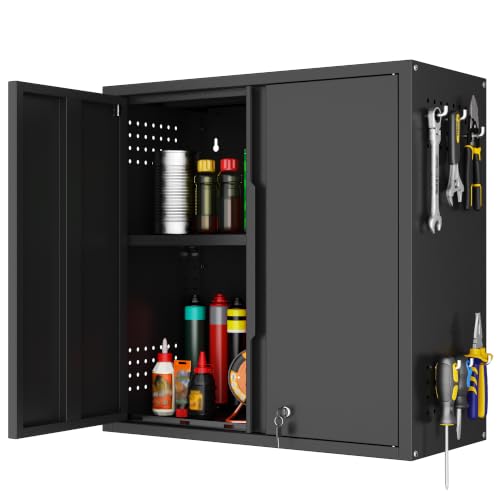 Yoonkool Garage Wall Cabinet with 2 Doors26''h wall cabinet11.8 x 26 x 26 inches11.8 poundsCheck on Amazon


Contents
- Start with your tools, not the cabinet
- Types of tool storage cabinets
- Drawers, slides and weight ratings
- Materials and finishes
- Locks and security
- Mobility, casters and stability
- Sizing and placement
- Layout and organization
- Care, safety and chemicals
- Who should choose what
- Common mistakes
- Buying checklist
- FAQ
- Conclusion
Start With Your Tools, Not the Cabinet
Most disappointing cabinet purchases begin with a photo and end with a mismatch. A cabinet that looks tidy in a showroom may have drawers too shallow for your power tools or a door too narrow for your longest clamps. Avoid that by laying out everything you plan to store and sorting it into groups before you shop.
- Small flat items: chisels, squares, marking tools, drill bits, driver bits and measuring tapes. These suit shallow drawers with dividers.
- Medium items: hand planes, hand saws, pliers, wrenches and sockets. Drawers of moderate depth with foam or liners keep them from sliding.
- Bulky items: routers, sanders, jigsaws, drills with chargers and batteries. These need deep drawers or shelves.
- Long items: clamps, levels, long saws and straightedges. These are better on wall racks or in tall compartments.
- Consumables: glue, sandpaper, screws, fasteners and finishes. Fasteners suit small bins; liquids need a separate closed cabinet.
Count each group and estimate volume. Then add roughly one fifth for tools you will buy in the next few years. If your collection is mostly woodworking hand tools, you may favor shallow drawers and a wall cabinet with doors. If you do repairs on cars or equipment, you may favor many drawers for sockets and wrenches. If you rely on cordless power tools, you will need shelves or deep drawers and a charging area.
Types of Tool Storage Cabinets
Cabinet types differ more in how they live in the room than in how they look. Compare them below.
| Type | Best for | Advantages | Watch out for |
|---|---|---|---|
| Rolling drawer cabinet | Shops where work moves around | Mobile, keeps tools near the task, many drawers | Casters must lock; floor must be reasonably flat |
| Stationary floor cabinet | Permanent layouts, heavy loads | Stable, strong, no wheels to fail | Uses floor space, hard to rearrange |
| Wall cabinet | Small shops, keeping tools visible | Frees floor, protects hand tools | Must be anchored into studs or solid backing |
| Tall locker style | Mixed storage, long items | Holds a lot in a small footprint | Shelf strength varies; tip-over risk |
| Shop-built wooden cabinet | Odd spaces, custom needs | Fit exactly, repairable, can match furniture | Time, lumber and skill required |
| Open shelving or pegboard | Frequently used tools | Fast access, cheap, flexible | Dust, clutter, no security |
Many shops use two or three types together: a rolling cabinet by the bench for daily tools, a wall cabinet for chisels and planes, and a tall cabinet or shelf for bulk items. Combining types is usually better than finding one perfect cabinet.
Drawers, Slides and Weight Ratings
Drawers are where cabinets succeed or fail. Full-extension ball-bearing slides allow you to reach the back of a drawer and handle load more smoothly than simple roller slides. If a weight rating per drawer is listed, compare it to your heaviest contents. A drawer of sockets and a drawer of angle grinders place very different demands on the slides.
Test, if you can, by opening a loaded drawer and pushing it shut. It should glide without scraping, shift or noise, and it should not drift open when the cabinet is on a slight slope. Look at how the drawer front attaches, since thin fronts can flex or crack. Check that drawers have stops so they do not come out completely, and that the cabinet resists tipping when one or more heavy drawers are open. Many quality cabinets include an interlock that lets only one drawer open at a time, which is a good feature for tall units.
Consider depth and height variety. A mix of shallow and deep drawers handles a wider range of tools than a stack of identical drawers. Drawer liners prevent sliding and protect finishes. Dividers, foam inserts and small bins help prevent a jumble; some people prefer custom-cut foam so each tool has an outline and missing items are obvious.
Materials and Finishes
| Material | Strengths | Weaknesses | Best environment |
|---|---|---|---|
| Steel with powder coat | Impact resistant, strong, common for garages | Scratches can allow rust; can dent | Garages, busy shops |
| Plywood or solid wood | Warm, repairable, easy to customize | Reacts to humidity; needs a finish | Dry shops, home workshops |
| Particleboard or MDF | Economical, smooth | Swells when wet, weak screw holding | Light loads in dry rooms |
| Plastic or resin | Rust-free, light | Less rigid, can crack in cold | Damp or outdoor sheds, light loads |
For garages and basements, humidity and temperature swings matter. Steel cabinets resist knocks but benefit from desiccant packs or a coat of paste wax on bare steel tools. Wood cabinets feel good and can be repaired, but should be sealed or finished, particularly in humid areas. Whatever the material, check the thickness and the way joints are fastened. Welded or well-fastened corners and a rigid back panel reduce racking, which is the sideways distortion that makes drawers stick.
Locks and Security
Locks serve two purposes: preventing theft and preventing accidents. If children, visitors, tenants or employees use the space, a lock on at least one cabinet is sensible. Keep sharp tools, power tools with exposed blades, hazardous materials and expensive items behind it. A central lock that secures every drawer at once is convenient, while individual locks offer more flexibility. Remember that many cabinet locks deter casual access but do not stop a determined thief, so do not rely on them alone for high-value tools.
Mobility, Casters and Stability
A rolling cabinet lets you bring tools to the work, which is especially handy in small shops where you rearrange often. Look for large, quality casters with brakes on at least two of them. Larger wheels roll more smoothly over cracks and cords. A cabinet with swivel casters at the front and rigid ones at the back steers well but may be harder to position precisely.
Stability matters even more than roll. A loaded cabinet is heavy and can tip if the top drawers are open and heavy items are at the front. Store the heaviest tools in the lowest drawers and lighter items near the top. Do not stand on the cabinet or climb it. Before using a new cabinet, check the floor. Uneven concrete or a sloped garage floor can cause a cabinet to roll on its own, rack out of square, or bind drawers. Shims under non-rolling cabinets can help, and wheel chocks can help rolling ones.
For tall cabinets, always anchor to the wall. Tip-over is a real hazard with any tall furniture, and it becomes more dangerous when drawers are loaded with tools. Use the anchors provided if they suit your wall type, or choose hardware appropriate for studs, masonry or concrete.
Sizing and Placement
Measure the space before you shop, then subtract room for drawer travel. A cabinet 24 inches deep with full-extension drawers needs another 20 inches or more in front to open. Leave space to walk past and to bend down. Note the location of outlets, windows, doors and any water heater, furnace or electrical panel that needs clearance. Check ceiling height for tall cabinets and wall cabinets, and make sure a wall cabinet will not hit your head when you work beneath it.
Placement strategy: put your most used tools within reach of your bench, ideally between waist and chest height. Keep anything you use rarely higher or lower. Keep cabinets away from areas where sawdust, sparks or splashes are common, such as grinders and water sources. Leave clearance for outfeed and traffic around machines.
If you are comparing options online, a rolling tool cabinet or a wall-mounted tool cabinet is a common starting point, but always compare the listed dimensions and drawer details against your inventory.
Layout and Organization
- Zone by task. Group measuring and marking tools, cutting tools, fastening tools and finishing supplies so each task has a home.
- Store heavy low. Heavy tools in low drawers reduce lifting and improve stability.
- Label fronts. A short label on every drawer saves time every day. Tape, printed labels or a marker on a card all work.
- Use shadow outlines or foam. When a tool is missing, you see it immediately.
- Keep a charging zone. Dedicate a shelf or surface with outlets for cordless batteries, and never leave chargers covered or near flammable materials.
- Leave empty space. Roughly one fifth should remain empty for new tools and for the creep that every shop experiences.
For small hardware, clear bins in a shallow drawer or a wall-mounted rack with labeled containers keep screws and fasteners from mixing. Hand tools like chisels and planes benefit from dry, cushioned storage so edges do not touch each other. Wrap edges or use slotted holders.
Care, Safety and Chemicals
Good storage protects tools from rust, damage and loss. Wipe tools clean before putting them away, especially after working with wet materials or finishes. In humid spaces, use rust inhibitors, silica gel packs or a light coat of oil or wax on bare steel surfaces, following the product instructions. Avoid storing tools directly against bare concrete or damp walls.
Store finishes, solvents, fuels and other flammable or hazardous products separately from your tool cabinets, in containers designed for them and away from heat, flames and pilot lights. Follow the safety instructions on each label and local regulations. Oily rags used for some wood finishes can heat up and ignite spontaneously, so lay them flat to dry outdoors or place them in a sealed metal container with water, as directed by the product label. Keep a fire extinguisher suitable for workshop fires within reach and check it periodically.
Keep cabinet doors and drawers closed when not in use, particularly around children and pets. Keep blades guarded. Replace damaged slides and handles before they fail.
Who Should Choose What
| Your situation | Good starting point | Why |
|---|---|---|
| Small garage shared with a car | Wall cabinet plus a narrow rolling unit | Frees floor space and can tuck away |
| Hand-tool woodworker | Wall cabinet or shallow-drawer chest near the bench | Protects edges and keeps tools visible |
| Cordless power tool user | Deep drawers or shelves with a charging zone | Tools and batteries need volume and outlets |
| Home repair and hobby user | Single rolling cabinet with mixed drawers | Flexible and easy to move |
| Shared or rented space | Locking cabinet | Security and safety |
| Skilled builder with odd space | Shop-built cabinet | Custom fit and use of lumber on hand |
If you are just starting, resist the urge to buy a huge cabinet. A modest unit that suits your current needs plus a plan to expand is often a better investment, because you will learn what you really use. If you are upgrading, think about what annoys you in the current setup, whether it is drawers that stick, tools that roll away or the time spent hunting.
Common Mistakes
- Buying the largest cabinet that fits. Organization matters more than size.
- Ignoring the floor. An uneven slab can rack a cabinet and jam drawers.
- Skipping wall anchoring. Tall units can tip, especially when drawers are open.
- Storing finishes with tools. Vapors and spills damage tools and create fire risks.
- Overloading top drawers. This raises the center of gravity and strains slides.
- Forgetting growth. Tool collections expand; plan for it.
Buying Checklist
- I sorted my tools by type and estimated volume with room to grow.
- I measured the space, including drawer travel and door swing.
- Drawers have full-extension slides and weight ratings that suit my heaviest tools.
- The material suits my climate and use.
- Casters lock, and the cabinet does not tip when loaded drawers are open.
- Tall units can be anchored to the wall.
- There is a lock if children or visitors use the space.
- Hazardous products have a separate home.
- I have checked the return policy and delivery conditions.
Frequently Asked Questions
What is the best type of tool storage cabinet for a garage?
For most garages, a combination works well: a rolling cabinet for daily tools and a wall cabinet or tall unit for the rest. Steel is common in garages because it resists knocks, but choose according to humidity and how heavy your tools are.
How many drawers do I need?
It depends on how you group your tools. Beginners often do well with a handful of drawers of mixed depth. Count your categories and add extra for growth. More drawers are useful only if you will label and use them.
Is a rolling cabinet stable enough?
It can be, if the casters lock and the cabinet is loaded sensibly with heavy items low. Avoid pushing a loaded cabinet quickly, and do not open multiple heavy drawers at once unless the design prevents it.
Do I need to anchor a tool cabinet to the wall?
Anchor tall cabinets and wall cabinets, always. Floor units with low height are less of a tip risk, but anchoring is still wise for tall or narrow ones, especially if there are children around.
How do I prevent rust in my tool cabinet?
Keep tools dry and clean, avoid storing them on bare concrete, use desiccant packs or rust inhibitors in damp spaces, and keep the shop ventilated. A light coat of wax or oil on bare steel helps. Fix leaks and condensation sources where possible.
Is a locking tool cabinet worth it?
If you have kids, tenants or visitors, or you store valuable or dangerous tools, yes. A lock reduces casual access, though it is not a guarantee against theft. Combine with sensible shop security and records of your tools.
Can I store chemicals in my tool cabinet?
It is best not to. Finishes, solvents and fuels should be kept in suitable containers in a separate, closed, ventilated place away from ignition sources. Follow label instructions and local rules.
Should I buy a cabinet or build one?
Buy if you need storage quickly or want features like steel drawers and locks. Build if you have the time, tools and an unusual space. Many woodworkers buy a basic cabinet first and build custom storage later, when they know their needs.
Conclusion
The best tool storage cabinets are not necessarily the biggest or the most expensive. They are the ones that suit the way you work: drawers sized to your tools, a material suited to your environment, locks where you need them, wheels that stay put and a structure that will not tip or sag. Inventory first, choose a type second, check the details third, and anchor and organize last. With that approach, even a modest cabinet can turn a cluttered corner into a shop where tools are easy to find and safe to put away. If you are ready to compare options, start with a locking tool cabinet or a drawer organizer set and check each listing against the checklist above.
Disclosure: As an Amazon Associate we earn from qualifying purchases. If you click a link marked as sponsored and make a purchase, we may earn a small commission at no extra cost to you.
Related guides
More from Amazon
Programs that pair well with the guide above. Offers and eligibility are set by Amazon and may change.
A free business account with business pricing and bulk-buying tools for work, shop or home office.
Create a business accountFree shipping on eligible items, Prime Video and more. Eligible new members can start with a free trial.
Start a Prime free trialAudiobooks and podcasts to listen to on the go. Eligible new members can start with a free trial.
Try Audible freeAd-free music streaming. Eligible new subscribers can start with a free trial.
Try Music Unlimited freeAs an Amazon Associate we earn from qualifying purchases.


Write Your Review
No reviews yet. Be the first to share your experience!