Best Random Orbital Sander for Beginners
What's inside
- Best random orbital sanders for beginners at a glance
- Why the Bosch ROS20VSC is the best starting point
- Other good choices by situation
- Decision matrix for a first sander
- What beginners should look for
- How to set up a random orbital sander correctly
- Ownership costs and common wear points
- Final recommendation
- Related Guides
- Best random orbital sanders for beginners at a glance
- Why the Bosch ROS20VSC is the best starting point
- Other good choices by situation
- Decision matrix for a first sander
- What beginners should look for
- How to set up a random orbital sander correctly
- Ownership costs and common wear points
- Final recommendation
- Related Guides
As an Amazon Associate I earn from qualifying purchases. This post may contain affiliate links at no extra cost to you.
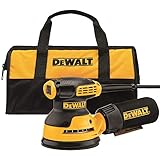
The best random orbital sander for beginners is the Bosch ROS20VSC because its 5-inch sanding pad, modest 3.5-pound weight, variable-speed control, low-vibration design, and effective dust canister make it forgiving when you are still learning how much pressure and sanding time to use.
That recommendation is not the only sensible choice. The right sander depends on whether you value the lowest weight, a more comfortable grip, cordless convenience, or the lowest ownership cost. For most first-time woodworkers, a corded 5-inch random orbital sander is the easiest place to start: it is lighter than many battery models, has consistent power, and avoids the extra cost of batteries and chargers.
As an Amazon Associate we earn from qualifying purchases at no extra cost to you.



Contents
- Best random orbital sanders for beginners at a glance
- Why the Bosch ROS20VSC is the best starting point
- Other good choices by situation
- Decision matrix for a first sander
- What beginners should look for
- How to set up a random orbital sander correctly
- Ownership costs and common wear points
- Final recommendation
- Related Guides
Best random orbital sanders for beginners at a glance
| Model | Power and speed | Weight | Dust collection | Best beginner use |
|---|---|---|---|---|
| Bosch ROS20VSC | 2.5 A; 7,500–12,000 OPM | 3.5 lb | Microfilter canister; vacuum port | Best overall learning tool |
| DeWalt DWE6423K | 3.0 A; 8,000–12,000 OPM | 2.9 lb | Dust bag; vacuum port | Best lightweight corded choice |
| Makita BO5041 | 3.0 A; 4,000–12,000 OPM | 3.1 lb | Dust bag; vacuum port | Best for control and varied materials |
| Milwaukee M18 2648-20 | 18 V battery; 7,000–12,000 OPM | About 3.4 lb bare tool | Dust bag; vacuum port | Best for cordless workshops |
Weights can vary slightly by configuration, and the Milwaukee figure excludes the battery. A 5-inch pad is the most useful beginner size because abrasives are widely available, the tool is easier to control than a 6-inch model, and replacement discs are usually less expensive.
Why the Bosch ROS20VSC is the best starting point
The Bosch ROS20VSC has the controls beginners actually benefit from. Its variable-speed dial lets you slow the pad for finish sanding, soft pine, painted surfaces, and edges, then increase speed for removing scratches left by coarse abrasive. That adjustment is more useful than simply having the highest motor rating.
Its 1/8-inch orbit is a practical middle ground. The sander removes material at a reasonable pace while leaving a finish that is easier to refine than the marks produced by an aggressive random orbital sander. The soft-start behavior also helps prevent the tool from jumping when the pad first contacts the workpiece.
The microfilter dust canister is convenient for short jobs and small shops. For longer sanding sessions, connect the vacuum port to a suitable shop vacuum. Dust collection will never replace eye protection and a properly fitted respirator when the material or finish requires one, but it reduces airborne dust and keeps abrasive particles from clogging the pad as quickly.
The main limitation is its plastic dust container. It is handy, but it fills quickly during coarse sanding, and the filter needs regular cleaning. Treat the tool as a controlled finishing sander rather than a rapid stock-removal machine.
Other good choices by situation
Choose the DeWalt DWE6423K for the lightest corded setup
At about 2.9 pounds, the DeWalt DWE6423K is easy to hold during vertical work and is less tiring for a beginner who has not yet learned to let the machine do the work. Its 3-amp motor and 8,000–12,000 OPM range cover ordinary furniture, trim, and DIY repair projects.
The compact shape is comfortable, and its speed-control range is simple to understand. Choose it if your priority is minimizing wrist and arm fatigue. Its dust bag is adequate for small jobs, but a vacuum connection is preferable when sanding indoors or working through several sheets of plywood.
Choose the Makita BO5041 for maximum hand-position flexibility
The Makita BO5041 combines a variable-speed trigger with a separate speed dial and includes an adjustable front handle. That handle is useful for beginners who feel less secure using a palm-only grip, especially when sanding broad panels or working near an edge.
Its speed range starts lower than the Bosch and DeWalt, which can help when sanding delicate veneer, painted surfaces, or softwood. The trade-off is a slightly more involved control layout. It is still beginner-friendly, but you should lock the front handle firmly and keep it clear of the sanding path.
Choose the Milwaukee M18 2648-20 if you already own M18 batteries
The cordless Milwaukee is attractive when a workbench has no convenient outlet or when a cord would snag around a cabinet. It offers a 5-inch pad and variable speed, with performance suitable for normal finish sanding. The important ownership calculation is battery cost: the bare tool may look competitive, but a new user must also buy a battery and charger.
Runtime depends heavily on battery capacity, abrasive grit, pressure, and the material being sanded. A compact battery reduces weight but may need more frequent charging; a larger battery lasts longer but makes the sander heavier. For occasional workshop use, a corded model is usually the simpler and less expensive system.
Decision matrix for a first sander
| Your situation | Best direction | Reason |
|---|---|---|
| Under about 10 projects per year | Corded 5-inch model | No battery aging or charging routine; lower total cost |
| Frequent vertical or overhead sanding | Lightweight DeWalt-style design | Less arm fatigue and easier pad control |
| Mixed softwood, hardwood, and painted surfaces | Wide variable-speed range | Lower speeds are more forgiving on delicate surfaces |
| Small indoor workspace | Model with vacuum port and sealed dust path | More reliable dust control than a small bag alone |
| Already invested in Milwaukee M18 tools | M18 2648-20 | Shared batteries can justify cordless convenience |
| Unsure how much control you need | Bosch ROS20VSC | Balanced weight, speed range, grip, and dust options |
What beginners should look for
- Low vibration: A comfortable sander encourages lighter pressure and longer, more even passes. Excess vibration can make it harder to prevent swirl marks.
- A 5-inch hook-and-loop pad: This is the common size, and discs are easy to find in grits from about 40 through 320.
- Variable speed: Use lower settings for finish sanding and higher settings for controlled scratch removal.
- A vacuum port: A dust bag is useful for portability, but a vacuum normally captures more dust and keeps the work area cleaner.
- Separate replacement pad availability: The hook-and-loop surface is a wear item. Confirm that replacement pads are available before buying.
- A clear power switch: Beginners should be able to turn the tool off without changing grip or reaching across the workpiece.
How to set up a random orbital sander correctly
- Inspect the pad. Replace it if the hook-and-loop face is torn, packed with resin, or no longer holds discs evenly. A damaged pad can create uneven sanding.
- Match the disc to the pad. Align the dust holes as closely as possible. Poor alignment reduces extraction and allows dust to clog the abrasive.
- Choose the grit. Start around 80 or 100 grit for removing milling marks, 120 or 150 grit for general smoothing, and 180 through 220 grit for final bare-wood preparation. Finer than 220 is often unnecessary before many finishes.
- Start on the workpiece. Place the pad flat before switching on, then move immediately. Starting in midair can make the tool jump.
- Use light pressure. The motor should maintain its speed. Pressing hard slows the pad, overheats the abrasive, increases swirl marks, and wears the pad faster.
- Overlap each pass. Move at a steady pace, overlapping the previous path by roughly half the pad width. Do not linger in one spot.
- Change grits completely. Vacuum the surface and the tool before changing to a finer disc. A single coarse grain left behind can create scratches that take several passes to remove.
Ownership costs and common wear points
Typical corded beginner sanders occupy a general market range of roughly $70–$150, while cordless bare tools are often about $120–$220 before adding a battery and charger. A 50-pack of 5-inch discs commonly costs about $15–$35, depending on brand and abrasive type.
For example, suppose one project uses 10 discs costing $0.50 each and you complete 12 similar projects per year. Abrasives cost about $60 annually, before considering the tool. Buying a cheaper sander does not eliminate this recurring cost, so spending slightly more for a comfortable grip and effective extraction can be worthwhile if it helps you avoid wasted discs and rework.
The abrasive is normally the first consumable to wear, followed by the hook-and-loop pad and dust-filter components. Keep the tool moving, empty the dust container before it becomes packed, brush dust from ventilation openings, and clean the filter according to the manufacturer’s instructions. Never block the vents or use a clogged filter; reduced airflow can increase heat in the motor.
Final recommendation
For most beginners, buy the Bosch ROS20VSC if you want the best balance of control, low vibration, manageable weight, speed adjustment, and dust-collection flexibility. Choose the DeWalt DWE6423K if low weight matters most, the Makita BO5041 if you want an adjustable front handle, or the Milwaukee M18 2648-20 if you already own compatible batteries and need cordless convenience. Whichever model you choose, consistent movement, light pressure, fresh abrasive, and careful dust control will affect the finished surface more than a small difference in motor specifications.