Best Planers for Matching Thickness on Multiple Boards
What's inside
As an Amazon Associate I earn from qualifying purchases. This post may contain affiliate links at no extra cost to you.
Matching the thickness of several boards is one of the jobs a thickness planer handles best—provided you set it up correctly. The goal is not simply to make every board the same size. You also need a reference face, consistent grain direction, controlled passes, and enough machine capacity to avoid snipe or uneven cuts.
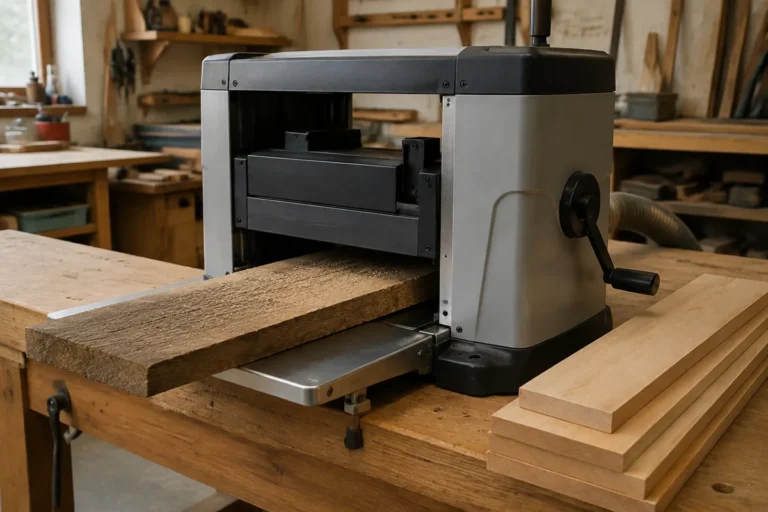
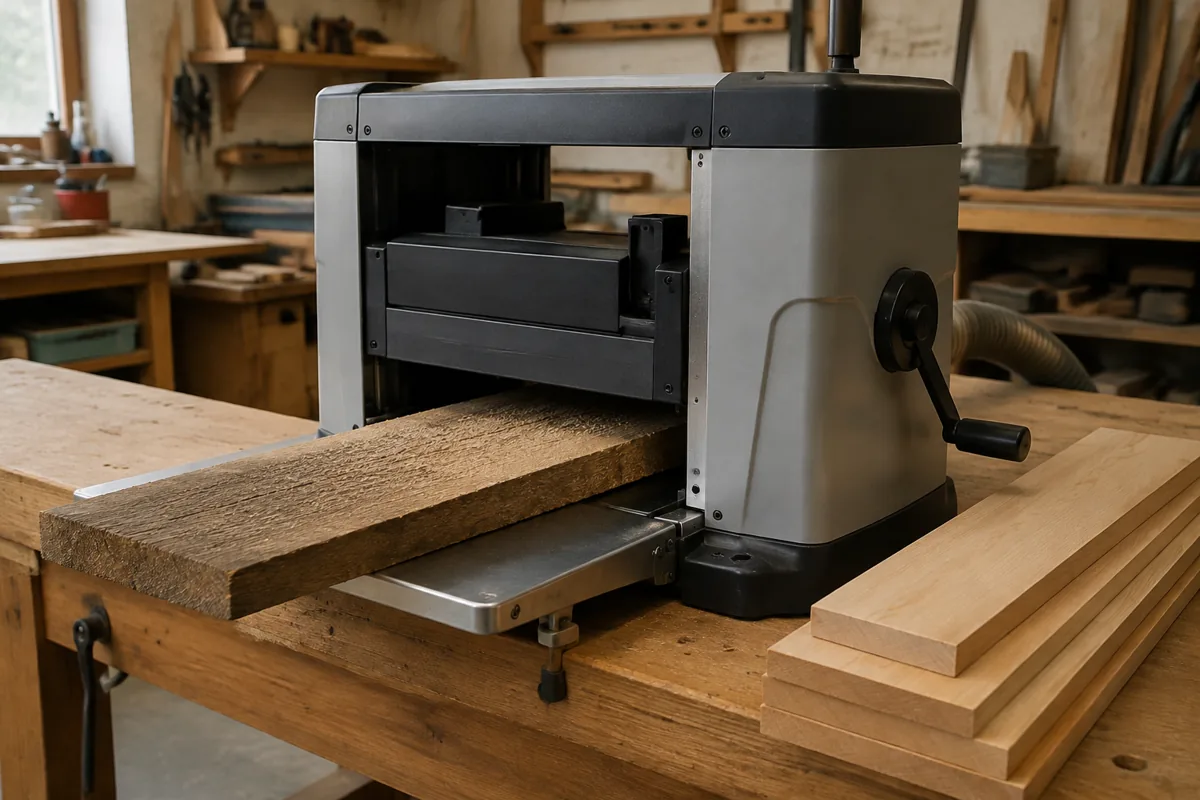
For most home workshops, a 12-1/2- or 13-inch benchtop planer is the practical choice. It can dimension furniture parts, cabinet stock, and glue-up panels without taking up the space or cost of a floor-standing machine. A larger stationary planer is smoother and faster for production work, but it is not automatically better for occasional board matching.
Contents
What to Look For in a Planer
Start with capacity. A 12-1/2-inch planer accepts boards up to roughly 12 inches wide in real use, allowing a little clearance. That is enough for most table parts and cabinet components. A 15-inch planer is more useful when you regularly work with wide stock, but it usually requires 240-volt power, more floor space, and better dust collection.
Cut depth matters more than many buyers expect. A machine rated for a 1/16-inch cut may only achieve that in softwood or across a narrow board. In hardwood, limit removal to about 1/32 inch per pass, and take lighter cuts—around 1/64 inch—when the board is wide or close to final thickness.
Look for a four-post design, sturdy tables, and a positive depth adjustment. A planer that flexes under load can leave boards with measurable variation from one end to the other. Infeed and outfeed extensions are also important. Without adequate support, long boards sag as they enter and leave the cutterhead, increasing snipe.
A two-speed feed system is useful but not essential. The faster setting is appropriate for rough sizing; the slower setting generally leaves a cleaner surface. Cutterhead design also affects maintenance. Straight knives are inexpensive to replace and easy to sharpen, while helical or segmented carbide cutters typically reduce tear-out and last longer. They cost more initially and still require careful setup.
For a typical home shop, compare current 12.5-inch benchtop thickness planers by table support, dust collection, and cutterhead availability rather than advertised maximum cut depth.
Planer Types Compared
| Planer type | Best use | Main advantage | Main drawback |
|---|---|---|---|
| Benchtop, straight knives | Occasional furniture and general stock preparation | Lowest purchase cost and simple knife replacement | More noise, tear-out, and knife maintenance |
| Benchtop, helical or segmented cutters | Hardwoods and cleaner repeated work | Longer cutter life and quieter operation | Higher cost; inserts can be expensive |
| 15-inch stationary planer | Wide boards and frequent production | More stable feeding and greater capacity | High price, large footprint, often 240-volt |
How to Match Multiple Boards
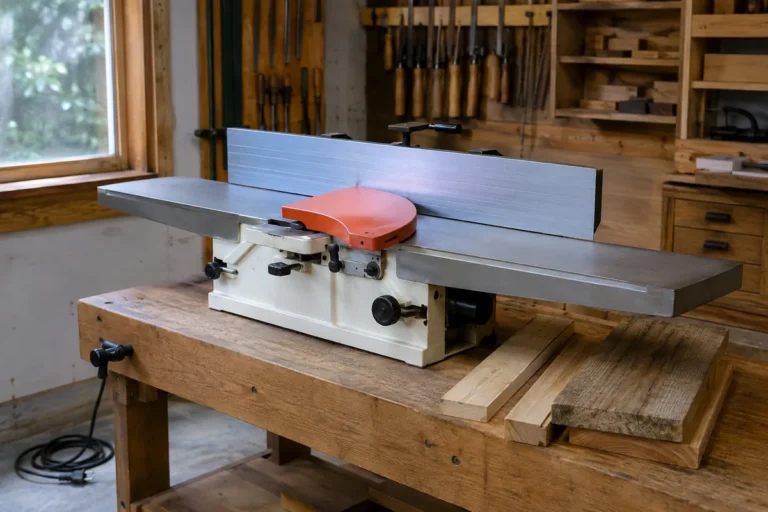
Before using the planer, flatten one face of every board. A thickness planer makes the opposite face parallel to the face riding on the bed; it does not reliably flatten a cupped or twisted board. Use a jointer first, or use a router sled or planer sled for boards that are too wide for your jointer.
Mark the reference face with a pencil. Run each board through with that face down, taking a light pass. The pencil marks show whether the cutter is removing material evenly. Continue until the marks disappear across the face. Then flip the board and plane from the opposite side until all boards reach the same target thickness.
Do not measure only one board. Use calipers or a reliable thickness gauge at both ends and near the center. For cabinet parts, a difference of 0.005 to 0.010 inch can usually be corrected during assembly or sanding. For visible matched edges, aim closer to 0.003 to 0.005 inch. Mark each board with its current thickness so you do not accidentally remove too much from one piece.
When matching boards, plane every piece in sequence rather than taking one board all the way to size before starting the next. Set the machine for a light cut, run all boards once, and repeat. This keeps small setting or feed differences from producing different final dimensions.
Avoiding Snipe and Tear-Out
Snipe is a shallow dip at the first or last several inches of a board. It occurs when the board lifts or drops as it engages the rollers. Support long stock at the same height as the planer table, and keep the board level as it enters and exits. If your planer allows it, slightly raise the free ends of the infeed and outfeed tables. Test this adjustment with scrap rather than forcing the tables upward.
Adding sacrificial lead and trailing boards can protect valuable pieces. Keep the workpieces moving in the same direction and feed the next board before the previous board fully exits when the machine design permits it. Never push a board backward through the cutterhead.
Tear-out is most likely with figured grain, reversing grain, and overly deep cuts. Reduce the cut to 1/64 inch, slow the feed if available, and orient the board so the grain slopes downward toward the cutterhead. A helical cutterhead can help, but it cannot eliminate tear-out on badly figured stock.
Dust Collection and Maintenance
Planers produce a large volume of chips quickly. A shop vacuum may handle short sessions with a small benchtop machine, but a dust collector with a 4-inch hose is a better choice for repeated work. Without collection, chips can clog the hood, restrict airflow, and leave debris under the rollers.
Wax the planer bed periodically so boards slide smoothly, but keep wax away from surfaces that will later be glued unless the product is known to be compatible. Clean resin from rollers, inspect knives or carbide inserts, and check that the cutterhead and bed remain parallel. Dull cutters increase motor strain and make matched boards less consistent.
Which Planer Makes Sense?
Buy a benchtop planer with a helical cutterhead if you work mainly with hardwood, want less tear-out, and can accept the higher price. A straight-knife machine is fine for pine, construction lumber, and occasional projects—especially if you are willing to sharpen or replace knives.
Choose a 15-inch stationary woodworking planer when you regularly process boards wider than 12 inches, need better feed stability, or dimension stock every week. Otherwise, the money is often better spent on a jointer, dust collector, and accurate measuring tools. For matching multiple boards, careful preparation and repeatable technique matter at least as much as the planer’s maximum capacity.