
Key takeaways
- Compare five dozuki saws for dovetails, tenons and fine crosscuts, with blade length, tooth pitch and kerf specs for each Japanese pull saw pick.
What's inside
As an Amazon Associate I earn from qualifying purchases. This post may contain affiliate links at no extra cost to you.
- Top Pick: SUIZAN Dozuki 9.5 Inch Crosscut (D-001)
- Runner-up: Gyokucho Razorsaw 372 Dozuki (Rip)
- Also consider: SUIZAN Dozuki 8 Inch Crosscut Ultra Thin (D-002)
The best dozuki saw for most joinery work is a 240 mm crosscut model with a replaceable blade: the SUIZAN Dozuki 9.5 Inch Crosscut covers tenon shoulders, dovetail cheeks and fine crosscuts in one saw. If the work is mostly dovetails in hardwood, the rip-filed Gyokucho 372 tracks the grain better, and for the finest, thinnest kerf, the SUIZAN 8 Inch Ultra Thin cuts with a blade only 0.008 inch thick.
A dozuki is the spined member of the Japanese pull saw family. A folded steel back keeps its very thin blade straight under the pull stroke, so the cut stays on the line with almost no wandering. That stiffness is exactly what dovetails, tenons and small box joints demand, and it is why the dozuki, rather than a ryoba or kataba, is the saw to buy when joinery accuracy matters more than cutting depth.
As an Amazon Associate, we earn from qualifying purchases.
Contents
Table of Contents
- SUIZAN Dozuki 9.5 Inch Crosscut (D-001)
- Gyokucho Razorsaw 372 Dozuki (Rip)
- SUIZAN Dozuki 8 Inch Crosscut Ultra Thin (D-002)
- Z-Saw Dozuki Hardwood 150 (7105)
- Temple Tool Co. Dozuki 6 (D-150)
- How to Choose a Dozuki Saw
- FAQ
- Conclusion
- Product and ASIN Reference
SUIZAN Dozuki 9.5 Inch Crosscut (D-001)
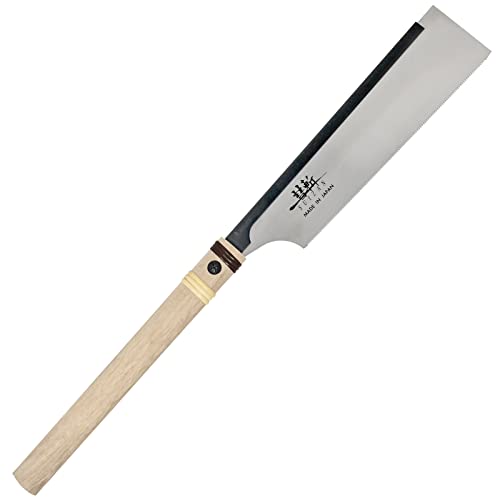
The SUIZAN D-001 is the straightforward first dozuki: a full-size 240 mm crosscut saw made in Japan from Japanese steel, with fine impulse-hardened teeth and a replaceable blade. Crosscut teeth sever wood fibers cleanly across the grain, which is the direction of most joinery cuts a dozuki makes: tenon shoulders, dovetail baselines trimmed across the grain, and precise crosscuts on small parts for boxes and frames.
The blade plate is 0.012 inch thick, thin enough to leave a narrow kerf that wastes little wood and needs little effort on the pull stroke, while the steel spine holds it straight so the cut follows a knife line. The handle is wood wrapped in rattan, the traditional grip on Japanese saws, and it balances the long blade well for horizontal bench work. When the teeth eventually dull, the blade swaps out rather than going to a file, since impulse-hardened teeth are not meant to be resharpened at home.
This is a mid-range saw and the most versatile pick here. Choose it as the only dozuki in the shop, or as the crosscut partner to a rip-filed saw. It is less suited to ripping dovetail cheeks along the grain, where a rip pattern clears waste faster, and the spine caps cutting depth at the height of the blade.
Specs:
- Blade length: 240 mm (9.5 in)
- Tooth pattern: fine crosscut, impulse-hardened
- Blade thickness: 0.012 in (0.3 mm)
- Model: D-001
- Blade: replaceable
- Handle: wood with rattan wrap
- Origin: made in Japan
Gyokucho Razorsaw 372 Dozuki (Rip)

Most dozuki saws are filed crosscut, but dovetails are rip cuts: the saw runs along the grain down the cheek of each tail and pin. The Gyokucho 372 is filed for exactly that work. Its 19 TPI rip teeth are shaped to slice along the grain, so it starts easily on end grain and tracks straight down a marked line in hardwoods such as oak, maple and walnut. Published reviews of this model note a glass-smooth cut face even in very hard stock.
The blade is 9-7/16 inches long with a kerf of just 0.018 inch, and its cutting depth tapers from 1-3/4 inches at the heel to 2-1/4 inches at the toe, deeper than most dozuki spines allow. That extra depth makes the 372 useful for tenon cheeks and small resawing tasks as well as dovetails. The teeth are impulse-hardened for long life, the blade is removable and replaceable, and the wooden handle carries the traditional rattan cane wrapping. At 8-1/4 ounces it is light enough for controlled, one-handed joinery strokes.
Pick the 372 if dovetails are the main job and a mid-range budget is the target. Pair it with a crosscut dozuki for shoulders, or accept slower crosscutting when it is the only saw on the bench.
Specs:
- Blade length: 240 mm (9-7/16 in)
- Teeth: 19 TPI, rip pattern, impulse-hardened
- Kerf: 0.018 in
- Cutting depth: 1-3/4 in at heel to 2-1/4 in at toe
- Overall length: 23-7/8 in
- Weight: 8-1/4 oz
- Handle: wood with rattan cane wrap
- Blade: replaceable
- Model: 372
SUIZAN Dozuki 8 Inch Crosscut Ultra Thin (D-002)

The D-002 is the fine-work specialist of the SUIZAN line. Its blade is 0.008 inch thick, which the maker describes as the thinnest dozuki blade it offers, and it carries 30 TPI crosscut teeth, the finest tooth count on this list. A thinner plate and finer teeth remove less wood per stroke and leave a narrower kerf and a cleaner surface, which matters on small-scale joinery: instrument work, model making, kumiko-style lattice, fine boxes and delicate trim in figured stock.
The trade-off for that fineness is speed and forgiveness. Thirty teeth per inch move slowly through thick hardwood, and a 0.008 inch plate is easier to kink if the saw is twisted or forced, so this is a saw for patient, light strokes on the pull. The 210 mm blade is a middle length that suits bench work on small parts better than wide boards. Like the other SUIZAN saws here, it is made in Japan with a replaceable blade, so a damaged or dull blade is a swap, not a write-off.
Choose the D-002 when the work is small and the finish off the saw matters most. It sits in the mid-range tier and works best as a second dozuki alongside a faster, coarser one.
Specs:
- Blade length: 210 mm (8 in)
- Teeth: 30 TPI crosscut
- Blade thickness: 0.008 in (0.2 mm)
- Model: D-002
- Blade: replaceable
- Origin: made in Japan
Z-Saw Dozuki Hardwood 150 (7105)

Z-Saw, made by Okada Hardware in Miki, Japan, tunes this compact dozuki for hardwood. The 150 mm blade is high-carbon steel 0.3 mm thick, and the tooth pattern is ground for dense species such as maple, mahogany and walnut, where a general-purpose fine tooth can skate or dull quickly. In the maker’s line, the hardwood pattern runs coarser than the softwood version, trading a little surface polish for a bite that keeps cutting in hard stock.
The short blade is the point. Six inches of cutting edge gives close control on small joints, dovetails in drawer parts, tenons on chair and stool components, and trim cuts where a 240 mm blade feels clumsy. The spine keeps the thin plate straight, and the blade is replaceable, as Japanese blades with hardened teeth are not resharpened. Depth of cut is limited by the compact blade height, so this is a joinery saw for small work, not a board-processing tool.
The Z-Saw 150 is the budget-friendly way into a hardwood-tuned dozuki and a good first Japanese saw for a small shop. Woodworkers who mostly cut pine and other softwoods should look at a finer crosscut model instead.
Specs:
- Blade length: 150 mm (6 in)
- Blade material: high-carbon steel, 0.3 mm thick
- Tooth pattern: hardwood, fine teeth tuned for dense species
- Model: 7105
- Blade: replaceable
- Origin: made in Japan
Temple Tool Co. Dozuki 6 (D-150)
Temple Tool Co. sells Japanese-made saws built for the North American market, and its Dozuki 6 is a compact all-rounder. The 6-inch blade uses universal teeth filed to handle both rip cuts and crosscuts, so one small saw covers dovetail cheeks, tenon shoulders and fine crosscuts without swapping tools. Published specifications put the tooth count at 25 TPI, fine enough for clean joinery faces on small parts.
The blade is Japanese steel on a traditional wooden handle, and the saw is made in Japan. At this size the Dozuki 6 suits box making, drawer joinery, picture frames and model work, and it travels well in a tool roll for site trim work. The spine limits depth in the usual dozuki way, and the short stroke means wide boards take many passes, so it complements rather than replaces a full-size saw.
This is the premium pick among the compact saws here, aimed at buyers who want one small dozuki that does a bit of everything. If the work is mostly ripping dovetails in thick hardwood, the Gyokucho 372 above is the more specialized tool.
Specs:
- Blade length: 150 mm (6 in)
- Teeth: 25 TPI universal, for rip and crosscut work
- Blade material: Japanese steel
- Model: D-150
- Handle: wood
- Origin: made in Japan
How to Choose a Dozuki Saw
Start with the tooth pattern, because it decides what the saw does well. Crosscut teeth, on the SUIZAN models, sever fibers across the grain and leave the cleanest shoulders and baselines. Rip teeth, on the Gyokucho 372, slice along the grain and are the right choice for dovetail cheeks and tenon cheeks. Universal teeth, on the Temple Tool Dozuki 6, compromise between the two for a one-saw kit.
Next, match blade length to the work. A 240 mm blade takes long, smooth strokes and covers wide dovetails and tenon work in furniture parts. A 150 mm blade gives up stroke length for control on small joints and in tight spaces. The 210 mm D-002 splits the difference for small-scale bench work.
Then weigh tooth count and plate thickness together. Fine teeth, 25 to 30 TPI, and thin plates leave the narrowest kerf and the cleanest surface, but cut slowly and kink more easily if twisted. Coarser teeth near 19 to 21 TPI cut faster and tolerate harder use. Finally, remember the spine: it guarantees a straight cut but limits depth to roughly the height of the blade, so check that the depth figure covers the thickest stock in the plan. Every saw here has a replaceable blade, which is the practical answer to dull teeth on impulse-hardened Japanese steel.
FAQ
What is a dozuki saw used for?
A dozuki is a joinery saw. Its spined, thin blade and fine teeth are made for dovetails, tenon shoulders and cheeks, small box joints, and precise crosscuts on small parts. It is not a general carpentry saw: the spine limits cutting depth, and the fine teeth are slow in thick or wide stock, where a ryoba or kataba is the better tool.
Should I choose a rip or crosscut dozuki for dovetails?
Dovetails use both cuts. The cheeks of tails and pins are rip cuts along the grain, so a rip-filed saw such as the Gyokucho 372 tracks them most easily. The baselines and waste removal involve crosscut work, where a crosscut dozuki leaves a cleaner line. A single crosscut saw can do the whole joint with care, and a universal-tooth saw is the one-tool compromise.
Can dozuki blades be sharpened?
In practice, no. The saws listed here use impulse-hardened teeth, which are far harder than a saw file is designed to cut, and the tooth geometry is too fine for home sharpening. The blades are replaceable instead: when a blade dulls or loses teeth, it unclips or unscrews from the handle and a fresh blade goes on, restoring the saw in minutes.
How deep can a dozuki saw cut?
Depth is set by the height of the blade under its spine. Compact 150 mm models cut roughly an inch and a half deep, while full-size 240 mm saws reach around two inches; the Gyokucho 372 is rated from 1-3/4 inches at the heel to 2-1/4 inches at the toe. Stock thicker than that needs a spine-free saw such as a ryoba or kataba.
Conclusion
For one dozuki that handles most joinery, the SUIZAN D-001 crosscut is the pick: full-size, fine-toothed and mid-range. Dovetail specialists should choose the rip-filed Gyokucho 372, fine-detail workers the ultra-thin SUIZAN D-002, hardwood workers on a budget the compact Z-Saw 150, and anyone wanting one small do-everything saw the Temple Tool Dozuki 6. Match the tooth pattern to the cut first, and any of the five will leave clean, straight joinery.
Related guides
More from Amazon
Programs that pair well with the guide above. Offers and eligibility are set by Amazon and may change.
A free business account with business pricing and bulk-buying tools for work, shop or home office.
Create a business accountFree shipping on eligible items, Prime Video and more. Eligible new members can start with a free trial.
Start a Prime free trialAudiobooks and podcasts to listen to on the go. Eligible new members can start with a free trial.
Try Audible freeAd-free music streaming. Eligible new subscribers can start with a free trial.
Try Music Unlimited freeAs an Amazon Associate we earn from qualifying purchases.



Write Your Review
No reviews yet. Be the first to share your experience!