Best Band Saws with Quick-Release Blade Tension Systems
What's inside
As an Amazon Associate I earn from qualifying purchases. This post may contain affiliate links at no extra cost to you.
Contents
What a quick-release blade tension system actually does
A quick-release lever lets you reduce blade tension without winding the tension knob down and back up every time you finish a cut. On a woodworking band saw, that matters most when the saw sits unused between sessions: leaving a narrow blade tensioned for days can fatigue the blade and put unnecessary load on the tires and frame. Release the tension when you’re done, then retension and check tracking before the next cut.
Quick release is a convenience, not a substitute for setting tension correctly. The scale on a saw may be approximate, especially if you use blades narrower or wider than the manufacturer’s standard. A blade that is too loose can wander or slip off the tires; one that is too tight can break prematurely or strain the saw. Set tension for the blade width and cut, then verify tracking and make a test cut in scrap.
As an Amazon Associate we earn from qualifying purchases at no extra cost to you.
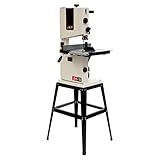
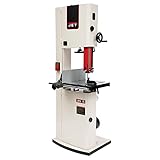
How to choose a saw with quick release
Start with capacity and the work you actually do. A 14-inch saw is a common choice for a home shop, but throat capacity—the distance from the blade to the column—doesn’t tell you the maximum resaw height. Check both the listed cutting height and whether a riser block is included. For resawing boards, frame stiffness, motor power, blade guides, and fence quality matter at least as much as the tension lever.
Look for a release mechanism that is easy to reach with the doors closed or safely open, and that returns to a repeatable tension setting. Some systems use a lever to unload the spring; others use a cam or a separate release position. Read the manual before operating it, since the correct sequence varies. Never engage a release while the blade is running, and keep fingers clear of the blade when opening the cabinet.
Blade availability is another practical factor. A saw that accepts common blade lengths gives you more choice in tooth count and width. Narrow blades turn tighter curves; wider blades are generally better for straight resaw cuts. Quick release saves time between jobs, but it won’t make a poorly matched blade cut straight.
Quick-release band saw choices by shop need
| Choice | Best fit | Trade-off to check |
|---|---|---|
| 14-inch stationary saw with a release lever | General-purpose home woodworking, curves, and moderate resawing | Compare cutting height, frame rigidity, and included fence; features vary by configuration |
| Large-frame saw with quick tension release | Frequent resawing of wide or thick stock | Higher cost, larger footprint, and a greater need for a suitable blade and dust collection |
| Basic saw with manual tension knob | Occasional cutting and shops where the blade stays installed | More winding between uses, but often the sensible budget choice |
If you’re comparing current configurations, search for 14-inch band saws with quick-release tension and confirm the release is included on the exact version being sold. Product names and included accessories can change, and a listing photo alone may not show the tension system.
When quick release is worth paying for
It’s useful if you regularly switch between blades, use the saw intermittently, or want a clear routine for unloading the blade after work. It is less compelling if the saw runs every day with one blade installed and you rarely leave it parked for long. In that case, a manual tension knob is a small inconvenience, and money may be better spent on a better fence, a mobile base, or a quality blade.
Don’t buy a heavier saw solely because it has a release lever. A stiff frame and adequate resaw capacity are harder to add later. If your main job is cutting curves in stock under 2 inches thick, a smaller, less expensive saw may do the job well. If you expect to resaw lumber near the machine’s maximum capacity, prioritize the saw’s real cutting height and support, not just its advertised horsepower.
Set tension, tracking, and guides in order
Install the blade with the teeth pointing down toward the table on the front run. With the saw unplugged, tension it according to the manual, then adjust tracking so the blade sits where the manufacturer specifies on the tire. Rotate the wheel by hand to check that it stays in position. Set the side and thrust guides close to the blade—often about the thickness of a sheet of paper away, though the manual takes precedence—and make sure they do not rub while the blade is idle.
For a straight resaw cut, use a sharp blade with a width the saw can tension properly. A blade that is too wide for the saw may not track or tension as intended; an overly narrow blade can deflect under a long cut. Feed steadily without forcing the stock. If the cut drifts, stop and diagnose it rather than pushing harder: common causes include a dull blade, incorrect tracking, poor tension, misaligned guides, or feeding faster than the blade can clear sawdust.
When finishing, switch off and wait for the blade to stop. Follow the manual’s procedure to release tension, and note the tension setting or number of turns needed to return to your working setup. Before cutting again, retension the blade, recheck tracking and guides, and make a test cut. A quick-release system makes that routine easier; skipping the checks is how a convenient feature turns into a crooked cut or a derailed blade.
A practical buying shortlist
For general shop use, compare stationary woodworking band saws with quick-release tension by capacity, frame, guide adjustment, and service support. If resawing is the priority, look at large-capacity woodworking band saws and verify the maximum cutting height and compatible blade widths in the manual.
For a budget shop or occasional use, a sound saw with a manual knob is perfectly reasonable. Spend extra for quick release when you’ll use it often, not because the feature promises better cuts. The right saw is the one that fits your stock, accepts blades you can readily buy, and can be set up accurately and safely.
