Best Table Saws for Precision Dados in Solid Hardwood
What's inside
As an Amazon Associate I earn from qualifying purchases. This post may contain affiliate links at no extra cost to you.
Contents
What precision dados demand
A dado in solid hardwood has to be wide enough for its mating part without leaving a sloppy fit, and its bottom should be flat and square to the face. That depends on more than the saw: blade setup, fence stability, stock thickness, and the way you make each pass all matter. A good table saw makes those variables easier to control, but a larger motor alone does not guarantee a better joint.
For cabinet parts and furniture components, a dado width around 1/4 to 3/4 inch is common. Make a test cut in scrap from the same board, then adjust the width in small increments. Hardwood thickness varies, and even boards sold as the same nominal size can differ enough to make a snug joint bind.
What to look for in a table saw
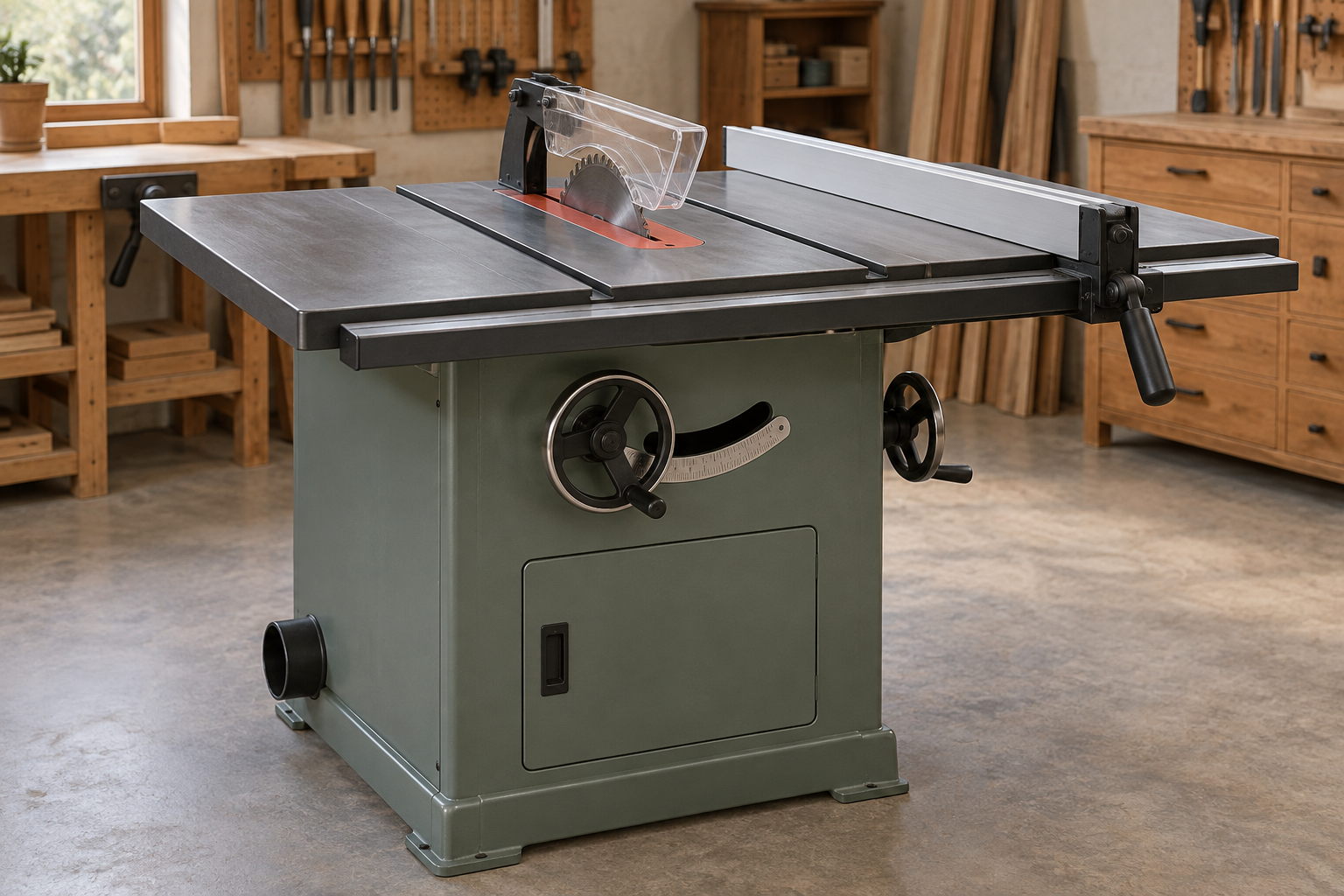
Prioritize a rigid arbor, a fence that locks parallel to the blade, a flat table, and enough arbor length and power for the dado setup you plan to use. A cabinet saw typically offers the most mass and stability; a good hybrid saw can be a sensible shop choice at lower cost. Contractor and jobsite saws can cut dados, but their lighter frames and shorter arbors may limit stack width or make repeatable setup less convenient. Check the saw manual before buying: some models prohibit dado sets, and permitted stack widths vary.
A 10-inch saw with a 1.5- to 3-horsepower motor is a practical range for many stationary-shop users. A 1.5-horsepower machine can do the work with sharp cutters and sensible feed rates. More power helps when cutting wider dados in dense hardwood, but pushing stock too fast can still burn the cut or overload the setup.
Saw types compared
| Saw type | Best fit | Dado trade-off |
|---|---|---|
| Cabinet saw | Frequent, repeatable furniture work | Heavy and costly, but usually the most stable platform and strongest motor options. |
| Hybrid saw | Serious hobby shops with limited space or budget | Often a strong balance of rigidity and price; verify arbor length and dado approval. |
| Contractor saw | Occasional dados and general shop use | Can work well when accurately tuned, though vibration and setup limits vary by model. |
| Jobsite saw | Portability is essential | Usually the least convenient choice for wide stacked dados; check the manual and arbor capacity closely. |
If dados are a regular part of your work, compare hybrid stationary table saws with cabinet saws, not just portable saws. A less expensive saw is fine for occasional narrow grooves, provided the manufacturer allows the cutter and the fence holds position under repeated use.
Dado set and saw compatibility
Most stacked dado sets use two outer blades and removable chippers to build the desired width. They can produce a flat-bottom cut, but only when assembled according to the cutter maker’s instructions. A wobble dado blade is another option, but its bottom profile is angled rather than flat, so it is generally a poor match when the joint needs a clean, level floor.
Before purchasing a saw or dado set, confirm the saw’s maximum dado width, arbor length, flange requirements, and throat-plate arrangement. A set marked 8 inches in diameter may still be unsuitable if the arbor cannot safely hold its stack. Do not remove a flange, washer, or guard component unless the saw manual explicitly permits that configuration. Use a correctly fitting dado throat plate and follow local safety rules and the saw maker’s instructions.
For a shop that already owns a compatible saw, a quality 8-inch stacked dado set can be more important to the finished cut than moving up one saw tier. Keep the cutters clean and sharp; pitch buildup and chipped edges can leave a ragged shoulder or a dark, burned bottom.
Setup for accurate cuts
Unplug the saw while installing or adjusting the cutter. Check that the arbor, flange faces, and dado components are clean, then tighten the nut as specified in the manual. Confirm the fence is parallel to the blade and locks without shifting. A fence that toes in can pinch the work; one that moves under pressure can produce inconsistent widths.
Set the cut depth to leave enough material for the joint without unnecessarily weakening the panel. For a dado receiving a shelf, a depth near one-third of the panel thickness is a useful starting point, not a rule for every design. Make the first test cut in offcut material. The mating piece should seat with firm hand pressure; if it needs hammering, the fit is too tight and may split the hardwood as humidity changes.
Use a push block or other suitable hold-down and keep hands out of the cutter path. Never freehand a dado against the blade. For repeated parts, use a stop or a reliably indexed fence setup, and check the first workpiece before cutting the whole batch. A wide cut can require multiple passes if the saw or cutter is straining, but overlapping passes may leave ridges unless the setup controls spacing precisely.
When a different method makes sense
If the saw’s manual prohibits dado cutters, or the arbor cannot support the stack safely, do not improvise. A router with a straightedge or a router table can cut accurate grooves, particularly for occasional work. It takes more setup and may need several passes in dense hardwood, but it avoids buying a larger saw solely for dados.
For frequent wide dados in solid hardwood, a rigid hybrid or cabinet saw with a manufacturer-approved dado configuration is the dependable buy. For a few narrow grooves each year, a properly tuned saw you already own—or a router—may be the more sensible investment. Choose based on verified compatibility and repeatable setup, not horsepower figures alone.