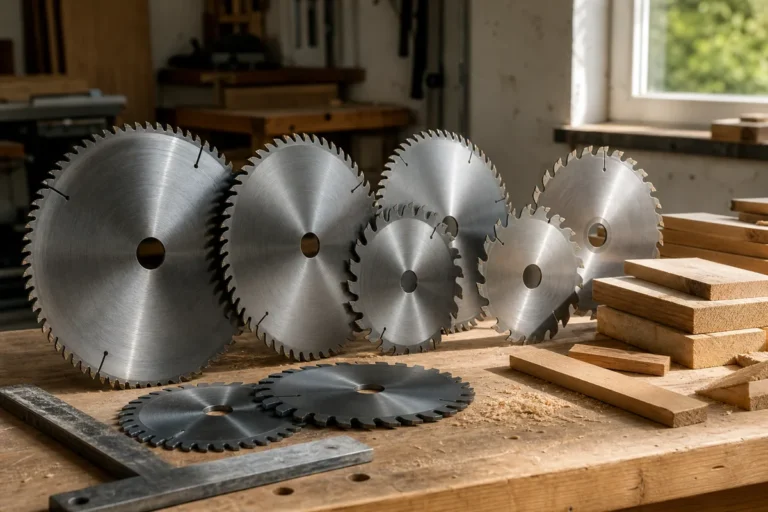
Best Drill Presses with High-Speed Ranges for Small Bits
What's inside
As an Amazon Associate I earn from qualifying purchases. This post may contain affiliate links at no extra cost to you.
Contents
Why high speed matters for small bits
A drill press’s top speed matters most when you use small bits in wood, plastic, or thin sheet metal. A small bit cuts best when it moves fast enough to keep its edges working smoothly. Run it too slowly and it may rub, snag, or leave a ragged hole; push it too hard and the bit can wander or break. Small bits are easy to snap, so a stable table and sensible feed pressure matter as much as the number printed on the speed chart.
For woodworking, a press that reaches roughly 3,000 to 4,000 rpm is useful for bits around 1/16 to 1/8 inch. Many general-purpose floor and benchtop presses top out near 3,000 rpm; some compact models reach 4,000 rpm or more. That extra speed is helpful, not mandatory. If most of your holes are made with bits 1/4 inch and larger, a lower top speed is rarely a reason to replace a sound machine.
As an Amazon Associate we earn from qualifying purchases at no extra cost to you.


What to look for before buying
Check the full speed range, not just the maximum. A press with a 4,000-rpm top end may have a lowest setting around 500 rpm, which is less suitable for large Forstner bits than a machine that drops below 300 rpm. A wide range covers more work, but the steps between settings matter too: belt-and-pulley presses can have large gaps, while electronic variable-speed controls allow finer adjustment. Electronic speed control costs more and may not hold its selected speed as well under heavy load.
Look at the chuck’s minimum capacity. Many standard chucks grip bits from 1/16 inch upward, but some larger chucks start at 1/8 inch, leaving very small drill bits unsupported. Runout—the amount the bit wobbles as it spins—is another concern. Excessive runout enlarges tiny holes and increases the chance of breaking a bit. If precision matters, check the manufacturer’s specifications or test the machine with a straight rod and a dial indicator before relying on it for delicate work.
For a bench model, measure the distance from the column to the spindle center and the travel of the quill. A 10-inch swing gives about 5 inches between the column and spindle center. Short quill travel can require repositioning the work for deep holes. A floor press offers more throat depth and often more quill travel, but takes up more space and usually costs more.
High-speed drill press options compared
| Type | Typical top speed | Best fit | Main trade-off |
|---|---|---|---|
| Compact benchtop, belt-driven | About 3,000–4,000 rpm | Small bits, hobby woodworking, limited shop space | Speed changes require moving the belt; modest capacity |
| General-purpose benchtop | About 2,500–3,000 rpm | Mixed drilling in wood and light metal | Smallest bits may run slower than ideal |
| Floor-standing press | About 2,500–3,000 rpm | Larger workpieces and deeper holes | Takes more floor space; often unnecessary for small-bit work |
| Electronic variable-speed press | Varies by machine, sometimes above 3,000 rpm | Frequent speed changes and mixed materials | Higher price; check low-speed torque and speed stability |
Specifications vary by model, so confirm the actual speed chart and chuck range before ordering. For a small shop focused on fine woodworking, browse high-speed benchtop drill presses and compare maximum rpm, minimum chuck capacity, and table size rather than choosing on speed alone.
Match the machine to your workload
If you drill occasional pilot holes or hardware holes with 1/8-inch and larger bits, a conventional benchtop press is usually enough. Paying extra for a 4,000-rpm rating may not improve your work noticeably. Spend the difference on a vise, a better chuck, or sharp bits if those are the weak links in your setup.
If you routinely drill holes with bits smaller than 1/8 inch, a compact high-speed model is a better fit. Its small footprint also suits a bench where a floor press would be awkward. The trade-off is reach: a small table and short throat can make it hard to position a wide panel. For frequent work on cabinet doors or broad boards, check swing and table dimensions before buying. A floor press is worth considering for larger stock, but its extra capacity does not automatically mean better small-hole accuracy.
Electronic variable speed makes sense when you switch often between tiny bits and large cutters and want to avoid moving belts. For a fixed set of woodworking tasks, a belt-driven press is generally cheaper and straightforward to maintain. Compare variable-speed drill presses for woodworking with belt-driven options, and read the manual for the rated speed range under load. A high unloaded top speed is less useful if the machine bogs down during ordinary drilling.
Using small bits without breaking them
Clamp the workpiece rather than holding it by hand. A small bit can catch as it breaks through, spinning the stock and pulling your fingers toward the chuck. Use a drill-press vise or clamps, especially with narrow pieces and metal. For wood, put scrap beneath the work to reduce tear-out. For thin sheet metal, back it with a sacrificial board and use a center punch so the bit does not skate.
Set speed according to both bit diameter and material. Higher rpm generally suits smaller bits, but a single top-speed setting is not right for every material. Start with the press maker’s chart, then make a test hole in scrap. Feed lightly; if the bit squeals, smokes, or stops cutting cleanly, ease off and check that it is sharp and aligned. A small bit that bends or snaps under side pressure may also be exposed too far from the chuck. Seat it securely while leaving enough length for the hole, and avoid levering the handle sideways.
For repeated tiny holes, use a center mark and bring the bit down slowly. If a press has visible spindle wobble, a precision chuck will not fix the underlying problem. In that case, return the machine if possible or reserve it for rougher work. A reliable conventional press with a true spindle is a better buy than a faster machine whose bit wanders.