Best 7 1 4 Circular Saw
Key takeaways
- A criteria-led look at the best 7 1 4 circular saw, judged on shoe flatness, bevel stops, guard action, vibration and dust extraction rather than spec-sheet rpm.
What's inside
As an Amazon Associate I earn from qualifying purchases. This post may contain affiliate links at no extra cost to you.
Every 7-1/4 inch circular saw on the shelf advertises the same numbers: about 5,500 rpm, a hair over 2-1/2 inches of cut at 90 degrees, and roughly 1-7/8 inches at 45. Those figures come from the blade diameter, not from engineering, so they tell you almost nothing. Choosing the best 7 1 4 circular saw comes down to what nobody prints on the carton: how flat and stiff the shoe is, whether the bevel and depth stops hold a setting, how the lower guard behaves at the start of a thin rip, and how much the tool buzzes after twenty cuts.
We treat a circular saw the way we treat a jointer, as a machine built around reference surfaces. Here those references are the shoe and the blade; the rest is a motor with a handle attached. So we judge on mechanics and name tool families rather than pretending we ran identical cut-offs across a dozen samples, and we tell you what to check with your own square in the first five minutes of ownership.
As an Amazon Associate we earn from qualifying purchases at no extra cost to you. Product prices and availability are accurate as of the date shown and are subject to change.


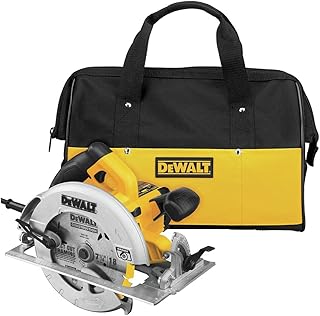


| Saw Type | Best For | What Usually Gives Out First |
|---|---|---|
| Corded sidewinder | Framing, remodels, a first saw | Thin stamped shoe flexes at full depth |
| Corded worm drive | Wet lumber, long rips | Weight, oil service, limited bevel range |
| Brushless cordless (DeWalt XR, Milwaukee FUEL, Makita LXT) | Site work, breaking down sheet goods | Runtime and heat under sustained load |
| Blade-left sidewinder with magnesium base | Sightline and panel work | Guard clearance on bevels, higher price |
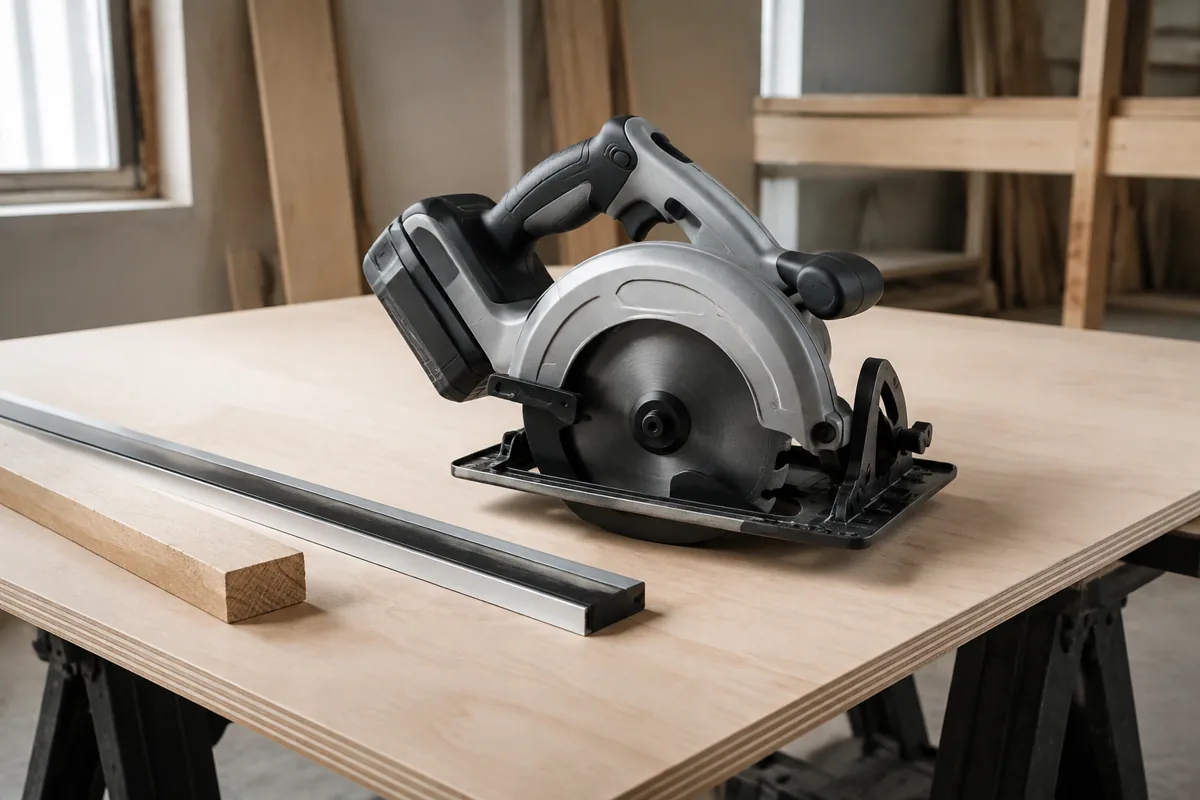
How We Judge the Best 7 1 4 Circular Saw
Shoe flatness and stiffness
Lay a straightedge across the base in both directions. A cast or extruded magnesium shoe usually sits flat; a thin stamped shoe often shows a crown near the arbor and a heel that lifts. Flatness barely matters in framing lumber and matters enormously in plywood, where a rocking base turns a straight line into a shallow S. Stiffness shows at full depth: press the toe and watch the blade-to-shoe relationship. If it visibly changes, that saw will never cut square through 2x stock with any consistency.
The 90 and 45 degree stops
Set 90 degrees with a small engineer’s square against the blade body, not the teeth, and ignore the printed scale until you have confirmed it. Better bevel mechanisms clamp a broad casting at two points; weaker ones pivot on one bolt and creep under vibration. Detents at 22.5 and 45 degrees are a convenience, not a guarantee, so verify them once and mark where the saw actually lands.
Guard action and sightline
Retract the lower guard slowly, then release it. It should snap home without scraping. A sticky guard is the most common reason a saw grabs at the start of a narrow rip, and on its own it is reason enough to leave a tool in the store. Sightline is separate. Blade-left saws put the line in plain view for a right-handed user but bring the blade closer to the body; blade-right saws hide the line behind the motor. Neither is wrong, but switching back and forth is a reliable way to wreck a cut.
Vibration and dust
Vibration is a useful proxy for build quality. Spin the saw off the cut and feel the handle: loose gearcases, sloppy arbors and out-of-round blades all announce themselves, and the same slop returns later as blade wander. Most saws in this class throw chips out an open chute, and only some accept a 1-1/4 or 1-1/2 inch hose. If you break down panels in a garage shop, a real dust port is not a luxury.
Brushless cordless 7-1/4 in. circular saw
If batteries in one of the big platforms are already in your shop, buy into it. Look for a magnesium shoe, an electric brake, a rafter hook and a bare-tool option, and budget for high-capacity packs, since a small battery is what makes a good cordless saw feel weak.
Corded, Cordless, or Worm Drive
Corded sidewinders are still the value play. Under a hundred dollars buys a competent framing saw, and the savings go into blades and a straightedge. The compromise is usually the base: stamped steel, fine for studs, unconvincing for cabinet-grade plywood. Move up one price tier and the shoe becomes magnesium and the depth lever gains a longer throw, without the motor changing much.
Brushless cordless saws in the DeWalt XR, Milwaukee FUEL and Makita LXT families have closed most of the gap for crosscuts and sheet breakdown. They have not closed it for sustained ripping in wet 2x stock, where a cord simply keeps going. Worm drives put the motor inline and the blade to the left, trading weight and occasional oil service for torque and a low, stable stance on long rips.
- ✔ No cord to drag through sawdust
- ✔ Electric brakes and brushless motors now standard
- ✔ One battery platform runs the whole kit
- ✘ Runtime falls off fast in wet lumber and long rips
- ✘ High-capacity packs add weight at the handle
- ✘ Bare tool plus battery and charger outruns a corded saw on price
Worm drive circular saw, 7-1/4 in.
Worth it if you rip framing lumber or long sheets regularly. The inline layout keeps your body behind the saw and the line in view, and the gear reduction shrugs off pressure-treated stock. Check bevel capacity and how easily you can reach the oil port before committing.
Blades, Depth and Dust: The Cheap Upgrades
A better blade improves a mediocre saw more than a better saw improves a mediocre blade. Keep a 24 tooth thin-kerf blade for framing and a 40 to 60 tooth blade for plywood and finish cuts. Thin kerf pays twice on cordless saws, because less waste means less current draw and more cuts per charge. For melamine, a negative hook angle plus a shallow scoring pass does more for the edge than careful feeding ever will.
Set depth so the gullets clear the work by about a quarter inch, no more. Extra exposed blade raises kickback risk, worsens tearout and heats the plate. Support the offcut, keep the wide side of the shoe on the supported side, and clamp a straightedge for anything that has to be truly straight. A modest saw on a guide will beat a premium saw used freehand every time.
Frequently Asked Questions
Can a 7-1/4 inch circular saw cut through a 4×4 in one pass? No. A nominal 4×4 is about 3-1/2 inches thick and this class of saw reaches roughly 2-1/2 inches at 90 degrees. Square a line around all four faces, cut from opposite sides, and expect a small step to clean up with a handsaw.
Is blade-left or blade-right better? For a right-handed user, blade-left shows the cut line and throws waste to the left, which is why worm drives are built that way. Blade-right keeps the blade further from the body and feels familiar to anyone who learned on a hardware store sidewinder. Choose one and stay with it.
Is a brushless motor worth the premium? On a cordless saw, yes: real runtime, less heat under load, and a brake that stops the blade in a second or two. On a corded saw the case is thinner, because the wall socket does not care about efficiency.
The Verdict
For most readers the best 7-1/4 inch circular saw is a brushless cordless model on the battery platform already in the shop, specified with a magnesium shoe, a positive depth lever and an electric brake. If the work is long rips in heavy or wet lumber, buy a worm drive and accept the weight. If the budget is fixed and low, choose the corded saw with the flattest, stiffest base on the shelf and spend the difference on two good blades and a clamped straightedge. Then check the shoe, the stops and the guard in the first week, while the saw can still go back.
Check prices on Amazon →