How to Joint Narrow Stock Without Losing Control
What's inside
As an Amazon Associate I earn from qualifying purchases. This post may contain affiliate links at no extra cost to you.
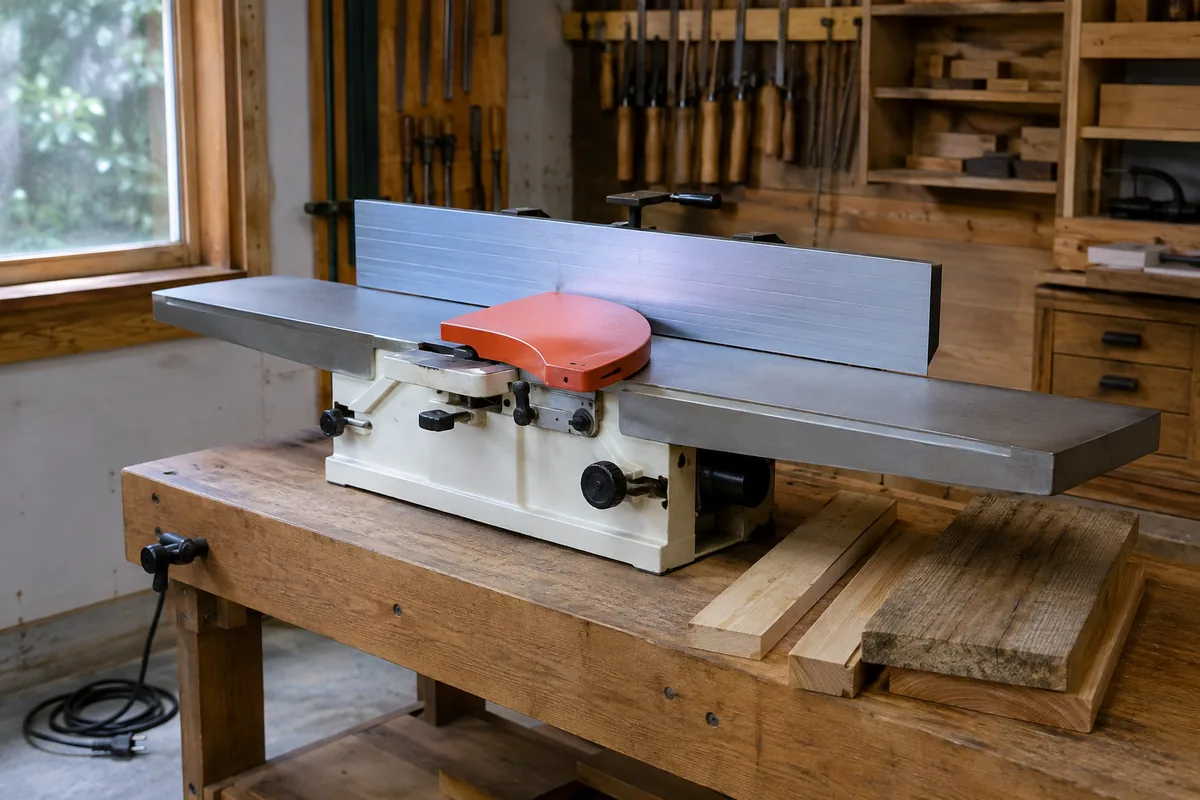
Jointing narrow stock is less about muscle than about controlling three things: the board’s position, the pressure you apply, and the order of cuts. A jointer can flatten a board’s edge, but its exposed cutterhead makes a short, narrow piece a poor candidate for casual feeding. If the stock is too small to hold securely with both hands clear of the cutter, use another method or make a wider blank first.
Contents
Know the machine’s limits
Check your jointer manual before jointing narrow material. The minimum workpiece length and width vary by machine; a common rule of thumb is to avoid pieces shorter than 12 inches or narrower than 3/4 inch unless the manufacturer approves a suitable holding method. These are not universal safe limits. Short stock can tip into the cutterhead, while narrow stock leaves little room for stable hand pressure.
Never joint end grain, and don’t try to flatten a board that rocks or has a severe bow by pressing harder. A jointer removes material from the underside; it does not hold a loose, unstable workpiece still. Inspect for nails, screws, loose knots, and other defects before switching on.
Prepare the stock before the cut
Mark the face and edge you want to reference, then check the board for twist and bow with winding sticks or a straightedge. If the piece is badly distorted, cut it closer to final length only after planning how it will be held. Leave enough extra length to maintain control and trim it later.
Set a light cut. For narrow stock, start around 1/32 inch; increase only if the machine, wood, and workpiece remain stable. A deep cut can grab, tear fibers, or make the board jump. Keep the guard in place, wear eye and hearing protection, and use dust collection. Do not wear gloves or loose clothing near rotating cutters.
Feed with steady, deliberate pressure
Stand to the side of the feed path, not directly behind the board. Place your hands on top of the stock, well clear of the cutterhead, and keep your fingers together rather than curled over an edge. Feed at a steady pace without forcing the board. Apply downward pressure over the infeed table at the start; as the board crosses the cutterhead, shift pressure to the outfeed table, where the newly cut surface can ride flat.
Use push blocks if they let you keep your hands farther from the cutter while maintaining control. A wide, flat push block can help on stock that is narrow but still long and stable. It is not a fix for a piece that is too short, too thin, or too awkward to hold securely. If the workpiece starts to chatter, lift, or veer, stop and reassess rather than trying to correct it over the cutterhead.
Choose a method that fits the stock
For long, narrow boards, a purpose-built jointer push block or a rigid carrier sled can improve control. A sled should support the stock along its length and keep it from shifting; simply sticking a short scrap to a board with a small piece of tape does not make an unstable setup safe. Check that the carrier clears the guard and cannot contact the cutterhead or fence.
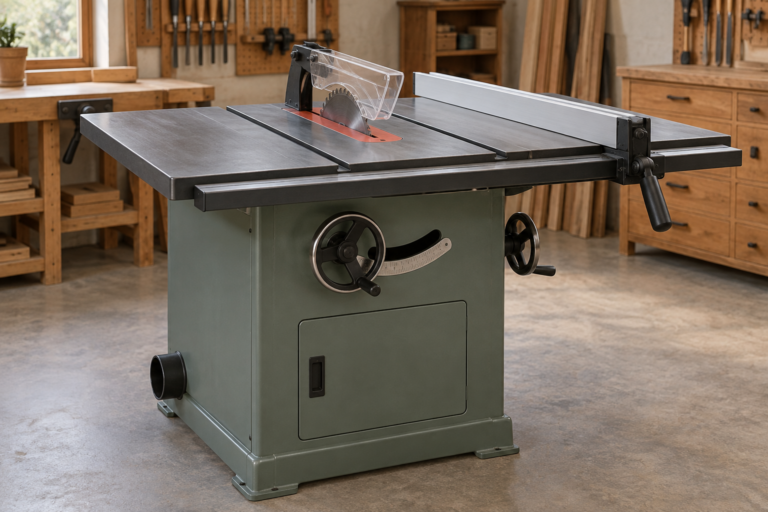
For very narrow strips, a table saw with a tall auxiliary fence, featherboards, and a suitable push stick may be a better way to establish a straight edge, provided the stock is long enough to control and the saw setup is appropriate. Another practical option is to glue or temporarily attach the narrow piece to a wider sacrificial carrier, then joint the carrier’s edge. Test the setup by moving it over the tables with the machine off.
If you regularly work with stock that is too narrow for your jointer, compare jointer push blocks and table saw featherboards against the cost and space of a different workflow. No accessory makes hand-feeding dangerously short stock acceptable.
Compare the practical options
| Method | Best fit | Trade-off |
|---|---|---|
| Jointer with push block | Long, narrow stock that remains stable on the tables | Fast and direct, but still requires enough length and safe hand clearance |
| Carrier sled or wider sacrificial piece | Stock too narrow to hold comfortably on its own | Improves support, but takes setup time and must be checked for secure attachment and clearance |
| Table saw and auxiliary fence | Long stock needing a straight reference edge | Useful for ripping, but requires proper saw guarding and controlled feeding |
| Hand plane or sanding block | Small quantities or pieces too short for a powered machine | Slower, but often safer and more controlled for small work |
When a different tool is the better buy
If the board is too short to bridge the jointer tables safely, don’t improvise a handhold. A sharp hand plane, guided by a straightedge, can be the cheaper and safer choice for a few pieces. A bench plane needs a secure workholding setup, but it gives you direct control over how much material comes off. For repeated work, a dedicated carrier or an appropriate machine accessory may save time; buy it only if it fits your stock dimensions and your machine’s guard arrangement.
A benchtop jointer is not automatically safer for narrow stock. Smaller tables can make it harder to support long pieces, and the same cutterhead hazards remain. If shopping for a benchtop jointer, compare table length, fence adjustment, cutter guard coverage, and the manufacturer’s stated minimum workpiece size—not just motor power or price.
Check the edge and stop at the right time
After each light pass, inspect the edge with a straightedge and check for twist. A clean, continuous shaving and a consistent edge are better signs than a large pile of chips. Stop once the reference edge is straight; repeated passes beyond that point only reduce the board’s width and may introduce taper if pressure shifts during feeding.
If the edge shows snipe, a hollow, or a taper, check table alignment, technique, and support before taking another cut. Don’t compensate by pressing down harder at the end of the pass. When the stock cannot be held flat and moved steadily with hands clear of the cutterhead, change the setup or use a hand tool.