Best Contractor Table Saws for a Dedicated Garage Workshop
What's inside
As an Amazon Associate I earn from qualifying purchases. This post may contain affiliate links at no extra cost to you.
Contents
What counts as a contractor table saw?
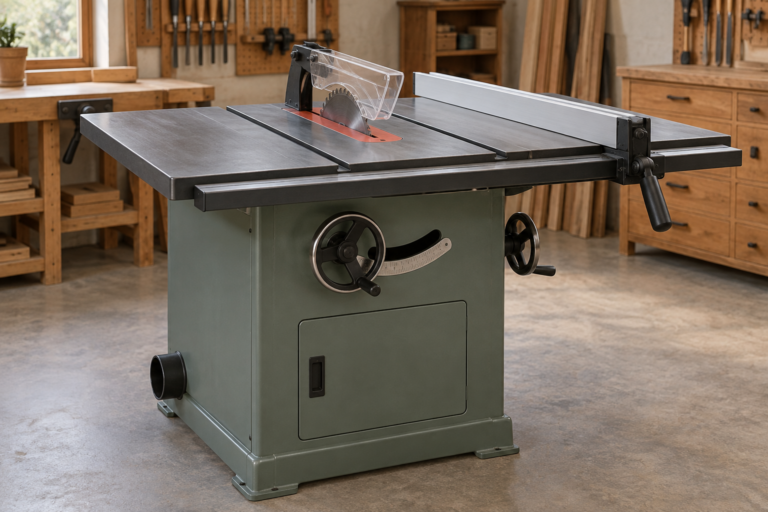
A contractor saw is a stationary table saw with a motor mounted behind the cabinet and a belt driving the arbor. That layout separates it from a benchtop saw, which is lighter and easier to move, and from a cabinet saw, which has a heavier enclosed base and usually a larger motor. Contractor saws are a useful middle ground for a dedicated garage shop: more stable and serviceable than most portable saws, without the weight, space, and price of a full cabinet machine.
For a typical small-shop workload—ripping sheet goods, breaking down lumber, and cutting joinery—a 10-inch blade and a rip capacity around 30 inches cover a lot. Check the actual fence capacity, not just the table’s overall width. A saw advertised with 30 inches of capacity may need an extension wing or outfeed support to handle wide panels safely.
Choose for your shop, not the brochure
Start with power and electrical service. Many contractor saws use a 120-volt motor, but the circuit matters: a saw drawing close to 15 amps can trip a shared garage circuit when a dust collector or shop vacuum starts at the same time. A dedicated 20-amp circuit is preferable where local code and the saw’s instructions allow it. Some machines can be configured for 240 volts; verify the motor and wiring requirements before buying.
Then measure the working footprint. The saw needs room for the workpiece to travel in front of and behind the blade, plus space to stand beside the fence. A long board that is unsupported can pivot, pinch the blade, or pull the operator off balance. Plan for an outfeed table or roller support, and make sure it does not obstruct access to the saw’s controls.
Look closely at the fence and blade guard. A fence that locks squarely at both ends is more useful than an extra inch of advertised capacity. A riving knife, anti-kickback pawls, and a blade guard help reduce exposure to common hazards; use the guard when the cut permits. A splitter that cannot be adjusted for the blade or removed without a frustrating setup is likely to get left off. That is a practical failure, not a minor convenience issue.
Contractor saw trade-offs
| Type | Best fit | Main trade-off |
|---|---|---|
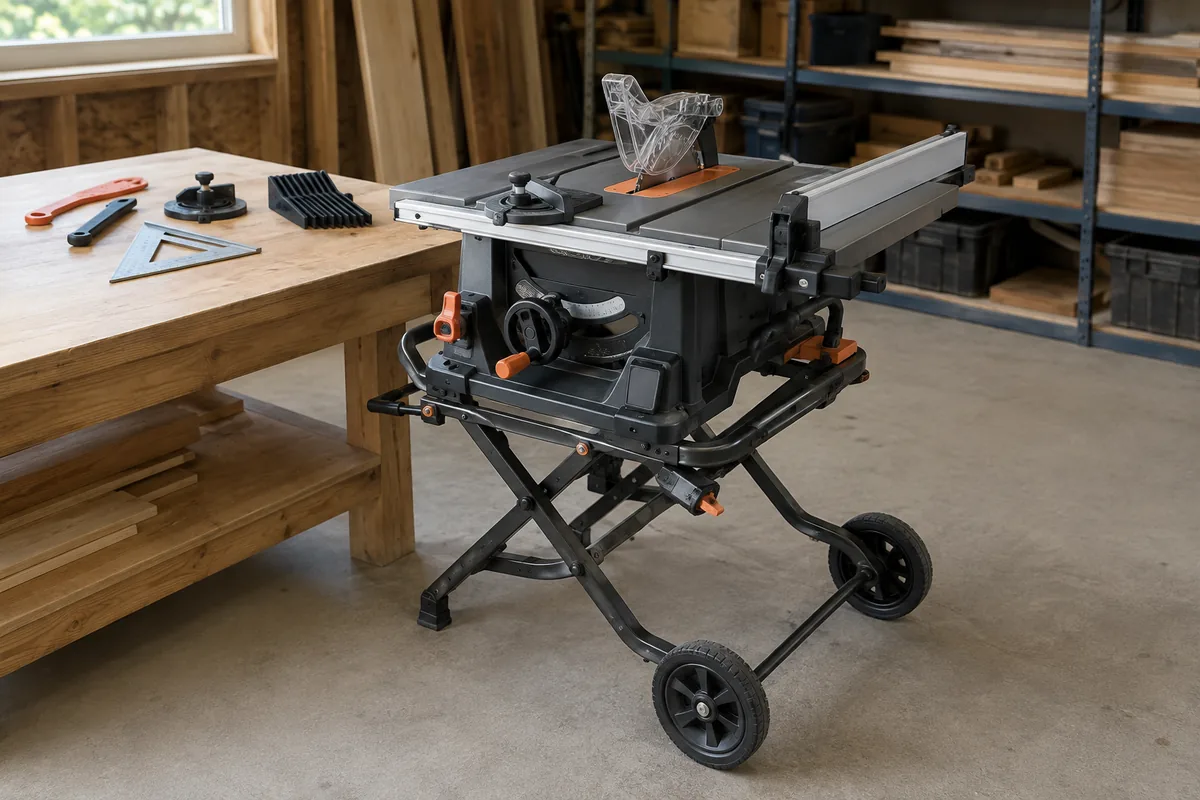
| Portable jobsite saw | Limited space, occasional use, or frequent transport | Compact and easier to store, but typically less mass and table support for large stock |
| Contractor saw | Dedicated garage shop with regular furniture or renovation work | Good balance of capacity and cost; open stand may collect dust and can be less rigid than a cabinet base |
| Cabinet saw | Frequent heavy work, large panels, and a permanent shop layout | More weight, space, electrical planning, and expense |
If the saw will stay in one place and you routinely cut hardwood, a 10-inch contractor table saw is a sensible starting category. It will not make a small motor behave like a cabinet saw: deep cuts in thick, dense stock still call for a steady feed rate and a sharp, suitable blade. For occasional cuts and modest projects, a quality portable saw may be enough; paying for a heavier machine makes little sense if it will sit unused.
Features worth paying for
Fence quality should rank near the top of the list. Check that it clamps without shifting, stays parallel to the miter slots, and has a scale that remains readable after setup. A fence that needs frequent correction wastes time and can create dangerous binding. Ask whether replacement parts, fence adjustments, and belt access are straightforward; these are machines you may keep for years.
Table extensions and a sturdy stand matter more than cosmetic finish. A thin extension wing that sags can make a wide rip frustrating, while a stand that racks under pressure can undermine alignment. If you buy a saw with an open base, consider how you will capture dust. Contractor layouts can leak more dust around the motor and cabinet than enclosed designs, so a shop vacuum connection may not be as effective as a well-designed dust port. Good extraction helps, but it does not replace a dust mask or proper shop ventilation.
Also budget for a blade suited to the work. The blade included with a saw may be adequate for rough construction cuts but leave burn marks or tear-out in hardwood and plywood. A general-purpose 40-tooth blade is a useful starting point; a dedicated ripping blade can feed more easily through thick stock, while a finer crosscut blade improves cut quality across the grain. Match the blade’s bore, diameter, and maximum speed to the saw’s manual.
Setup before the first cut
Check the blade against the miter slot with a reliable measuring method, then align the fence to the blade according to the manufacturer’s procedure. A small alignment error can cause burning, poor accuracy, or stock binding. Confirm that the blade is sharp and tight, the riving knife is correctly positioned, and the guard moves freely. With the saw unplugged, inspect the belt and pulleys for damage or obvious misalignment.
Use a push stick or push block when the cut brings your hands near the blade, and keep your body out of the likely kickback path. Never reach over a moving blade to retrieve offcuts. For sheet goods, use support on both sides of the cut or break the panel down with a track saw first; a large sheet can be difficult to control on a contractor saw’s table. A table saw outfeed support can make long stock easier to manage, but it must be level with the saw table and stable under load.
A practical buying checklist
Before committing, verify the voltage, rip capacity, blade size, included safety equipment, and availability of replacement parts. Confirm the saw fits through the garage door or shop entrance: a machine that arrives on a pallet may be awkward to move alone. Check whether the fence, wings, and stand are included in the price, since package contents vary.
For a serious garage shop, prioritize a reliable fence, stable support, useful safety features, and serviceable parts over a bigger number on the motor label. If your projects are mostly small and your circuit is limited, a less expensive portable saw can be the right choice. If you cut long boards and sheet goods weekly, the contractor format earns its extra footprint—provided you give it room, outfeed support, and a safe setup.