How to Fix a Band Saw That Wanders During Resawing
What's inside
As an Amazon Associate I earn from qualifying purchases. This post may contain affiliate links at no extra cost to you.
Contents
Why the cut wanders
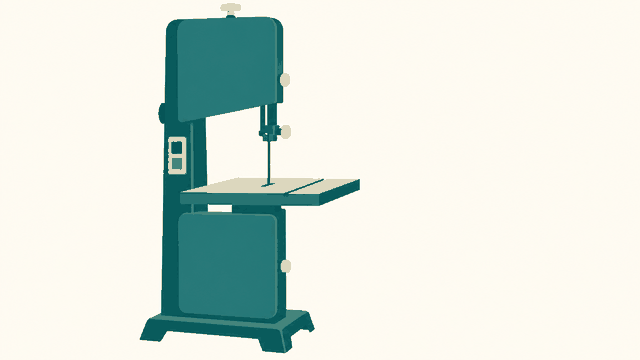
A band saw can drift because the blade is dull, too narrow for the job, poorly tensioned, or not tracking and guiding properly. The fence can also be set at the wrong angle for that particular blade. Resawing makes small problems obvious: a blade that cuts acceptably through thin stock may bend or twist in a tall workpiece.
Before adjusting anything, unplug the saw. Check that the blade is installed in the direction marked by its teeth, and inspect it for missing teeth, cracks, pitch buildup, or a visibly dull edge. A damaged blade should be replaced, not corrected with fence adjustments. Never reach into the machine while it is connected to power.
Choose a blade suited to resawing
For straight cuts in typical cabinet stock, a sharp 1/2-inch blade with a relatively low tooth count—often 3 teeth per inch (TPI)—is a useful starting point. The wide blade resists twisting better than a narrow one, while the large gullets clear sawdust from the cut. If your saw cannot properly tension a 1/2-inch blade, a sharp 3/8-inch blade may perform better than an under-tensioned wider blade. Check the saw manual for its blade-width limits.
Tooth shape matters too. A skip-tooth blade has generous gullets and works well in many resawing jobs. A hook-tooth blade can feed more aggressively, but aggressive feed increases the chance of deflection if the blade is dull or the saw is underpowered. Very fine-tooth blades tend to clog in thick stock and can run hot. For a selection of widths and tooth counts, compare resaw band saw blades that match your wheel diameter and saw’s specifications.
Do not assume a wider blade is always better. A small saw may struggle to tension one correctly, and a blade that is too wide for the machine’s guides can damage the blade or guides. The manual’s blade-width range is the limit to follow.
Set tension and tracking
With the saw unplugged, fit the blade and set tension according to the manufacturer’s instructions. Built-in tension scales are often approximate, especially on older saws. If the scale gives inconsistent results, a blade-tension gauge can help you apply repeatable tension; it does not replace the manual’s limits. Too little tension lets the blade bow and twist in the cut. Too much can overload the saw’s frame, wheels, bearings, and blade.
Adjust tracking with the blade guard open only as directed by the manual, then close it before running the saw. On many saws, the blade is intended to sit near the center of the tire, but some tire designs call for a different position. Follow the saw maker’s procedure rather than applying a universal tracking rule. Spin the wheels by hand to confirm the blade stays in place, then run the saw briefly with the guards closed and listen for unusual rubbing or vibration.
Set the guides close to the work
Guides support the blade behind and beside the cut; they should not force it out of line. Set the upper guide assembly about 1/4 inch above the workpiece. Keep side guides just clear of the blade’s teeth and close enough to support the blade body. Set the thrust bearing just behind the blade so it turns under cutting pressure, not while the saw is idling. Adjust the lower guides too if the machine has them.
If guides are too far away, the blade can twist before they provide support. If they press on the blade, they create heat and wear. After adjustment, turn the wheels by hand through a full rotation and check that nothing binds. Also make sure the table insert is not pinching the blade.
Align the fence for the blade
A blade can cut straight yet not run parallel to the saw’s miter slot or table edge. In that case, a fence set square to the table may push the stock sideways and make the cut wander. First verify that the blade is tracking consistently and that the guides are correctly set. Then test-cut scrap from the same kind of wood and adjust the fence angle to follow the blade’s natural cutting line. This is sometimes called drift adjustment.
Mark a straight line on a piece of scrap and feed it freehand along that line, keeping your hands well clear of the blade. If the cut consistently veers, note the angle of the stock relative to the table edge. Set the fence to that angle, then make another test cut. Do not use a fence adjustment to disguise a dull blade, loose guides, or a blade that will not hold tension.
Control feed rate and wood condition
Feed at a steady pace without forcing the stock. A dull or narrow blade may need a slower feed, but pushing harder usually bends it more and worsens the wander. If the saw bogs down, the blade slows, or the cut face gets burn marks, reduce feed pressure and check the blade. Resawing dense or wet wood takes more power and can clog the gullets faster than dry, straight-grained stock.
Check the workpiece for nails, grit, knots, and changing grain direction. Grain can steer a blade even when the machine is properly adjusted. A tall, thin piece may also flex against the fence; use a suitable resaw fence or tall auxiliary fence only if it holds the stock securely and does not obstruct safe feeding. A featherboard can help control stock against a fence, but it cannot correct blade deflection.
Compare the likely fixes
| Symptom | Likely cause | First fix |
|---|---|---|
| Cut curves despite light, steady feeding | Dull, damaged, or unsuitable blade | Replace it with a sharp blade suited to the saw and stock |
| Blade bows sideways or cut widens toward the bottom | Low tension, inadequate blade width, or excessive feed | Check tension, then reduce feed; confirm the blade is within the saw’s capacity |
| Stock keeps moving away from the fence | Fence does not match blade drift, or stock is being forced | Test-cut scrap and reset the fence angle |
| Burning, noise, or marks on blade body | Guides pressing on blade, clogged gullets, or rubbing | Stop, unplug, and inspect guides, blade, and clearance |
When to buy or service
If a known-sharp blade still wanders after you have checked tension, tracking, guides, and fence angle, inspect the tires for damage and the wheels for wobble or play. A bent wheel, failing bearing, or cracked frame needs repair; repeated fence adjustments will not cure it. Stop using the saw if you see a cracked blade, feel unusual wheel play, or hear persistent bearing noise.
For occasional resawing, a suitable replacement blade is usually the first purchase to consider. If the saw’s tension indicator is unreliable and you change blade widths often, a band saw blade tension gauge can make setup more repeatable. It is optional: a sound saw, the correct blade, and the maker’s tension procedure are enough for many hobby users.