Open-Stand vs Enclosed-Base Table Saw for a Basement Workshop
What's inside
As an Amazon Associate I earn from qualifying purchases. This post may contain affiliate links at no extra cost to you.
In a basement, the choice between an open-stand and an enclosed-base table saw is less about cutting power than about dust, floor space, and how the machine fits through the door. An open-stand saw is often lighter and easier to move; an enclosed-base saw usually contains more of the dust and can feel more settled in use. Neither design makes a saw safe without proper guarding and dust control.
As an Amazon Associate we earn from qualifying purchases at no extra cost to you.
Contents
The basic difference
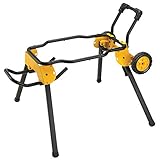
An open-stand saw has a motor and blade assembly carried on a legged frame. The underside is exposed, so chips fall onto the floor and dust escapes around the blade and cabinet. Many portable and jobsite-style saws use this layout, though some have a wheeled stand that folds for storage.
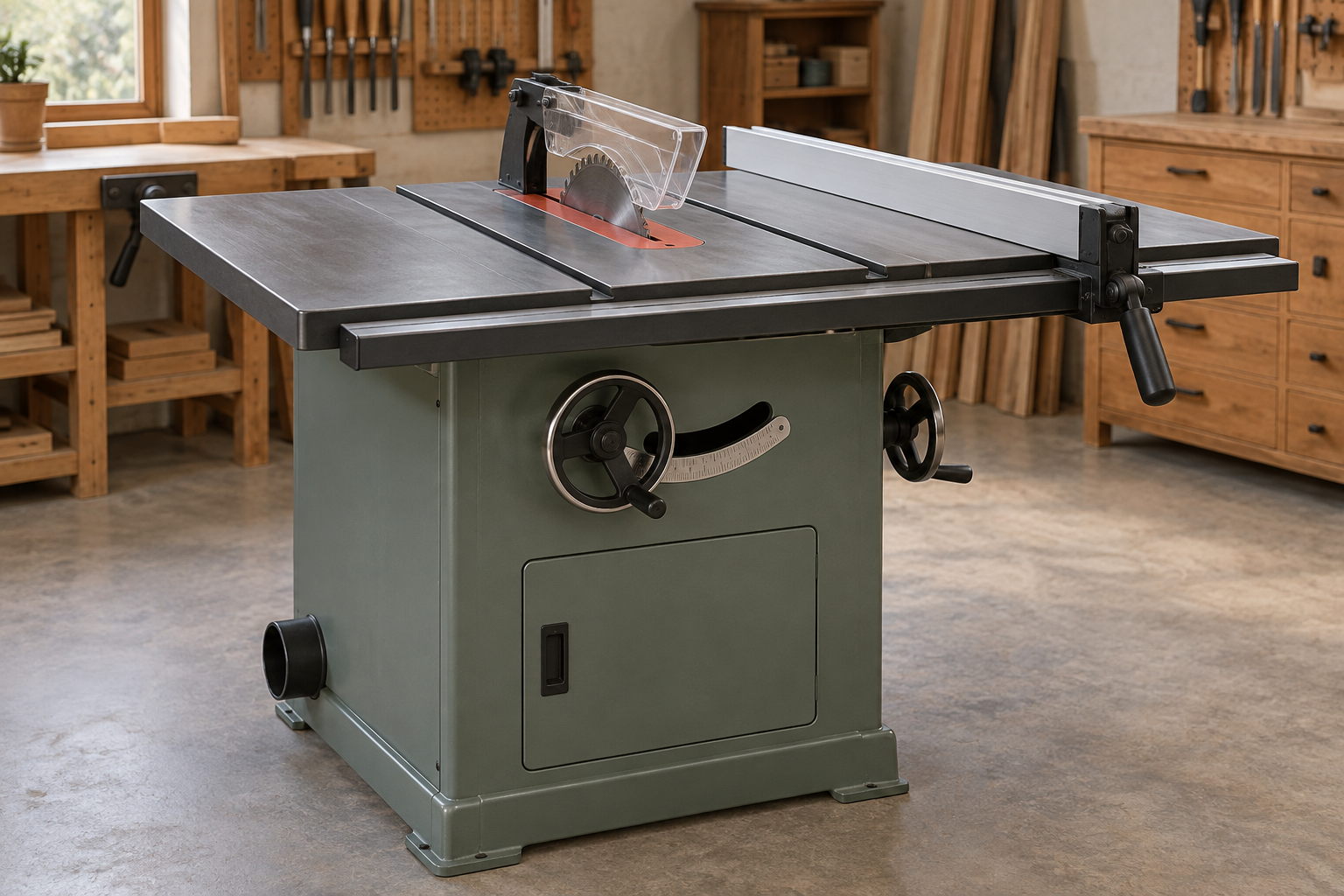
An enclosed-base saw surrounds much of the mechanism with a cabinet. Dust can be directed toward a collection port, and the cabinet may reduce noise escaping from below the table. Cabinet-style saws tend to be heavier, but “enclosed” does not mean airtight: dust still comes off the blade above the table, and a weak collector can leave fine dust inside the cabinet.
What matters in a basement
Measure the path into the workshop, not just the space where the saw will sit. Check stair turns, door width, ceiling height, and whether the saw can be moved around stored lumber or a furnace. A heavy saw that fits the room but cannot make the basement stairs is a costly mistake. Compare the assembled weight and shipping dimensions before ordering.
Dust deserves extra attention indoors. Fine wood dust remains airborne and settles on shelves, equipment, and laundry. A shop vacuum connected to a saw’s small port may catch some chips, but it often misses the fine dust thrown above the table. Use a suitable dust collector, keep the blade guard’s extraction connection in place when practical, and avoid treating a basement window fan as a substitute for collection. Follow the collector and saw manufacturers’ requirements.
Floor level also matters. An uneven slab can make a light stand rock, which is distracting and can affect feeding. Check the floor with a level and use the stand’s adjustment feet, if provided; do not wedge a loose scrap under a leg and assume it is stable. On a small basement floor, a saw with wheels can be useful, but lock them before cutting and confirm the machine cannot shift under pressure.
Open stand vs enclosed base
| Factor | Open-stand saw | Enclosed-base saw |
|---|---|---|
| Dust handling | More chips and dust escape underneath; floor cleanup is common. | Cabinet can funnel dust toward a port, but collection still depends on airflow and sealing. |
| Moving and installation | Often lighter; folding stands and wheels simplify storage, though stairs remain a challenge. | Usually heavier and less convenient to relocate; plan delivery and access carefully. |
| Stability and feel | Varies by stand. A light frame can move or vibrate if poorly set up. | Weight and a rigid base can feel steadier, but a cabinet is not automatically well aligned. |
| Basement fit | Good where space is tight or the saw must be stored between projects. | Good where the saw can stay put and dust collection is available. |
| Typical trade-off | Lower cost and easier transport, with more cleanup and often a smaller work surface. | Better containment potential, at the cost of weight, space, and usually a higher price. |
Which type should you buy?
Choose an open-stand saw if you need to carry it downstairs, store it against a wall, or bring it out only for occasional projects. It can be entirely adequate for trim, shelving, and breaking down sheet goods, provided the fence locks square and the stand is stable. A portable table saw with a stand is a sensible category to compare when portability is the main constraint.
Choose an enclosed-base saw if it will stay assembled, you have room for infeed and outfeed support, and you can connect effective dust collection. It is the more comfortable setup for frequent indoor work, especially when the cabinet port and blade-guard port can both be used. Look at the actual port sizes and collection requirements rather than assuming any shop vacuum will be enough. A contractor table saw with an enclosed cabinet can be a middle ground, but cabinet designs vary; verify the base is genuinely enclosed and has a usable extraction port.
Do not buy a larger, heavier saw solely because its base looks more substantial. Fence accuracy, blade alignment, arbor condition, and the ability to get replacement parts matter more. Before the first cut, check that the blade is parallel to the miter slot and that the fence is parallel to the blade. A misaligned saw can burn wood, produce inaccurate cuts, and increase the chance of binding or kickback.
Dust, noise, and safe operation
For either design, budget for collection and cleanup. A practical starting point is a collector and ducting matched to the saw’s specified airflow, with the shortest workable hose run and few sharp bends. If dust piles inside an enclosed cabinet or shoots across the floor from an open stand, the setup is not capturing enough. Do not remove guards or splitters to make a cut easier; use the appropriate blade and setup for the operation, and use a push stick when your hands would otherwise approach the blade.
Basements can also amplify motor and blade noise. A cabinet may soften some sound, but it will not make a saw quiet. Wear hearing protection, keep doors to living areas closed when possible, and plan work hours accordingly. Avoid placing the saw where dust can enter a furnace return or interfere with a water heater or other equipment. Keep required service clearances around those appliances.
Before ordering
Write down the saw’s footprint, table height, port size, weight, and voltage requirements. Add space for a straight board to enter and leave the blade; a saw placed against a wall may have a large tabletop but still be unusable for long stock. Include the collector, hose, mobile base if needed, and outfeed support in the cost. For occasional work in a tight basement, the cheaper open stand is often the sensible choice. For regular work with a fixed layout and capable dust collection, the enclosed base earns its extra weight and expense.