Best Table Saws with Dust Collection for an Indoor Workshop
What's inside
As an Amazon Associate I earn from qualifying purchases. This post may contain affiliate links at no extra cost to you.
Contents
What dust collection a table saw actually needs
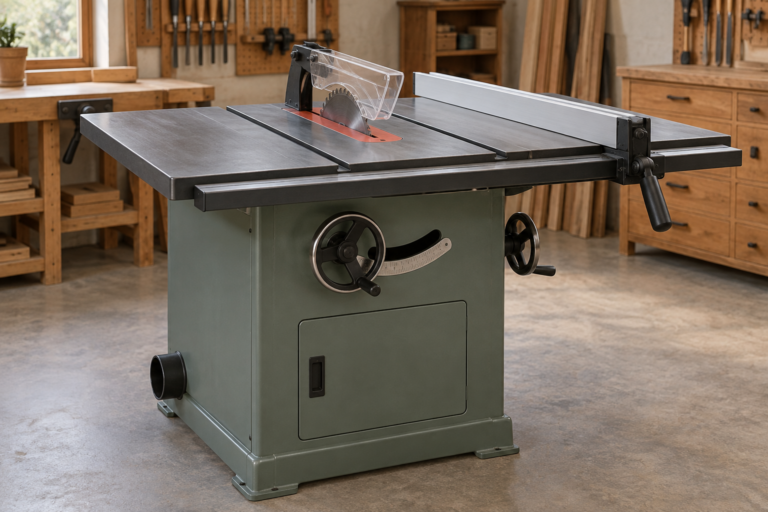
For an indoor workshop, a table saw’s dust port is only part of the system. The blade throws chips below the table and fine dust above it, especially during ripping. A cabinet or enclosed base helps capture the lower stream; an over-blade guard with a hose is more effective at the top. Neither makes a saw dust-free, and a shop vacuum connected to a large cabinet port may not move enough air to collect well.
Check the port sizes before buying. Many saws use a 2½-inch port, while larger cabinet saws commonly have a 4-inch connection. A 4-inch dust collector moves more air than a typical shop vacuum, but the result depends on the collector, hose length, bends, and filters—not the port diameter alone. Keep the hose short, use smooth fittings, and avoid reducing a 4-inch line to a small shop-vac hose unless the saw’s manual permits it.
As an Amazon Associate we earn from qualifying purchases at no extra cost to you.

Also plan for the dust above the table. Some saws accept an overarm guard with a separate hose; others offer a blade guard designed for extraction. These accessories can improve capture but take up space and may need to be removed for narrow cuts or certain setups. Never remove a guard or riving knife just to make dust collection easier. Follow the saw manual, and wear a suitable respirator when dusty work is unavoidable.
Compare the main saw types
The right choice depends on available space, the work you do, and the collector you already own. The figures below are typical ranges, not specifications for every saw; check the exact manual before purchase.
| Saw type | Typical dust setup | Best fit | Main trade-off |
|---|---|---|---|
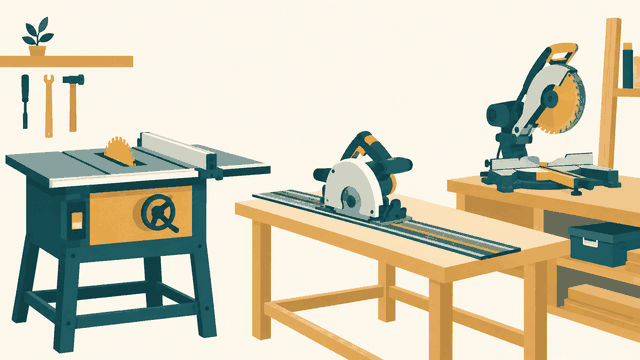
| Contractor-style saw | Open or partly enclosed base; often 2½-inch port | Smaller shops and moderate budgets | More leakage and less lower-blade containment |
| Hybrid saw | Enclosed cabinet; usually 4-inch port | Indoor shops wanting better capture without a full cabinet saw | Still needs a capable collector and good hose routing |
| Cabinet saw | Enclosed cabinet; commonly 4-inch port, sometimes a second port | Frequent use, heavier stock, and a dedicated dust system | Higher cost, weight, and space requirements |
| Portable jobsite saw | Small outlet and compact collection bag or vacuum connection | Occasional work or a shop that must be cleared away | Typically less effective at containing fine dust indoors |
Choose the saw around your collector
If you already have a dust collector with a 4-inch hose, an enclosed-base hybrid or cabinet saw is usually the sensible starting point. Look for a sealed cabinet, a well-fitting door, and a port that connects without a maze of adapters. Some cabinet saws have an additional port for an overarm guard; that can help with fine dust above the blade, but only if your collector can serve both connections as the manufacturer specifies.
If you have a shop vacuum, a contractor-style or portable saw can be a reasonable budget choice for occasional cuts, particularly with a short, direct hose run. It is not a substitute for a larger collector on long ripping sessions. A common failure is assuming that a vacuum’s advertised peak suction means it will pull enough air through a long, narrow hose and a restrictive filter. Watch for chips piling up inside the saw or dust escaping around the base: those are signs the setup is not keeping up.
For a dedicated indoor shop, compare hybrid table saws with 4-inch dust ports against the cost of a proper collector and ducting. If you routinely process sheet goods or hardwood, a cabinet saw may be worth the extra investment. If the saw gets used a few times a month, the cheaper enclosed-base option can be enough—provided you accept some cleanup and use respiratory protection when needed.
Features worth checking in person
Ask whether the dust port is accessible with the saw against a wall. A rear-facing outlet can become awkward if the hose bends sharply or the machine sits close to a wall. Check whether the cabinet has a cleanout door or an easy way to remove accumulated chips. Fine dust and offcuts can collect inside and obstruct airflow; clean the cabinet and inspect the hose regularly rather than waiting for a visible cloud.
Look at the blade guard, too. A guard with a dedicated dust connection can capture airborne dust close to its source, but it may interfere with certain cuts or limit visibility. Make sure it can be adjusted without tools if you expect to switch frequently, and confirm that replacement parts are available. On any saw, a poorly aligned riving knife or a guard that is difficult to reinstall can tempt users to leave safety equipment off.
Before buying, check the manual for the stated port diameter, any collector requirements, and whether the saw is intended for indoor use with a particular extraction arrangement. Reviews and product listings sometimes mix up a hose size, an included adapter, and the actual saw outlet. When in doubt, measure the port and budget for a fitting that seals securely.
Set up collection to avoid common failures
Use the shortest practical hose run and minimize tight bends. A long, corrugated hose can reduce airflow enough that a nominally suitable collector performs poorly. Keep the filter clean and empty the collector before it fills to the point that airflow drops. If you connect more than one machine to a shared system, close the blast gates on unused branches so the saw receives the available airflow.
For a new indoor setup, compare 4-inch woodworking dust collectors with a shop vacuum suited to smaller ports. Match the system to the saw’s needs and your other machines rather than buying by motor horsepower alone. A planer or jointer produces a heavy volume of chips and may need more airflow than a small vacuum can provide.
Finally, test the system with the kind of cut you actually make. Ripping a long board can reveal leaks and clogging that a quick crosscut will not. Stop the saw before clearing a blockage, and disconnect power before reaching into the cabinet. Dust collection reduces exposure and cleanup; it does not eliminate either, so keep the work area tidy and use appropriate protection.