Best Static Climbing Ropes for Secure Anchors
What's inside
- Top 3 Picks
- Quick Comparison
- How We Chose
- 1. AOLEBA 10.5 mm Static Rope – Best for All-Round Fixed Lines
- 2. GINEE 10 mm Static Climbing Rope – Best for a Short Fixed Line With Hardware Included
- 3. Lopevex 1/2 Inch Static Climbing Rope – Best for Tree Pulling and Heavy Rigging
- 4. AOLEBA 8.5 mm Static Climbing Rope – Best Budget Fixed Line for Rappelling and Rescue Drills
- 5. X XBEN 10.5 mm UIAA Static Rope – Best for a Certified-Class Fixed Line at a Known Length
- 6. Hopeseily 1/2 Inch Static Climbing Rope – Best for Long Rigging Lines and Swing Work
- 7. NewDoar 6 mm Accessory Cord – Best for Prusiks, Tie-Downs and Light Utility
- 8. FUEMEILY UIAA Static Climbing Rope 11 mm – Best Premium Long Fixed Line
- 9. NTR 8 mm Static Climbing Rope – Best Budget Multi-Length Line
- 10. X XBEN Outdoor Climbing Rope 10 m – Best for Escape and Short Utility Lines
- 11. BlazeBeam 10.5 mm UIAA Static Rope – Best Premium Short Rappel Line
- 12. WISEROOT 8 mm Static Rope – Best Budget Entry Rope With Certification Language
As an Amazon Associate I earn from qualifying purchases. This post may contain affiliate links at no extra cost to you.
The best static climbing rope for most buyers is the AOLEBA 10.5 mm Static Climbing Rope, sold in 10 m, 20 m, 30 m, 50 m and 70 m options. A 10.5 mm kernmantle static line sits in the sweet spot of the category: thick enough for comfortable hand grip on a fixed line or a slow lower, thin enough to stay manageable in a pack, and available in the lengths that fixed-line work actually calls for. It suits a landowner rigging a training wall, an arborist running a short fixed line for limb work, and anyone setting up a repeatable top-rope anchor on private property. If the budget is tight, the AOLEBA 8.5 mm Static Climbing Rope covers short, light-duty fixed lines at a lower price tier. If you are pulling timber rather than supporting a person, the Lopevex 1/2 Inch Static Climbing Rope (150 ft) is the premium pick, built as a high-strength bull rope. Everything below is sorted by what you are actually going to do with the rope.
Contents
- Top 3 Picks
- Quick Comparison
- How We Chose
- 1. AOLEBA 10.5 mm Static Rope – Best for All-Round Fixed Lines
- 2. GINEE 10 mm Static Climbing Rope – Best for a Short Fixed Line With Hardware Included
- 3. Lopevex 1/2 Inch Static Climbing Rope – Best for Tree Pulling and Heavy Rigging
- 4. AOLEBA 8.5 mm Static Climbing Rope – Best Budget Fixed Line for Rappelling and Rescue Drills
- 5. X XBEN 10.5 mm UIAA Static Rope – Best for a Certified-Class Fixed Line at a Known Length
- 6. Hopeseily 1/2 Inch Static Climbing Rope – Best for Long Rigging Lines and Swing Work
- 7. NewDoar 6 mm Accessory Cord – Best for Prusiks, Tie-Downs and Light Utility
- 8. FUEMEILY UIAA Static Climbing Rope 11 mm – Best Premium Long Fixed Line
- 9. NTR 8 mm Static Climbing Rope – Best Budget Multi-Length Line
- 10. X XBEN Outdoor Climbing Rope 10 m – Best for Escape and Short Utility Lines
- 11. BlazeBeam 10.5 mm UIAA Static Rope – Best Premium Short Rappel Line
- 12. WISEROOT 8 mm Static Rope – Best Budget Entry Rope With Certification Language
Our Top Picks



Top 3 Picks
Best Overall: AOLEBA 10.5 mm Static Climbing Rope
A true 10.5 mm static kernmantle line in five lengths from 10 m to 70 m, which means you can match the rope to the drop instead of tying two shorter ropes together. The diameter gives a good grip, works with standard hardware, and keeps knot bulk reasonable. It is the most versatile single purchase in this list.
Best Budget: AOLEBA 8.5 mm Static Climbing Rope
An 8.5 mm heavy-duty rappelling and rescue-style static rope at the lowest price tier here. It suits short fixed lines, hand lines, hauling and light rigging where every gram and every dollar counts, but it is not the right choice for long free-hanging lowers or heavy shock loading. Buy it for light duty and short drops.
Best Premium for Rigging: Lopevex 1/2 Inch Static Climbing Rope (150 ft)
A 12.7 mm, 150 ft rope rated by the listing at 9,000 lbs breaking strength, aimed at arborist bull-rope work: pulling, dragging and controlled lowering of limbs and logs. The extra diameter and polyester construction trade stretch and hand feel for abrasion resistance and pulling power. It is the pick when the load is timber, not a person.
Quick Comparison
| Product | Best for | Key specs (per listing) | Price tier |
|---|---|---|---|
| AOLEBA 10.5 mm Static Climbing Rope | All-round fixed lines, top-rope anchors | 10.5 mm; 10/20/30/50/70 m; static kernmantle; outdoor rock climbing | Mid-range |
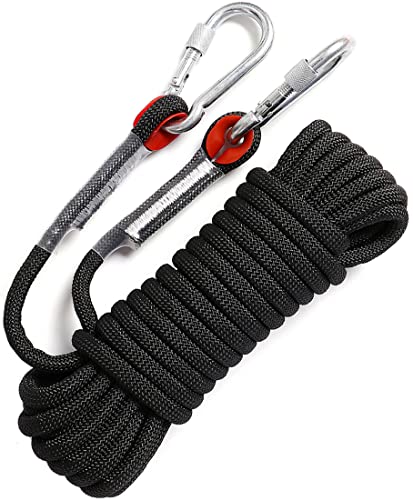
| GINEE 10 mm Static Climbing Rope | Short fixed lines with hardware included | 10 mm; 35 ft; supplied with carabiner; black | Mid-range |
| Lopevex 1/2 Inch Static Climbing Rope | Tree pulling, rigging, log control | 1/2 in (12.7 mm); 150 ft; 9,000 lbs strength; arborist bull rope | Premium |
| AOLEBA 8.5 mm Static Climbing Rope | Budget fixed lines, rappelling, rescue drills | 8.5 mm; heavy-duty rappel rope; fire rescue / escape use | Budget |
| X XBEN 10.5 mm UIAA Static Rope | Certified-class fixed line, mountaineering | 10.5 mm; 64 ft; static; UIAA-marketed; green | Mid-range |
| Hopeseily 1/2 Inch Static Climbing Rope | Long rigging lines, swing and arborist work | 1/2 in (12.7 mm); 200 ft; 48-strand polyester | Premium |
| NewDoar 6 mm Accessory Cord | Prusiks, tie-downs, light utility | 6 mm accessory cord; arborist, mountaineering, sailboat, dock lines | Budget |
| FUEMEILY UIAA Static Climbing Rope 11 mm | Long certified fixed lines, rescue-style work | 11 mm; 45 m (150 ft); UIAA-marketed; black | Premium |
| NTR Static Climbing Rope 8 mm | Budget multi-length fixed lines | 8 mm; 10/20/30/50 m; orange, black or blue | Budget |
| X XBEN Outdoor Climbing Rope 10 m | Escape rope, short utility lines | 10 m (32 ft); rock climbing / escape / fire rescue marketing | Budget |
| BlazeBeam Static Climbing Rope 10.5 mm | Short UIAA-marketed rappel line | 10.5 mm; 15 m (50 ft); nylon kernmantle; UIAA-marketed | Premium |
| WISEROOT 8 mm Static Rope | Budget entry rope, light fixed lines | 8 mm; CE/ASTM-marketed; outdoor adult use | Budget |
How We Chose
Selection started with the specification classes that matter for a rope used on a fixed line: diameter, core-and-sheath construction, published elongation behaviour, material, certification claims and the length options the listing actually offers. A rope only made the list if its diameter was stated and if that diameter mapped to a real job — 6 mm and 8 mm for accessory and light utility work, 8.5 mm to 10.5 mm for personal fixed lines and rappels, 11 mm and 1/2 inch for rescue-style and rigging loads.
Category fit came next. Some ropes here are marketed for arborist and bull-rope work, some for rappelling and rescue, some for general outdoor climbing and escape use. We kept those lanes separate rather than ranking a tree-pulling rope against a rappel line. Certification language was treated as a claim from the listing, not as an independently verified result, and we have not tested, measured or owned any of these ropes.
Finally we weighed upgrade path and ownership reality: whether a buyer can start with a short budget rope and later move to a longer or thicker line from the same brand, whether the sheath construction suits abrasive rock or bark, and what the rope will cost to keep using over its life — inspection, cleaning and eventual retirement. Length options, price tier and the nearest alternative in this same list decided the final ordering.
1. AOLEBA 10.5 mm Static Rope – Best for All-Round Fixed Lines
As an Amazon Associate we earn from qualifying purchases at no extra cost to you.
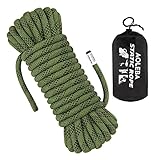
This is the rope to buy when you do not yet know exactly what you are doing with a static line. The AOLEBA 10.5 mm is a static kernmantle rope listed in five lengths — 10 m (32 ft), 20 m (64 ft), 30 m (96 ft), 50 m (160 ft) and 70 m (230 ft) — and it is marketed for outdoor rock climbing. That combination of a middle-of-the-road diameter and a wide spread of lengths is what makes it the best overall pick here: you can buy a 20 m for a fixed top-rope anchor and a 70 m for a full-length fixed line, and stay inside one product family with predictable hand feel and hardware compatibility.
It suits the buyer who wants a rope that works for a top-rope anchor on a private crag, a fixed line on a training wall, a hand line on a steep bank, or a haul line on a woodlot where you are moving gear rather than timber. It also suits anyone who wants a spare static line for a group so that a beginner is not handed a thin, slick cord on their first lower.
Key specs at a glance
- Diameter: 10.5 mm
- Lengths offered: 10 m, 20 m, 30 m, 50 m, 70 m
- Construction: static kernmantle (core plus woven sheath)
- Intended use per listing: outdoor rock climbing
- Spec class: 10.5 mm static rope — typically the thickest diameter that still handles like a personal line rather than a rigging rope
- Typical elongation class for this diameter: low single-digit percentage under working load, well under dynamic-rope stretch
The strengths are straightforward. At 10.5 mm you get a rope that is comfortable to grip with gloves on, that runs through standard descenders and friction devices, and that ties into a figure-eight or a bowline without becoming an unmanageable knot. The multi-length lineup is the real advantage: most buyers end up needing two different rope lengths eventually, and buying both from the same line keeps the sheath feel, the stiffness and the colour coding consistent.
A 10.5 mm static rope also carries more material in the sheath than an 8 mm line, which matters on abrasive granite, rough concrete or bark. Thicker ropes wear more slowly because the sheath has more mass to give before the core is exposed. That is the ownership reality of this category: the sheath always goes first, usually at the anchor end or wherever the rope runs over an edge, and a heavier sheath buys you more working life before retirement.
Pros
- Five lengths from 10 m to 70 m, so one product covers both short and long jobs
- 10.5 mm is a genuine all-round static diameter — good grip, standard hardware fit
- Kernmantle construction protects the load-bearing core
- Longer options reduce the need to join ropes, which removes a knot from the system
- Mid-range price tier for the diameter and lengths offered
Cons
- Heavier than an 8 mm or 8.5 mm rope over the same length — a 70 m coil is a real carry
- No single length fits every job; you may need to buy twice
- Static ropes should not be used for lead falls, and this listing does not promise dynamic performance
- Bulkier knots and more rope mass in the system than a thinner line
How it compares: the nearest alternative is the X XBEN 10.5 mm UIAA Static Rope at 64 ft, which matches the diameter and the spec class but locks you into a single length. If you know your exact drop, the X XBEN is a clean single-purpose buy. If you might need 10 m today and 50 m next season, the AOLEBA length spread is the reason to choose it. Against the GINEE 10 mm at 35 ft, the AOLEBA is slightly thicker and far more flexible in length, but the GINEE includes a carabiner out of the box.
2. GINEE 10 mm Static Climbing Rope – Best for a Short Fixed Line With Hardware Included
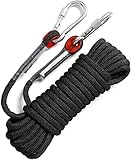
The GINEE is a 10 mm static climbing rope in a 35 ft (roughly 10.7 m) length, supplied with a carabiner and finished in black. It is the practical choice for someone building one short fixed line and who does not want to shop for hardware separately. Thirty-five feet is enough for a low anchor, a steep garden path hand line, a short rappel station, or a fixed line on a home training wall where the working height is under about 8 m once you account for the anchor and the tail.
It suits the homeowner, the small club and the instructor running a single station. It also suits the buyer who wants a black rope for low visibility in a public-adjacent setting, or simply because black hides dirt and sheath fuzz better than bright colours.
Key specs at a glance
- Diameter: 10 mm
- Length: 35 ft (approximately 10.7 m)
- Included hardware: carabiner
- Colour: black
- Construction: static kernmantle class
- Spec class: 10 mm static — thinner and lighter than 10.5 mm, slightly less sheath mass
The main strength is convenience. A 10 mm rope with a carabiner is a complete starter package: anchor, rope, connector. The diameter is a sensible compromise — lighter and more packable than 10.5 mm, but still comfortable in the hand and still compatible with standard belay and descender hardware. For a fixed line that will be set up and left in place for a season, 10 mm is a reasonable middle ground between durability and weight.
The 35 ft length is the limitation to think about honestly. Work out your drop before buying. If the anchor sits 3 m above the top of the line and you need 2 m of tail for a knot and a hand hold, a 10.7 m rope gives you roughly 5.5 m of usable vertical. That is fine for a training wall and too short for a real crag pitch. Buyers who underestimate this end up joining two ropes with a knot, which is exactly the complication a static fixed line is supposed to avoid.
Ownership-wise, a black rope is easy to keep looking decent, but colour also makes it harder to spot in low light and harder to inspect — sheath damage shows up less clearly against black than against orange or white. Get into the habit of running the whole rope through your hands after every use, feeling for flat spots and stiffness, regardless of colour.
Pros
- Carabiner included, so the rope is usable as soon as it arrives
- 10 mm is a light, versatile static diameter
- 35 ft is a good size for a fixed training line or short rappel
- Black finish hides dirt and sheath fuzz
- Mid-range price tier for a rope plus hardware
Cons
- 35 ft is short — check your actual drop before ordering
- 10 mm has less sheath mass than 10.5 mm, so it wears faster on abrasive edges
- Black is harder to inspect and harder to see at dusk
- Only one length offered, so it cannot grow with your needs
How it compares: the closest alternative is the AOLEBA 10.5 mm at 10 m or 20 m. The AOLEBA gives you a thicker rope and a choice of two useful short lengths, but no carabiner. The GINEE wins on out-of-the-box completeness; the AOLEBA wins on diameter and length flexibility. If you already own carabiners — and most people setting up a fixed line do — the AOLEBA is the more adaptable purchase. Choose the GINEE if you want one box, one rope, one connector, done.
3. Lopevex 1/2 Inch Static Climbing Rope – Best for Tree Pulling and Heavy Rigging

The Lopevex is a 1/2 inch (12.7 mm) static rope in a 150 ft length, listed at 9,000 lbs breaking strength and marketed as a high-strength arborist bull rope for tree pulling and rigging. This is not a personal climbing line in the usual sense — it is a working rope for moving heavy things under control. It suits the arborist, the woodlot owner and the land manager who needs to pull, redirect or lower limbs and small logs without standing under the load.
It also suits anyone who has been trying to do rigging work with a 10 mm climbing rope and has watched the sheath fuzz up after a handful of sessions. Doubling the diameter roughly doubles the cross-section of material available to resist abrasion, and polyester construction resists UV and moisture uptake better than nylon over long outdoor exposure.
Key specs at a glance
- Diameter: 1/2 inch (12.7 mm)
- Length: 150 ft (approximately 45.7 m)
- Stated breaking strength: 9,000 lbs (roughly 40 kN)
- Material class: high-strength synthetic, bull-rope construction
- Intended use per listing: arborist tree pulling and rigging
- Spec class: 12.7 mm rigging rope — the heaviest diameter in this roundup
The headline number is the strength rating. At 9,000 lbs, this rope has a large safety margin for the kinds of loads a manual rigging setup produces — a limb section, a friction-braked lower, a hand-pulled drag. That margin is what lets you use it with pulleys, friction hitches and mechanical advantage systems without worrying that you are near the limit. The 150 ft length also lets you set up a redirect or a long pull line from a safe distance, which is the whole point of rigging.
The trade-off is weight and handling. A 12.7 mm rope in this class typically runs in the region of 100–120 g per metre, so 150 ft (about 45.7 m) is roughly 4.5–5.5 kg of rope before you add hardware. It is stiff, it does not coil small, and it will not feed through a standard descender designed for 10 mm line. Plan on pulleys, blocks and large-diameter hardware.
Pros
- 9,000 lbs stated breaking strength gives a wide working margin
- 12.7 mm diameter resists abrasion from bark and rough timber
- 150 ft length supports redirects and long pull lines
- Polyester-class material handles UV and wet conditions well
- Purpose-built for rigging rather than adapted from climbing use
Cons
- Heavy and bulky — a serious carry and a serious coil to store
- Too thick for most personal climbing hardware
- Premium price tier
- Overkill if you only need a fixed line for a person, not a log
- Not a substitute for a certified personal climbing rope
How it compares: the direct rival is the Hopeseily 1/2 inch rope at 200 ft with a 48-strand polyester sheath. The Hopeseily gives you 50 ft more length and a stated strand count for the sheath, which is a useful durability signal. The Lopevex counters with a stated breaking strength figure — 9,000 lbs — that is easy to plan around. If your longest pull needs more than 150 ft of reach, the Hopeseily is the better buy. If you want a documented strength number and a shorter, more manageable coil, the Lopevex wins.
4. AOLEBA 8.5 mm Static Climbing Rope – Best Budget Fixed Line for Rappelling and Rescue Drills

The AOLEBA 8.5 mm is the budget entry in this list: a thin static rope marketed for outdoor rock climbing, heavy-duty rappelling and fire rescue or escape use. It suits the buyer who needs a light, compact fixed line for short drops — a practice rappel station, a fire-escape style descent, a hand line on a steep slope — and who is working to a tight budget.
It also suits the person who wants a second rope for a specific narrow job rather than a general-purpose line. At 8.5 mm, this is a rope you can carry in a small pack or a jacket pocket, which is the entire appeal of the thin-diameter class.
Key specs at a glance
- Diameter: 8.5 mm
- Construction: static kernmantle class
- Intended use per listing: outdoor rock climbing, heavy-duty rappelling, fire rescue, escape
- Spec class: 8.5 mm static — a thin personal line, not a rigging rope
- Typical weight class for this diameter: roughly 45–55 g per metre, so about half the mass of a 10.5 mm rope
- Typical breaking strength class for this diameter: lower than 10 mm and above; treat as a light-duty line
The strength of this rope is its weight-to-bulk ratio and its price tier. On a fixed line where the rope is installed once and left in place, low weight matters less; on a rope that lives in a pack as an emergency descent line, it matters a great deal. An 8.5 mm coil takes up a fraction of the space of a 10.5 mm rope of the same length.
The honest limitation is abrasion life and hand comfort. Thinner ropes have less sheath material, so they fuzz and flatten faster on the same edge that a 10.5 mm rope would shrug off. They are also harder to grip bare-handed, generate more friction heat in a descender on fast lowers, and can be awkward to tie into bulky knots. If your fixed line runs over a rough edge or a bark-covered limb, protect the edge rather than relying on the rope to survive it.
Think of this as a task rope rather than a do-everything rope. It is an excellent choice for a known short drop with a clean edge and light use, and a poor choice for a long, heavily used, abrasive fixed line. Retirement comes sooner with thin ropes, so track how many sessions it has seen and inspect the sheath at the anchor end and at any point that contacts rock or hardware.
Pros
- Lowest price tier in this roundup
- Very light and compact — easy to carry as an emergency line
- 8.5 mm is a good compromise between a thin accessory cord and a full 10 mm rope
- Suitable for short rappels and escape-style use where the listing points
- Cheap enough to own as a dedicated single-purpose rope
Cons
- Less sheath mass means faster wear than 10 mm or 10.5 mm
- Harder on the hands than thicker rope
- Generates more heat in a descender during fast lowers
- Lower strength class than 10 mm and above
- Not suited to heavy rigging or long free-hanging work
How it compares: the nearest alternatives are the NTR 8 mm multi-length rope and the WISEROOT 8 mm CE/ASTM-marketed rope. The NTR offers a choice of lengths — 10 m to 50 m — which the AOLEBA 8.5 mm does not, so if length flexibility matters more than the extra half millimetre, the NTR is the better buy. The WISEROOT is similarly priced and similarly thin, but claims CE and ASTM certification language in the listing, which some buyers value as a paper trail. The AOLEBA 8.5 mm sits between them: slightly thicker than either, budget-priced, and marketed specifically at rappelling and rescue-style use.
5. X XBEN 10.5 mm UIAA Static Rope – Best for a Certified-Class Fixed Line at a Known Length
The X XBEN is a 10.5 mm static rope in a 64 ft length, marketed as a UIAA static mountain climbing rope for mountaineering, in green. It is the pick for a buyer who knows their working length, wants a mid-range 10.5 mm line, and values the UIAA certification language in the listing. Sixty-four feet is about 19.5 m — enough for a two-pitch practice wall, a long fixed line with a walk-off, or a rappel station with a comfortable tail.
It suits the mountaineer who wants a static line for fixed-rope sections, the club that needs one rope at a documented length, and the buyer who prefers a single well-chosen rope to a length ladder. Green is a practical colour: visible enough to inspect easily, and less obtrusive than orange on a vegetated slope.
Key specs at a glance
- Diameter: 10.5 mm
- Length: 64 ft (approximately 19.5 m)
- Colour: green
- Construction: static kernmantle class
- Certification language per listing: UIAA static
- Intended use per listing: mountain climbing, mountaineering
Two things make this rope worth considering. First, 10.5 mm is the diameter most buyers should default to for a personal fixed line: good grip, standard hardware, decent sheath life. Second, UIAA certification language in a static rope listing signals that the manufacturer is claiming compliance with a recognised standard for static rope rather than simply describing it as “heavy duty”. Buyers who need documentation for insurance, club rules or a professional risk assessment often pay a premium for exactly that.
The single length is the constraint. There is no 10 m version for a short hand line and no 50 m version for a long fixed line. If your needs might change, you will eventually own two ropes. That is not a problem — plenty of people do — but it does mean this rope is best bought by someone who has already measured.
At 19.5 m, the rope is also short enough to be genuinely portable. A 10.5 mm rope of this length runs roughly 1.3 kg, which is a reasonable carry for a fixed-rope section on an approach. Compare that with a 70 m 10.5 mm rope at around 4.5–5 kg, which is a pack animal rather than a personal carry. That portability is a real argument in favour of the shorter length for alpine-style use.
Pros
- 10.5 mm is the best all-round static diameter for personal use
- UIAA certification language in the listing
- 64 ft is a useful, portable length
- Green is easy to inspect and reasonably discreet
- Mid-range price tier for a certified-class 10.5 mm rope
Cons
- Only one length offered
- Too short for a full-length fixed line on a big crag
- Heavier per metre than 8 mm or 8.5 mm alternatives if pack weight is critical
- Certification is a listing claim, not something we verified
How it compares: the obvious comparison is the AOLEBA 10.5 mm, which matches the diameter and spec class but offers five lengths from 10 m to 70 m at a mid-range tier. The AOLEBA is more flexible; the X XBEN is more specific. If you want certification language and a fixed 64 ft, choose the X XBEN. If you want the freedom to buy exactly the length you need — including a 20 m that is nearly identical to 64 ft — choose the AOLEBA. Against the FUEMEILY 11 mm at 45 m, the X XBEN is thinner, shorter and cheaper, and much easier to carry.
6. Hopeseily 1/2 Inch Static Climbing Rope – Best for Long Rigging Lines and Swing Work
The Hopeseily is a 1/2 inch (12.7 mm) static rope in a 200 ft length with a 48-strand polyester sheath, marketed for rappelling, arborist work and swinging. It is the longest heavy-diameter rope in this roundup and the one to choose when reach matters more than anything else — a long pull line, a high redirect, a rope that has to run from a safe anchor position to a distant load.
It suits the arborist rigging a large tree, the landowner clearing storm damage, and the buyer setting up a long fixed line for a rope swing or a zip-style descent where the anchor and the landing are far apart. It also suits anyone who wants a documented sheath construction, because the 48-strand figure is a genuine durability signal.
Key specs at a glance
- Diameter: 1/2 inch (12.7 mm)
- Length: 200 ft (approximately 61 m)
- Sheath construction: 48 strands, polyester
- Intended use per listing: rappelling, arborist work, swinging
- Spec class: 12.7 mm heavy rigging rope
- Typical mass for this class: roughly 110 g per metre, so about 6.5–7 kg of rope at 200 ft
Sheath strand count is the detail worth understanding. A 32-strand sheath is smoother and more supple; a 48-strand sheath packs more yarn into the same circumference, which usually means better abrasion resistance and a longer working life on bark, rock and hardware edges. For a rigging rope that spends its life dragging over rough surfaces, that is exactly the trade you want. The trade-off is a slightly stiffer rope that can feel boardy when new.
Polyester as a material class is also well matched to this job. Polyester absorbs less water than nylon, holds up better under sustained UV exposure, and typically shows lower stretch under a steady load — all properties that suit a rope used for pulling and holding rather than catching falls.
The practical downside is mass. At 200 ft of 12.7 mm rope, you are handling something in the region of 6.5–7 kg. That is a rope you carry in a bag or drag, not one you coil onto a harness. It also needs large-diameter hardware: pulleys, blocks and friction devices sized for 12.7 mm, not the 10 mm kit most climbers already own. Budget for that hardware alongside the rope.
Pros
- 200 ft gives the longest reach in this roundup
- 48-strand polyester sheath is built for abrasion resistance
- 12.7 mm diameter is well matched to rigging hardware
- Polyester handles UV and moisture better than nylon over long exposure
- Long enough for high redirects and distant anchors
Cons
- Premium price tier
- Heavy — roughly 6.5–7 kg of rope
- Requires large-diameter pulleys and friction devices
- Stiff and slow to break in when new
- Far more rope than most fixed-line jobs need
How it compares: this is a direct head-to-head with the Lopevex 1/2 inch at 150 ft. The Hopeseily gives you 50 ft more length and a stated 48-strand sheath. The Lopevex gives you a stated 9,000 lbs breaking strength. If you need the reach, the Hopeseily is the only answer in this list. If you need a documented strength figure and a coil you can manage alone, the Lopevex is the better fit. Neither is a personal climbing rope, and neither should be used as one.
7. NewDoar 6 mm Accessory Cord – Best for Prusiks, Tie-Downs and Light Utility

The NewDoar is a 6 mm accessory cord marketed for arborist tree work, mountaineering, sailboat use and dock lines. It is not a climbing rope in the certification sense, and it should not be treated as one. What it is: a cheap, light, strong-for-its-size cord that solves a dozen small problems around a fixed-line setup.
It suits the buyer who already has a main rope and needs the supporting pieces: a prusik loop for a friction hitch, a cord to tie off a haul bag, a lashing for a tarp over a work area, a light drag line, a replacement for a worn shock cord on a boat. It also suits the woodworker and landowner who wants a general-purpose cord for tying down loads and securing stacked timber under a cover.
Key specs at a glance
- Diameter: 6 mm
- Type: accessory cord
- Intended use per listing: arborist tree work, mountaineering, sailboat rope, dock lines
- Spec class: 6 mm accessory cord — typically around 25–30 g per metre
- Typical strength class for 6 mm accessory cord: single-digit kN, far below any certified climbing rope
- Certification: none stated for life-safety use as a climbing rope
The value here is cost per job. A 6 mm cord does the work of a much more expensive rope for tasks that never involve a falling or suspended person. Knots hold well in accessory cord, it cuts cleanly and can be sealed at the ends, and it takes up almost no space in a pack or a toolbox. For prusik loops, a 6 mm cord used against a 10.5 mm main rope is in the right diameter ratio for a friction hitch that grips and releases predictably.
The risk is misuse. Because it is sold on climbing-adjacent listings and described with words like “arborist” and “mountaineering”, buyers occasionally assume it can serve as a main line. It cannot. Accessory cord is not built with the sheath-to-core construction or the certification testing that a climbing rope receives. If a person’s weight is going on it, it is the wrong product — full stop.
Ownership is simple. Inspect for sheath damage and internal stiffness after heavy use, retire it if the core feels lumpy, and keep it out of prolonged direct sun when not in use. Because it is cheap, replacement is not painful, which is one of its genuine advantages.
Pros
- Budget price tier — the cheapest way to solve small rigging problems
- Very light and compact
- Ideal diameter for prusik loops against 10–11 mm main ropes
- Versatile: tree work, boat work, tie-downs, lashings
- Knots hold well and ends seal easily
Cons
- Not a life-safety climbing rope and not certified as one
- Low strength class compared with any rope in this roundup
- Short working life under abrasion
- Easy to misuse because of the climbing-adjacent marketing
- Too thin to grip comfortably under load
How it compares: the nearest alternatives in this list are the 8 mm options — the NTR 8 mm and the WISEROOT 8 mm. Those are thicker, stronger and can serve as a genuine light fixed line for a person, at a modest price increase. Choose the NewDoar 6 mm only for supporting tasks where no one is hanging on it. If you want one rope that can do both light utility work and short personal lowers, step up to 8 mm instead.
8. FUEMEILY UIAA Static Climbing Rope 11 mm – Best Premium Long Fixed Line

The FUEMEILY is an 11 mm static rope in a 45 m (150 ft) length, black, with UIAA certification language in the listing. It is the premium choice for a long personal fixed line: a full rappel route, a fixed line on a big wall approach, a rescue-style training line, or a rope that will be installed and left in place for a season.
It suits the buyer who has already decided that a fixed line is part of their setup and wants the largest sensible diameter in a portable length. Eleven millimetres is the top of the personal-rope range — noticeably beefier than 10 mm, with more sheath material and a bigger safety margin, but still manageable through standard hardware.
Key specs at a glance
- Diameter: 11 mm
- Length: 45 m (150 ft)
- Colour: black
- Certification language per listing: UIAA static
- Construction: static kernmantle class
- Typical mass for this class: roughly 75–85 g per metre, so about 3.4–3.8 kg at 45 m
Three things justify the premium tier. First, 11 mm gives the best grip and the most sheath material of any personal static diameter, which translates into a longer service life before the sheath flattens at the anchor. Second, the UIAA certification language provides the documentation that professional and club users often need. Third, 45 m is a genuinely useful length for real terrain — long enough for a full rappel with a tail, short enough to carry.
Black is a mixed blessing at this diameter. It looks professional, hides handling grime, and is less conspicuous in a work setting. It also makes sheath damage and core irregularities harder to spot, so inspection discipline matters more. Run the full length through your hands after every session, feeling for soft spots, flat sections and stiffness changes.
Weight is the honest cost. At roughly 3.4–3.8 kg for 45 m, this is a rope you carry deliberately rather than casually. It also takes up real volume in a pack. For a fixed line that stays in place, neither matters. For a rope that travels to the crag every weekend, it is a genuine consideration against a 10 mm or 10.5 mm alternative.
Pros
- 11 mm is the thickest personal static diameter, with the best grip and sheath life
- 45 m is a practical full-length fixed line
- UIAA certification language in the listing
- Premium construction for long-term installation
- Strong choice for rescue-style training and professional use
Cons
- Premium price tier
- Heavier and bulkier than 10 mm or 10.5 mm ropes
- Black hides sheath damage during inspection
- Only one length offered
- More rope than a short fixed line needs
How it compares: the nearest alternative is the BlazeBeam 10.5 mm UIAA static line at 15 m. The BlazeBeam is a short, thin, premium rope for a single station; the FUEMEILY is a long, thick, premium rope for a full route. If your job is one rappel station, the BlazeBeam is cheaper and lighter. If your job is a route-length fixed line that will be used repeatedly, the FUEMEILY’s extra diameter and length are worth the money. Against the X XBEN 10.5 mm at 64 ft, the FUEMEILY is thicker, much longer and considerably more expensive.
9. NTR 8 mm Static Climbing Rope – Best Budget Multi-Length Line

The NTR is an 8 mm static rock climbing rope offered in 10 m (32 ft), 20 m (64 ft), 30 m (96 ft) and 50 m (160 ft) lengths in orange, black or blue, with carabiner options in the listing. It is the budget answer to the length-flexibility problem: a thin rope that you can buy in the size your job actually needs, in a colour you can see.
It suits the budget-conscious buyer who wants a light fixed line for a known short drop, and the household that wants a colour-coded set — orange for the training wall, blue for the boat, black for the truck. Colour coding is an underrated ownership habit: it makes it obvious which rope has been used on abrasive work and which has stayed clean.
Key specs at a glance
- Diameter: 8 mm
- Lengths offered: 10 m, 20 m, 30 m, 50 m
- Colours: orange, black, blue
- Construction: static kernmantle class
- Typical mass for this diameter: roughly 40–48 g per metre
- Spec class: 8 mm static — light-duty personal line, not a rigging rope
The appeal is simple: four lengths, three colours, one low price tier. If you need a 30 m fixed line for a practice rappel and a 10 m hand line for a steep path, you can buy both without agonising. The 8 mm diameter keeps both light enough to carry in a small bag, and thin enough to double as a haul or drag line when you are not using it on a person.
The limitations are the same as any 8 mm rope. There is less sheath material to absorb abrasion, so it wears faster than 10 mm and above. It is harder to grip under load. It runs hot in a descender during fast lowers, and it is less forgiving of a rough edge. If your fixed line crosses rock or bark, protect the edge with a sleeve or a redirect, and inspect the rope after every use.
One practical note on the colour options: orange is the easiest to inspect and the easiest to find if it is dropped, black is the most discreet and the hardest to inspect, blue sits in between. If the rope is going to be used hard, buy orange. If it lives in a vehicle and needs to look tidy, black is fine, but inspect more carefully.
Pros
- Four lengths from 10 m to 50 m at a budget tier
- Three colour options for coding and visibility
- Light and compact — around 40–48 g per metre
- Cheap enough to own several for different jobs
- Good first rope for a home training wall or short rappel
Cons
- 8 mm wears faster than 10 mm and above
- Harder on the hands and hotter in a descender
- Lower strength class than thicker ropes
- Less edge-tolerant — needs protection on rough rock
- Not suitable for heavy rigging or long free-hanging work
How it compares: the nearest alternatives are the AOLEBA 8.5 mm and the WISEROOT 8 mm. The AOLEBA is half a millimetre thicker, which is a small but real gain in sheath life and hand comfort, but it does not offer a length choice. The WISEROOT is the same diameter and a similar budget tier, with CE/ASTM certification language in the listing. The NTR wins on length and colour flexibility; the WISEROOT wins on certification language; the AOLEBA sits between them with a slightly thicker rope.
10. X XBEN Outdoor Climbing Rope 10 m – Best for Escape and Short Utility Lines

The X XBEN 10 m rope is a 32 ft climbing and escape rope marketed for rock climbing, escape use, fire rescue and parachute-adjacent applications. It is the shortest rope in this roundup and the least expensive way to own a dedicated short line. It suits the buyer who needs one compact rope for a specific fixed task: a short descent, a hand line, a haul line, a backup rope kept in a vehicle or a kit bag.
It also suits the household that wants an emergency descent line for a second-floor window or a roof access point, provided the user has had proper training in descent technique and anchor selection. Rope alone does not make an escape system; the anchor, the technique and the practice do.
Key specs at a glance
- Length: 10 m (32 ft)
- Intended use per listing: rock climbing, escape rope, fire rescue, parachute-style applications
- Construction: kernmantle class
- Spec class: short utility and escape line
- Diameter: not stated prominently in the listing — treat as a general-purpose short rope rather than a documented diameter class
- Mass: a 10 m rope in this class is typically well under 1 kg
The value proposition is price and size. A 10 m rope at a budget tier costs very little, takes up almost no space, and solves a narrow problem well. For a fixed line on a steep garden path, a short rappel off a low structure, or a drag line for moving brush, it is exactly enough rope and no more.
The honest limitation is that 32 ft is not much rope. Once you subtract the anchor wrap, the knot, and the tail you need for a hand hold, you are working with roughly 5–6 m of usable descent. If your drop is taller than that, this rope is the wrong size, and joining it to a second rope introduces a knot that a fixed line should not have. Measure your drop before ordering.
Because the listing does not foreground a diameter, this rope is best treated as a general-purpose short line rather than a specific spec-class purchase. If you need to know the exact diameter to match hardware, choose a rope whose listing states it plainly — the GINEE 10 mm or the NTR 8 mm both do.
Pros
- Budget price tier — the cheapest rope in this roundup
- Very compact and light for storage in a vehicle or kit bag
- Good for a single short fixed task
- Useful as a backup or spare rope
- Low commitment if you are not sure you need a static rope at all
Cons
- Only 10 m — very limited working height
- Diameter not clearly stated in the listing
- No length options
- Too short for most real fixed-line work
- Escape use requires training, not just a rope
How it compares: the closest alternatives are the NTR 8 mm at 10 m and the GINEE 10 mm at 35 ft. Both offer a more clearly stated diameter and a more clearly defined spec class. The GINEE adds a carabiner and roughly 3 ft more rope for a modest step up in price tier. If you want a short rope with a known diameter and included hardware, the GINEE is the better buy. If you simply want the least expensive short line for light utility work, the X XBEN 10 m is the pick.
11. BlazeBeam 10.5 mm UIAA Static Rope – Best Premium Short Rappel Line

The BlazeBeam is a 10.5 mm UIAA static line in a 15 m (50 ft) length, built as a nylon kernmantle rope for rappelling and escape-style use. It is the premium short rope in this list: the same diameter as the best overall pick, but half the length and a higher price tier, which buys certification language and a purpose-built short-line package.
It suits the buyer who wants one excellent short rope rather than several cheap ones — a dedicated rappel station rope, a fixed line on a training structure, or a rescue-practice line that will be handled by many people. Fifty feet is a comfortable length for a low station with a good tail, and 10.5 mm is thick enough to be kind to beginners.
Key specs at a glance
- Diameter: 10.5 mm
- Length: 15 m (50 ft)
- Construction: nylon kernmantle static rope
- Certification language per listing: UIAA static
- Intended use per listing: rappelling and escape-style use
- Typical mass for this class: roughly 65–70 g per metre, so around 1 kg at 15 m
The advantages are quality-focused rather than quantity-focused. A 10.5 mm nylon kernmantle rope gives good grip, good knot behaviour and solid sheath life. UIAA certification language in the listing supports use in settings where documentation is requested. At around a kilogram, it is light enough to carry anywhere and easy to store coiled on a peg.
Nylon as a material class is worth noting here. Nylon typically has higher tensile strength and better energy absorption than polyester, at the cost of slightly more stretch under load and more water uptake. For a short rappel line where some forgiveness is useful, nylon is a reasonable choice; for a long rigging rope where you want minimal stretch and minimal water absorption, polyester is generally preferable.
The constraint is length. Fifty feet is a short rope. On a clean 8 m drop with a solid anchor and a metre of tail, it is ideal. On anything taller, it is not enough, and the premium price for only 15 m is hard to justify unless the short length is exactly what you need. Buyers who want the same diameter with room to spare should look at the AOLEBA 10.5 mm in 20 m or 30 m.
Pros
- 10.5 mm — the best all-round static diameter
- Nylon kernmantle construction with good grip and knot behaviour
- UIAA certification language in the listing
- Around 1 kg — light and easy to store
- Well suited to a single dedicated rappel station
Cons
- Premium price tier for only 15 m
- Too short for most fixed-line applications
- Nylon absorbs more water than polyester
- No other lengths offered in this listing
- Cost per metre is high compared with longer options
How it compares: the nearest alternatives are the GINEE 10 mm at 35 ft and the FUEMEILY 11 mm at 45 m. The GINEE is thinner, slightly shorter, includes a carabiner and sits at a lower price tier — better value for a simple short line. The FUEMEILY is thicker and three times longer, and priced accordingly. The BlazeBeam sits in the middle: a premium short rope for a buyer who specifically wants 10.5 mm, UIAA language and a 15 m length in one package.
12. WISEROOT 8 mm Static Rope – Best Budget Entry Rope With Certification Language

The WISEROOT is an 8 mm static rope marketed for outdoor adult use with CE and ASTM certification language in the listing. It is a budget-tier entry point into static ropes: thin, light, inexpensive, and carrying the kind of compliance wording that reassures a first-time buyer who is not yet fluent in rope specs.
It suits the beginner setting up a first fixed line on private property, the household that wants a light utility rope with some paperwork behind it, and the buyer who wants to spend as little as possible while still choosing a product that claims a recognised standard. It is also a reasonable choice as a second rope for hauling, dragging and light rigging tasks where no one is hanging on it.
Key specs at a glance
- Diameter: 8 mm
- Construction: static kernmantle class
- Certification language per listing: CE and ASTM
- Intended use per listing: outdoor climbing for adults
- Typical mass for this diameter: roughly 40–48 g per metre
- Spec class: 8 mm light static rope
The main draw is the combination of a low price tier and certification language. CE and ASTM references in a listing give a buyer something to point at when justifying the purchase, whether to a partner, a club or an insurer. For a first rope, that matters more than most spec-sheet details.
At 8 mm, the physical realities of thin rope apply. There is less sheath material, so abrasion life is shorter than a 10 mm or 10.5 mm rope. Hand comfort is lower, especially on a long lower. Heat builds faster in a descender on fast descents. And edge protection becomes more important, not less — a thin rope on a sharp edge is the fastest way to ruin a rope, and the fastest way to create a hazard.
The right way to own this rope is as a light-duty line with a defined job. Set it up, use it consistently, inspect it after every session, and retire it without sentiment when the sheath starts to flatten or the core stiffens. An 8 mm rope at a budget price is cheap enough that replacement is not a crisis — which is itself a safety advantage, because people are more likely to retire a cheap rope than an expensive one.
Pros
- Budget price tier with CE and ASTM certification language
- Light and compact — around 40–48 g per metre
- Good first static rope for
Affiliate disclosure. As an Amazon Associate we earn from qualifying purchases at no extra cost to you. Prices accurate as of the date shown.Best Static Climbing Ropes for Secure AnchorsCheck price on AmazonRelated guides