Best Rock Tumblers for Beginners and Hobbyists
What's inside
- Rotary vs. Vibratory: Which Action Fits Your Goals?
- Spec Comparison: Popular Beginner and Hobbyist Models
- How to Choose by Barrel Capacity and Batch Size
- Decision Matrix: Match Your Situation to the Right Tumbler
- Motor Durability and Noise: What Actually Matters
- Durability and Ownership Realities
- Worked Calculation: Cost Per Batch for a 3 lb Rotary Tumbler
- Setup for First Use: A Reliable Workflow
- Frequently Asked Questions
- Rotary vs. Vibratory: Which Action Fits Your Goals?
- Spec Comparison: Popular Beginner and Hobbyist Models
- How to Choose by Barrel Capacity and Batch Size
- Decision Matrix: Match Your Situation to the Right Tumbler
- Motor Durability and Noise: What Actually Matters
- Durability and Ownership Realities
- Worked Calculation: Cost Per Batch for a 3 lb Rotary Tumbler
- Setup for First Use: A Reliable Workflow
- Frequently Asked Questions
As an Amazon Associate I earn from qualifying purchases. This post may contain affiliate links at no extra cost to you.
The best rock tumblers for most beginners are 3 lb rotary models like the Lortone 33B or National Geographic Professional, because they balance batch size, low noise, and motor durability, while vibratory tumblers are faster but louder and better suited to experienced hobbyists polishing smaller batches.
As an Amazon Associate we earn from qualifying purchases at no extra cost to you.


Contents
- Rotary vs. Vibratory: Which Action Fits Your Goals?
- Spec Comparison: Popular Beginner and Hobbyist Models
- How to Choose by Barrel Capacity and Batch Size
- Decision Matrix: Match Your Situation to the Right Tumbler
- Motor Durability and Noise: What Actually Matters
- Durability and Ownership Realities
- Worked Calculation: Cost Per Batch for a 3 lb Rotary Tumbler
- Setup for First Use: A Reliable Workflow
- Frequently Asked Questions
Rotary vs. Vibratory: Which Action Fits Your Goals?
This is the first decision to make, as it determines speed, noise, finish, and what stages you can actually complete.
Rotary Tumblers
Rotary tumblers use a barrel that rolls horizontally for hours or days. Rocks, water, and grit slide over each other continuously. This is the only type that can do the full process from rough grind (Stage 1) to polish (Stage 4) on raw, angular rocks. They are slower — a full cycle typically takes 4 to 6 weeks — but they shape stones and produce the classic smooth, rounded finish. They are also significantly quieter than vibratory models when loaded correctly and placed on a rubber mat.
Vibratory Tumblers
Vibratory tumblers use a motor with an offset weight to vibrate a bowl at high frequency. Media and rocks circulate in a toroidal motion. They are 2x to 4x faster for stages 2 through 4 (often 2-7 days per stage), use less grit and water, and let you watch progress without stopping the machine. They do not efficiently shape very rough rock in Stage 1, so most hobbyists still need a rotary tumbler for the initial grinding. Vibratory bowls are louder, produce a constant buzzing hum, and require more frequent checking to ensure rocks stay covered with slurry.
Simple rule: If you are starting with rocks from a beach, river, or yard and want one machine to do everything, choose rotary. If you already have rotary-tumbled or pre-shaped stones and want faster polishing for jewelry or small batches, add a vibratory tumbler later.
Spec Comparison: Popular Beginner and Hobbyist Models
These models represent the common capacity classes available in 2026. Specifications are based on manufacturer data for the standard configurations.
| Model / Type | Barrel Capacity | Usable Rock Load | Barrel Material | Motor Type | Weight (Empty) | Noise Level (Loaded) |
|---|---|---|---|---|---|---|
| National Geographic Professional (Rotary) | 2 lb | 1.0 – 1.5 lb | Rubber | Single ball-bearing, thermal protection | 5.5 lbs | Low – Moderate |
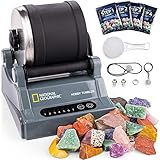
| Lortone 33B (Rotary, Dual Barrel) | 2 x 3 lb | 2.0 – 2.5 lb per barrel | Rubber | Continuous-duty, fan-cooled | 12 lbs | Low |
| Lortone 45C (Rotary, Single Barrel) | 4.5 lb | 3.0 – 4.0 lb | Rubber-lined metal | Continuous-duty, heavy-duty | 14 lbs | Low |
| Thumler’s Model T #100 (Rotary, Single Barrel) | 3 lb | 2.0 – 2.5 lb | Rubber | Continuous-duty, belt drive | 9 lbs | Low |
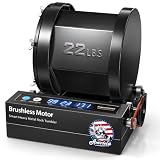
| Raytech TV-5 / Lot-O Style (Vibratory) | 5 lb bowl | 1.5 – 2.5 lb | Plastic bowl | Vibratory, offset weight | 7 lbs | Moderate – High |
Usable rock load is lower than barrel capacity because you need 60-70% rock, plus water, grit, and ceramic media for proper tumbling action. Overfilling prevents the sliding action rotary tumblers need and causes poor grinding.
How to Choose by Barrel Capacity and Batch Size
Capacity directly controls how many rocks you finish per month and how much grit and electricity you use.
- 1.5 to 2 lb barrels (starter single-barrel): Good for kids, classrooms, or testing the hobby. Finishes about 8-12 medium stones (1 to 1.5 inches) per month-long cycle. Lowest upfront cost and easiest to store, but cost per finished stone is highest and you cannot run two grit stages at once.
- Dual 3 lb barrels (most versatile for beginners): The Lortone 33B style is the sweet spot. Run coarse grit in one barrel and polish in the other, or tumble two different rock hardnesses separately. This doubles throughput without doubling noise or footprint. Recommended for hobbyists who want a steady pipeline.
- 4.5 to 6 lb single barrels: For hobbyists who collect larger agates, jasper, or want to tumble 20-30 stones per cycle. The motor and belt must be more durable. These use more grit (about 4-6 tablespoons per stage vs. 2-3 for a 3 lb barrel) and are heavier to move when draining slurry.
- Vibratory bowls (4 to 10 lb rated): Bowl rating is not rock weight. A 5 lb vibratory bowl typically holds less rock than a 3 lb rotary barrel. Best for polishing batches of 1-2 lb of pre-rounded stones quickly.
Decision Matrix: Match Your Situation to the Right Tumbler
| Your Situation | Recommended Choice | Why |
|---|---|---|
| First tumbler, limited space/apartment, need quiet operation | 3 lb single-barrel rotary with rubber barrel (Thumler’s Model T #100 type) | Rubber barrels dampen noise by 10-15 dB vs. plastic; runs quiet enough for a garage or utility room on a rubber mat |
| Beginner who wants to learn the full process efficiently | Dual 3 lb rotary (Lortone 33B type) | Allows staggering stages so you finish a batch every 1-2 weeks after the first month |
| Hobbyist with larger or harder rocks (agate, petrified wood) | 4.5 lb+ rotary with continuous-duty motor (Lortone 45C type) | Larger diameter barrel improves grinding action; heavy-duty motor handles 4-6 week cycles without overheating |
| Focused on polishing speed and jewelry-sized stones | Vibratory tumbler as a second machine + small rotary for coarse grind | Vibratory cuts polish time from 7-10 days to 2-3 days per stage and uses less grit |
| Low budget, casual use a few times per year | 2 lb starter rotary (National Geographic type) | Lowest entry price in the $80-$120 range, but expect shorter motor life with frequent use |
Motor Durability and Noise: What Actually Matters
Motor failures and leaks cause most beginner frustration, not rock quality.
- Motor duty rating: Look for continuous-duty, thermally protected motors with ball bearings. These are designed to run 24 hours per day for weeks. Intermittent-duty or unprotected motors found in many toy-grade tumblers will overheat and fail if you run Stage 1 for 10+ days straight.
- Belt vs. direct drive: Most 3 lb+ rotary tumblers use a small drive belt. This is intentional — the belt is a wear item that protects the motor if the barrel jams. Keep a spare $5-$8 belt. Direct-drive vibratory motors have no belt but generate more vibration and heat.
- Barrel type and noise: Rubber barrels are consistently quieter and last longer than clear plastic barrels, which can crack and transmit more sound. Placing any tumbler on a 1/4 inch rubber anti-vibration mat and ensuring the barrel is filled to the correct level (about 2/3 to 3/4 full with rocks, water to the bottom of the top layer of rocks) reduces noise more than any motor spec.
- Heat management: Motors need airflow. Do not enclose a tumbler in a cabinet. Ambient temperature above 85°F shortens motor life. Clean dust from motor vents monthly.
Durability and Ownership Realities
A rock tumbler is a wet, abrasive system. These are the parts and habits that determine long-term cost.
- What wears first: Drive belts stretch and glaze, barrel lids and O-rings leak if grit gets on the seal, and barrel interiors thin over years of abrasion. Rubber barrels can last 5-10 years with care; plastic barrels often need replacement after 1-2 years of heavy use.
- Consumables to budget: Silicon carbide grit (60/90 for coarse, 120/220 for medium, 500 for pre-polish), aluminum oxide polish, ceramic media to cushion rocks and keep barrels full as rocks shrink, and replacement grit — never reuse grit between stages.
- Cleaning between stages: This is the most important maintenance step. Scrub barrel, lid, and rocks with an old toothbrush and clean water between every stage. Even a few grains of coarse grit carried into a polish stage will scratch every stone. Many hobbyists dedicate a separate barrel just for polish to avoid cross-contamination. Burnishing with a tablespoon of borax or Ivory soap shavings and water for 2-4 hours after polish removes slurry film.
- Common mistakes that damage machines: Never pour slurry down a drain — it hardens like concrete in pipes. Let it settle in a bucket, pour off water, and trash the solids. Do not run barrels less than half full (rocks fracture) or more than 3/4 full (no tumbling action). Do not oil a belt that slips; clean it and the pulleys with rubbing alcohol and adjust tension.
Worked Calculation: Cost Per Batch for a 3 lb Rotary Tumbler
Understanding ongoing cost helps you compare capacity classes beyond the purchase price. General market ranges in 2026 put starter rotary kits at $80-$120 and hobby-grade 3 lb dual-barrel machines at $150-$250 before grit.
Example for one full 4-stage cycle in a 3 lb barrel holding 2 lb of rocks:
- Coarse grit (60/90): 4 tablespoons ≈ $0.60-$0.90
- Medium grit (120/220): 4 tablespoons ≈ $0.60-$0.90
- Pre-polish (500): 4 tablespoons ≈ $0.80-$1.20
- Polish (aluminum oxide): 4 tablespoons ≈ $1.20-$1.80
- Electricity (0.05 kW motor x 720 hours ≈ 36 kWh at $0.15/kWh): ≈ $5.40
- Water and cleaning: negligible
Total consumable + energy cost per month-long batch: about $8.60-$10.20 for roughly 10-15 finished stones. A dual-barrel machine running staggered stages finishes a batch every 2 weeks on average, halving the time to finished stones while adding only the grit cost for the second barrel. Vibratory polish stages use about half the grit and 1/3 the time, reducing polish-stage cost to $2-$3 per batch.
Setup for First Use: A Reliable Workflow
Proper loading prevents noise, jams, and poor results.
- Sort rocks by hardness (Mohs). Never tumble quartz/agate (hardness 7) with calcite or obsidian (hardness 5 or below) in the same barrel — softer stones will undercut and disappear.
- Fill barrel 2/3 to 3/4 full with similar-sized rocks. Add ceramic pellets if needed to reach level after rocks shrink.
- Add water until it just covers the bottom of the top layer of rocks, not to the top of the barrel.
- Add grit per barrel size — typically 2 tablespoons for 2 lb, 4 tablespoons for 3 lb, 6 tablespoons for 4.5 lb.
- Seal lid after wiping the rim and O-ring completely clean. Check for leaks in the first hour.
- Check every 24 hours for correct slurry consistency — it should be like thin gravy. Add a teaspoon of water if it thickens to paste. After 5-7 days, rinse and inspect before moving to next stage.
Frequently Asked Questions
How long does a beginner need to run each stage?
For mixed river rock in a rotary tumbler: Stage 1 coarse grind 7-14 days, Stage 2 medium 7 days, Stage 3 pre-polish 5-7 days, Stage 4 polish 7 days. Very hard or very pitted rocks may need 2-3 weeks in Stage 1. Check progress by rinsing a few stones — move on only when pits and sharp edges are gone.
Can I use a vibratory tumbler for all four stages?
It is not efficient for Stage 1. Vibratory bowls do not create the heavy sliding pressure needed to grind off rough edges. Most manufacturers recommend rotary for Stage 1, then vibratory for the remaining stages if you want speed.
Why are my polished rocks dull or scratched?
The three most common causes are grit carryover from inadequate cleaning, tumbling mixed hardnesses, and running the polish stage with too little water or too few cushioning pellets, which allows rocks to bruise each other. Dedicate a barrel for polish only and run a 2-hour cleaning cycle with soap between stages.