Best RFID Blocking Travel Wallets for Every Trip
What's inside
As an Amazon Associate I earn from qualifying purchases. This post may contain affiliate links at no extra cost to you.
Contents
Best RFID Blocking Travel Wallets for Every Trip
The best RFID blocking travel wallet for most travelers is a slim, zip-around organizer that fits a passport without folding it, holds the cards and cash you actually carry, and closes securely without becoming uncomfortable in a pocket. Choose a neck wallet for hands-free access, a belt pouch for concealed storage, or a compact passport cover when low bulk matters more than carrying everything in one place.
RFID-blocking fabric can help limit unauthorized scans of some contactless cards, but it does not prevent theft of a physical wallet, protect every kind of data, or replace sensible travel habits. The more useful buying decision is whether the wallet fits your documents and routine without encouraging you to carry unnecessary weight.
As an Amazon Associate we earn from qualifying purchases at no extra cost to you.


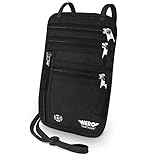

Compare the main travel-wallet styles
Dimensions and capacities vary by model, so treat the figures below as practical shopping targets rather than specifications for every wallet in a category. Check the manufacturer’s measurements before buying, particularly if your passport has a cover or you carry a large phone.
| Style | Typical size | Useful capacity | Closure security | Best for |
|---|---|---|---|---|
| Passport cover | About 14 × 10 × 1 cm | 1 passport, 2–4 cards, a few folded notes | Open or elastic band; check for a retaining strap | Light packers and short trips |
| Zip-around travel organizer | About 19 × 12 × 2.5 cm | 1 passport, 6–10 cards, notes, boarding documents | Full perimeter zipper | People who want documents together in a bag |
| Neck wallet | About 19 × 14 × 1.5 cm | 1–2 passports, 4–8 cards, cash | Zipper or hook-and-loop flap; strap is a separate security factor | Transit days and hands-free document access |
| Money belt | About 27 × 13 × 1 cm | Passport, cards, folded cash | Zippered pouch; worn under clothing | Concealed storage for valuables |
| Compact card wallet | About 11 × 8 × 1.5 cm | 4–8 cards and folded cash; usually no full-size passport | Snap, zipper, or elastic closure | Day trips when the passport stays secured elsewhere |
Capacities are estimates: thick cards, coins, receipts, and passport covers can reduce usable space. For a true passport fit, look for an interior pocket around 13 × 9 cm or larger and leave extra room for seams. Do not assume a passport-cover label means the document will slide in easily.
Choose by the trip, not by the feature list
- One-bag or weekend traveler: A passport cover or compact organizer is usually enough. Pick a cover with a card slot that does not stretch the passport pocket, and carry only the cards needed for the trip.
- Family trip: A zip-around organizer can keep several documents together, but confirm that it fits the number of passports you need. A wallet that is packed to its limit is harder to close and slower to search.
- Frequent flights and border crossings: A neck wallet keeps documents accessible while leaving hands free. Choose a strap that adjusts securely and lies flat; a bulky pouch may swing, rub, or show under light clothing.
- Crowded public transport: A money belt can conceal a backup card and emergency cash. It is less convenient for repeated payments, so keep a separate small wallet for ordinary spending.
- Minimal day out: Use a compact card wallet and leave the passport in a secure place when appropriate. A passport carried everywhere adds bulk and creates another item to protect.
What matters when comparing wallets
Capacity without overstuffing
Count your usual cards, not the maximum number of slots printed on the packaging. A slot may hold one standard card comfortably but become difficult to use with two. For travel, a practical setup is often two payment cards, an identification card, a transit or insurance card if needed, and a small amount of cash. Keep a backup payment method separate from your everyday wallet.
Passport fit and access
Passport dimensions and cover styles differ, and wallet stitching reduces the pocket’s usable opening. Look for a clear fit measurement, not just a product photo. A passport should slide in and out without bending its cover or catching on a zipper. If you use a passport cover, measure the covered passport and compare it with the wallet’s interior dimensions.
Closure and theft resistance
A zipper helps prevent loose cards and receipts from falling out, but it does not make a wallet theft-proof. Check whether the zipper opens smoothly around corners and whether the pull stays shut when the wallet is packed. Hook-and-loop closures are quick to open but can collect lint and lose grip over time. A snap is tidy, though a heavily loaded wallet may strain the fastening.
Materials, weight, and pocket comfort
Nylon and polyester fabrics are generally light and easy to wipe clean; coated versions may shed light moisture, but coatings and seams are not necessarily waterproof. Leather can feel more structured and age attractively, but it is usually heavier and may show scratches or water marks. A rigid, overfilled organizer can press uncomfortably against a hip or make a jacket pocket sag. For pocket carry, favor a soft, rounded profile and keep the total thickness near 2 cm or less when empty.
RFID shielding claims
Some wallets use a conductive lining intended to block radio-frequency communication with certain contactless cards. Shielding performance depends on construction and coverage, and product claims are not always directly comparable. A passport’s electronic chip is not the same as a contactless payment card, and an RFID wallet should not be treated as a substitute for protecting physical documents or using strong account security.
Materials and ownership: what wears first
On fabric wallets, the zipper, stitching at strap anchors, and corners usually deserve the closest inspection. Repeated overloading pulls on seams and can make a zipper track bow. On leather models, edges and fold lines tend to show wear first; moisture and friction can also alter the finish. Hook-and-loop closures gradually collect lint, while elastic bands can lose tension.
To extend the life of any style, empty it after a trip, remove crumbs and paper scraps, and clean the surface according to the care label. Avoid soaking a wallet unless the manufacturer explicitly permits it. Do not pack coins or bulky key fobs into a document organizer: concentrated pressure can distort the shape and stress the closure. If the RFID lining is damaged or a seam opens, treat the wallet as ordinary storage rather than assuming its shielding still works.
Quick decision matrix
| Your priority | Best starting choice | Trade-off to accept |
|---|---|---|
| Lowest bulk | Passport cover | Limited room for cash and extra cards |
| Documents and cards together | Zip-around organizer | Too large for most trouser pockets |
| Hands-free airport access | Neck wallet | Strap comfort and visibility matter |
| Concealed backup cash | Money belt | Slower access, especially in warm weather |
| Daily sightseeing | Compact card wallet | Passport needs separate secure storage |
Bottom line
For a single all-purpose travel wallet, start with a zip-around organizer if you carry a passport, several cards, and travel papers; choose a passport cover if light packing is the priority. Neck wallets and money belts suit specific situations rather than every day of a trip. Before purchasing, check interior dimensions, empty weight, closure type, and care instructions—and test the fit with your actual passport and cards at home, leaving enough room for the wallet to close without force.