Best Compact Random Orbital Sanders for Small Workshops
What's inside
As an Amazon Associate I earn from qualifying purchases. This post may contain affiliate links at no extra cost to you.
Contents
Best Compact Random Orbital Sanders for Small Workshops
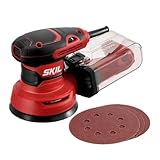
The best compact random orbital sander for most small workshops is a corded 5-inch model with a short body, a comfortable palm grip, low vibration, and a dust port that can connect to your extractor. Choose a 3-inch sander instead if you regularly work on narrow parts, or a cordless model if moving around a crowded bench matters more than uninterrupted runtime.
Compactness is more than the tool’s advertised dimensions. A short, narrow body is easier to steer between clamps and against raised edges; a manageable weight helps when sanding upright surfaces; and a well-shaped grip makes one-handed control less tiring. The picks below emphasize those everyday constraints rather than maximum removal rate.
As an Amazon Associate we earn from qualifying purchases at no extra cost to you.


Compact sander comparison
Specifications can vary by version and market. Treat listed weights as approximate tool-only figures and check the exact model’s manual before buying accessories or making a dust-hose adapter.
| Sander | Pad size | Approx. weight | Power and dust setup | Best fit in a small shop |
|---|---|---|---|---|
| Bosch ROS20VSC | 5 in. | About 3.5 lb | 2.5 A corded; microfilter dust canister and vacuum-compatible port | General-purpose sanding and users who want variable speed |
| Makita BO5030 | 5 in. | About 3.1 lb | 3 A corded; dust bag and vacuum connection | Frequent bench work where a light, simple tool is preferable |
| DEWALT DWE6423 | 5 in. | About 2.9 lb | 3 A corded; dust-sealed switch and vacuum-compatible dust port | Long sessions and a lower-weight 5-inch option |
| Mirka DEROS 5-inch models | 5 in. | About 2.2 lb | Electric; designed for connection to dust extraction | Dust-extractor setups and users willing to pay more for a very light body |
| Festool ETSC 125 | 5 in. (125 mm) | About 2.2 lb without battery | 18 V cordless; typically paired with compatible dust extraction | Small shops where cord-free movement is worth the battery cost |
| Bosch GEX 12V-125 | 5 in. (125 mm) | About 2.2 lb without battery | 12 V cordless; dust bag or compatible extraction, depending on setup | Light-duty cordless sanding and a crowded bench |
A published weight does not tell the whole story: a battery adds weight and changes the balance, while a vacuum hose can pull on the back of a corded sander. If possible, hold the tool with the dust connection attached. For tight work, that combination may matter more than a few tenths of a pound on the specification sheet.
Which compact sander suits your situation?
For one dependable sander for furniture and small projects
Pick a conventional 5-inch corded model such as the Bosch ROS20VSC, Makita BO5030, or DEWALT DWE6423. Five-inch hook-and-loop discs are widely available, and the pad covers enough area to finish tabletops and cabinet parts without making the tool unwieldy. Variable speed is useful when sanding delicate veneer, easing an edge, or working with a finish schedule that calls for a lighter touch.
For frequent sanding and less arm fatigue
Consider the lighter DEWALT DWE6423 or, at a higher general market price, a Mirka DEROS model. A lighter sander is particularly helpful on vertical panels or when the work cannot be positioned flat. But low weight is not an automatic win: a tool that feels too light or top-heavy can be harder to keep flat, especially if the hose is stiff.
For a narrow bench, small parts, or edge details
A 3-inch random orbital sander can fit where a 5-inch pad crowds clamps or crosses a narrow rail. The trade-off is slower coverage and less convenient abrasive availability in some shops. It is best as a second tool for small components, not a default replacement for a 5-inch sander if you routinely finish broad panels.
For a bench with no convenient outlet
Choose a cordless 5-inch model only if the freedom from a cord solves a real layout problem. Cordless sanding is convenient for moving between a bench, assembly table, and finishing area, but budget for batteries and charging time. For steady work at one bench, a corded sander avoids pauses and usually costs less overall.
Fit, grip, and dust matter more than headline power
In a small workshop, a palm-grip sander is usually easier to control than a larger body designed to accommodate a prominent top handle. Look for a narrow waist, a reachable power switch, and a grip surface that stays secure without squeezing hard. The useful test is whether you can guide the tool with a relaxed hand while keeping the pad level—not whether you can press down firmly.
Dust-port compatibility deserves a check before purchase. Ports and adapters are not universal, and a tool’s included dust bag may not seal as well as an extractor connection. Measure the port or consult the maker’s adapter information, then account for the hose’s outside diameter and stiffness. A loose fit leaks dust; a tight, heavy hose can tug the sander off course. Keep a short, flexible hose section near the tool if your extractor setup allows it.
For clean sanding, let the sander’s weight do the work. Pressing down increases fatigue, can slow the orbit, and may leave uneven marks. Move at a steady pace with overlapping passes, and stop the pad before lifting it from the surface. These habits help prevent swirl marks and reduce the chance of tipping the tool over an edge.
Set up the sander for a tight workshop
- Choose the pad around the work: Use 5 inches for general surfaces and 3 inches for narrow parts or limited clearance. Confirm that replacement discs match the pad’s hole pattern if dust extraction relies on through-pad airflow.
- Check the hose path: Route the cord or hose behind the work and away from clamps. A hose that catches a bench leg can pull the pad sideways and spoil a pass.
- Start with a sound disc: Align the disc carefully with the pad holes. A badly offset disc can reduce dust collection and create a less stable sanding feel.
- Test on scrap: Begin with light pressure and a moderate speed, then inspect for scratches, heat, or swirl marks before sanding the visible face of a part.
- Keep dust moving: Empty the canister or bag before it is packed, and clean the pad’s extraction holes. Wear suitable eye and respiratory protection; dust collection does not capture every particle.
Ownership costs and wear to expect
Most compact random orbital sanders use hook-and-loop discs, so abrasive is the recurring cost. General market prices vary widely: basic corded models commonly fall in the roughly $50–$100 range, while premium electric or cordless options can cost several hundred dollars before accessories or batteries. A 3-inch format may also cost more per square inch of abrasive, depending on the discs available locally.
The abrasive usually wears out before the sander. After that, inspect the hook-and-loop pad: worn hooks can let discs shift or detach. Dust buildup around the pad, vents, and switch can also shorten service life or make the tool run hot. Unplug a corded tool or remove the battery before cleaning; use the manufacturer’s maintenance guidance and avoid directing high-pressure air into the motor unless the manual permits it.
For a small shop buying its first sander, a 5-inch corded model is the sensible starting point. Add a 3-inch tool when narrow parts are a regular job, or move to a lightweight premium or cordless model when reduced fatigue or cord-free access will make a noticeable difference in your actual layout.