How to Maintain Table Saw Trunnion Lubrication and Movement
What's inside
As an Amazon Associate I earn from qualifying purchases. This post may contain affiliate links at no extra cost to you.
Contents
Why Trunnion Maintenance Matters
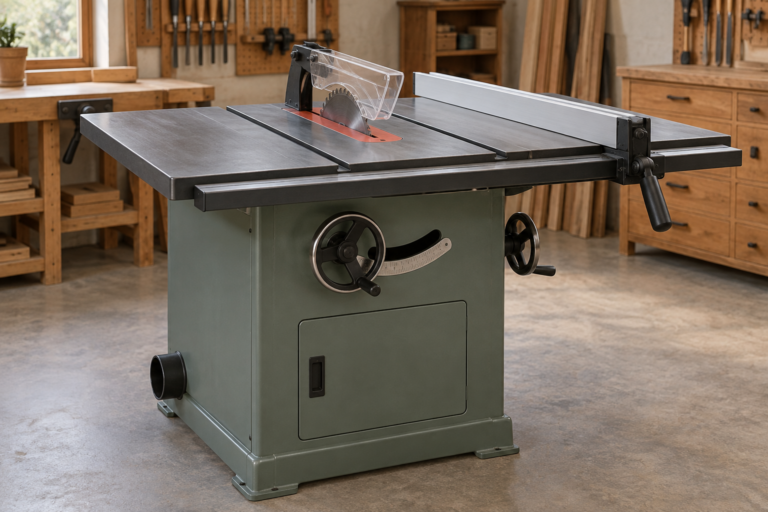
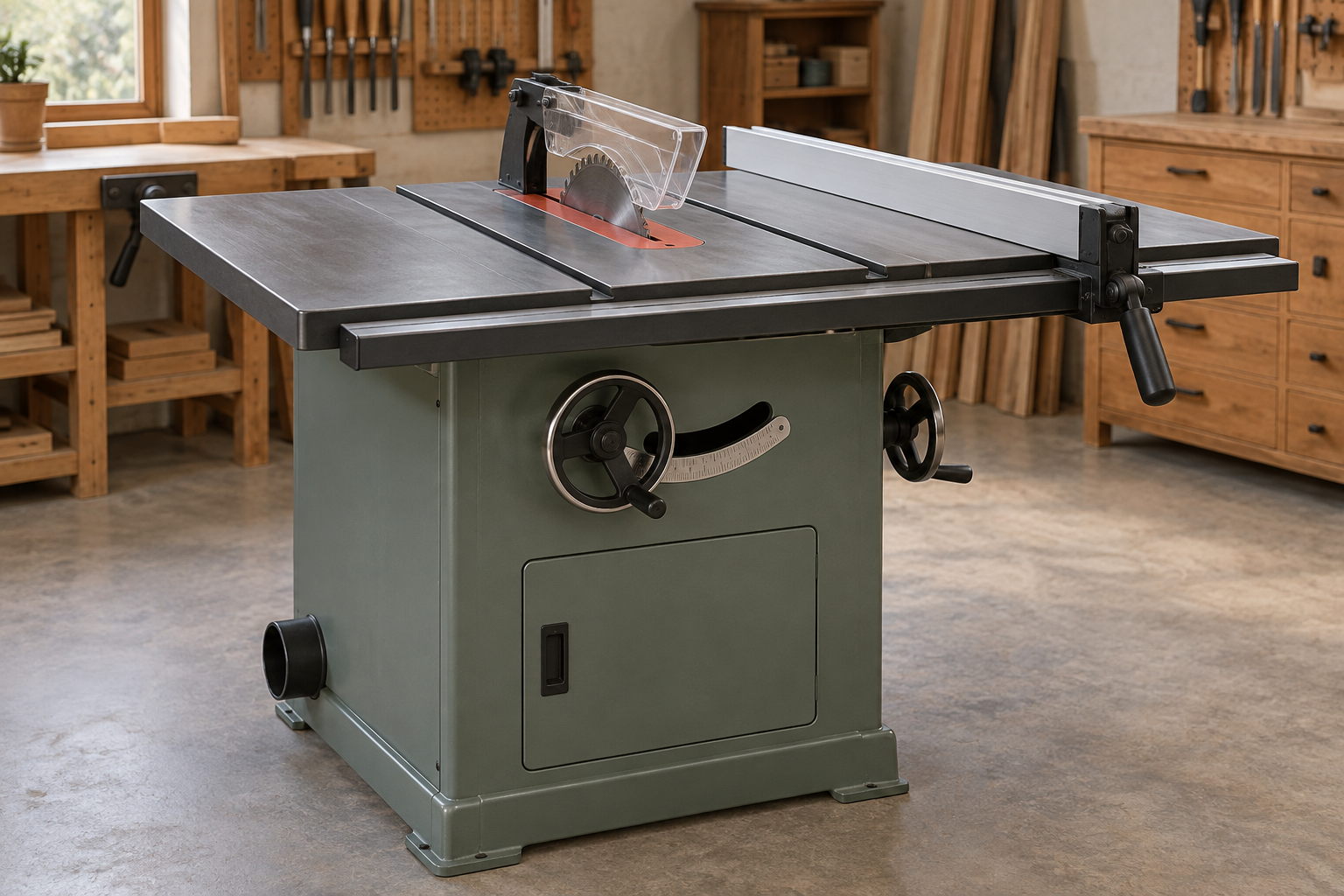
The trunnions are the table saw’s pivoting supports. They let the arbor and blade assembly tilt for bevel cuts and, on many saws, move vertically for blade-height adjustment. Their curved ways, pivot pins, gears, and threaded elevation mechanism carry substantial weight. When they become dusty or dry, the symptoms are familiar: a stiff handwheel, jerky blade movement, a bevel that will not reach its stop, or an angle that drifts after locking.
Good maintenance is not simply a matter of adding more oil. Sawdust mixed with wet oil forms an abrasive paste. That paste can make movement worse and accelerate wear. The correct routine is to clean first, apply a small amount of suitable lubricant to the right surfaces, and then exercise the mechanism through its complete range.
What to Use—and What to Avoid
Check the saw’s manual before choosing a lubricant. Manufacturers differ, especially on enclosed gearboxes and polymer components. For exposed steel pivot points and threaded elevation shafts, a dry-film lubricant or a light machine oil is usually more useful than a heavy grease. Dry lubricants attract less dust, while light oil provides better corrosion protection but needs more frequent cleaning.
| Lubricant | Best use | Advantages | Drawbacks |
|---|---|---|---|
| Dry PTFE or graphite spray | Exposed trunnion ways and dusty shops | Does not stay wet and collect as much sawdust | Less corrosion protection; overspray is easy |
| Light machine oil | Pivot pins, shafts, and threaded mechanisms | Good penetration and rust protection | Collects dust if applied heavily |
| Lithium or other general grease | Locations specified by the manufacturer | Long-lasting film and good load capacity | Can turn sawdust into abrasive sludge |
| Penetrating oil | Freeing a stuck fastener or rusty pivot temporarily | Useful for loosening corrosion | Not a durable maintenance lubricant |
A dry PTFE lubricant spray is a sensible choice for a dusty woodworking shop. For oil, use a small bottle of light machine oil rather than automotive motor oil. Avoid WD-40-type water-displacing sprays as the only lubricant; they can help clean or free a part, but their lubricating film is short-lived.
Safety and Access
Unplug the saw before removing the throat plate, opening a cabinet panel, or reaching near the arbor and trunnions. Do not rely on the power switch. Remove the blade if your hands will be near its teeth, and wear eye protection when brushing out compacted dust.
Raise the blade to its highest position before cleaning the elevation mechanism, unless the manual specifies another position. Tilt the arbor assembly through its range only by turning the handwheel; never force the blade or use a wrench on the handwheel. If the saw has a cabinet, remove the lower panel or dust collection hose to expose the front and rear trunnions. Some saws have trunnions mounted to the table, while others mount them to the cabinet, so access and adjustment procedures vary.
Clean Before Lubricating
Vacuum loose dust from the cabinet and around the elevation and tilt gears. Follow with a stiff nylon brush. A brass brush can be useful on bare steel, but do not use it on painted surfaces, plastic gears, or delicate graduated scales. Scrape hardened deposits with a plastic tool.
Pay particular attention to the curved trunnion arcs and the mating pads or ways. These surfaces need to slide, not merely pivot. Clean the elevation screw, worm gears, bevel gears, and pivot pins as far as you can reach. If the old lubricant is gummy, wipe it away with a rag lightly dampened with mineral spirits, keeping solvent away from rubber belts, electrical parts, and plastic components. Let the area dry completely before applying anything.
Lubrication Procedure
Apply lubricant sparingly. For a dry spray, put a piece of cardboard behind the target area to control overspray and use a short burst from roughly 6 to 8 inches away. For oil, place one or two drops on a clean cloth or precision oiler and wipe a thin film onto the pivot shaft or screw. Do not pour oil into the cabinet or flood the gear teeth.
Lubricate the exposed threads of the elevation screw, the screw’s thrust or bearing points, pivot pins, and the trunnion sliding surfaces identified by the manual. On some saws, the curved ways are painted or machined steel; on others, replaceable wear pads do the sliding. If the manual says a way should remain dry, follow that instruction.
After applying the lubricant, turn the elevation and tilt handwheels through their full travel several times. Move slowly at first, then operate normally. This spreads the film and reveals tight spots. Wipe away any visible excess. A properly lubricated mechanism should feel smoother, but it may still have some resistance because the assembly is carrying the arbor and blade weight.
For an economical option, a clean rag and a few drops of light machine oil are adequate on a lightly used saw. The extra cost of dry-film lubricant is easier to justify in a high-dust shop or on a saw that is difficult to clean.
How Often to Service It
Inspect the mechanism every 25 to 40 hours of use, or monthly for a saw used regularly. Clean and lubricate sooner if the shop produces fine dust, the saw has been stored in a damp area, or the handwheels feel noticeably rough. A full inspection every six months is reasonable for occasional home use.
Do not judge lubrication by handwheel force alone. Check that the blade reaches its marked 0-degree and 45-degree positions, that the bevel lock holds securely, and that the blade remains parallel to the miter slot. A blade that moves out of alignment can indicate loose trunnion bolts, worn bearings, bent hardware, or a damaged cabinet—not just dry lubricant.
Common Problems That Lubrication Will Not Fix
Grinding, clicking, or a sudden tight spot may indicate a damaged gear tooth, bent elevation screw, or bearing problem. Excessive side-to-side movement points to loose pivot hardware or worn trunnion supports. If the handwheel turns but the blade does not rise, inspect the key, pin, and gear connection.
Never compensate for a loose or misaligned trunnion by applying more lubricant. Tighten mounting bolts only according to the saw’s adjustment procedure, because shifting one trunnion can change blade-to-slot alignment. If a mechanism binds after cleaning, stop using the saw until you identify the interference. Forcing the handwheel can strip gears and turn a simple cleaning job into a parts replacement.
When buying supplies, prioritize a good vacuum brush, lint-free rags, a nylon detailing brush, and a lubricant compatible with the manufacturer’s instructions. Those inexpensive items prevent more trouble than a heavy grease applied in large amounts.