Best Band Saws for Producing Consistent Cabinet Door Arches
What's inside
As an Amazon Associate I earn from qualifying purchases. This post may contain affiliate links at no extra cost to you.
Cabinet door arches are easy to draw and surprisingly difficult to cut consistently. A band saw can follow the curve without the waste and noise of a router, but only if the machine keeps the blade tracking in one plane. Frame flex, poor blade tension, an undersized table, or a dull blade can turn a clean arch into a series of flats and ripples.
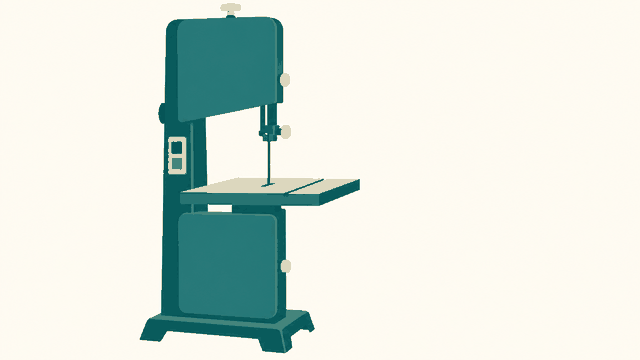
For most cabinet shops and serious home workshops, the best choice is a 14-inch band saw with a rigid frame, a cast-iron table, reliable blade guides, and at least 1 hp. A smaller saw can handle thin plywood and narrow door parts, while a larger resaw-oriented machine makes sense when you also cut thick hardwood components. The ideal saw depends less on maximum throat depth than on how steadily it controls the blade through a long, visible curve.
Contents
What Makes a Band Saw Good for Arches
Arch cutting needs smooth control rather than brute force. Look for a throat capacity of at least 12 inches so a typical cabinet door blank can be rotated without constantly approaching the column. A 14-inch saw usually provides 13 to 14 inches of throat, which is enough for many doors and face frames. If you routinely cut 18-inch-wide or larger panels, a 17- or 18-inch machine gives more working room.
Blade tension matters more than the motor rating. The upper wheel and frame must resist deflection when you tension a 1/4-inch or 3/8-inch blade. A flexible frame allows the blade to wander, making one side of a pair of doors different from the other. A welded-steel frame or heavy cast-iron frame is preferable to a light benchtop housing.
Choose a saw with upper and lower ball-bearing guides. Ceramic guides can also work well, but they need careful adjustment and can wear or chip if set aggressively. The guides should move close to the work—roughly 1/8 inch above the stock—without touching the blade. A large cast-iron table, ideally at least 15 by 15 inches, gives better support as you pivot a door blank through the arch.
Recommended Band Saw Types
| Band saw type | Best use | Typical strengths | Main limitation |
|---|---|---|---|
| 10-inch benchtop | Small doors, plywood, occasional work | Low cost, compact, adequate for thin stock | Limited throat, weaker tension, small table |
| 14-inch, 1 hp | Most cabinet door arches | Good control, useful capacity, broad blade selection | May struggle with thick hardwood resawing |
| 14-inch with riser | Taller parts and moderate resawing | More cutting height for the money | Riser can increase vibration and complicate blade tracking |
| 17- to 18-inch floor model | Production work and thick hardwood | Rigid frame, strong tension, larger table | Expensive, bulky, excessive for occasional arches |
A 14-inch 1 hp band saw is the sensible starting point for most cabinetmakers. It has enough capacity for common door blanks while remaining easier to fit and maintain than a large production saw. The cheaper option is fine when you cut 3/4-inch plywood or solid wood doors occasionally and can accept making a light cleanup pass with a spindle sander or router.
Move up to a 17-inch woodworking band saw when you cut thick hardwood regularly, need a larger table, or want more dependable resaw performance. Do not buy one simply because the horsepower number is higher. A poorly aligned 17-inch saw will still produce inconsistent arches, and its larger footprint can make it less convenient for small work.
Blade Selection for Clean Arches
For most cabinet door curves, use a 1/4-inch blade with 6 teeth per inch (TPI) or a 3/8-inch blade with 6 TPI. The narrower 1/4-inch blade turns tighter radii; the 3/8-inch blade is usually steadier on broad arches. A 1/2-inch blade is often too stiff for tight curves, even though it can leave a straight cut on large-radius work.
Use a skip-tooth or regular-tooth blade designed for wood, with sharp teeth and adequate gullets. A 1/4-inch, 10-tooth-per-inch blade can produce a smoother edge in thin plywood, but it removes waste more slowly and clogs more easily in thick hardwood. If the blade burns the edge, stalls the motor, or requires force to stay on the layout line, replace it rather than increasing feed pressure.
Blade width determines the minimum practical radius. As a rough guide, a 1/4-inch blade handles curves around 5/8 inch radius, while a 3/8-inch blade is better for radii above about 1-1/2 inches. These are working estimates, not guarantees; blade quality, tooth set, stock thickness, and feed speed all change the result.
Setup for Matching Door Pairs
Make a full-size template from hardboard or MDF and mark the centerline. For a pair of doors, clamp the blanks together if the total cutting height stays within the saw’s capacity. Otherwise, use the same template and register it from identical reference edges. Cut just outside the line—about 1/32 inch is enough—then sand or rout to the final profile.
Before cutting, verify that the blade tracks near the center of the wheel tires, the table is square to the blade, and the guides are close to the stock. Let the blade reach full speed before entering the cut. Feed at a steady rate and rotate the work rather than twisting it sideways. If the arch has a tight inside corner, drill a relief hole or divide the cut into sections; forcing a turn can pull the blade off the wheels.
Common Failure Modes
Wavy cuts usually come from a dull or under-tensioned blade, loose guides, or excessive feed pressure. A cut that drifts consistently may indicate incorrect blade tracking, a fence that is not parallel to the blade, or uneven tooth set. Burning is generally caused by a dull blade, too many teeth for the material, or feeding too slowly. Vibration can come from an unbalanced wheel, a loose stand, poor blade weld, or a table that is not firmly locked.
A quality 1/4-inch band saw blade and careful setup often improve results more than replacing a functional saw. If your current machine has less than about 10 inches of throat, cannot tension a narrow blade properly, or flexes visibly under moderate tension, replacement is justified. For everyone else, spend first on blades, dust collection, and a rigid work stand.