Planer For Hardwood Lumber
Key takeaways
- An editorial guide to choosing a planer for hardwood lumber, judged on cutterhead design, bed flatness, snipe control and dust extraction rather than marketing claims.
What's inside
As an Amazon Associate I earn from qualifying purchases. This post may contain affiliate links at no extra cost to you.
Hardwood is where cheap thickness planers stop pretending. Softwood forgives a dull knife and a sloppy feed roller, but hard maple, white oak and anything with figure will punish a machine that lacks the mass, the power and the mechanical discipline to hold a cut. The right planer for hardwood lumber is not simply the one with the highest horsepower number on the box. It is the one whose bed stays flat, whose cutterhead lock actually locks, and whose feed system keeps moving when a 12-inch wide slab of quartersawn oak starts to load the motor.
We approach this the way we approach any machine on the review desk: by looking at the parts that wear, deflect or drift. Cutterhead geometry, bed and extension-table flatness, snipe behavior at both ends of a board, dust port design and vibration under load tell you more about a planer’s working life than any spec sheet. What follows is a criteria-led framework, plus the categories of machine worth your attention. We do not publish fabricated bench numbers, and we do not claim to have run a specific numbered model across a specific number of board feet.
As an Amazon Associate we earn from qualifying purchases at no extra cost to you. Product prices and availability are accurate as of the date shown and are subject to change.

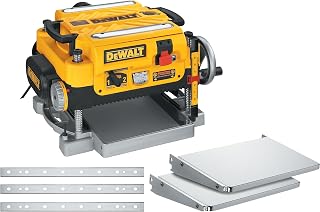


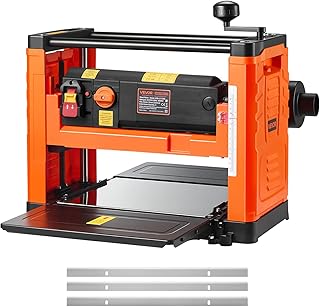


| Class | Typical Width | Cutterhead | Best Fit For |
|---|---|---|---|
| Benchtop portable | 12 to 13 in | Straight knife or segmented helical | Small shops, occasional hardwood, mobile work |
| Benchtop premium | 13 in | Segmented helical upgrade available | Serious hobbyists surfacing figured stock |
| Stationary 15 in | 15 in | Helical or three-knife | Regular hardwood milling, cabinet shops |
| Stationary 20 in and up | 20 in plus | Helical, multi-speed feed | Production work, wide slabs, hardwood dealers |
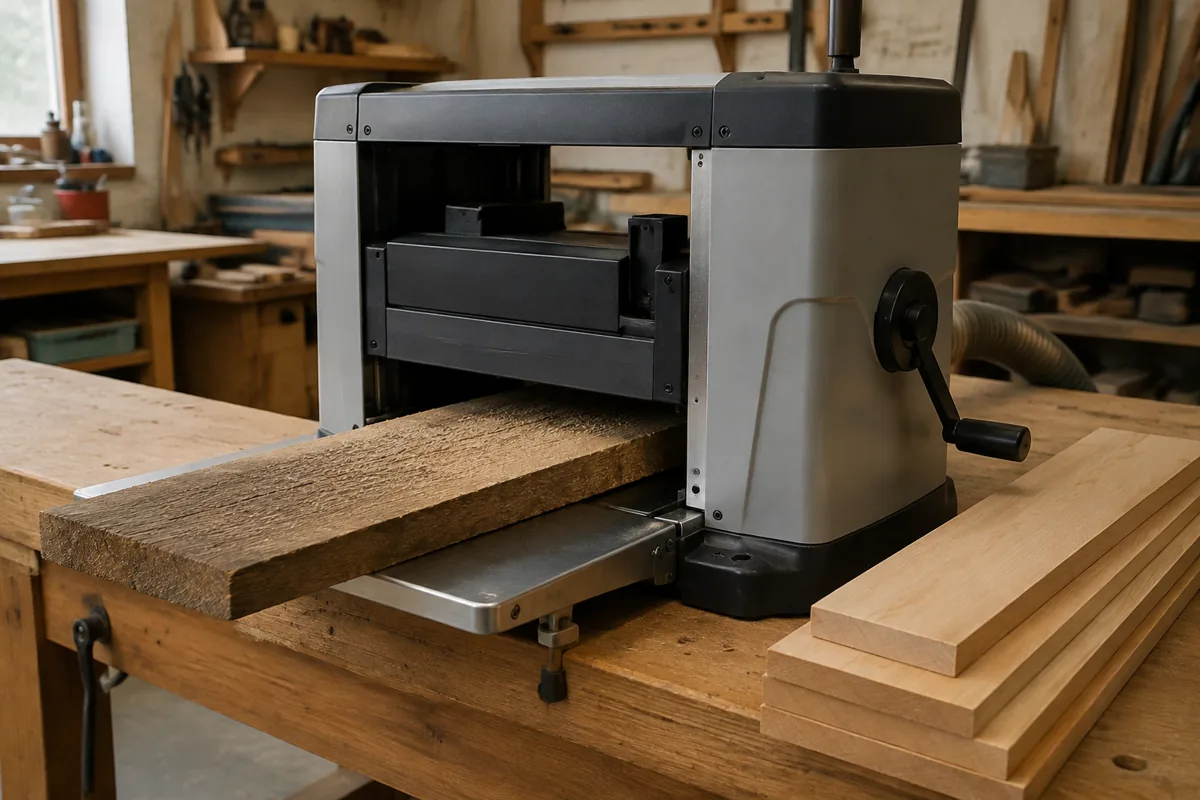
Why A Planer For Hardwood Lumber Is Judged Differently
A thickness planer does one job: it references the bed and removes material from the top face until the board reaches a uniform thickness. Everything that goes wrong in hardwood traces back to that reference surface being disturbed. Dense stock pushes back harder against the knives, which lifts the cutterhead in its posts if the machine has slop. It loads the motor, which slows the feed rollers and produces the burnished, glassy patches you find on cherry. It also generates chips at a volume that will pack a poorly designed chute and start pressing debris into the workpiece.
Mass is the first honest indicator. A 60-pound benchtop unit and a 500-pound cast-iron machine can share the same nominal cut width and the same claimed depth of cut, and they will behave nothing alike in white oak. Weight damps vibration and resists the upward force of the cut. That does not mean benchtop machines are unfit for hardwood. It means they need to be run within their limits: shallower passes, sharper knives, and patience.
The second indicator is the cutterhead lock. Portable planers use four threaded posts to carry the head, and any looseness there shows up as snipe and as thickness variation across the width. Better machines add a cam-style head lock that clamps the carriage before the cut. Some four-post designs are precise enough to work well without one. What you want to check on any machine, new or used, is whether the head can be rocked by hand at all when locked.
Cutterhead Choice: Straight Knives Versus Segmented Helical
This is the decision that most changes the character of the machine. Straight knives are cheap to replace, sharpen quickly, and cut cleanly when fresh. In hardwood they dull faster, and a single nick anywhere along the edge leaves a raised line down the entire board. Disposable double-edged knives soften the cost, but you are still swapping the whole set.
Segmented helical heads carry dozens of small square carbide inserts arranged in a spiral. Each insert has four usable edges and rotates individually, so a nick costs you one insert rather than a set. The shearing action reduces tearout in figured maple and interlocked grain, which is the single most persuasive argument for the design. The cut leaves a faint scalloped pattern that sands out easily. Noise drops noticeably compared with straight knives, and chip size becomes smaller and more granular, which changes what your dust collector needs to handle.
The tradeoffs are real. Helical heads cost more up front, whether factory-fitted or bought as an aftermarket conversion. Rotating a full head of inserts is a methodical job with a torque driver. And for straight-grained poplar and pine, the improvement is modest. If hardwood is the majority of what passes over your bed, and especially if figured stock is involved, helical earns its price. If you mostly mill construction lumber, it does not.
Benchtop 13-Inch Thickness Planer With Helical Cutterhead
For most one-person shops working hardwood a few times a month, a 13-inch benchtop with a segmented helical head is the sensible center of the market. You give up mass and feed-rate options compared to a stationary machine, but you gain tearout control in figured stock and inserts you can rotate individually. Expect to take lighter passes than the manual’s maximum suggests, and budget for a real dust collector rather than a shop vacuum.
Snipe, Bed Flatness And The Mechanical Details That Matter
Snipe is the shallow dish cut into the first and last few inches of a board when only one feed roller has contact and the cutterhead is momentarily free to shift. No planer is entirely immune. What separates good machines from poor ones is how much, how consistently, and whether you can manage it.
Three mechanical factors control snipe. First, the head lock, as discussed. Second, the extension tables: if the infeed and outfeed tables sag below the bed plane, the board tips as it enters and exits, and the cut deepens at the ends. Those tables are adjustable on most machines, and setting them a hair above the bed plane is a standard remedy. Third, feed roller pressure and spring tension, which determine how firmly the stock is held while the knives are engaged.
Check bed flatness with a reliable straightedge across the width and along the length. A hollow in the middle of a cast bed produces boards that are thinner at the center, and that error propagates through every glue-up you make. On benchtop machines the bed is often a stamped or cast plate that can be shimmed; on stationary machines it is a ground casting that should be flat out of the crate.
Dust extraction deserves more weight than it usually gets in reviews. Hardwood at full width produces chips fast, and a 4-inch port that necks down internally will clog. Look for a port that maintains its diameter into the chute, and an unobstructed path from the cutterhead. A shop vacuum can keep up with a benchtop planer on narrow stock and will not keep up on wide hardwood.
- ✔ Segmented helical heads dramatically reduce tearout in figured hardwood
- ✔ Individual carbide inserts mean a nick costs one insert, not a full knife set
- ✔ Cast-iron stationary machines hold thickness tolerance better under load
- ✔ Two-speed feed on larger machines allows a slower, finer finishing pass
- ✘ Helical conversions add meaningful cost to an otherwise affordable machine
- ✘ Benchtop planers need light passes in dense stock, which slows milling
- ✘ Chip volume in hardwood outpaces shop vacuums and small dust extractors
- ✘ No thickness planer flattens a cupped board without a jointer or planer sled first
Matching The Machine To Your Actual Workflow
Width capacity sets a hard ceiling on your projects. A 12 or 13-inch machine handles most furniture parts, since wide panels are usually glued up from narrower boards anyway. If you buy rough lumber from a sawyer in 14 to 18-inch widths, or work with live-edge slabs, a 15-inch or 20-inch stationary machine stops being a luxury.
Feed rate matters more in hardwood than most buyers expect. Machines with a two-speed gearbox let you rough at the faster rate and finish at the slower one, which puts more cuts per inch on the surface and reduces the sanding that follows. Single-speed benchtop planers compensate with high cutterhead RPM, and the results are respectable, but the control is not the same.
Finally, be honest about the jointer question. A thickness planer references the bottom face. Feed in a cupped or twisted board and you get a cupped or twisted board of uniform thickness. Hardwood bought rough and air-dried very often needs a jointer, a planer sled, or a router-based flattening jig first. Buyers who skip this step blame the planer for a problem it was never designed to solve.
15-Inch Stationary Planer For Hardwood Milling
If you mill hardwood weekly, the jump to a 15-inch stationary machine changes the experience more than any accessory. Cast-iron construction damps vibration, two-speed feed gives you a genuine finishing pass, and the bed casting holds flat across the full width. Plan for a 220V circuit, a mobile base, and a dust collector rated for the chip volume before the machine arrives.
Frequently Asked Questions
How deep a pass can I take in hard maple? Far less than the manual’s maximum, which is usually quoted for softwood at narrow widths. In dense hardwood at or near full width, think in terms of very light passes, roughly a thirty-second of an inch or less, and let the machine’s sound tell you when you are asking too much. Bogging the motor dulls knives and burnishes the surface.
Is a helical cutterhead worth the upgrade cost on a benchtop planer? If figured or interlocked hardwood is a regular part of your work, yes. The tearout reduction and the four-edge insert economy add up over a few years. If you mostly surface straight-grained stock, disposable straight knives are the cheaper path and the finish difference is small.
Can I use a shop vacuum instead of a dust collector? On narrow hardwood, briefly. Wide hardwood generates chip volume that a shop vacuum cannot move, and a packed chute pushes debris back under the rollers where it dents the workpiece. A collector sized for 4-inch ductwork is the practical minimum for regular hardwood milling.
The Verdict
For the shop that mills hardwood occasionally, a 13-inch benchtop with a segmented helical head is the best value in the category. It is limited by mass and by single-speed feed, and those limits are manageable with lighter passes and a properly set pair of extension tables. For anyone milling hardwood every week, or working stock wider than a nominal foot, a 15-inch cast-iron machine with two-speed feed is the honest recommendation, and the cost of the required electrical service and dust collection should be in the budget from the start.
Whichever class you choose, judge the specific machine on the mechanics: rock the locked cutterhead, put a straightedge on the bed, look into the dust port, and check that the extension tables adjust. Those four checks predict how a planer will behave in oak better than any horsepower figure.
Check prices on Amazon →