How to Select a Table Saw Blade for Crosscutting Hardwood
What's inside
As an Amazon Associate I earn from qualifying purchases. This post may contain affiliate links at no extra cost to you.
Crosscutting hardwood on a table saw is less forgiving than cutting construction lumber. Dense fibers can splinter at the exit edge, a coarse blade can leave washboard marks, and a blade with the wrong hook angle can make a cut feel unnecessarily aggressive. The right blade depends on the finish you need, the thickness of the stock, and whether you are cutting solid wood or sheet goods.
Contents
Start With Tooth Count
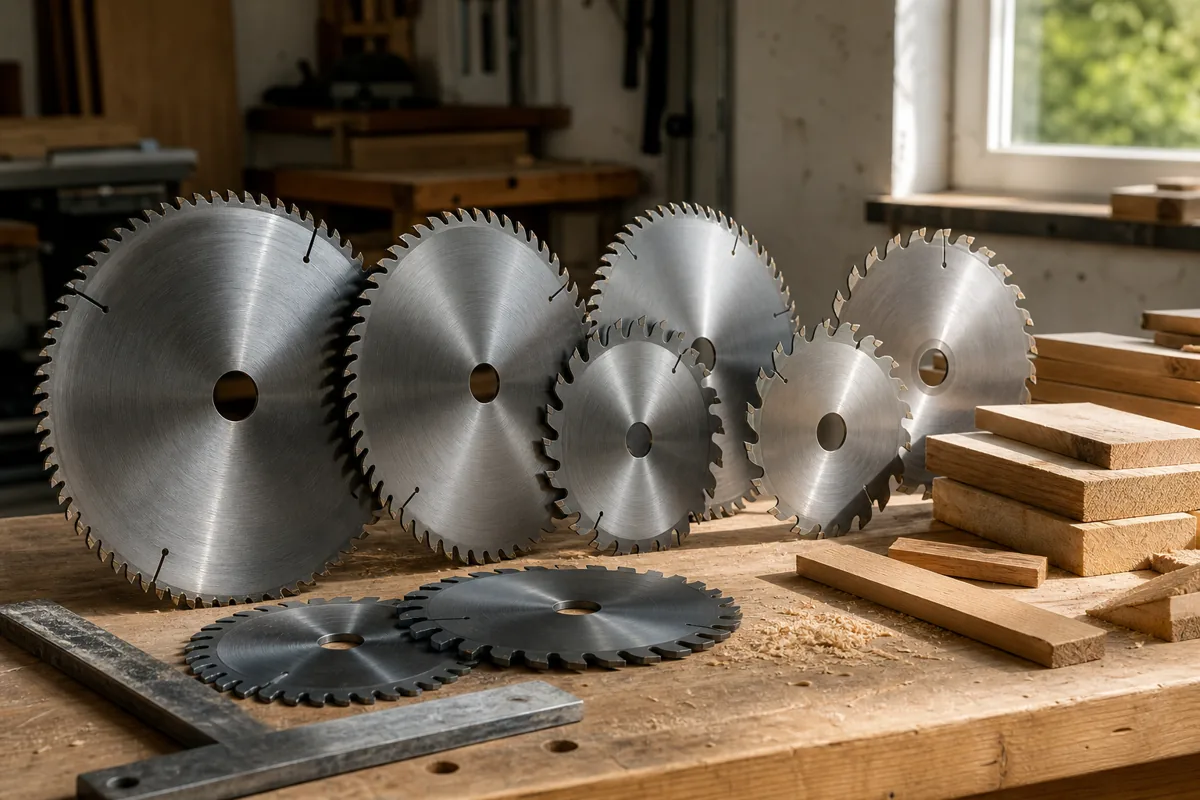
For most hardwood crosscuts, a blade with 60 to 80 teeth is the practical range. More teeth generally produce a cleaner edge because each tooth removes less material, but they also cut more slowly and create more fine dust. An 80-tooth blade is useful for short, visible cuts in expensive hardwood. A 60-tooth blade is usually the better all-around choice for furniture parts and general shop work.
Tooth count alone does not determine cut quality. A thin, poorly tensioned blade with 80 teeth can perform worse than a well-made 60-tooth blade. Look for carbide teeth that are evenly ground, firmly attached, and wide enough to be sharpened several times. A blade that is visibly warped, has chipped teeth, or leaves alternating burn marks is not a bargain, regardless of its tooth count.
| Blade type | Best use | Main trade-off |
|---|---|---|
| 40-tooth combination | Occasional crosscuts, ripping, and general work | Acceptable finish, but not the cleanest crosscut |
| 60-tooth ATB | Routine hardwood crosscutting and furniture parts | Slower than a combination blade; less suitable for heavy ripping |
| 80-tooth crosscut | Very clean cuts in thin or finished hardwood | Highest cutting resistance and slower feed rate |
| Crosscut or combination blade with a raker | General shop use where tearout must be controlled | May not match the finish of a dedicated high-tooth blade |
Choose the Tooth Grind
For hardwood crosscutting, an alternate-top-bevel, or ATB, grind is the normal starting point. The teeth alternate left and right, scoring the fibers before the center of the tooth removes material. This helps limit splintering on the top face of the board. A high-ATB blade, with a more pronounced bevel, can leave an even cleaner cut in brittle hardwood, but its narrow tips dull faster when used on abrasive materials.
Some blades use a modified ATB pattern or alternate groups of beveled teeth with a flat-top raker. These designs can be a good compromise for a shop that cuts both hardwood and plywood. A triple-chip grind, or TCG, is especially durable on laminated sheet goods and hard, abrasive surfaces, but it is not always the first choice for the cleanest solid-wood crosscut.
Do not confuse a polished finish with a suitable grind. A blade marketed as “fine finish” may still have a hook angle or tooth geometry better suited to ripping. Read the manufacturer’s specifications when available, rather than choosing by packaging color.
Check Hook Angle and Kerf
Hook angle describes how far the tooth leans into the cut. A high positive hook angle feeds aggressively and is useful for ripping, but it can grab during crosscutting. For hardwood crosscuts, a low positive or neutral hook angle is easier to control. Around 5 degrees is a sensible general target; some crosscut blades use 0 degrees or a slightly negative angle for extra control.
A full-kerf blade typically removes about 1/8 inch of wood. It is a good match for a saw with a rigid arbor and at least a 3-horsepower motor. A thin-kerf blade may remove about 3/32 inch and needs less power, making it useful on a 1-1/2- to 2-horsepower contractor or jobsite saw. The trade-off is that thin-kerf blades can deflect more easily, particularly when cutting wide, dense stock. That deflection can produce a cut that is not square even when the saw’s fence and miter gauge are correctly adjusted.
If your saw struggles to maintain speed in 8/4 maple or white oak, a thin-kerf blade can help. If the motor handles the material without slowing, a full-kerf blade generally offers greater stability.
Match the Blade to the Cut
For crosscutting boards up to roughly 1 inch thick, a 60-tooth ATB blade is usually sufficient. For 1-1/2- to 2-inch hardwood, the same blade can work, but use a steady feed and allow the blade to clear dust. If the motor bogs, reduce the feed rate or switch to a lower-tooth-count blade rather than forcing the cut.
For delicate veneers, figured maple, or parts that will receive clear finish, consider an 80-tooth fine-finish table saw blade. For normal furniture work, a 60-tooth ATB hardwood blade usually costs less and is easier to live with.
A 40-tooth combination blade is fine when you make only a few hardwood crosscuts and do not want to change blades. It is also the cheaper option for rough shop furniture, painted parts, or cuts that will be hidden by joinery. Expect more tearout and occasional saw marks compared with a dedicated crosscut blade.
Reduce Tearout at the Saw
Even the right blade can chip the bottom face as it exits the wood. Use a properly fitted zero-clearance throat plate when possible. The narrow opening supports fibers close to the blade and often makes a larger difference than adding another 20 teeth. Keep the plate flush with the table and replace it if the slot becomes enlarged.
Support the work with a sharp, square crosscut sled or a reliable miter gauge. Do not use the rip fence as a stop for a short crosscut unless the setup prevents the offcut from becoming trapped between the blade and fence. A trapped offcut can kick back with considerable force. For repeated lengths, use a stop on a crosscut sled or a stop block positioned so the loose piece cannot contact the fence.
Feed hardwood smoothly without pausing in the cut. A hesitant feed can burn the edge; forcing the stock can deflect the blade or chip the corner. Keep the board flat against the table and gauge, and use a sacrificial backing board when the exit face is especially important.
Buying and Maintenance
Spend more on carbide quality and sharpening support before spending more on decorative coatings. A reputable carbide table-saw blade that can be professionally sharpened is often cheaper over several years than repeatedly replacing low-cost blades.
Clean pitch from the teeth when the blade begins to burn or feed poorly. Pitch changes the tooth shape and increases friction. Store blades hanging or in a protective case, and check that the arbor flange and blade are clean before installation. If a blade still produces a rough, angled cut after cleaning and alignment checks, have it sharpened or replace it rather than compensating with more force.