How to Prevent Table Saw Kickback When Ripping Narrow Stock
What's inside
As an Amazon Associate I earn from qualifying purchases. This post may contain affiliate links at no extra cost to you.
Ripping narrow stock on a table saw is not automatically dangerous, but it leaves very little room for error. A workpiece only 1 to 3 inches wide can trap your hand between the blade and fence, tip into the blade, or twist away from the fence and get thrown back. The safest setup keeps the board flat, holds it against the fence, and lets you complete the cut without reaching over or near the blade.
Contents
Why Narrow Stock Causes Kickback
Kickback usually starts when the kerf closes behind the blade or the workpiece rotates into the rising rear teeth. A narrow board is easier to twist, especially if it is bowed, cupped, or poorly supported. If the fence is not parallel to the blade, the board can pinch between the fence and the rear of the blade. A dull or incorrectly set blade increases the force needed to push the stock, making that twist more likely.
The most common mistake is treating the fence as the only guide. The fence controls the board’s sideways position, but it does not hold the board flat. Your hand pressure, a featherboard, or both must also keep the stock down on the table. Never rely on hand pressure alone when the strip is too narrow for a safe grip.
Prepare the Saw and Stock
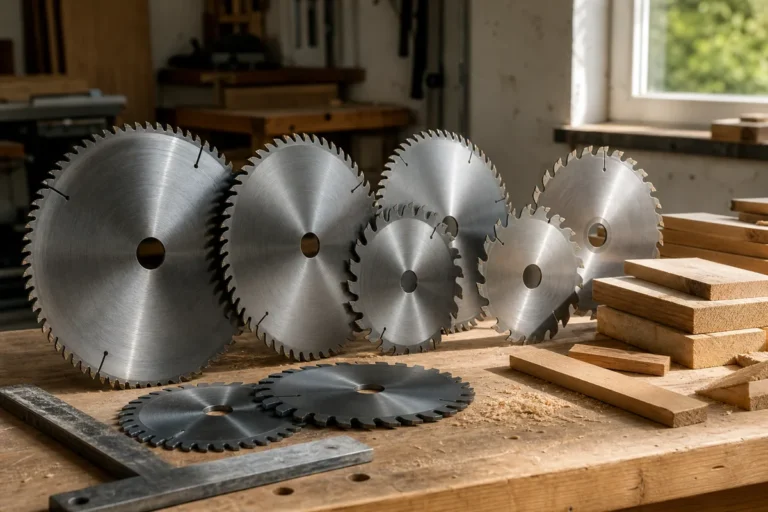
Unplug the saw before making adjustments. Confirm that the blade is sharp, properly installed, and suitable for ripping. For general solid wood, a 24-tooth or 30-tooth ripping blade usually clears waste more easily than a fine crosscut blade. Set the blade height so the gullets are just above the stock, with roughly 1/8 to 1/4 inch of tooth showing above the top surface.
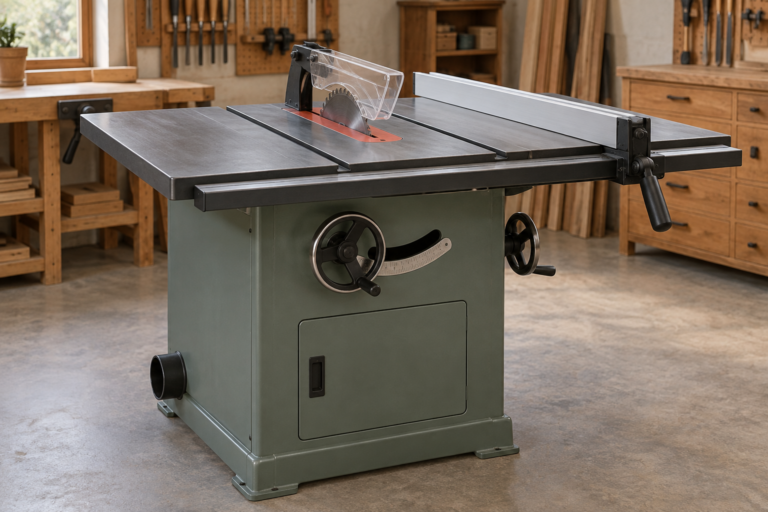
Use the saw’s riving knife or splitter whenever the cut allows it. It should be aligned with the blade and slightly thinner than the kerf, so it prevents the freshly cut sides from closing without forcing the stock sideways. A riving knife that is bent, too thick, or out of alignment can create the very binding it is meant to prevent.
Check the fence with a reliable square or measuring method. It should be parallel to the blade, or fractionally farther away at the rear than at the front. Do not set the rear of the fence closer to the blade. Also check the tabletop and extension surfaces for obstructions that could stop the board mid-cut.
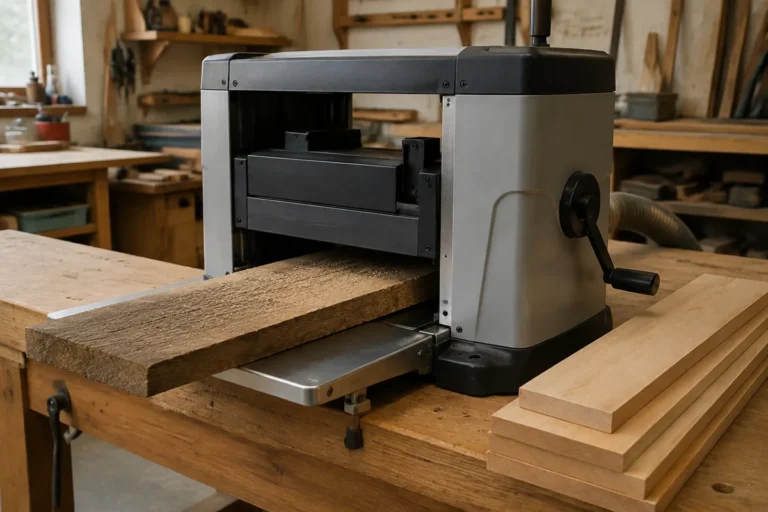
Reject stock with severe bowing, loose knots, splits, or twist. A narrow strip that rocks on the table is a poor candidate for a direct rip. Flatten or straighten it first with a jointer and planer, or rip it slightly oversized and clean it up with another operation.
Choose the Right Feed Controls
A featherboard applies steady sideways pressure against the fence. Install it before the blade, where it can guide the board without pushing it into the blade. The fingers should flex slightly as the stock passes, not clamp it so tightly that feeding becomes difficult. A featherboard behind the blade is generally a bad idea unless the saw manufacturer specifically supports that setup; pressure behind the cut can increase binding.
For narrow strips, a push stick or push shoe is essential. Choose one that keeps your hand at least 6 inches from the blade and gives you a solid hook over the rear of the workpiece. A push shoe is often better than a thin stick because it supports more of the stock and provides a lower, more controlled pushing angle. You can buy a table saw push shoe and push stick set, or make a simple push shoe from 1/2-inch plywood if its hook is strong and the shape keeps your hand away from the blade.
| Control | Best use | Trade-off |
|---|---|---|
| Push stick | General strips and the final part of a cut | Less downward support on very narrow stock |
| Push shoe | Narrow stock needing firm downward pressure | Can feel bulky around the fence |
| Featherboard | Maintaining contact with the fence before the blade | Must be positioned carefully to avoid binding |
| Overhead guard or hold-down | Repeated narrow ripping and production work | More setup time and cost |
Set Up the Narrow Rip
Place the featherboard before the blade, typically 2 to 6 inches ahead of it. Adjust it so the board remains against the fence but still feeds with firm, continuous pressure. The exact position depends on the fence and blade guard, so verify that the featherboard cannot contact the blade.
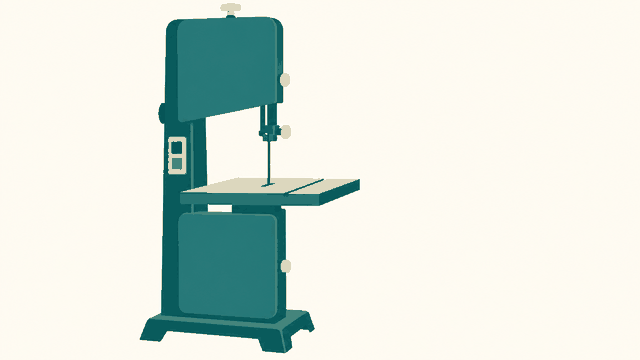
For stock around 2 inches wide or less, use a push shoe rather than trying to grip the top edge with your fingers. For very narrow strips—especially under 1 inch—consider whether the table saw is the right machine. A band saw can make the rough cut with less risk of trapping your hand beside the blade, followed by planing or jointing to final size. A woodworking band saw blade for resawing and ripping can be a sensible purchase if this work is frequent.
Use infeed and outfeed support whenever the stock extends beyond the table. Even a small drop at the outfeed end can lift the board into the blade. The support should be level with, or a hair below, the saw table—not higher. For repeated cuts, a long auxiliary fence or sacrificial fence can improve control, provided it does not interfere with the guard or riving knife.
Feed the Workpiece Safely
Stand slightly to the side of the blade’s projected path, not directly behind the stock. Start the saw and let it reach full speed. Keep the board’s edge firmly against the fence, apply downward pressure over the table area before the blade, and feed at a steady rate. Do not stop halfway through unless there is an immediate problem; hesitation can leave the stock pinched in the cut.
As the board passes the blade, move your pushing hand to the push shoe or stick. Keep your other hand well ahead of the blade and away from the gap between the fence and blade. Do not pull the workpiece backward while the blade is turning. If the cut binds, the board lifts, or you lose control, hit the stop and wait for the blade to stop completely before investigating.
When a Cheaper Setup Is Fine
You do not need an expensive digital fence or a specialized narrow-rip jig for occasional work. A sharp blade, correctly aligned riving knife, basic featherboard, and a homemade push shoe can provide excellent control. A basic table saw featherboard is usually enough for a hobby shop.
Spend more on a dedicated narrow-rip guide or overhead hold-down when you make dozens of identical strips, work with long stock, or find that a standard featherboard shifts during feeding. No accessory compensates for warped stock, a misaligned fence, or unsafe hand placement. Set up the saw correctly first; buy a jig only when it solves a repeatable control problem.