How to Plane End Grain Without Damaging a Cutterhead
What's inside
As an Amazon Associate I earn from qualifying purchases. This post may contain affiliate links at no extra cost to you.
Contents
Why End Grain Is Hard on Planers
End grain is the toughest surface a cutterhead encounters. Instead of slicing along the fibers, the knives strike the exposed fiber ends and try to lift or crush them. That creates more impact, more vibration, and a much higher chance of tearout than ordinary face-grain planing.
The risk is greatest with cutting boards, butcher-block panels, and short crosscut pieces. A board that looks flat can still have loose fibers, glue lines, or uneven sections that make one corner hit the cutterhead first. The result may be a chipped knife, a dented insert, a broken carbide tip, or a board kicked back from the machine.
For that reason, the safest general rule is simple: do not put a loose end-grain panel directly through a thickness planer. A planer is designed to remove material from the broad face of a board, with the grain running generally in the feed direction.
Choose the Right Machine for the Job
| Method | Best use | Main risk or limitation |
|---|---|---|
| Thickness planer | Face-grain boards and edge-glued panels | High impact and tearout on loose end grain |
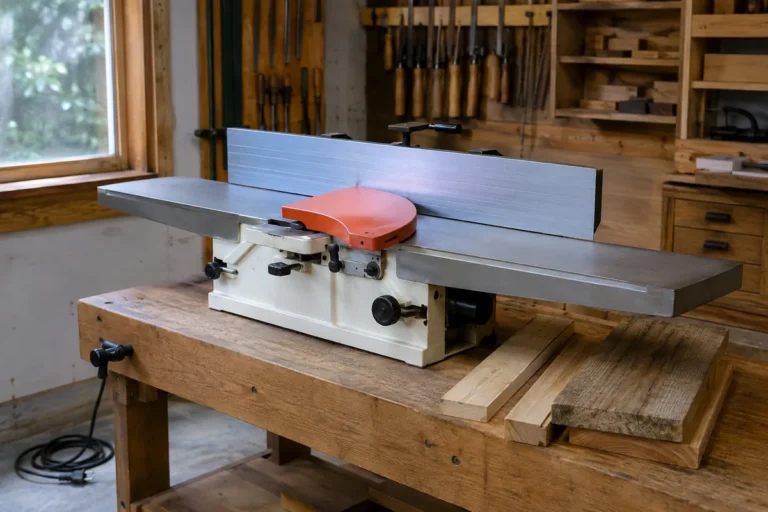
| Jointer | Flattening long edges and faces with the grain | Unsafe and unpredictable with short end-grain pieces |
| Drum or wide-belt sander | Flattening end-grain cutting boards | Slower and more expensive; requires suitable abrasive |
| Router sled | Flattening large or irregular end-grain panels | Requires setup, dust collection, and multiple passes |
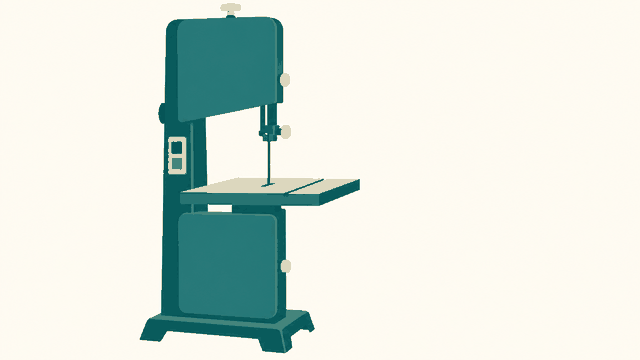
| Table saw or band saw | Rough sizing before flattening | Not a surface-flattening method |
A drum sander is the most straightforward stationary-machine choice when you regularly make end-grain boards. It removes material gradually, so the abrasive does not take a heavy bite from the fiber ends. It is slower than planing but much kinder to the workpiece and cutterhead.
For occasional work, a router sled is usually cheaper than buying a drum sander. It can flatten a cutting board or slab with a surfacing bit, but the board must be held securely and the sled must be rigid. A wide router bit and shallow passes produce a better surface than trying to remove a large amount in one cut.
When a Planer Can Be Used
There are limited cases where a planer can handle a short section containing end grain, but the grain direction matters. A normal edge-glued panel with its boards running lengthwise is usually fine. Its exposed ends are at the front and back, not directly across the full cutting width.
Do not confuse that with a butcher-block panel made from many short blocks. On that panel, the entire surface is end grain. Feeding it through a thickness planer exposes every knife to thousands of fiber ends at once.
If a small end-grain defect must be removed from an otherwise ordinary board, use very shallow cuts and inspect the piece first. Remove loose knots, check for glue squeeze-out, and make sure the board is supported flat. Even then, a planer is not the right tool for a full end-grain surface.
Protect the Cutterhead
Sharp knives reduce impact, but they do not make direct end-grain planing safe. Dull knives compress and tear fibers, then suddenly catch harder sections. That shock can damage knives and put extra load on the feed rollers and gearbox.
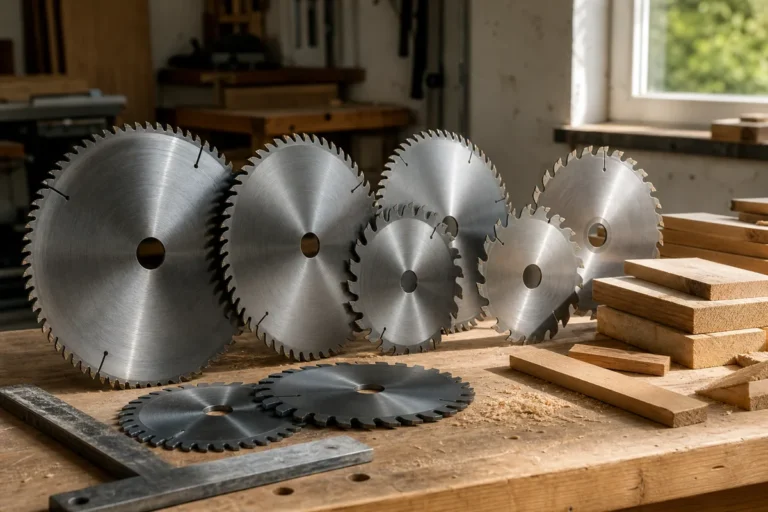
Disposable straight knives are relatively inexpensive and easy to replace. A replacement planer knife set is a sensible spare to keep on hand, especially if you process reclaimed lumber. Helical and spiral cutterheads generally leave a better finish and spread the impact across many small carbide inserts, but they are not immune to damage. A hidden nail, hardened glue lump, or direct end-grain impact can still chip an insert.
Before any planing operation, use a metal detector on reclaimed or suspicious wood. Remove screws, staples, and nails completely; do not rely on a cutterhead to break them off. Also remove dried glue beads. Even a small hardened spot can chip a knife edge.
A Safer Flattening Procedure
For an end-grain panel, start by trimming it accurately on a table saw or band saw if its edges are uneven. Leave only a small amount for flattening. Removing 1/16 inch is manageable; removing 1/4 inch from a warped panel creates unnecessary heat, dust, and setup problems.
Secure the panel to a flat router-sled base with wedges or low-profile clamps. Keep all hardware below the cutter’s travel path. Take cuts around 1/32 inch deep, or less when the panel has loose fibers. Make overlapping passes in one direction, then rotate the panel or change the pass direction to reduce ridges.
After routing, sand through the grits rather than trying to make one aggressive final cut. A woodworking dust collector is particularly useful here because router surfacing produces a large volume of chips and fine dust.
Reducing Tearout and Breakout
End-grain panels often chip at their edges during flattening. Leave the panel oversized by at least 1/4 inch on both length and width, then trim to final size afterward. This sacrifices a little material but avoids trying to protect a finished edge while making aggressive cuts.
On a router sled, climb-cutting can reduce breakout in selected areas, but it also increases the chance of the bit grabbing the work. Use it only for a controlled cleanup pass, with the router held firmly and the feed direction understood. Never use a jointer to clean up the end-grain edges of a small panel. The cutterhead can catch the piece and throw it before the operator can react.
What to Buy
If you make one cutting board a year, buy or build a router sled and use shallow passes. The cheaper option is fine because the setup cost is low and the slower process is unlikely to matter. If you make several boards each month, a drum sander saves time, produces a more consistent surface, and avoids sacrificing planer knives.
Keep the planer for face-grain stock, and choose a cutterhead based on your broader work rather than this one job. A helical head is worthwhile for quieter operation and improved finish on figured or difficult face grain, but it should not be treated as permission to plane solid end grain.