How to Joint Thin Boards Without Excessive Material Removal
What's inside
As an Amazon Associate I earn from qualifying purchases. This post may contain affiliate links at no extra cost to you.
Thin boards are easy to ruin because the amount removed during jointing can be a large percentage of the stock’s thickness. A conventional jointer may flatten a board effectively, but taking off 1/16 inch from a 1/4-inch panel wastes material and can leave you with a flexible, difficult-to-handle piece. The better approach is to stabilize the board, remove only what is necessary, and choose the machine based on whether you need a flat face, a straight edge, or both.
Contents
Identify the Jointing Job
“Jointing” can mean three different operations. Face jointing makes one broad surface flat. Edge jointing makes an edge straight and square to a face. Thickness planing makes the opposite face parallel to a reference face. These operations are not interchangeable.
For a thin board that is already reasonably flat, edge jointing on a jointer is usually safe. Face jointing is more demanding because the board can flex into the cutterhead. Thickness planing is often the best way to preserve material, provided the board can be supported on a sled.
Measure the board with calipers or a reliable rule before starting. If a panel is 3/8 inch thick and your jointer removes 1/32 inch, that is more than 8 percent of its thickness in one pass. Set the machine for the smallest practical cut—often 1/64 inch or less—and make test passes on scrap.
Choose the Right Machine
| Machine or method | Best use | Main limitation |
|---|---|---|
| Jointer | Straightening an edge or lightly flattening a face | Thin stock can flex, tip, or dip into the cutterhead |
| Planer with carrier sled | Making a thin board parallel while preserving thickness | Requires a flat sled and secure, removable attachment |
| Table saw | Straight-line ripping an edge | Does not flatten a bowed face |
| Band saw | Resawing or rough straightening with a support | Leaves a saw-cut surface requiring further work |
If you need a straight edge for a glue joint and the board is too thin for comfortable jointer work, a table saw with a straight-line ripping setup is often the least wasteful choice. Use a known-straight carrier or fence, not the board’s crooked edge. A table saw featherboard can help keep the work against the fence, but it cannot correct a badly bowed board by itself.
Edge-Jointing Thin Stock
For edge jointing, keep the board flat against the jointer fence and use a push block that applies pressure over a broad area. Avoid pushing directly over the cutterhead. Take light cuts, especially near the end of the board, where a heavy push can force the trailing end down and create a tapered edge.
A practical limit is less about a particular thickness and more about whether the board can be held securely without your hands approaching the knives. As a conservative rule, use a jointer for thin edge work only when the board is wide enough to control and the cut can be completed with proper push blocks. For very narrow or very thin pieces, make a carrier jig or use the table saw.
Joint one edge, then rip the opposite edge on the table saw if parallel width matters. This removes only the amount needed to establish a reliable reference edge. Repeatedly jointing both edges can consume more material than necessary and may leave a board narrower than the project requires.
Flattening a Thin Face
Do not place a flexible, cupped board directly on a jointer and expect a good result. The board may bend under hand pressure, then spring back after passing the cutter. The usual failure is a surface that appears flat in the middle but remains hollow at the ends.
A better method is to attach the board to a flat carrier sled with low-profile double-sided tape or small dabs of removable hot-melt glue. Put the supports near corners and along areas that do not rock. The sled must be longer and wider than the workpiece, and its bottom must sit flat on the planer bed.
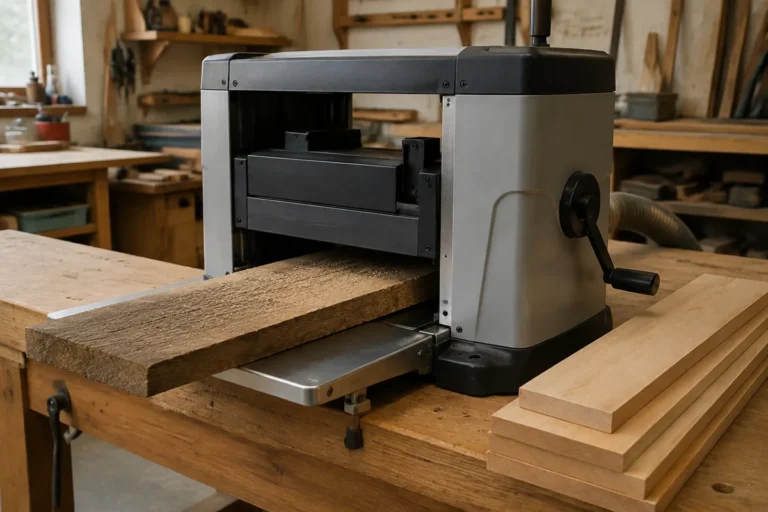
Run the assembly through a planer with very shallow cuts, commonly 1/64 to 1/32 inch per pass. Once the upper face has a continuous planed surface, remove the board, turn it over, and plane it to final thickness if necessary. A planer sled and woodworking tape are useful for this setup, but check that the adhesive releases cleanly and does not allow the board to shift.
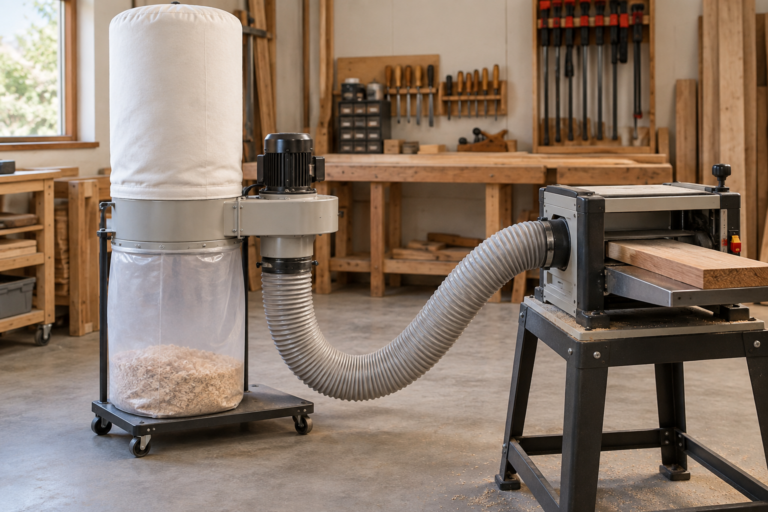
Do not use thick blobs of glue or tape that can let the board rock. If the board moves on the sled, the cutterhead can produce a stepped surface or catch the edge. Keep the sled flat, use dust collection, and inspect the board after every few passes.
When a Jointer Is Still Best
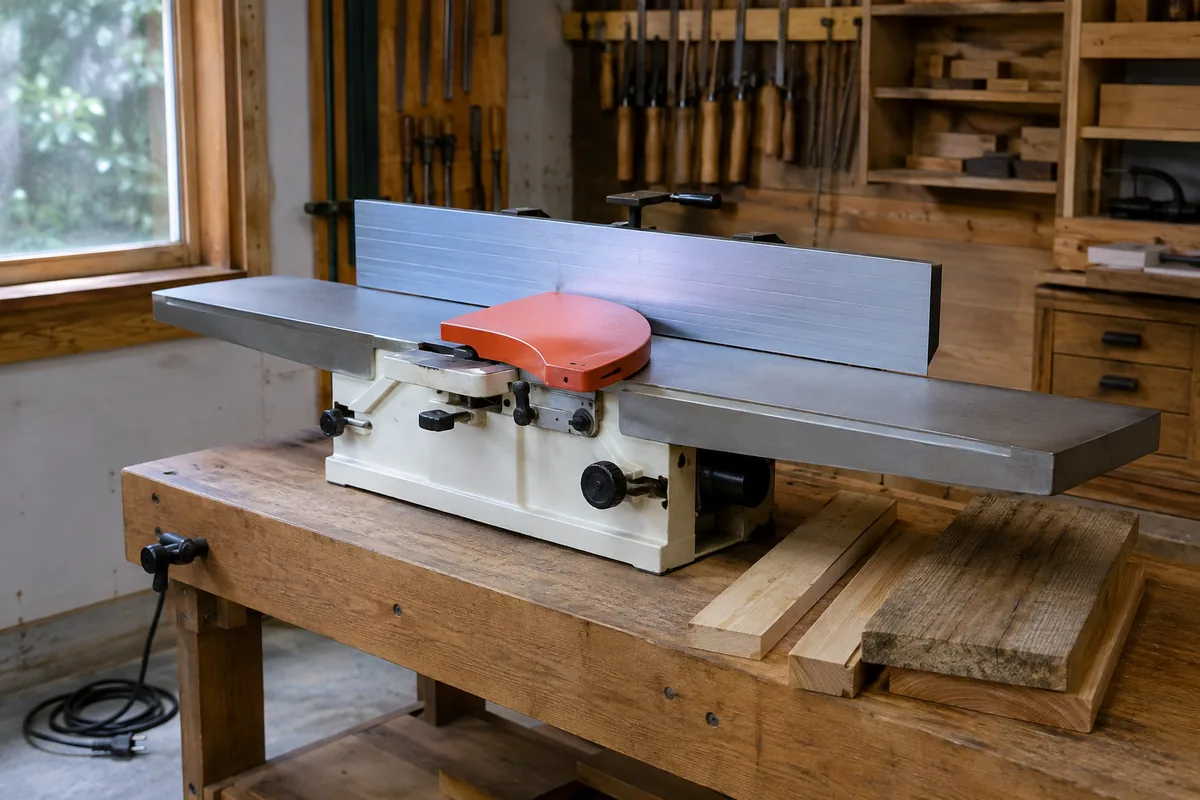
A jointer is the fastest option when the stock is thick enough to resist flexing and you need a flat reference face quickly. It is also the natural machine for producing a square edge. For boards around 3/4 inch and thicker, shallow passes are normally straightforward, assuming the board is not severely twisted.
Use the jointer’s outfeed table as the reference. Once a portion of the board rests on that table, shift pressure forward while keeping the infeed pressure light. Excessive downward pressure ahead of the cutterhead is a common cause of a concave board. Check the result with a straightedge rather than trusting a single visual pass.
Cutting Safety and Setup
Inspect for nails, loose knots, and splits before using any machine. Set the cutter height correctly, verify that guards and dust collection are working, and keep hands outside the manufacturer’s marked danger zone. A sharp cutterhead matters: dull knives require more force, increase tear-out, and make thin stock harder to control.
For small boards, make a larger sacrificial carrier rather than trying to grip the work close to the cutter. On a table saw, use a push block or push shoe and keep the fence parallel to the blade. On a planer, never feed a loose thin board by itself if it can sag into the cutterhead or stall under the pressure rollers.
Buying the Support Equipment
If thin-stock work is occasional, a shop-made sled from flat plywood is usually enough; the cheaper option is fine when the base is genuinely flat. If you process thin boards often, a woodworking planer sled saves setup time, though it will not compensate for a twisted or poorly supported carrier.
For edge work, spend first on accurate straightedges, push blocks, and a reliable table-saw setup rather than buying a larger jointer. The right support method removes less wood, gives more predictable results, and is usually safer than forcing a thin board across a machine designed for heavier stock.