How to Joint Boards with Severe Bow or Twist
What's inside
As an Amazon Associate I earn from qualifying purchases. This post may contain affiliate links at no extra cost to you.
A board with a deep bow or twist is hard to joint safely because it may rock, bridge over the cutterhead, or lose contact with the fence. The goal is not to force it flat against the jointer. It is to make one face reliably flat, then use that face as a reference for the rest of the milling. For severe distortion, a planer sled or a rough-cutting step may be safer and cheaper than trying to remove the whole problem on a jointer.
Contents
Check the board before milling
Mark the board’s intended face and edge, then check the face with winding sticks or a straightedge. Look for bow along the length, cup across the width, and twist from corner to corner. A board can have more than one of these. Measure its thickness at several points; the thinnest finished dimension determines how much material you can remove.
Also check for nails, screws, grit, loose knots, and cracks. A severe twist can make the board teeter on the jointer bed. If it rocks when placed on a flat surface, do not try to hold it down by force near the cutterhead. Shorten it, rip it into narrower pieces, use a sled, or reject it if none of those options leaves enough usable stock.
Choose the method that fits the defect
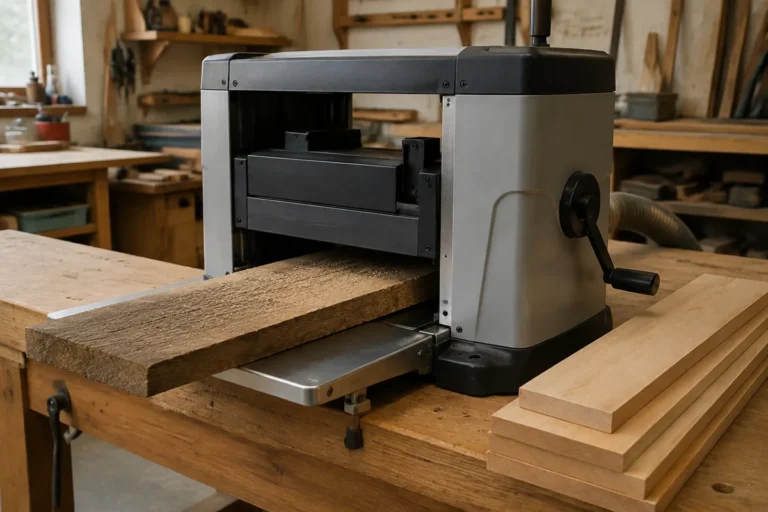
A jointer is the simplest way to flatten a manageable board, but it removes material from the face that contacts the knives. A thickness planer makes faces parallel; it does not reliably flatten a twisted board on its own, because the rollers can press the twist flat temporarily and the board springs back after the cut. A rigid sled solves that problem by holding the board in a stable position while the planer cuts the high points.
| Method | Works best for | Main trade-off |
|---|---|---|
| Jointer | Boards that sit stably on the beds and have enough thickness for repeated passes | Fast and direct, but a rocking board is difficult to control safely |
| Planer sled with shims | Twisted or bowed boards that cannot lie flat on the jointer | More setup; takes extra thickness and planer capacity |
| Rough cut narrower or shorter | Wide or long stock with severe distortion | May change the finished dimensions, but reduces the amount of waste |
| Hand plane or winding sticks | Small corrections or valuable stock | Low machine risk, but slower and dependent on hand-skill |
Jointing a board on the jointer
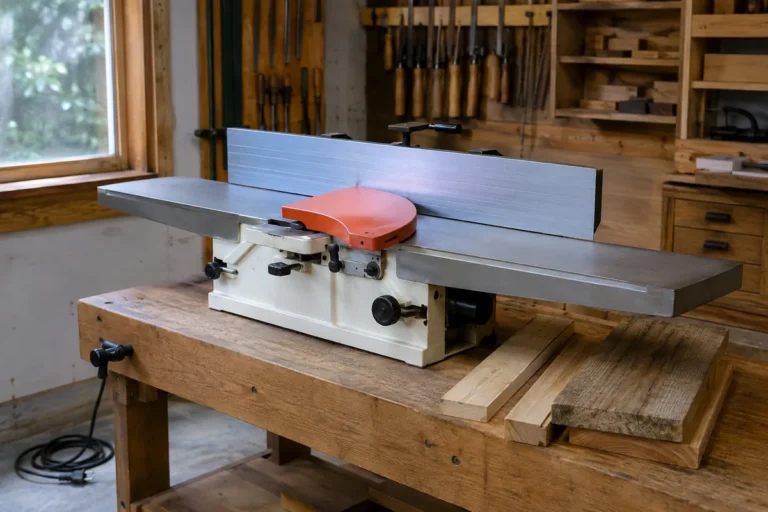
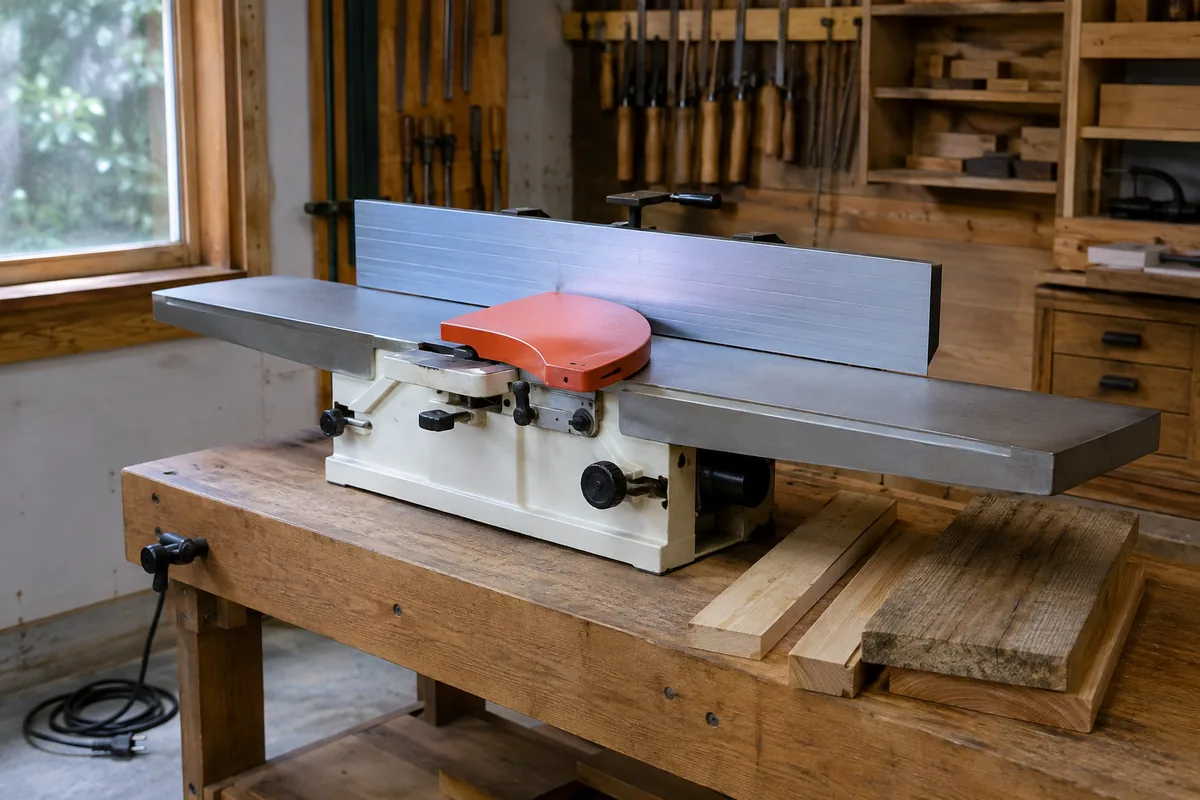
Use the jointer only if the board stays stable on the infeed and outfeed beds and can be controlled without putting your hands over the cutterhead. Set a light cut—about 1/32 inch is a sensible starting point for distorted stock. For a small machine or difficult grain, use a shallower cut. A deeper cut may reduce the number of passes, but it increases the chance of tearout, kickback, and a poor finish.
Place the board with the hollow or concave side down when possible. That gives it a more stable footprint than placing the crown down, where it can rock on a narrow high point. Keep downward pressure over the infeed bed at the start; as the board advances, shift pressure to the outfeed bed once enough flattened surface is supported there. Use push blocks, keep hands clear of the cutterhead, and never try to pin a rocking board down by leaning on it.
Take short, controlled passes and check the face between them. Stop when the face is flat enough to register securely, not when every defect has disappeared. Removing the entire depth of a bow may leave the board too thin or narrow. If one side is much higher than the other, or the board rocks despite careful positioning, switch to a sled or rough-cut the stock rather than forcing it through.
Flattening with a planer sled
A stiff, flat sled can support a twisted board in a planer. Use a sled that fits the planer’s width and is long enough to support the work through the feed rollers. Place the board on it with the face to be flattened upward. Shim beneath low corners and gaps so the board cannot rock; hot-melt glue or wedges can hold the shims in place. Check that the board is secure and that no shim can come loose and enter the cutterhead.
Take light passes, typically around 1/32 inch, until the upper face is continuous and flat. Then remove the board from the sled, turn it over, and plane the opposite face parallel. The sled and shims add height, so confirm the combined stack fits below the planer’s maximum opening. Keep hands away from the feed rollers, and do not use a sled that can flex or shift as the board feeds.
A sled is often the safer choice for a board that would rock on a jointer, but it costs time and can reduce the usable final thickness. For occasional work, a straight, rigid homemade sled is usually adequate; a purchased sled is mainly worth considering if you flatten stock often or want a ready-made setup. Search for planer sleds if you want to compare available designs.
Make the remaining faces square
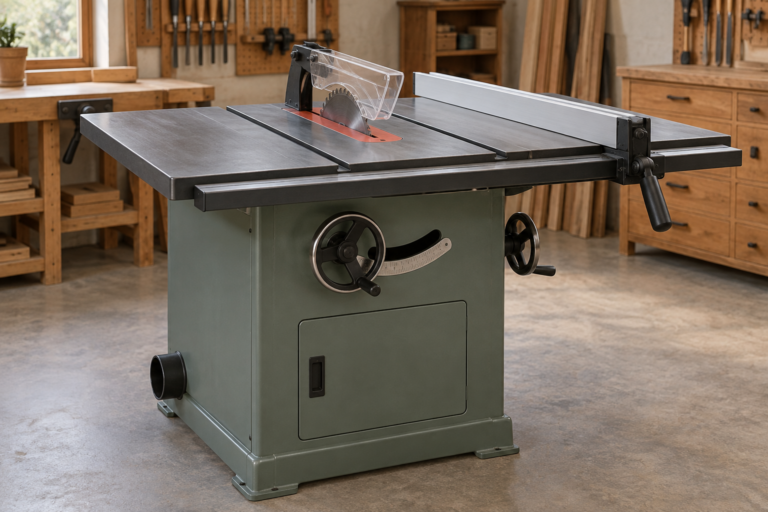
Once one face is flat, mark it as the reference face. Plane the opposite face parallel to it, leaving enough thickness for any final cleanup. Then joint one edge against the jointer fence, keeping the reference face against the fence, and rip the opposite edge on the table saw to width. If the board is too wide for your jointer, rip it narrower first only if the finished project allows it.
Check the result with a straightedge and winding sticks before moving on. A face can look clean while retaining twist, and a planer can make a twisted board uniformly thick without removing that twist. If the board still rocks or the reference face is not flat, return to the sled or remove more material from the high areas. Do not use the table saw to compensate for an unstable board: it can bind, pinch the blade, or kick back.
What to buy—and what to skip
If most of your stock is modest in width and not badly distorted, a jointer may be the faster everyday tool. Match its capacity to your actual boards; a jointer cannot flatten stock wider than its cutterhead, and extra bed length helps support long pieces. For occasional severe twist, a planer sled and careful shimming can be a cheaper solution than buying a larger jointer. A pair of winding sticks and a reliable straightedge are useful either way; a long straightedge makes it easier to see where material needs to come off. Compare winding sticks and shop straightedges by length, rigidity, and how easily you can read the reference edges.
Do not buy a jointer solely to rescue one severely twisted board. If the board will become narrower or shorter in the project, rough-cutting before flattening may save more wood than taking repeated full-width passes. If the required finished size cannot survive the material removal, the practical answer is to choose a straighter board.