How to Choose a Table Saw Arbor and Blade Flange for Safe Operation
What's inside
As an Amazon Associate I earn from qualifying purchases. This post may contain affiliate links at no extra cost to you.
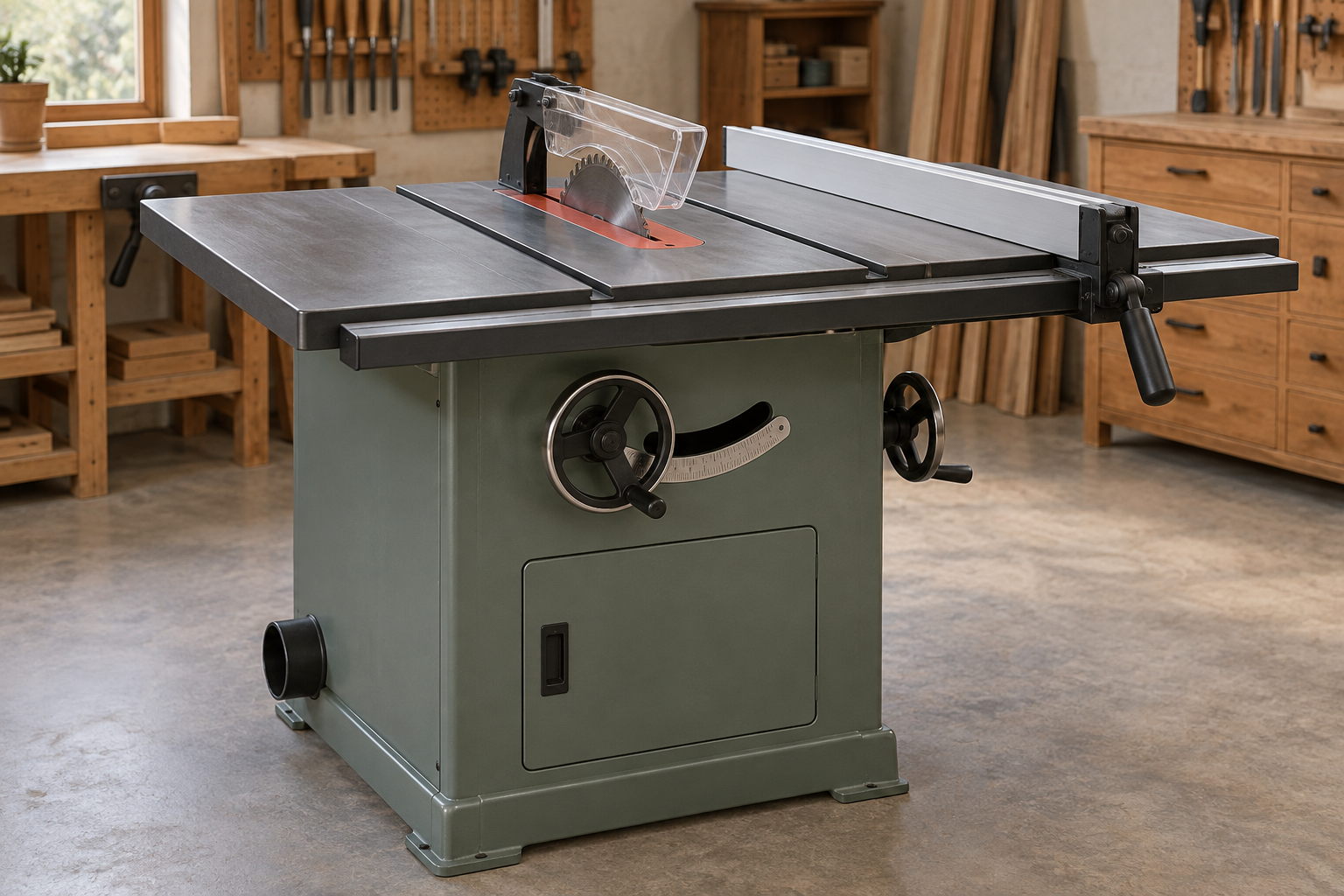
A table saw arbor is the shaft that holds the blade; the flanges, also called collars, clamp the blade against the arbor. The parts must fit the saw and blade, run true, and tighten securely. A mismatch can cause vibration, poor cuts, a loose blade, or damage to the arbor threads. Before buying anything, check the saw manual and measure the parts you have. Do not assume that a blade’s diameter alone tells you whether it will fit.
Contents
Identify the arbor and flanges
The arbor’s threaded end passes through the blade’s center hole. One flange is fixed or keyed to the arbor; the outer flange is removed to change blades. Together, the flanges support and clamp the blade near its center. Some saws have a short arbor designed for a specific blade thickness, while others accept a wider range.
Record the arbor diameter and thread, blade-hole diameter, usable arbor length, and the inner and outer flange diameters. Note whether the arbor has flats, a key, or another feature that prevents the inner flange from spinning independently. Check the manual for the specified blade diameter, maximum kerf, and blade-body thickness. If the manual is missing, the saw maker may have archived specifications; the existing parts are useful clues, but they are not proof that a previous owner installed the right ones.
Match the blade to the saw
Buy a blade with the hole size specified for the arbor. A blade with an oversized hole should not be centered with improvised washers, a homemade bushing, or a loose adapter. A proper precision reducer may be acceptable if the blade maker approves it and the saw’s manual does not prohibit it. The blade must seat flat and concentrically, with no rocking or visible gap at the flange.
Match the blade diameter to the saw’s rating. A larger blade can exceed the guard’s clearance and raise the tip speed beyond the machine’s design. A smaller blade may fit physically but can reduce cutting depth and may not work correctly with the factory guard or riving knife. Also confirm that the blade’s body thickness and kerf suit the riving knife: the knife should be thicker than the blade plate but thinner than the kerf, as specified by the saw manufacturer. For general-purpose work, compare suitable 10-inch table saw blades by bore, kerf, and plate thickness—not tooth count alone.
Choose flange size and condition
Use the flange dimensions and style specified for the saw. The flange needs enough flat contact area to clamp the blade without covering the teeth or interfering with the gullets. A flange that is too small can concentrate pressure and allow the blade to slip; one that is too large can contact the blade’s teeth or body unevenly. Do not substitute a generic collar based only on its outside diameter.
Inspect both faces for sawdust, pitch, rust, burrs, or dents. A tiny chip between the blade and flange can tilt the blade and create runout. Clean with a non-damaging method and replace a cracked, badly scored, or visibly distorted flange. Do not grind a flange to make it fit. If the replacement is not an exact factory part, verify material, bore, face flatness, and compatibility with the saw maker or a qualified repair shop. A replacement table saw arbor flange is a sensible purchase only when its dimensions and design match your machine.
Compare common replacement choices
| Choice | When it makes sense | Main trade-off |
|---|---|---|
| Original-equipment flange | The original is damaged or missing, and the maker still lists the part. | Usually the safest fit; availability and price vary. |
| Verified compatible flange | The original is unavailable and measurements and specifications are confirmed. | Can cost less, but a dimensional mismatch may cause runout or poor clamping. |
| Precision blade reducer | The blade maker approves a reducer for the specific blade and arbor. | Useful for a supported bore mismatch; not a fix for an unstable or oversized hole. |
| Improvised washer or modified flange | Not recommended. | May clamp unevenly, loosen, or throw the blade out of alignment. |
Check the arbor before installation
With the saw unplugged, clean the arbor threads and inspect them under good light. Flattened or crossed threads can prevent the nut from tightening properly. Check the arbor shoulder and seating face for burrs, corrosion, or impact damage. If the arbor is bent, cracked, or has damaged threads, stop using the saw and have it serviced; replacing only the flange will not correct a defective shaft.
To check for runout, mount a clean blade and rotate it by hand with power disconnected. A dial indicator gives a more reliable measurement than judging the rim by eye. Follow the saw maker’s runout limit; if none is available, have a repair shop assess noticeable wobble rather than treating a rough visual check as a safety test. Vibration can also come from a dirty flange, a warped blade, a loose arbor bearing, or an unbalanced blade, so isolate the cause before buying parts.
Install and test safely
Disconnect power before changing the blade. Seat the inner flange in its intended position, place the blade in the correct direction of rotation, then install the outer flange and nut in the order shown in the manual. Tighten the nut using the specified method and tool. Do not add a cheater bar or overtighten: the saw’s rotation is normally arranged to keep the nut secure, and excessive force can damage threads or make future removal hazardous.
Turn the blade through a full revolution by hand and check that it clears the throat plate and guard components. Reinstall the guard and riving knife before cutting. Stand out of the blade’s line, start the saw, and let it reach full speed without touching the workpiece. Stop immediately if the saw vibrates, makes a new scraping sound, or the blade appears to wobble. A short test cut is not a substitute for correcting a suspected fit or runout problem.
Know when to get help
If the saw is old, has nonstandard parts, or lacks reliable specifications, do not guess at arbor or flange dimensions. Take the saw model and parts to the manufacturer, a parts supplier, or a qualified service technician. The cheaper compatible part can be fine when its fit is documented and its seating surfaces are sound. When dimensions or condition are uncertain, the cost of a proper inspection is small compared with the risks of a blade that does not clamp securely.