Bosch Power Tools Review: A Precision Brand in an American Market
Key takeaways
- Bosch does not try to win every category. In the two or three it owns, nothing else is close.
What's inside
As an Amazon Associate I earn from qualifying purchases. This post may contain affiliate links at no extra cost to you.
Bosch occupies an odd position in the American market. It does not have the jobsite ubiquity of DeWalt or Milwaukee, and its cordless range here is thinner than Makita’s. But in a handful of categories, Bosch simply makes the best tool available at any price, and woodworkers know it.
That combination confuses buyers who shop for platforms rather than for machines. The useful question is not whether Bosch is a good brand in general. It is which specific Bosch tools earn bench space in an American shop, and which ones you should pass over in favor of the battery system you already own. Framed that way, Bosch stops looking inconsistent and starts looking like what it is: a specialist that happens to specialize in the tools fine woodworkers use most.
As an Amazon Associate we earn from qualifying purchases at no extra cost to you. Product prices and availability are accurate as of the date shown and are subject to change.




We judge tools on criteria you can inspect at the bench rather than read off a spec sheet: base and shoe flatness, how well the tool holds a blade or cutter square under load, whether depth and angle adjustments return to the same place twice, how much vibration reaches your hand at full speed, and how easy the consumables and spare parts will be to buy a year from now. Bosch scores unusually well on the first four and unevenly on the last, and that single pattern explains nearly every recommendation below.
Where Bosch leads
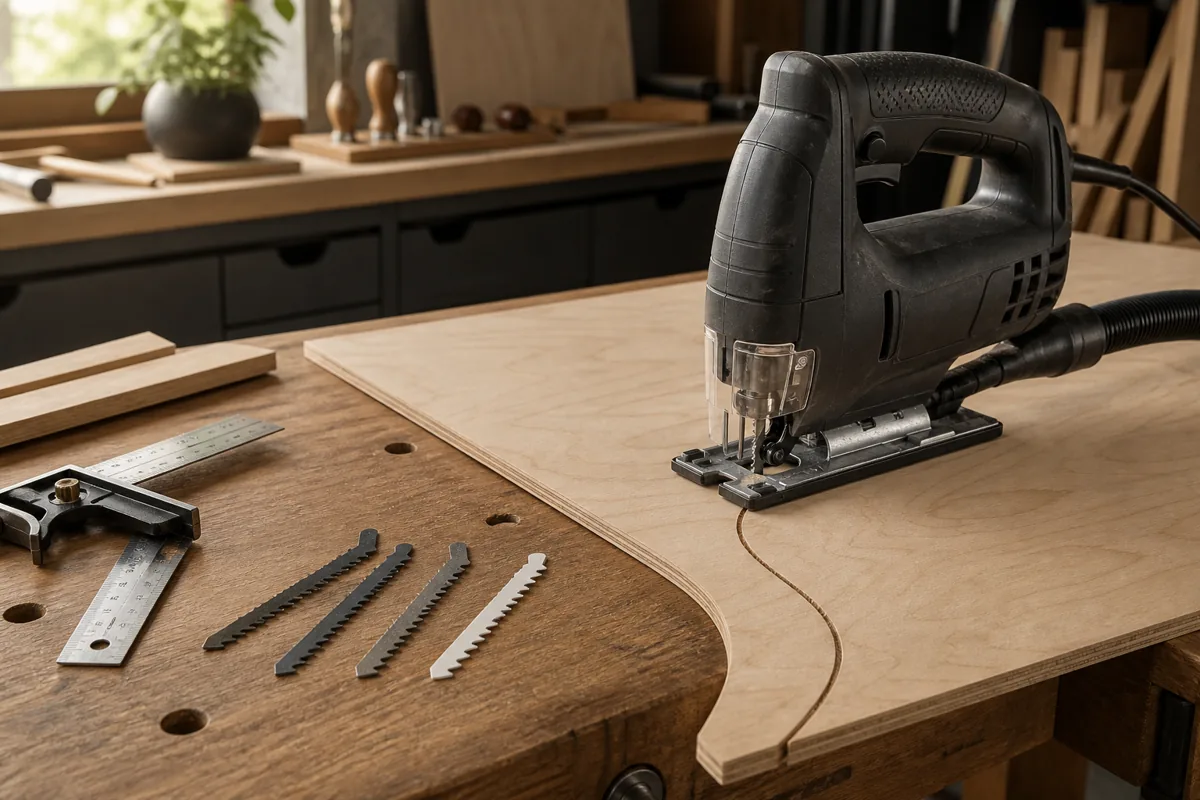
Jigsaws. Blade guidance and low deflection put Bosch jigsaws at the top of the category. If you cut curves for a living, this is the brand. The mechanical reason is that the guide system supports the blade close to the workpiece, so the back of the blade cannot wander off the line of the cut as the tool is steered. The visible result is a cut face that stays much closer to square through thick stock, which matters enormously when the sawn edge is the finished edge or a template reference rather than something you will clean up later on a router table.
You can test this on any saw before you commit: cut a tight curve in scrap and check the cut face against a small square at several points along the arc. Weak saws lean, and they lean worst exactly where you turned hardest. Choose the grip by how you steer rather than by price — a top handle is easier to start one-handed and better overhead, while a barrel grip puts your hand low and close to the work for fine curve control. Neither is the better tool.
Compact routers. The Colt has been the default American recommendation for a small router for well over a decade — smooth, controllable, easy to adjust. What keeps it there is that the depth adjustment is fine enough to dial in a hinge mortise and repeatable enough to come back to the same setting, and the motor holds speed as the cutter enters the wood instead of sagging and leaving a burn mark at the start of the pass. The common failures in this class are coarse depth adjustment, a collet that marks or slips on shanks, and a base that rocks on a narrow edge.
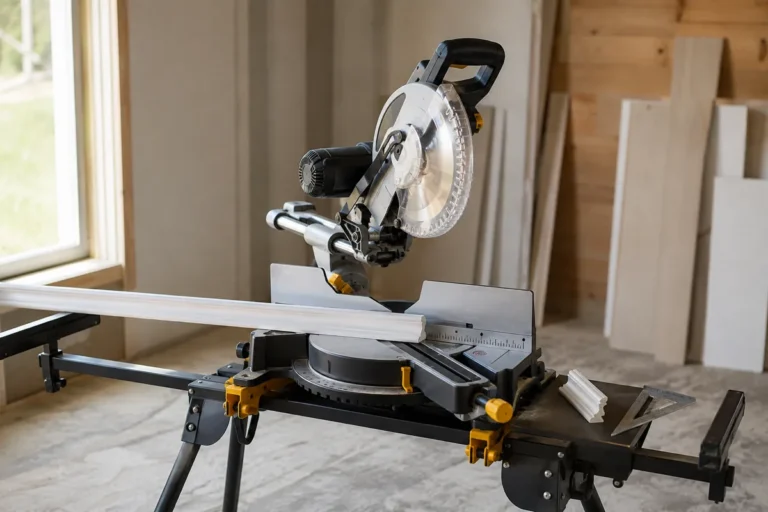
Glide miter saws. The articulating arm design needs far less space behind the saw than rail sliders. In a small shop that is worth real money. It is not free, though: you pay in weight and in price, and the arm mechanism only earns its keep if the rest of the saw holds tolerance. Check the fence for flatness across both wings, check that the miter detents return to the same reading in both directions, and check the blade for square to the table before you cut anything that matters.
Rotary hammers. Consistently excellent SDS tools with good vibration control. For a woodworker this is an occasional tool that solves annoying jobs — anchoring a bench or a cabinet run to a concrete floor, punching dust collection through a block wall — so vibration control and chuck durability matter more to you than raw impact energy or duty-cycle ratings aimed at concrete crews.
Bosch jigsaws
Straighter cuts with less blade wander than anything at the price. Tool-free blade change and good dust blowing.
Bosch Colt palm router
Edge profiles, hinge mortises, template work. The small router most American woodworkers end up owning.
Bosch Glide miter saws
Needs almost no clearance behind it. Expensive, and genuinely worth it if your bench is against a wall.
How to weigh the buying criteria against each other
Most of these criteria pull against each other, so ranking them for your own work is the real decision. A rough order of importance for shop woodworking:
- Accuracy under load comes first. Blade or cutter deflection, base rigidity and squareness determine whether the cut needs rescuing afterward. Nothing else on the list buys back a wandering cut.
- Adjustment repeatability comes second. A depth stop or miter detent that returns to the same place is worth more than an extra range of adjustment you will set once and forget.
- Vibration and ergonomics matter more the longer your sessions are. On a tool you hold for an hour at a stretch, this is a quality issue, not a comfort issue — tired hands cut crooked.
- Dust control is worth paying for on routers and miter saws, where the mess is constant and the sightline to your line depends on clearing chips.
- Consumables and accessories decide the long-term cost. A jigsaw is only as good as its blades; a compact router is only as versatile as the bases and guides you can buy for it.
- Battery platform comes last for bench work and first for site work. That ordering is the whole Bosch argument in the United States.
What separates a good pick from a bad one at each price band
At the bottom of the range, every brand sells the same compromises: stamped or thin bases that flex, depth scales that are decorative rather than usable, no meaningful blade guidance, and motors that lose speed the moment they meet hardwood. Bosch’s cheapest offerings compete against everyone else’s cheapest offerings, and there is no brand magic that survives at that price. If your budget is genuinely at the floor, buy on returns policy and blade availability, not on badge.
The middle band is where Bosch’s advantage actually shows up, and it is where the jigsaw and the compact router live. Here you are buying guidance, rigidity and adjustment quality — the things that are expensive to engineer and cheap to leave out. A good pick in this band has a stiff base you cannot flex by hand, tool-free blade or bit changes that still lock solid, and adjustments with detents you can feel. A bad pick has an impressive spec sheet and a base that twists.
At the top, you are buying capacity, duty cycle and space efficiency rather than cut quality. The Glide saws are the clearest example: the reason to pay premium money is that the saw fits against a wall and still crosscuts wide stock. If your shop has open floor behind the bench, you are paying for clearance you do not need, and a conventional slider or a well-tuned crosscut sled will do the same work for less.
Where Bosch trails in the US
- ✘ Cordless platform range is smaller than DeWalt, Milwaukee or Makita here
- ✘ Some of the Professional (blue) range is hard to source in America
- ✘ Fewer aggressive promotions than the big US brands
- ✘ Accessory availability at big-box stores is patchier
None of these are performance problems, but they are ownership problems. Before you buy, confirm that the blades, bits, bases, guide rails and dust attachments you expect to use are actually stocked where you shop, or that you are comfortable ordering them online. The tools that frustrate American Bosch owners are almost never the tools themselves; they are the accessory you needed on a Saturday and could not find locally.
The corded argument
Much of what makes Bosch worth buying is corded: routers, jigsaws, rotary hammers, miter saws. For a shop-based woodworker that is not a drawback — corded tools cost less, weigh less and never run flat. They also hold speed through a full-depth pass without the sag you feel at the bottom of a battery charge, which is exactly when a router burns a workpiece. Cord management is a solvable problem in a fixed shop: one overhead drop or a dedicated outlet near the bench removes the entire objection. Buy Bosch for the bench and something else for the truck.
Common mistakes
- Buying one Bosch cordless tool intending to grow a platform around it. In the US that is the wrong starting point. Pick the platform first from the brands with the deepest local range, then buy Bosch as standalone tools where they win.
- Judging a jigsaw by stroke speed or amperage. Guidance and shoe rigidity decide cut quality. Fitting a tired or wrongly pitched blade and blaming the saw is the other half of this mistake.
- Buying the premium miter saw for the wrong reason. The articulating arm is a space solution. If space is not your constraint, spend the difference on stock or on dust collection.
- Ignoring accessory ecosystems. Check base, guide and dust-port availability before you buy, not after.
- Overthinking green versus blue. In the American market this rarely changes your shortlist.
Who each tool suits, and who should skip it
The jigsaw
Suits anyone whose sawn curve is the finished edge: curved aprons, templates, sink and speaker cutouts, scribed cabinet fillers. Skip it if your curves are all cut on a bandsaw and cleaned up with a router template, because then you are paying for accuracy you immediately machine away.
The compact router
Suits nearly every woodworker, which is why it became the default. Skip it if you already own a compact router you trust, or if your work is dominated by big panel-raising and deep mortising bits, which belong in a mid-size or full-size router instead.
The Glide miter saw
Suits small fixed shops with the saw against a wall and a genuine need for wide crosscuts. Skip it if you work out of a vehicle, where the weight is punishing, or if you already have clearance for a rail slider.
The rotary hammer
Suits shops that periodically anchor into concrete or masonry. If you have exactly one such job ahead of you, rent instead and put the money toward cutting tools you use weekly.
Verdict
Bosch is not the brand to build a whole cordless kit around in the United States. It is very much the brand to buy specific tools from, and if you do fine woodworking, at least two of them probably belong in your shop. Treat the catalog as a shortlist rather than a system: take the jigsaw and the compact router almost without argument, take the miter saw if your walls are close, and let another brand handle the drills, drivers and site tools.
FAQ
Green or blue Bosch? Green is the consumer DIY line (mostly European markets), blue is Professional. In the US you will mostly encounter the professional range, so the distinction affects your shortlist far less than it does for a European buyer.
Is the Colt still the best small router? It has real competition now, but it remains the safe recommendation. If a rival matches it on depth-adjustment feel, base rigidity and accessory availability, buy the rival with confidence; those are the criteria the Colt won on in the first place.
Should I buy Bosch cordless? Only if a specific Bosch cordless tool is the best in its class for your work. For a full platform, look at the big three first.
Does mixing brands actually cost me anything? On corded tools, nothing at all. The cost of mixing is confined to batteries and chargers, which is precisely why buying corded Bosch alongside another brand’s cordless kit is a coherent strategy rather than a compromise.
Check Bosch tool prices →