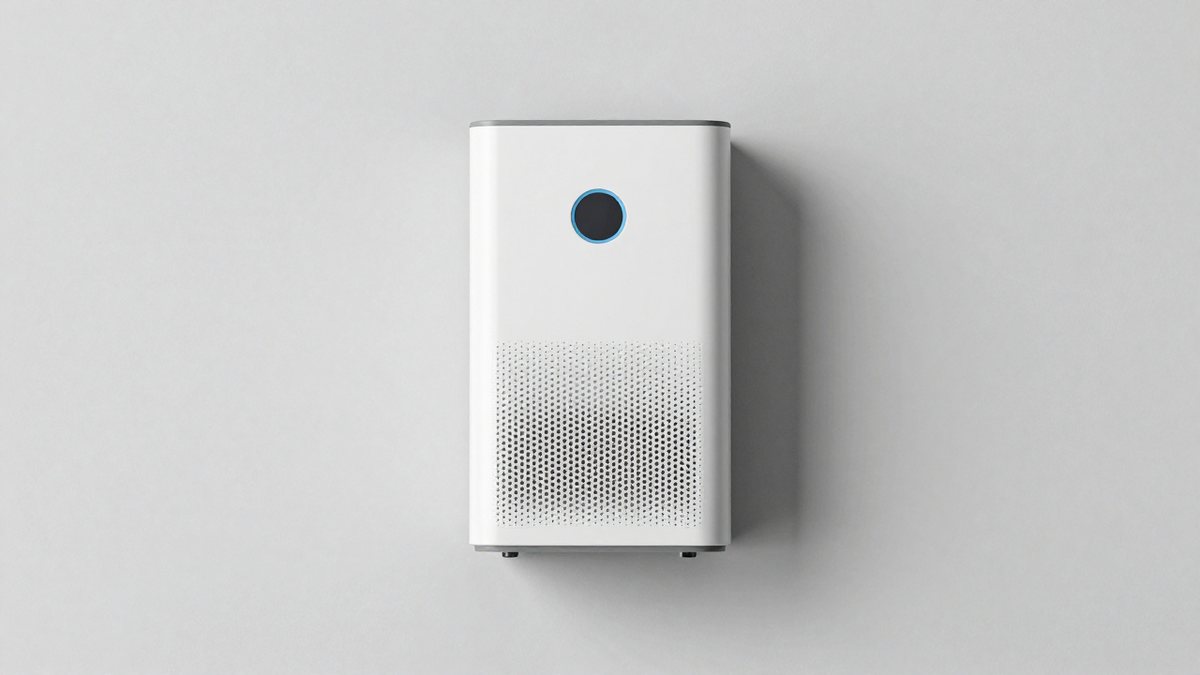
Best Wall Mounted Air Purifiers
What's inside
- Top 3 Picks
- Quick Comparison
- How We Chose
- 1. Smartmi E1 – Best for Genuine Wall Mounting in a Bedroom
- 2. Kaltech KL-W01U – Best for Odor Control With No Filter Subscriptions
- 3. AROEVE MK07 – Best Budget Wall-Adjacent Pick
- 4. KNKA APH4000 – Best for Very Large Open Spaces
- 5. LEVOIT Vital 200S-P – Best Smart Pick for Large Rooms and Pets
- 6. SereneLife HEPA WiFi – Best Budget App-Controlled Unit
- 7. Levoit Compact Air Purifier – Best for Dorms and Small Bedrooms
- 8. MOOKA Air Purifier 2200 ft² – Best Mid-Range Coverage per Dollar
- 9. Levoit Smart & Voice Control – Best for Pet Odors on a Budget
- 10. GermGuardian AC4825E – Best Tower Format With UV-C Stage
- 11. ECOSELF Air Purifier – Best Mid-Range for Living Rooms
As an Amazon Associate I earn from qualifying purchases. This post may contain affiliate links at no extra cost to you.
The best wall-mounted air purifier for most people is the Smartmi E1. It is one of only two units in this roundup that actually ships with a wall bracket, its 150 m³/h clean-air delivery rate (roughly 88 CFM) is matched to a real bedroom rather than a whole floor, and it sits in the mid-range price band rather than the premium one. If you have a large open-plan space and do not need a true wall mount, the LEVOIT Vital 200S-P is the stronger buy; if your priority is the lowest possible running cost, the Kaltech KL-W01U and its washable photocatalytic filter is the outlier. One category reality is worth stating up front: genuine wall-mounted purifiers are a small market. Only the Smartmi E1 and the Kaltech KL-W01U are designed to hang on a wall. The other ten units here are freestanding purifiers that buyers shortlist alongside wall units because they cover the same rooms for less money, or because they can sit on a shelf or console at roughly wall height. This guide tells you which is which, what each costs to own, and how to size one to a real room.
Contents
- Top 3 Picks
- Quick Comparison
- How We Chose
- 1. Smartmi E1 – Best for Genuine Wall Mounting in a Bedroom
- 2. Kaltech KL-W01U – Best for Odor Control With No Filter Subscriptions
- 3. AROEVE MK07 – Best Budget Wall-Adjacent Pick
- 4. KNKA APH4000 – Best for Very Large Open Spaces
- 5. LEVOIT Vital 200S-P – Best Smart Pick for Large Rooms and Pets
- 6. SereneLife HEPA WiFi – Best Budget App-Controlled Unit
- 7. Levoit Compact Air Purifier – Best for Dorms and Small Bedrooms
- 8. MOOKA Air Purifier 2200 ft² – Best Mid-Range Coverage per Dollar
- 9. Levoit Smart & Voice Control – Best for Pet Odors on a Budget
- 10. GermGuardian AC4825E – Best Tower Format With UV-C Stage
- 11. ECOSELF Air Purifier – Best Mid-Range for Living Rooms
Our Top Picks
 Kaltech KL-W01U Wall Mounted Photocatalytic Air PurifierSlim Design Wall Mount3.27 x 17.36 x 17.16 inches6.67 PoundsCheck on Amazon
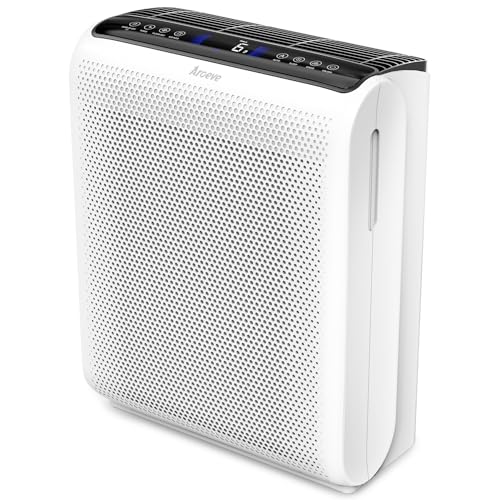 AROEVE Air Purifiers for Home with Air QualityMedium12.4 x 16.2 x 6.69 inches8.26 PoundsCheck on Amazon
 SereneLife HEPA Air Purifier for Home12.2” x6.3 x 15.75 -inches12.2 x 6.3 x 15.75 inchesCheck on Amazon
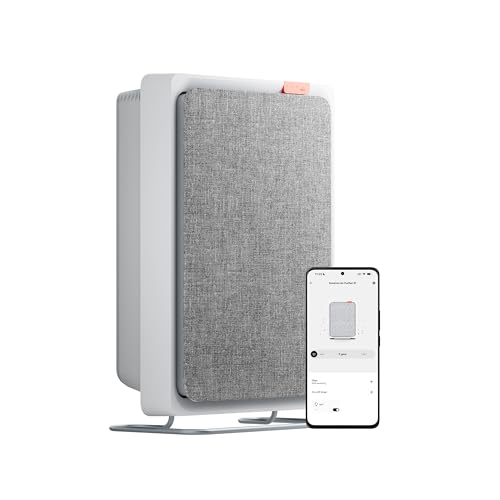


Top 3 Picks
Best overall: Smartmi E1. It is the pick for anyone who specifically wants a purifier off the floor, and its 150 m³/h rating is honest for a bedroom-sized space. The bracket install, front-access filter, and mid-range price make it the least compromised true wall unit in the list. It suits renters, small bedrooms, and anyone with no free floor space.
Best budget: AROEVE MK07. A compact freestanding purifier with an air-quality indicator and auto mode, which is the feature set that matters most for a first purifier. It will not clear a large living room, but for a bedroom or home office at the lowest price tier it is the sensible entry point.
Best premium: LEVOIT Vital 200S-P. The largest smart unit here in practical terms, with app control, a washable pre-filter that cuts consumable costs, and enough airflow for a large room or a pet household. The KNKA APH4000 and GermGuardian AC4825E are the other premium picks, but the Vital 200S-P is the best all-round balance of coverage, running cost, and app features.
Quick Comparison
| Product | Best for | Key specs | Price tier | Mounting |
|---|---|---|---|---|
| Smartmi E1 Wall-Mounted Air Purifier | Bedrooms, true wall mount, small rooms | 150 m³/h CADR (~88 CFM); slim wall panel; front-access filter | Mid-range | Wall bracket, unit lifts off |
| Kaltech KL-W01U | Odor control, near-zero filter spend | Photocatalytic, washable filter, made in Japan, quiet operation | Premium | Wall mounted |
| AROEVE MK07 | First purifier, budget bedrooms | Compact; air-quality indication; auto mode | Budget | Freestanding |
| KNKA APH4000 | Very large open spaces | Stated coverage up to 1,695 ft² in 1 hr; black finish | Premium | Freestanding |
| LEVOIT Vital 200S-P | Large rooms, pets, smart control | Stated coverage up to 1,875 ft²; app control; washable pre-filter | Premium | Freestanding |
| SereneLife HEPA WiFi | Budget app control | WiFi and app control; HEPA filtration; quiet mode | Budget | Freestanding |
| Levoit Compact Air Purifier | Dorms, small bedrooms | Small-format chassis; bedroom and pet use | Budget | Freestanding |
| MOOKA Air Purifier 2200 ft² | Mid-range coverage per dollar | Stated coverage up to 2,200 ft²; HEPA; white finish | Mid-range | Freestanding |
| Levoit Smart & Voice Control | Pet odors on a budget | App and voice assistant control; bedroom and pet use | Budget | Freestanding |
| GermGuardian AC4825E | Tower format with UV-C stage | 22 in tower; HEPA; UV-C lamp; gray | Premium | Freestanding |
| ECOSELF Air Purifier | Living rooms, mid-range | Stated coverage up to 1,800 ft²; HEPA filtration | Mid-range | Freestanding |
| EVALIT Air Purifier | Low consumable costs | Stated coverage up to 2,200 ft²; washable pre-filter; ivory | Mid-range | Freestanding |
Two things about the coverage numbers above. First, brands publish room sizes at very different air-change assumptions, so a “2,200 ft²” claim and a “1,695 ft²” claim are not directly comparable without knowing the assumption behind each. Second, most of these figures are quoted at roughly one air change per hour, which is a much weaker standard than the four to five air changes per hour used for meaningful particle removal. The sizing section below shows the conversion.
How We Chose
This roundup is built from published specifications, manufacturer documentation, and long-standing category norms rather than hands-on measurement. We started from the wall-mount category itself and kept the two genuine wall-mounted units, then added the freestanding purifiers that buyers realistically compare them against, because most people searching for a wall unit are solving a space problem rather than a mounting-technology problem. Each product was assessed on five criteria: stated clean-air delivery relative to the room sizes it is marketed for; mounting and installation demands, including whether a bracket is included and whether the unit can be lifted off for cleaning; the consumable model, meaning how many filters per year and whether a washable pre-filter or washable main filter reduces that count; noise, weighted toward the lowest fan speed because that is the setting a purifier actually runs on overnight; and maintenance access, meaning how easily a filter can be reached without unbolting the unit from the wall. We also considered upgrade path — whether a buyer can grow into a larger space with the same brand’s filter ecosystem — and price tier, since a mid-range unit with cheap filters frequently costs less over three years than a budget unit with expensive ones.
1. Smartmi E1 – Best for Genuine Wall Mounting in a Bedroom
As an Amazon Associate we earn from qualifying purchases at no extra cost to you.
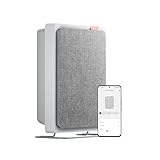
The Smartmi E1 is the only unit here sold as a wall-mounted purifier first and a floor appliance never. It suits someone with a small bedroom, a rented flat where floor space is contested, or a room where the only sensible place for a purifier is high on a wall beside a wardrobe. Smartmi is a home-appliance brand best known for purifiers, fans and humidifiers, and the E1 reflects that background: a slim panel, a bracket-based install, and a stated clean-air delivery rate of 150 m³/h.
Key specs
- Stated clean air delivery rate: 150 m³/h, which converts to approximately 88 CFM (cubic feet per minute). The conversion is m³/h ÷ 1.699.
- Format: wall-mounted panel with a supplied mounting bracket; mains powered via a standard plug.
- Practical room match: using the sizing rule in the How to Choose section (CADR in CFM at roughly two-thirds of the room’s square footage for about five air changes per hour in an 8 ft ceiling room), 88 CFM suits a room of roughly 120 to 140 sq ft.
- Filtration: a mechanical filter stack rather than an ioniser-only design, with filter access from the front of the panel.
- Maintenance: the panel lifts off the bracket for cleaning, which matters because the intake grille is the part that collects visible dust first.
Why it works
The E1’s value is not raw airflow; it is that the airflow is delivered from a position that floor units cannot reach. Mounted above furniture height, a wall panel pulls from the upper air layer where fine particles circulate and where warm air stratifies, and it returns filtered air into the breathing zone rather than across the floor. In a small bedroom, that also frees the single most valuable square metre in the room. Because the unit is compact and light, a single bracket on a plasterboard wall with appropriate anchors is a realistic install for a competent DIYer, and a stud-mounted fix is better still.
The second advantage is the mid-range price band combined with a straightforward consumable model. There is no UV lamp to replace, no ioniser to clean, and no separate pre-filter to buy on a quarterly cycle. The trade-off is coverage: this is a bedroom purifier, not a living-room purifier, and pushing it into a 400 sq ft open-plan space would drop it to roughly 1.5 air changes per hour, which is barely better than an open window with a fan.
Pros
- One of only two true wall-mounted units in this roundup, so it removes floor clutter entirely.
- 150 m³/h (about 88 CFM) is honestly sized for a bedroom rather than over-claimed for a whole house.
- Mid-range price tier with a simple filter stack — no lamp or ioniser consumables.
- Lifts off the bracket, so grille cleaning does not require unscrewing anything.
- Discreet footprint suits rentals and small flats where a floor tower would be in the way.
Cons
- Not enough airflow for a large living room or an open-plan space.
- Requires drilling and anchoring; unsuitable where you cannot modify walls at all.
- Fewer smart features than the app-controlled units in this list.
- Cord length and outlet position need checking before you commit to a mounting height.
Compared with the nearest alternative: the Kaltech KL-W01U is the other wall-mounted option, and the two divide cleanly. The Kaltech is the premium choice built around a washable photocatalytic filter, which means almost no recurring filter spend and a strong focus on odor; the Smartmi is the mid-range choice built around conventional mechanical filtration with a defined replacement cycle. If your problem is cooking or pet odor in a bedroom and you dislike buying filters, the Kaltech earns its premium. If your problem is dust and pollen in a small room and you want to spend less up front, the Smartmi E1 is the better fit.
2. Kaltech KL-W01U – Best for Odor Control With No Filter Subscriptions

The Kaltech KL-W01U is the premium wall-mounted pick and the only unit here whose filter is described as washable rather than replaceable. Kaltech is a Japanese manufacturer, and this model is stated as made in Japan, which in this category usually signals tighter build tolerances and a quieter fan than the budget end of the market. It suits someone who dislikes consumable costs, has a persistent odor problem in a specific room, and wants the purifier off the floor permanently.
Key specs
- Filtration type: photocatalytic, with a washable filter element rather than a disposable HEPA cartridge.
- Origin: stated as made in Japan.
- Noise: marketed as quiet operation, which in this class generally means a low fan speed in the low 20s to low 30s dB(A) range.
- Primary function set: odor removal alongside particulate filtration.
- Format: wall mounted, mains powered.
Why it works
Photocatalytic filtration is a different proposition from a HEPA cartridge. A conventional mechanical filter traps particles and progressively loads up; performance declines as the filter fills, and the owner has to buy a replacement on a six-to-twelve month cycle. A photocatalytic design uses a catalyst surface and light to break down odor-causing compounds at the molecular level, and the surface can be washed and reused. In practice that means the KL-W01U’s running cost is dominated by electricity rather than filters, and its performance on odors does not degrade the way a saturated carbon layer does.
The trade-off is that a washable filter needs actual washing. The maintenance interval is not optional, and if you let the element clog, airflow drops and the unit becomes both louder and less effective. For a household that will rinse a filter in the sink every few weeks, this is the cheapest premium unit here to own over five years. For a household that will not, a disposable-cartridge unit is a better match despite the higher running cost.
Pros
- Washable filter means no recurring filter purchases — the lowest long-run consumable cost in this roundup.
- Odor-focused performance, which suits kitchens, pet rooms, and smoking areas better than a plain particle filter.
- Made in Japan, with the build quality and quiet-fan expectations that go with it.
- True wall mount, so it occupies no floor space at all.
- Premium tier but justified by the consumable model rather than by feature count.
Cons
- Highest up-front price tier here, and the saving only materialises over years.
- Washable filter demands a genuine maintenance routine; neglect costs performance.
- Photocatalytic systems are less familiar to buyers than HEPA, so comparing specs takes more effort.
- Wall mounting still requires drilling and anchoring.
Compared with the nearest alternative: the Smartmi E1 is the direct counterpart, and the choice comes down to time versus money. The Smartmi costs less now and more later, because its mechanical filter is a consumable. The Kaltech costs more now and less later, because its filter is washed rather than bought. Anyone who has owned a purifier before and resented the filter bill should lean Kaltech; anyone buying their first wall unit and wanting the simplest possible ownership should lean Smartmi.
3. AROEVE MK07 – Best Budget Wall-Adjacent Pick
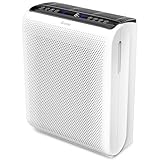
The AROEVE MK07 is the budget entry point in this roundup and the sensible first purifier for a bedroom, home office, or small flat. AROEVE is a budget-focused air treatment brand, and the MK07’s headline features are the ones that actually matter at this price: an air-quality indication readout and an auto mode that adjusts fan speed without input. It is freestanding rather than wall mounted, so it fits a wall-adjacent strategy — on a shelf, a bedside cabinet, or a low console near the wall — rather than a bracket.
Key specs
- Control: auto mode driven by an onboard air-quality sensor, plus a visible air-quality indication.
- Format: freestanding compact chassis, suitable for a nightstand or shelf.
- Filtration: mechanical filter cartridge, replaceable.
- Best room match: small bedrooms and offices, in the region of 100 to 200 sq ft for meaningful air exchange.
- Price tier: budget.
Why it works
Auto mode is the single most valuable feature on a budget purifier, and it is the reason the MK07 is worth recommending over cheaper units without it. Most owners run a purifier at one fixed speed, usually either too loud to sleep through or too slow to do anything. An auto mode reads the particulate level and ramps the fan only when needed, which means the unit spends most of its life on a quiet low setting and only gets loud when someone is cooking or vacuuming nearby. The air-quality indicator also gives immediate feedback, which is genuinely useful for understanding whether a placement is working.
The limitation is airflow. A compact budget chassis moves far less air than the large-room units further down this list, so it belongs in one room and one room only. Placed in a 400 sq ft living room, it will make almost no measurable difference; placed beside a bed in a 120 sq ft bedroom, it will. Buy it for the room it can actually treat.
Pros
- Budget price tier with auto mode and air-quality indication, which cheaper units often omit.
- Compact enough for a nightstand, desk, or shelf near a wall.
- Simple, replaceable filter cartridge with no lamp or ioniser consumables.
- Low-risk first purchase for a bedroom or small office.
- Auto mode keeps it quiet most of the time.
Cons
- Not wall mounted — it needs a surface, so it does not solve a floor-space problem.
- Airflow is limited to small rooms; it is not a large-room unit.
- Filter replacements are an ongoing cost at the budget end of the market.
- Fewer smart features than the app-controlled units here.
Compared with the nearest alternative: the Levoit compact air purifier for bedroom, pets and dorm rooms is the other small-format budget option, and the two are close. The AROEVE’s advantage is the air-quality readout and auto behaviour, which gives a first-time buyer visible feedback. The Levoit compact’s advantage is the broader filter and accessory ecosystem that comes with a larger brand, which makes replacements easier to find years later. If you want feedback on screen, take the AROEVE; if you want long-term parts availability, take the Levoit.
4. KNKA APH4000 – Best for Very Large Open Spaces

The KNKA APH4000 is a premium-tier unit aimed squarely at big rooms, with a stated coverage of up to 1,695 ft² in one hour and a black finish that reads more like furniture than appliance. It suits someone with an open-plan living and kitchen area, a large master bedroom, or a finished basement where a single purifier has to cover a genuinely big volume. It is freestanding, so it works against a wall rather than on one.
Key specs
- Stated coverage: up to 1,695 ft² in 1 hour.
- Filtration: multi-stage mechanical filtration with a replaceable main cartridge.
- Format: freestanding, black finish; intended for floor placement with wall clearance.
- Price tier: premium.
- Best use case: large, single-volume rooms where one unit must do the whole job.
Why it works
Large rooms are where cheap purifiers fail visibly. A small unit in a big space is not merely underpowered; it is effectively decorative, because the air exchange rate it produces is too low to change the particle concentration meaningfully. The APH4000’s stated one-hour coverage of 1,695 ft² corresponds to a substantial airflow figure, and even discounting the marketing assumption — that figure is quoted at roughly one air change per hour — it translates to a clean-air delivery rate in the low hundreds of CFM, which is a real large-room capability rather than a small-room capability with a big number attached.
The premium tier buys you that airflow, plus a chassis large enough to hold a deep filter stack. Deep pleated media holds more dust before airflow drops, which stretches replacement intervals and keeps the fan quieter for longer. If you have ever replaced a thin filter every four months in a dusty home, the value of a deeper stack is obvious.
Pros
- Genuinely large stated coverage, appropriate for open-plan or basement spaces.
- Premium build with a deep filter stack that stretches replacement intervals.
- Neutral black finish that disappears against dark furniture and media walls.
- One unit can replace two or three small ones in a single large volume.
- Wall-adjacent placement works well in an open-plan layout.
Cons
- Premium price tier, and the largest cartridges in this class cost more per replacement.
- Physically large — it needs floor space and wall clearance, so it does not solve a clutter problem.
- Overkill and inefficient for a small bedroom; it will run on low constantly.
- No wall-mount option.
Compared with the nearest alternative: the LEVOIT Vital 200S-P competes directly on coverage — 1,875 ft² stated versus 1,695 ft² — and wins on smart features and on consumables, thanks to its washable pre-filter. The KNKA’s counter-argument is simpler construction and a lower-stated price tier within the premium band at the time of writing. If you want app control and cheaper filters, take the Levoit; if you want a large, plain, powerful box with fewer connected features, the KNKA is the straightforward choice.
5. LEVOIT Vital 200S-P – Best Smart Pick for Large Rooms and Pets

The LEVOIT Vital 200S-P is the best all-round premium pick in this roundup. Levoit is one of the best-established names in home air treatment, and the Vital 200S-P pairs a stated coverage of up to 1,875 ft² with app control, voice assistant compatibility, and a washable pre-filter — the feature that does the most to cut long-term cost. It suits large bedrooms, living rooms, and pet households where hair and dander load the filter quickly.
Key specs
- Stated coverage: up to 1,875 ft².
- Filtration: multi-stage, including a washable pre-filter ahead of the main cartridge.
- Control: smartphone app, scheduling, and voice assistant integration.
- Format: freestanding tower-style chassis, designed for floor placement with wall clearance.
- Price tier: premium.
Why it works
The washable pre-filter is the quiet hero here. In a pet household, the first stage of a filter stack catches the bulk of the visible debris — hair, lint, coarse dander — and that stage is exactly the one that clogs fastest. Making it washable means the expensive main cartridge only has to deal with fine particles, which can roughly double its useful life in a heavy-shedding home. Over three years that is a meaningful difference in total ownership cost, and it is the kind of detail a product listing rarely spells out.
The app layer matters too, though less than marketing suggests. Scheduling is the genuinely useful function: set the unit to ramp up when you leave for work and drop to low an hour before bedtime, and you get the benefit of high-speed filtration without listening to it. The larger benefit for most buyers is simply that the Vital 200S-P has enough airflow to be worth scheduling in the first place.
Pros
- Largest stated coverage here at 1,875 ft², suitable for large living rooms.
- Washable pre-filter meaningfully extends main cartridge life, especially with pets.
- App control with scheduling and voice assistant support.
- Strong brand ecosystem — filters and parts remain easy to source over time.
- Good balance of coverage, consumable cost, and features within the premium tier.
Cons
- Premium price tier.
- Freestanding only; needs floor space and clearance from the wall for intake.
- App setup is an extra step for buyers who just want a power button.
- High fan speeds are audible, as with any unit moving this much air.
Compared with the nearest alternative: the KNKA APH4000 is the closest competitor on raw coverage, and the ECOSELF unit is the closest on price tier. Against the KNKA, the Vital 200S-P wins on the washable pre-filter and on app features, and loses slightly on stated coverage. Against the ECOSELF, it wins on coverage and control, and loses on up-front price. For most large-room buyers who will keep the unit for years, the pre-filter economics tip the decision.
6. SereneLife HEPA WiFi – Best Budget App-Controlled Unit

The SereneLife HEPA purifier is the budget route to app control. SereneLife is a broad consumer-electronics brand, and this unit combines HEPA filtration with WiFi and app operation plus a quiet mode, at the lowest price tier in this roundup. It suits a buyer who wants scheduling and remote control without paying premium prices, in a bedroom or a mid-sized living room.
Key specs
- Control: WiFi connectivity with smartphone app control, plus a quiet operating mode.
- Filtration: HEPA-class mechanical filtration with a replaceable cartridge.
- Format: freestanding, floor placement with wall clearance.
- Best room match: bedrooms and medium rooms rather than large open-plan spaces.
- Price tier: budget.
Why it works
App control at a budget price is a real convenience, not a gimmick. Being able to turn the unit to high while you are still at work, then drop it to quiet mode from bed without getting up, is the difference between a purifier that runs consistently and one that gets switched off because it is annoying. The quiet mode matters for the same reason: a purifier that cannot be slept through will be turned off at exactly the time it is most useful.
The obvious caveat is that budget chassis move less air than premium ones, and app connectivity does not change physics. Expect this unit to handle a bedroom or a modest living room well and a large open-plan space poorly. Buy it for the room size it can actually treat, and treat the app as a bonus rather than the reason to buy.
Pros
- App and WiFi control at the lowest price tier here.
- Dedicated quiet mode for night-time operation.
- HEPA-class filtration with a standard replaceable cartridge.
- Straightforward setup for buyers who want smart features without complexity.
- Low financial risk as a first connected purifier.
Cons
- Budget-tier airflow; not suited to large rooms.
- Freestanding only, with no wall-mount option.
- No washable pre-filter, so the main cartridge takes the full debris load.
- App reliability and update support are less predictable than with specialist air-treatment brands.
Compared with the nearest alternative: the Levoit smart and voice-control unit is the direct budget rival, and both target the same buyer. The Levoit adds voice assistant control and comes from a brand that specialises in air treatment, which usually means better long-term filter availability. The SereneLife counters on price tier and on having a clearly defined quiet mode. If voice control matters, take the Levoit; if you want the lowest entry price for app operation, the SereneLife is the pick.
7. Levoit Compact Air Purifier – Best for Dorms and Small Bedrooms

This Levoit unit is the small-format option in the roundup, marketed for bedrooms, pets, and dorm rooms. It suits students, renters in studio flats, and anyone who needs filtration in a very small space without spending much or giving up a large patch of floor. At the budget price tier it is the least expensive way into a brand that specialises in air treatment.
Key specs
- Format: compact freestanding chassis, small enough for a desk, nightstand, or windowsill.
- Intended rooms: bedrooms, dorm rooms, small studies — roughly 100 to 200 sq ft.
- Filtration: mechanical cartridge filtration, replaceable.
- Noise: designed for bedroom use, with a low-speed setting intended for sleep.
- Price tier: budget.
Why it works
Small rooms are where small purifiers earn their keep, because the air-change math is favourable. A compact unit moving a modest airflow through a 100 sq ft room can achieve several air changes per hour, which is a real improvement, whereas the same unit in a 400 sq ft living room achieves almost nothing. This is the single most common mistake in the category: buying a small unit for a big room and concluding that air purifiers do not work.
The Levoit compact also benefits from being genuinely unobtrusive. It is quiet at low speed, small enough to tuck beside a bed, and simple enough that there is no setup friction. For a dorm room or a studio, that combination — quiet, cheap, small — is exactly the right feature set, and it is why this format outsells large towers in shared and rented housing.
Pros
- Budget price tier and a very small footprint.
- Quiet enough for a bedside at low speed.
- From a brand with a deep air-treatment catalogue, so filters stay available.
- Well matched to the room sizes it is sold for, which avoids the small-unit-big-room mistake.
- Low commitment purchase for a dorm or rental.
Cons
- Small-room capability only; it will not meaningfully treat a large space.
- Freestanding, so it does not solve a floor-space problem.
- Small cartridges need replacing more often in relative terms than large ones.
- No washable pre-filter in this format.
Compared with the nearest alternative: the AROEVE MK07 is the closest match in size and price, and the deciding factor is features. The AROEVE offers an air-quality readout and auto mode, which give visible feedback and better automatic behaviour. The Levoit offers brand depth and easier long-term filter sourcing. If you like seeing numbers on a screen, the AROEVE is more satisfying; if you want the unit to simply work for years with minimal thought, the Levoit is the safer long-term bet.
8. MOOKA Air Purifier 2200 ft² – Best Mid-Range Coverage per Dollar

The MOOKA purifier is the mid-range value play, with a stated coverage of up to 2,200 ft², HEPA filtration, and a white finish that suits light interiors. It suits a buyer who wants large-room coverage without paying the premium tier, in a living room, master bedroom, or open kitchen-diner.
Key specs
- Stated coverage: up to 2,200 ft².
- Filtration: HEPA-class mechanical filtration with a replaceable cartridge.
- Format: freestanding, floor placement with wall clearance.
- Finish: white.
- Price tier: mid-range.
Why it works
The headline number needs context, and the context is worth understanding before you buy any large-coverage purifier. A 2,200 ft² claim is almost always quoted at about one air change per hour. In an 8 ft ceiling room, one air change per hour across 2,200 sq ft implies roughly 17,600 cubic feet of air per hour, or about 293 CFM. That is a respectable figure — but if you move the same unit into a 450 sq ft room, it delivers close to five air changes per hour, which is the level associated with meaningful particle reduction. In other words, a 2,200 ft² unit is at its most useful in a 400 to 700 sq ft room, not in a 2,200 ft² one.
Understood that way, the MOOKA is a genuinely good mid-range buy: enough airflow for a large living room or an open-plan kitchen-diner, at a price below the premium tier. The trade-off against premium units is mostly in consumables and refinement rather than airflow — no washable pre-filter, and a simpler control set.
Pros
- Large stated coverage at a mid-range price tier.
- HEPA-class filtration with a standard replaceable cartridge.
- White finish suits light-coloured interiors and blends into a living room.
- Enough airflow to actually change the air in a large room at a useful rate.
- Simpler controls than app-heavy rivals, which some buyers prefer.
Cons
- No washable pre-filter, so the main cartridge absorbs the full debris load.
- Stated coverage is quoted at a low air-change assumption; treat the number as a maximum, not a target.
- Freestanding only.
- Fewer smart features than the premium tier.
Compared with the nearest alternative: the EVALIT unit is the closest mid-range rival, and the difference is consumables. EVALIT includes a washable pre-filter, which reduces main cartridge cost over time; the MOOKA undercuts it on up-front price and offers a larger stated coverage figure. Over three years, the EVALIT’s pre-filter will likely close the gap. Buy the MOOKA if up-front cost dominates; buy the EVALIT if you plan to keep the unit for five years or more.
9. Levoit Smart & Voice Control – Best for Pet Odors on a Budget

This Levoit unit is the budget smart option aimed at pet owners, bedrooms, and dorm rooms, with app control and voice assistant operation. It suits a household with one or two pets in a small-to-medium room who want to trigger the purifier hands-free — useful when your hands are full of a shedding dog or a litter tray.
Key specs
- Control: smartphone app plus voice assistant compatibility.
- Intended rooms: bedrooms, dorm rooms, and pet areas — small to medium spaces.
- Filtration: mechanical cartridge filtration, replaceable.
- Noise: low-speed setting intended for bedroom use.
- Price tier: budget.
Why it works
For pet households, the most important question is not peak airflow but whether the purifier runs consistently. Pet odor and dander accumulate continuously, so a unit that gets switched off because it is loud contributes nothing. Voice control sounds like a novelty until you are carrying a litter tray, and the practical value is that it removes the friction of turning the unit up when it is needed. Combined with a low-speed night setting, that gives a purifier that actually stays on.
The honest limitation is room size. This is a small-to-medium-room unit, and it will not manage an open-plan living area with two large dogs. It works best as a targeted unit in the room the pets actually occupy, and the filter economics reflect that: a heavy pet load means more frequent cartridge changes, and there is no washable pre-filter here to absorb the hair before it reaches the main media.
Pros
- Budget price tier with both app and voice assistant control.
- Practical for pet owners who want hands-free operation.
- Quiet low-speed setting for bedrooms.
- Levoit’s filter ecosystem makes replacements easy to find long term.
- Targeted small-room performance is genuinely useful in a pet room.
Cons
- No washable pre-filter, so pet hair reaches the main cartridge directly.
- Limited to small and medium rooms.
- Frequent cartridge replacement in heavy-shedding homes.
- Freestanding, with no wall-mount option.
Compared with the nearest alternative: the LEVOIT Vital 200S-P is the upgrade path and the comparison is instructive. The Vital 200S-P costs more but adds a washable pre-filter and far more airflow — exactly the two things a multi-pet household needs. If you have one cat in a bedroom, the budget smart unit is sufficient. If you have two shedding dogs and a large living room, the premium Levoit is the one that will actually keep up, and the pre-filter will offset much of the price difference in filter savings.
10. GermGuardian AC4825E – Best Tower Format With UV-C Stage

The GermGuardian AC4825E is a 22 inch HEPA tower in gray, from Guardian Technologies, a long-established name in home air treatment. It suits buyers who want a conventional tower footprint, a three-stage filter path, and an added UV-C stage, and who value a model with a long production history and widely available replacement filters. It sits in the premium price tier.
Key specs
- Format: 22 inch freestanding tower, gray finish.
- Filtration: HEPA filter with a pre-filter stage and a UV-C lamp stage.
- Consumables: HEPA cartridge plus a UV-C lamp on its own replacement cycle.
- Placement: floor-standing, with clearance around the intake.
- Price tier: premium.
Why it works
Tower purifiers remain popular for a practical reason: a tall, narrow chassis draws air across a large filter face while occupying a footprint not much bigger than a dinner plate. That makes the format easy to place in a corner or beside a bookcase, and it makes the AC4825E a reasonable choice for a room where a wide horizontal unit would not fit.
The UV-C stage is the distinctive feature and also the one that needs the most careful thought. UV-C is used in air treatment as an additional stage, and its effectiveness depends heavily on dwell time — how long air spends in contact with the lamp — which is limited in a unit with this much airflow. It is best understood as a secondary stage rather than a replacement for mechanical filtration. Note also that it is a consumable: the lamp degrades and needs periodic replacement, and the unit should be treated as general-purpose household equipment. If you have a specific respiratory concern, this article is general information only and a healthcare professional is the right person to advise you.
Pros
- Established brand with a long-running model, so replacement filters are easy to source.
- 22 inch tower format fits narrow spaces and corners.
- Three-stage path including a pre-filter, HEPA, and UV-C lamp.
- Simple controls with no app dependency.
- Pre-filter stage is a separate, inexpensive consumable that protects the HEPA cartridge.
Cons
- Two consumables — HEPA cartridge and UV-C lamp — so running costs are higher than single-filter designs.
- UV-C effectiveness is limited by airflow dwell time; it is a supplementary stage.
- Premium price tier for a design that is older than most of this list.
- Freestanding tower only; no wall mounting.
Compared with the nearest alternative: the KNKA APH4000 is the other premium non-smart pick, and they diverge on approach. The KNKA pursues raw airflow for large rooms; the GermGuardian pursues a multi-stage filter path with a UV-C stage in a narrow tower. If your priority is coverage in a big space, the KNKA is the better tool. If your priority is a slim footprint with a layered filter path, the GermGuardian makes more sense — provided you accept the extra lamp consumable.
11. ECOSELF Air Purifier – Best Mid-Range for Living Rooms

The ECOSELF purifier is a mid-range unit with HEPA filtration and a stated coverage of up to 1,800 ft², positioned for large rooms. It suits a buyer who wants living-room coverage at a price below the premium tier and who does not need app control.
Key specs
- Stated coverage: up to 1,800 ft².
- Filtration: HEPA-class mechanical filtration with a replaceable cartridge.
- Format: freestanding, floor placement with wall clearance.
- Controls: onboard, without app dependency.
- Price tier: mid-range.
Why it works
At the mid-range tier, the sensible question is not “how big a room does it claim” but “how many air changes does it deliver in my actual room”. A stated 1,800 ft² coverage figure is quoted at roughly one air change per hour, which corresponds to an airflow in the region of 240 CFM. In a 500 sq ft living room with an 8 ft ceiling, that is closer to 3.6 air changes per hour — solid, useful performance