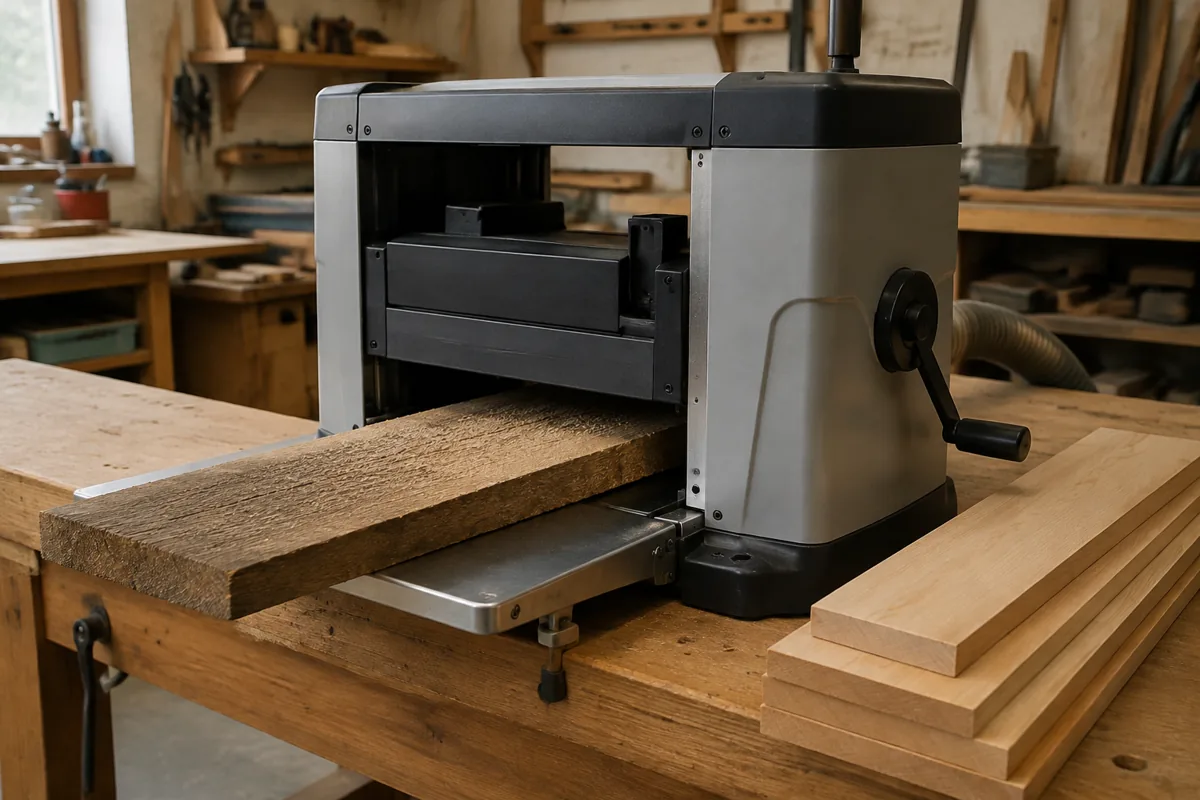
Best Planers with Replaceable Carbide Inserts
What's inside
As an Amazon Associate I earn from qualifying purchases. This post may contain affiliate links at no extra cost to you.
Planers with replaceable carbide inserts are a good choice when you want a smoother finish, quieter cutting, and less downtime than a straight-knife machine provides. Instead of one long knife, the cutterhead uses many small, four-sided carbide inserts. When one edge is damaged, you rotate or replace that insert rather than changing and setting an entire knife set.
The important distinction is that most affordable benchtop planers do not come with true insert cutterheads. They use disposable or resharpenable straight knives. To get carbide inserts, you generally buy a heavier stationary planer with a factory helical head, or replace the original cutterhead with an aftermarket head.
Contents
What to Look For
A useful insert planer has more than carbide cutters. Look for a rigid cast-iron or heavily reinforced frame, a cutterhead with enough rows of inserts, reliable feed rollers, and a chip evacuation system that does not clog. A 12- to 15-inch capacity covers most furniture work. Wider machines are useful for doors and panels but become considerably more expensive and need more shop space.
Insert count matters, but it is not the only specification. Small square inserts may have four usable edges, while some rectangular designs have two or four. More inserts usually mean a smoother cut and lower load per cutter, but replacement costs increase. A head with roughly 40 to 60 inserts is common on mid-size machines. Keep at least one spare packet in the shop; hitting a screw can turn a quick job into a week-long delay if the correct insert is unavailable.
Cutting depth is another practical limitation. Removing 1/16 inch in one pass is reasonable on many machines, but taking 1/8 inch from a wide, hard board can overload the motor and leave ridges. Use shallow finishing cuts—about 1/64 to 1/32 inch—after flattening the stock.
Best Options by Shop Type
| Planer type | Best for | Advantages | Trade-offs |
|---|---|---|---|
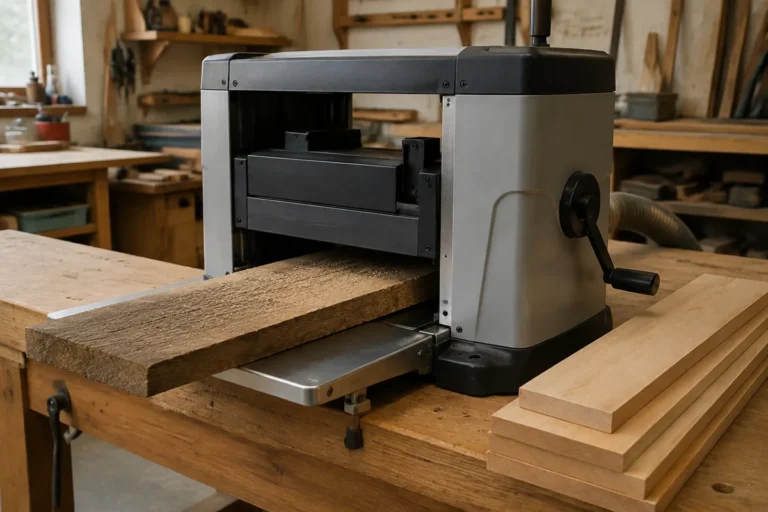
| Benchtop planer with aftermarket insert head | Small shops and occasional furniture work | Lower total cost, compact footprint, familiar machine | Limited dust collection, lighter feed system, upgrade cost |
| 12- to 15-inch stationary planer with factory helical head | Regular hardwood milling | Better rigidity, smoother feed, less vibration | Higher purchase price and greater space requirement |
| Wide industrial planer | Large panels, production work, thick stock | Powerful motor, wide capacity, consistent thickness | Expensive, heavy, and excessive for most hobby shops |
For a compact shop, start by comparing benchtop planer replacement helical cutterheads for the planer you already own. Compatibility is not universal. Check the exact model number, cutterhead diameter, bearing arrangement, and mounting hardware before ordering. The upgrade can make sense when the machine is sound, but it is not worthwhile if the feed rollers slip or the tables are badly misaligned.
If you are buying new, look for a 12-inch planer with a helical cutterhead. This size is a practical middle ground: wide enough for most cabinet parts, but not so large that moving it requires a forklift. A factory-installed head also avoids the fitment and alignment risks of an upgrade.
Why Inserts Work Better on Difficult Wood
Carbide inserts handle knots, figured grain, and abrasive species better than high-speed-steel knives. When a small corner encounters a knot, the damage is usually limited to one or two inserts. Rotate those inserts 90 degrees and continue working. The helical cutting action also reduces the long, continuous impact that makes straight-knife planers loud.
The finish is usually more consistent, but “tear-out free” is not guaranteed. Feed direction still matters. If the grain rises toward the cutter, reduce the depth of cut and feed the board in the direction that presents a lower cutting angle. A planer cannot replace a jointer for correcting a twisted board, and it will not make a bowed board flat unless one face is already established.
Expect small scallop marks from the curved path of the inserts. On a well-adjusted head these marks are shallow and disappear quickly with a cabinet scraper or sander. Increasing the feed speed makes them more noticeable. Slower feed improves the finish but reduces production rate.
Cost and Maintenance
A cheaper straight-knife planer is fine for construction lumber, softwood shelving, and occasional dimensioning. It is also the better choice when the machine will see only a few hours of use each year. Knives are inexpensive, widely available, and quick to replace once you learn the setup procedure.
Choose carbide inserts when you regularly process hardwood, reclaimed wood, or figured stock, or when knife changes have become a recurring nuisance. A replacement insert head can cost a substantial portion of the original planer price. Factor in the cutterhead, spare inserts, and possible installation labor—not just the advertised machine price.
Use the correct replacement planer inserts for the cutterhead. Generic inserts may have the wrong thickness, corner radius, or screw geometry. Clean the pocket before installing an insert, seat it firmly without overtightening, and mark rotated cutters with a paint pen so you know which edges have been used.
Common Failure Modes
Uneven thickness from one end of a board to the other usually points to feed-roller pressure, dirty rollers, or an out-of-level table—not dull inserts. Snipe at the board ends is often reduced by supporting long stock, raising the outfeed end slightly, and using a consistent feeding technique. If the planer suddenly becomes rough or noisy, stop immediately and inspect for a loose insert, packed chips, or a damaged pocket.
Good dust collection is essential. Fine chips packed around the cutterhead can prevent clean cutting and overheat the motor. Use a collector capable of moving roughly 600 to 800 cubic feet per minute at the machine, keep the hose short, and empty the bag before airflow drops. A helical planer is quieter than a straight-knife model, but it still produces dangerous noise and airborne dust; hearing and respiratory protection remain necessary.
The Practical Buying Decision
Buy a factory helical planer if you mill hardwood regularly and want the least installation work. Upgrade a good benchtop machine if space and budget are tight. Buy the cheaper straight-knife planer if most of your work is softwood or rough construction stock. In every case, prioritize a rigid frame, dependable feed rollers, accurate table adjustment, and available parts over a high insert count printed on the box.