Best Heated Bidet Seats for Everyday Comfort
What's inside
As an Amazon Associate I earn from qualifying purchases. This post may contain affiliate links at no extra cost to you.
Contents
Best Heated Bidet Seats: Quick Picks by Bathroom and Budget
The best heated bidet seat for most bathrooms is a size-matched, elongated model with adjustable seat and water temperatures, a warm-air dryer, and a nearby GFCI-protected outlet; choose a round model if your toilet is round, or a non-electric bidet if the bathroom has no safe power access.
For a premium electric seat, the TOTO WASHLET C5 is a well-established option with adjustable warm water, a heated seat, dryer, and remote control. The Bio Bidet BB-2000 Bliss is another feature-rich choice, particularly if you want a broader range of wash adjustments. For a simpler setup, Brondell Swash models offer electric bidet functions at a range of price points. Features and availability vary by exact model and bowl shape, so confirm the current specification before buying.
As an Amazon Associate we earn from qualifying purchases at no extra cost to you.
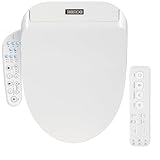

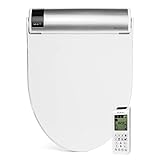

Compare the Options That Matter
Electric bidet seats differ less in their basic job than in fit, control layout, water-heating style, and extras. The figures below are practical buying ranges for common full-size household toilets and typical electric-seat designs, not guaranteed dimensions for every model. Use the manufacturer’s drawing for the specific seat you are considering.
| Seat type or example | Typical overall width | Typical front-to-back length | Power and water | Best fit |
|---|---|---|---|---|
| TOTO WASHLET C5, electric | About 15–16 in | About 20–22 in, depending on bowl shape | 120 V outlet; connects to toilet’s cold-water supply | Owners seeking a mainstream premium seat with remote control |
| Bio Bidet BB-2000 Bliss, electric | About 15–16 in | About 20–22 in, depending on bowl shape | 120 V outlet; connects to toilet’s cold-water supply | Those prioritizing extensive wash and comfort adjustments |
| Brondell Swash electric models | About 15–16 in | About 20–22 in, depending on model and bowl shape | 120 V outlet; connects to toilet’s cold-water supply | Shoppers comparing simpler and more feature-rich electric seats |
| Non-electric bidet attachment or seat | Usually close to the existing seat width | Varies by attachment and toilet | No outlet; uses toilet’s cold-water supply | Bathrooms without a suitable outlet or buyers seeking lower cost |
As a rough planning guide, electric seats commonly cost from the low hundreds to several hundred dollars; premium models can cost more. Non-electric options are generally less expensive. Installation supplies or electrical work can add to the total.
Choose by Your Situation
| Your situation | What to prioritize | Likely choice |
|---|---|---|
| Round toilet or compact bathroom | Round-bowl compatibility, rear clearance, and lid clearance | A round-specific electric seat or compact non-electric unit |
| No outlet near the toilet | Safe power access before selecting heated features | Non-electric bidet, or an electrician’s assessment before an electric seat |
| Several people use the bathroom | Easy-to-clean controls, adjustable settings, and a clear control layout | An electric seat with a remote or accessible side panel |
| Frequent use or a preference for warm water | Continuous-flow versus stored-water heating, plus adjustable pressure | A higher-spec electric model with the heating system and settings you prefer |
| Renting or limited DIY experience | Reversible mounting and simple connections | A non-electric attachment or an electric model with a straightforward mounting plate |
Fit Comes Before Features
Most seats are made for either elongated or round toilet bowls; these shapes are not interchangeable. Measure from the centers of the seat-mounting holes to the front edge of the bowl, and check the distance between the mounting holes. Compare those measurements with the manufacturer’s fit diagram. Also measure the space behind the bowl: a wall, tank, shelf, or unusual toilet shape can prevent the seat from opening or sitting flat.
Check whether the seat is compatible with your toilet’s mounting arrangement and whether its lid can support any weight. Bidet-seat lids are not generally designed to serve as stools. If you have an unusual one-piece toilet, a concealed mounting area, or a very short tank-to-bowl gap, verify compatibility with the manufacturer before ordering.
Heating, Water, and Power: What to Expect
Seat temperature, wash-water temperature, and dryer temperature are separate features on many electric models. Multiple levels are more useful than simply having an on/off setting, especially when household preferences differ. Some seats heat water as it flows; others keep a small reservoir warm. A reservoir can provide a limited amount of heated water before it needs time to recover, while an on-demand system is designed to maintain warm water during a wash. Check the exact model specification rather than assuming all electric seats behave alike.
Most electric seats plug into a standard 120 V outlet and use the toilet’s cold-water line. The outlet should be properly grounded and protected as required for bathroom use—typically by GFCI protection—and positioned so the cord does not stretch, cross a walkway, or touch standing water. Do not use an extension cord as a workaround. If there is no suitable outlet, ask a qualified electrician about adding one; avoid choosing a heated seat until safe power access is resolved.
Non-electric bidets avoid the outlet requirement but ordinarily use unheated water. They can be a practical choice where wiring is inconvenient, though they will not provide a heated seat or powered dryer.
Installation and Ownership Realities
Many installations involve removing the old seat, fitting a mounting plate, adding a bidet T-valve to the toilet’s supply, attaching the seat, and checking for leaks. For someone comfortable with basic household plumbing, the work is often manageable with the included instructions and a wrench. Shut off the supply valve first, flush to empty the tank, and follow the manufacturer’s connection order. If the valve is corroded, the plumbing is unfamiliar, or a leak persists, stop and call a plumber rather than forcing a fitting.
Before installation, confirm the bidet’s water hose can reach without kinking and that the seat can slide off its mounting plate for cleaning. Afterward, check connections again once the water is back on. A small leak at a threaded joint may need careful reseating; overtightening can damage fittings.
For day-to-day care, unplug the seat before cleaning and use the cleaning products permitted by its manual. Abrasive pads, harsh solvents, and direct sprays of water can damage the finish or electronics. Retractable nozzles may have a cleaning mode, but they still need periodic attention according to the instructions. The nozzle, seat hinges, and control buttons are the parts most exposed to residue and repeated handling; gentle regular cleaning helps, while aggressive scrubbing can shorten their life.
Electric models also have ongoing energy use, which varies with ambient temperature, settings, and whether an energy-saving mode is enabled. Lowering the seat temperature or using a timer can reduce standby heating. If a model has a replaceable deodorizing filter, check its replacement interval and cost before buying; not every seat uses the same consumables.
Bottom Line
For everyday comfort, prioritize correct bowl shape, a safe nearby outlet, adjustable seat and wash temperatures, and controls that all users can reach. The TOTO WASHLET C5 is a sensible premium starting point; the Bio Bidet BB-2000 Bliss suits shoppers who want extensive adjustments; and Brondell Swash models provide alternatives across feature levels. If power access or installation is the deciding constraint, a non-electric bidet is the more practical fit—just expect to give up heated water and a heated seat.