How to Choose a Stationary Band Saw for Resawing Wide Boards
What's inside
As an Amazon Associate I earn from qualifying purchases. This post may contain affiliate links at no extra cost to you.
A stationary band saw can resaw a wide board into thinner boards, but the machine’s advertised throat depth is only one part of the decision. Blade width, frame stiffness, guides, motor power and setup all affect whether it can make a useful cut without wandering or stalling. Choose around the stock you actually plan to cut, not the largest number on a spec sheet.
Contents
Start with the board and the cut
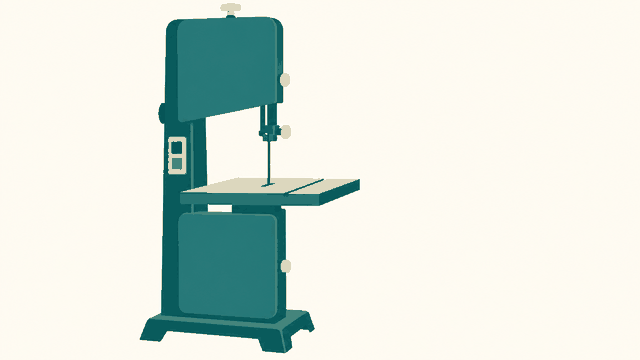
Resawing means cutting parallel to a board’s wide face, usually to make two thinner boards or veneers. The saw’s resaw capacity is the maximum height between the table and upper guides. A 12-inch capacity can accept stock about 12 inches tall, but that does not guarantee a straight cut through 12-inch hardwood.
Measure your usual stock and allow room to guide it. If your boards are typically 8 inches wide, a saw with 10 inches of capacity is more practical than one that only just clears the board. A taller fence or auxiliary fence may also be needed to support the work. Long boards need infeed and outfeed support; otherwise, their weight can pull them away from the fence or twist them as they pass the blade.
Match capacity and frame to your stock
For occasional resawing of boards up to roughly 6 inches tall, a well-tuned smaller floor-standing saw may be adequate. Regular work above 8 inches, especially in dense hardwood, calls for more capacity and a heavier frame. A rigid frame helps maintain blade tension under load. If the frame flexes, the blade can drift even when the tracking and guides appear correctly set.
Compare throat capacity with maximum resaw height: they describe different dimensions. Throat capacity is the distance from the blade to the frame, limiting the width of a cut across the table. Resaw height is the vertical clearance under the upper guides. For a wide board, resaw height is usually the key specification, but throat capacity matters for other band-saw work.
Before buying, check whether the stated capacity is usable with the fence installed and whether the saw has a practical way to tension the blade you intend to use. Some machines list a maximum blade width that is difficult to tension adequately for demanding resawing.
Prioritize blade support, tension and power
A sharp, appropriate blade often matters more than a small difference in motor rating. For resawing, a wide blade—commonly 3/4 inch or 1 inch on larger saws—with a low tooth count and deep gullets can clear sawdust from the cut and resist twisting. A coarse blade around 2–3 teeth per inch is a common starting point, though the best choice depends on wood species, thickness and the finish you need. Follow the saw manufacturer’s blade-width and tension limits.
Blade drift is the tendency of a blade to steer away from the direction it is pointed. If the fence forces the board straight ahead while the blade wants to cut at an angle, the cut may wander, bind or burn. Set the fence to the blade’s natural cutting direction, then test on scrap. A freshly sharpened blade and suitable feed rate reduce drift; no adjustment can compensate for a dull blade or a blade that is too narrow for the job.
Motor ratings are not directly comparable across every manufacturer, but more usable power helps the blade keep moving through thick hardwood. A modest motor can work for softer wood and occasional cuts if you feed steadily. If the motor bogs down, slow the feed rather than forcing the board. For frequent hardwood resawing, consider a 14-inch band saw with resaw capacity only if its frame, tension system and blade support suit your material—not just because it is a familiar size.
Compare machine types for the job
| Machine type | Best fit | Main trade-off |
|---|---|---|
| Benchtop band saw | Small stock and occasional light resawing | Limited height, blade width and stiffness |
| 14-inch floor-standing saw | General shop use and moderate resawing | Performance varies widely; some need upgrades |
| Larger or resaw-focused saw | Frequent, taller hardwood cuts | Higher purchase price and more floor space |
A benchtop saw is the cheaper choice for narrow stock, thin strips and occasional work within its capacity. It is a poor bargain if you routinely ask it to resaw near its height limit: narrow blades can deflect, and a light frame may not hold the cut straight. A heavier 14-inch saw can be a sensible middle ground, but verify the actual resaw height, motor and blade-tension range. For repeated cuts above about 10 inches, look at larger resaw band saws and compare their footprint and electrical requirements as well as capacity.
Check the parts that control the cut
Upper and lower guides support the blade close to the work. They should be adjustable without fuss and should not force the blade out of alignment. Roller guides and bearing guides can both work when properly set; neither makes a dull blade cut straight. Look for a solid table, an accessible blade-tension indicator, a fence that locks square and a way to attach dust collection. Resawing produces a lot of fine dust and chips, and buildup around the lower wheel can affect tracking.
A fence is useful, but it is not a substitute for tuning. Some boards naturally steer, so many woodworkers set the fence to match the blade’s drift instead of relying on a perfect 90-degree alignment to the table. A tall auxiliary fence can support the board, but it should be square to the table and not press the stock into a binding cut.
Plan for setup and operating cost
Budget for several blades, because resawing dulls them faster than light curve cutting. A sharp blade saves time and reduces burning. Check replacement-blade availability in the widths and lengths your saw accepts, and ask whether a local sharpening service handles that size. If the saw’s guides are difficult to adjust or its blade length is unusual, routine maintenance can become a nuisance.
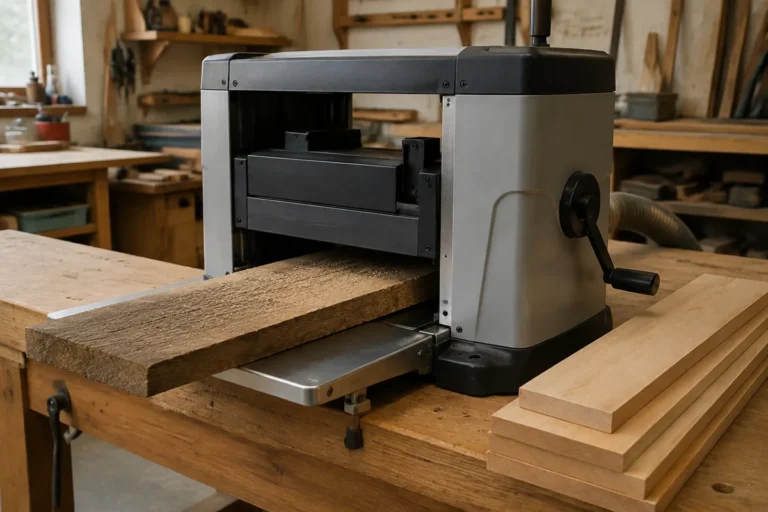
When you inspect a machine, test it with a straight, flat board close to your normal maximum thickness. Watch for the blade slowing, drifting, burning the wood or leaving a wavy face. Also inspect the board before cutting: a warped or twisted blank is hard to register safely against the table and fence. Flatten one face and one edge first when possible, and use a push aid or other safe method to keep hands clear. A band saw can make the rough split, but the resulting faces may still need a thickness planer or sanding to reach final thickness.
Buy enough capacity for your regular work, with some margin, but do not pay for a tall machine if you mostly resaw small stock. For occasional thin cuts, a smaller saw with a sharp blade and careful setup is often the economical choice. For frequent wide-board work, prioritize rigidity, tensioning and blade support over a headline capacity figure.