
What's inside
- Quick Answer: Best Stationary Jointers for Professional Furniture Shops
- What professional shops should look for
- Cutterhead and knife options
- Fence and table construction
- Top Stationary Jointer Picks for Furniture Shops
- Also Consider: Benchtop and Entry-Level Jointers
- Best jointer sizes compared
- Dust collection and electrical needs
- Jointer Buying Checklist for a Furniture Shop
- Helical vs Straight-Knife: How to Decide
- Common Jointer Mistakes in Furniture Shops
- Maintenance Schedule for Stationary Jointers
- Setup and daily use
- Which Jointer Fits Which Shop?
- When a cheaper jointer is enough
- Frequently Asked Questions
As an Amazon Associate I earn from qualifying purchases. This post may contain affiliate links at no extra cost to you.
A stationary jointer earns its floor space by making one face and one edge reliably flat and square. That reference surface is the starting point for cabinet doors, face frames, tables, and any glue-up that needs tight joints. For a professional furniture shop, the right choice is less about the widest advertised cut and more about table length, fence stiffness, cutterhead design, dust control, and whether the machine can hold its settings through a full day of work.
As an Amazon Associate we earn from qualifying purchases at no extra cost to you.
Updated October 2026 – model lineup and buying notes reviewed.
Contents
- Quick Answer: Best Stationary Jointers for Professional Furniture Shops
- What professional shops should look for
- Cutterhead and knife options
- Fence and table construction
- Top Stationary Jointer Picks for Furniture Shops
- Also Consider: Benchtop and Entry-Level Jointers
- Best jointer sizes compared
- Dust collection and electrical needs
- Jointer Buying Checklist for a Furniture Shop
- Helical vs Straight-Knife: How to Decide
- Common Jointer Mistakes in Furniture Shops
- Maintenance Schedule for Stationary Jointers
- Setup and daily use
- Which Jointer Fits Which Shop?
- When a cheaper jointer is enough
- Frequently Asked Questions
Our Top Picks




Quick Answer: Best Stationary Jointers for Professional Furniture Shops
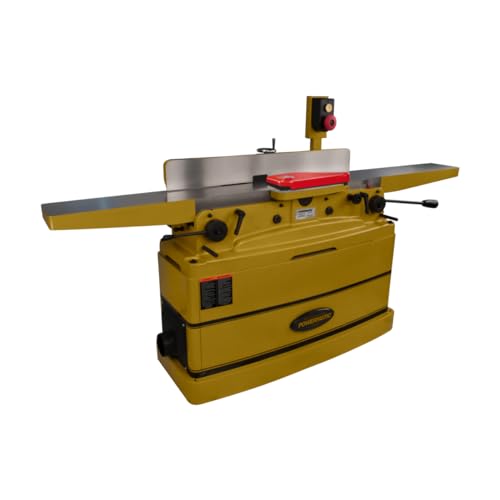
The best stationary jointers for professional furniture shops are 8-inch machines with a helical cutterhead and a long bed. Our top three: the Powermatic 8-Inch Jointer, Helical Cutterhead, 2 HP (Model 60HH) as the dependable all-rounder, the JET Black 8-Inch Jointer (JWJ-8HH-BLK) for a low-friction table and fence, and the Powermatic 8-Inch Parallelogram Jointer (PJ-882HH) for shops that want the most refined table adjustment.
How we chose: this ranking is research-based. We compared manufacturer specifications, published documentation and recurring buyer feedback, and we make no claims of personal shop use.
| Model | Size | Cutterhead | Power | Best for |
|---|---|---|---|---|
| Powermatic 60HH | 8 in | Helical | 2 HP, 230V single-phase | All-round pro shop |
| JET JWJ-8HH-BLK | 8 in | Helical | See current listing | Smooth table and fence travel |
| Powermatic PJ-882HH | 8 in | Helical | 2 HP, 230V single-phase | Parallelogram precision |
| Shop Fox W1858 | 8 x 72 in | Helical | Not stated in title | Value helical with mobile base |
| Powermatic 60C | 8 in | Straight knife | 2 HP, 230V single-phase | Lower-cost straight-knife pick |
What professional shops should look for
Most furniture work is well served by a 6-inch or 8-inch jointer. A 6-inch machine is adequate for typical 4/4 and 5/4 boards, but its tables and cutter width limit how comfortably it handles wide stock. An 8-inch jointer costs more and takes more room, yet it gives you a useful margin for flattening boards between 6 and 8 inches wide. It is the best general-purpose size for many small and mid-sized professional shops.
A 12-inch jointer is appropriate when the shop regularly flattens wide slab parts, stair components, or large solid-wood panels. It is not automatically better for ordinary furniture work. The larger machine needs more floor space, more electrical capacity, and usually a more capable dust collector. A wide jointer also tempts operators to flatten stock that should first be broken down with a track saw or bandsaw.
Look for long tables rather than relying only on cutting width. Infeed and outfeed tables around 70 inches long are much easier to use with long cabinet parts than compact machines with tables in the 40-inch range. Longer beds reduce rocking and make it easier to keep the board supported before and after the cutterhead.
Cutterhead and knife options
Traditional straight-knife cutterheads are still capable and usually cost less. They leave a clean surface when the knives are sharp and correctly aligned. The drawbacks are noise, more noticeable tearout in difficult grain, and the recurring work of changing and setting knives. A nick in one knife also produces a ridge along the entire board width.
Helical and spiral cutterheads use multiple small carbide inserts. They generally run quieter, leave a more consistent finish in figured or interlocked grain, and allow you to rotate an insert when one corner is damaged. The trade-off is a higher purchase price and a surface that may show fine scallop marks, especially with a slow feed or a high cutting depth. Those marks are normally removed with sanding or a light finishing pass.
For a busy professional shop, a helical-cutterhead stationary jointer is often worth the premium if it reduces knife-setting downtime and handles difficult hardwoods. If most work involves straight-grained maple, oak, pine, or poplar, a straight-knife machine remains a sensible lower-cost choice.
Fence and table construction
The fence must stay square when the board presses against it. A tall, heavy cast-iron fence is preferable to a thin stamped fence, particularly when jointing narrow edges or long boards. Check that the fence locks at both ends and can be adjusted without excessive play. A fence that shifts by even a small amount can turn a supposedly square edge into a wedge.
Cast-iron tables provide mass and stability, but their flatness matters more than their weight. Before buying, inspect the table surfaces with a reliable straightedge if possible. A hollow or twisted table creates concave faces and makes accurate setup nearly impossible. The tables should also align cleanly at the cutterhead; a step between the outfeed table and knives can cause snipe, catches, or a board that will not sit flat.
Table adjustment is another practical difference. A parallelogram-style mechanism usually keeps the table parallel as it moves and is easier to set accurately than some traditional wedge systems. Either design can work, but a professional machine should have smooth adjustment, positive locks, and no visible movement after tightening.
Top Stationary Jointer Picks for Furniture Shops
The picks below are floor-standing machines that suit a working furniture shop. Each entry lists only specifications stated in the product title or by the maker.
Powermatic 8-Inch Jointer, Helical Cutterhead (Model 60HH) – Best All-Round Pro Pick

The Powermatic 60HH is the helical-head version of the 60C already covered above. It suits a one-to-three-person furniture shop that wants quiet running, consistent surfaces in figured wood and no knife-setting downtime.
- 8-inch capacity
- Helical cutterhead
- 2 HP motor
- 230V single-phase
Pros: established brand, helical inserts that can be rotated, single-phase power. Cons: costs more than the straight-knife 60C. Skip it if most of your stock is straight-grained and budget is tight.
Powermatic 8-Inch Parallelogram Jointer (PJ-882HH) – Best for Table Precision

The PJ-882HH pairs a helical head with a parallelogram table design, which keeps the infeed and outfeed tables moving in parallel as you adjust them. It is a good fit for shops that change cut depth often and want repeatable settings.
- 8-inch parallelogram jointer
- Helical cutterhead
- 2 HP motor
- 230V single-phase
Pros: easy, repeatable table adjustment; long-bed stability. Cons: premium cost; heavy and floor-hungry. Skip it if you want the lowest cost per capacity.
JET JWJ-8CS – Best Straight-Knife Value

The JET JWJ-8CS is the straight-knife alternative for shops that prefer low-cost knives they can sharpen and reset themselves. It suits traditional shops working mostly in straight-grained species.
- 8-inch jointer
- Straight-knife cutterhead
- 2 HP motor
- 230V single-phase
Pros: cheaper knives, simple design, familiar setup. Cons: louder and more tearout-prone than helical. Skip it if you work heavily with figured or interlocked grain.
JET 6-Inch Long Bed Jointer (JJ-6HHDX) – Best 6-Inch Helical Option
For small professional shops with limited floor space, the JJ-6HHDX offers a long bed and a helical cutterhead in a 6-inch machine. It is a good choice when most boards are narrower than six inches.
- 6-inch long bed jointer
- Helical cutterhead
- 1 HP motor
- 115/230V single-phase
Pros: runs on standard household or 230V power, smaller footprint, helical head. Cons: limited width. Skip it if you regularly face wide boards.
Shop Fox W1858 8 x 72 – Best Helical Value With Mobile Base
The Shop Fox W1858 combines a 72-inch bed with a helical cutterhead and a mobile base. It suits shops that need to roll the machine aside between jobs.
- 8 x 72 inch dovetail jointer
- Helical cutterhead
- Mobile base included
Pros: long bed, helical head, mobile base at a lower cost than the Powermatic models. Cons: dovetail table design is less refined than a parallelogram. Skip it if you want a premium finish and support.
Shop Fox W1859 8 x 76 Parallelogram – Best Budget Parallelogram

The W1859 brings a parallelogram table and a 76-inch bed to a lower price tier, which makes it a practical step up for a growing shop.
- 8 x 76 inch parallelogram jointer
- Mobile base included
Pros: very long bed, parallelogram adjustment, mobile base. Cons: check the cutterhead type in the current listing before ordering. Skip it if you need a helical head confirmed.
Oliver 8-Inch Parallelogram Jointer – Best for Heavy Production
The Oliver is a production-grade machine with a four-sided insert helical cutterhead. It is aimed at shops that run the jointer many hours a day and want inserts that can be rotated four times.
- 8-inch parallelogram jointer
- Four-sided insert helical cutterhead
Pros: heavy-duty build, four-sided inserts, parallelogram tables. Cons: price and weight; fewer service options than larger brands. Skip it if you only joint a few boards a week.
Also Consider: Benchtop and Entry-Level Jointers
These are not floor-standing machines, but they suit a small shop, a second jointer or a tight budget.
Cutech 40180HI – Best Benchtop 8-Inch

- 8-inch spiral cutterhead benchtop jointer
- Cast iron tables, 16 carbide inserts
- 24-inch aluminum fence
A strong benchtop option for smaller parts and mobile work. Skip it if you flatten long boards daily.
WEN JT833H – Best Budget 8-Inch

- 8-inch spiral benchtop jointer
- 10-amp motor
- Extendable table
The lowest-cost route to an 8-inch spiral jointer. Skip it if you need pro-level tables and fence stiffness.
WEN JT630H – Best Budget 6-Inch

- 6-inch spiral benchtop jointer
- 10-amp motor
A compact starter jointer for hobby-scale or occasional professional use. Skip it if boards over six inches are routine.
Best jointer sizes compared
| Jointer size | Best use | Main advantage | Main limitation |
|---|---|---|---|
| 6 inch | Small shops and general furniture parts | Lower price and smaller footprint | Limited width and shorter tables on many models |
| 8 inch | Professional general-purpose work | Good balance of capacity, stability, and cost | Requires more floor space and dust capacity |
| 12 inch | Wide boards and slab-oriented production | Flattens substantially wider stock | High cost, large footprint, and greater power demands |
Dust collection and electrical needs
Jointer dust is heavy and falls quickly, but the cutterhead still throws chips with force. A collector rated around 1,000 to 1,200 CFM at the machine is a reasonable target for an 8-inch jointer, assuming short, smooth ducting. A small shop vacuum is usually inadequate; it may capture some chips while leaving airborne dust around the cutterhead and behind the machine.
Verify the machine’s electrical requirements before ordering. Many professional 8-inch jointers use a 2 to 3 horsepower motor on 230 to 240 volt single-phase power. Some smaller machines run on 120 volts, but that convenience may come with reduced cutting capacity or more frequent motor strain. Long extension cords and undersized circuits can cause voltage drop, nuisance breaker trips, and poor performance in dense hardwood.
For a shop upgrading dust control at the same time, compare woodworking dust collectors around 1,200 CFM rather than choosing by horsepower alone. Airflow at the hose and static pressure under load are more useful specifications than a large motor number.
Jointer Buying Checklist for a Furniture Shop
Product names matter less than the details that decide whether a jointer will hold its settings through a full week of milling. Use the checklist below to compare any stationary jointer against the picks in this guide.
Bed length and total table area
A bed of 70 inches or more supports long rails, stiles and table legs without needing a roller stand at both ends. The Shop Fox W1859 (76 inches) and W1858 (72 inches) show how much bed length is available even in value-tier machines. Longer beds also help when you are removing bow or crook from long boards, because the table acts as a long reference surface.
Cutterhead diameter and insert count
Helical heads vary in insert count, insert shape and row spacing. More rows of smaller carbide inserts usually give a finer finish, and four-sided inserts, as on the Oliver model, give you four fresh edges per insert before replacement. Ask what an insert pack costs and how many you will need if you nick the head on a hidden nail or screw; that recurring cost is the main ongoing expense of a helical machine.
Fence travel, tilt and stops
A professional fence should tilt to common angles such as 45 and 90 degrees with positive stops and lock without drifting. Check how far the fence can slide across the table, because a fence that cannot be moved aside limits how much of the cutter you can use and encourages uneven wear along the head.
Weight and vibration
Mass absorbs vibration, which matters for surface finish and for operator fatigue. A heavy cast-iron base and tables usually run smoother than a lighter, stamped-steel build. If a model ships with a mobile base, confirm that it still sits solidly when the base is lowered rather than rocking on the wheels.
Parts and support
Before you buy, look up replacement inserts, knives, belts and drive parts, and check that the brand has a service network. A jointer is a machine you will keep for decades, so parts availability affects its real cost of ownership.
Helical vs Straight-Knife: How to Decide
The Powermatic 60C and JET JWJ-8CS use straight knives; the Powermatic 60HH, PJ-882HH, JET JWJ-8HH-BLK, Shop Fox W1858 and Oliver models use helical heads. Choose straight knives if you sharpen your own tooling, mill mostly straight-grained species and want the lowest initial cost. Choose helical if your work includes figured maple, curly cherry, walnut crotch or reclaimed lumber with embedded grit, since a single nick in a straight knife leaves a ridge across the whole board, while a damaged helical insert only affects a narrow strip.
Common Jointer Mistakes in Furniture Shops
- Skipping outfeed alignment: a table set even slightly low produces snipe and a convex face on every board.
- Taking heavy cuts: removing more than 1/16 inch per pass increases tearout and strains the motor.
- Jointing the wrong face first: mark the concave side down on the infeed table so the board bridges the cutterhead instead of rocking.
- Ignoring grain direction: feed so the knives cut with the grain on the face; reverse the board if you see tearout.
- Underpowered dust collection: chips pack into the throat and the table, scratching the surface.
Maintenance Schedule for Stationary Jointers
Wax the cast-iron tables and fence regularly with a non-silicone paste wax to reduce friction and rust. Vacuum chips from the cutterhead throat after each long session. Re-check table alignment and fence squareness whenever the machine is moved, and rotate or replace helical inserts as soon as you see a line on the surface. Check the drive belt tension monthly if the machine has a V-belt, and keep the guard spring clean so it returns reliably.
Setup and daily use
Flatten the concave face first. Mark the board with pencil lines, take shallow cuts—usually 1/32 inch or less—and continue until the marks disappear across the usable surface. Then place the flattened face against the fence to joint the edge. For most furniture stock, a final cut of 1/64 inch produces less tearout and leaves more control than trying to remove a large amount in one pass.
Keep the outfeed table level with the highest point of the knives. If it is too low, the board drops as it leaves the cutterhead and develops snipe. If it is too high, the board catches on the table and may stop abruptly. Never joint stock shorter than the manufacturer’s stated minimum; as a practical rule, boards under about 12 inches are better handled with a planer sled, router setup, or hand tools.
Use push blocks for face jointing and push pads or a push block for edge work once the trailing end passes the cutterhead. The guard should cover the exposed portion of the cutterhead, and the fence should be positioned to expose only the cutting width required. A stationary jointer is productive, but it has little tolerance for casual hand placement.
Which Jointer Fits Which Shop?
- One-person furniture shop, single-phase power: Powermatic 60HH · 8 in · helical · 2 HP
- Frequent figured hardwoods: JET JWJ-8HH-BLK · 8 in · helical · low-friction table
- Repeatable settings across many cuts: Powermatic PJ-882HH · parallelogram · helical
- Budget-conscious with long stock: Shop Fox W1858 or W1859 · 72 to 76 in bed · mobile base
- High-volume production: Oliver 8-Inch Parallelogram · four-sided inserts
- Small footprint: JET JJ-6HHDX · 6 in · helical · 1 HP
Before ordering any floor-standing jointer, measure the doorway and floor path, confirm the circuit and breaker rating, and plan for a rolling base or pallet jack, since many of these machines weigh several hundred pounds.
Jointer or Planer First?
A jointer flattens one face and straightens one edge; a planer then makes the opposite face parallel. A furniture shop needs both, but the jointer is the machine that sets accuracy. If you can buy only one machine at professional quality, buy the jointer first and use a planer sled temporarily.
When a cheaper jointer is enough
A basic 6-inch straight-knife jointer is fine for a shop producing occasional tables, shelves, and small cabinet parts. It can make excellent surfaces if the tables are flat, the knives are set correctly, and the operator works within its capacity. Spending more does not compensate for poor stock preparation or a dull cutterhead.
Pay for an 8-inch machine when wider boards are routine, the shop needs longer beds, or downtime from knife changes costs real money. Pay for a helical cutterhead when noise, figured grain, and insert maintenance justify it. Choose a 12-inch jointer only after measuring the available floor area, confirming power and dust collection, and identifying work that genuinely requires its width.
For current availability, start by comparing 8-inch stationary woodworking jointers and check the table length, motor voltage, fence construction, cutterhead type, and replacement knife or insert cost. Those details predict the machine’s usefulness far better than a claimed maximum cut depth.
Frequently Asked Questions
What size jointer do professional furniture makers need?
An 8-inch jointer with a bed of 70 inches or more suits most professional furniture work; a 12-inch machine is only needed for regularly flattening very wide slabs.
Is a helical cutterhead worth it on a stationary jointer?
For most professional shops, yes. Helical heads run quieter, reduce tearout in figured grain and let you rotate an insert instead of resetting knives, at the cost of a higher purchase price.
Do I need 240V power for an 8-inch jointer?
Most 8-inch stationary models in this guide, including the Powermatic 60HH and PJ-882HH, are listed as 230V single-phase, so plan a dedicated 230 to 240 volt circuit.
What is the difference between a parallelogram and a dovetail jointer?
A parallelogram jointer moves its tables on linkages that keep them parallel as you adjust, which makes settings easier to repeat. A dovetail design uses sliding ways and works well but is usually less refined.
Can a benchtop jointer replace a stationary jointer?
For small parts and light use, yes. For long cabinet stock and daily production, the longer tables and heavier fences of a stationary machine make a measurable difference.
How much dust collection does a jointer need?
Plan on roughly 1,000 to 1,200 CFM at the machine for an 8-inch jointer, with short ducting and a dedicated 4-inch port or larger.
Related guides
More from Amazon
Programs that pair well with the guide above. Offers and eligibility are set by Amazon and may change.
A free business account with business pricing and bulk-buying tools for work, shop or home office.
Create a business accountFree shipping on eligible items, Prime Video and more. Eligible new members can start with a free trial.
Start a Prime free trialAudiobooks and podcasts to listen to on the go. Eligible new members can start with a free trial.
Try Audible freeAd-free music streaming. Eligible new subscribers can start with a free trial.
Try Music Unlimited freeAs an Amazon Associate we earn from qualifying purchases.

Write Your Review
No reviews yet. Be the first to share your experience!