Best Planers with Carbide Inserts for High-Volume Milling
What's inside
As an Amazon Associate I earn from qualifying purchases. This post may contain affiliate links at no extra cost to you.
Contents
Choosing a Planer for High-Volume Milling
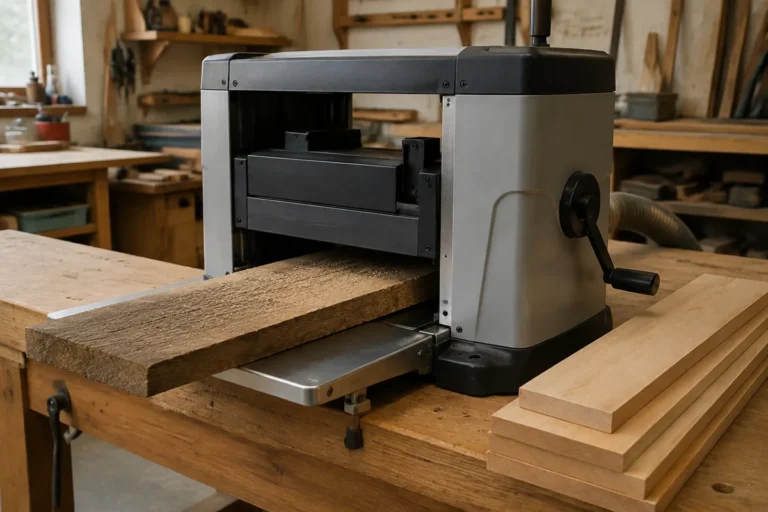
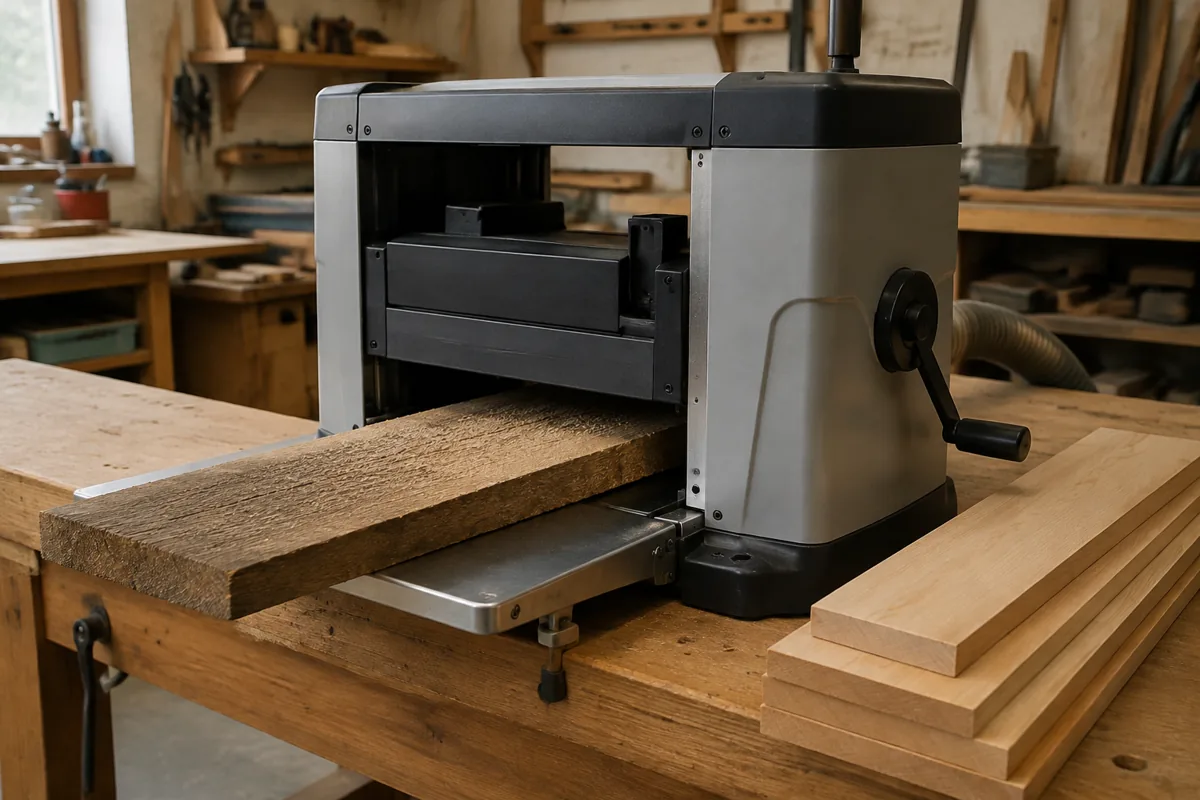
For repeated milling, the cutterhead matters more than a long list of convenience features. A planer with carbide inserts can process dirty, figured, or abrasive stock with less downtime than a conventional straight-knife head. Instead of sharpening and resetting a full set of knives, you rotate or replace small square or rectangular inserts when an edge is damaged.
The best setup for most shops is a stationary thickness planer with a helical or segmented carbide cutterhead, a 12- to 15-inch capacity, a rigid cast-iron bed, and a feed system that can maintain roughly 16 to 30 feet per minute. Smaller benchtop machines are useful for occasional work, but they often struggle when boards are wide, heavy, or fed continuously.
Start by comparing helical-head thickness planers by cutterhead design, feed rate, and service access rather than motor horsepower alone. A large motor does not compensate for a weak gearbox, poor chip ejection, or a bed that flexes under long boards.
How Carbide Insert Cutterheads Work
A conventional planer head uses two or more long knives. Those knives provide a clean cut when sharp, but one nail, staple, or patch of grit can nick an entire cutting edge. Carbide insert heads use many small cutters arranged in rows, usually with each insert presented at a slight angle. Only a portion of the insert engages the wood at a time.
When one edge dulls, loosen the screw, rotate the insert to a fresh edge, and clean the seat before tightening it again. Many inserts have four usable edges, though the exact shape and hole pattern vary. Never assume inserts from one head fit another. Keep a spare set that matches the cutterhead’s dimensions and screw type.
Helical heads are quieter than straight-knife heads, but they are not silent. The difference is most noticeable in the sharper, less explosive cutting sound and reduced vibration. They also produce smaller chips, which can improve dust collection while increasing the load on a marginal dust extractor.
Features That Matter in Production Use
| Feature | Why it matters | Practical target |
|---|---|---|
| Cutterhead | Controls finish, noise, and maintenance time | Segmented carbide inserts with replaceable screws |
| Planing width | Determines the largest board processed in one pass | 12 inches for general work; 15 inches for wide stock |
| Maximum cut | Limits how aggressively rough boards can be reduced | At least 6 inches of thickness capacity |
| Feed rate | Sets output and affects finish quality | 16–30 feet per minute, preferably selectable |
| Table and rollers | Support long, heavy boards without snipe or drag | Cast-iron table and positive-height locking |
| Dust outlet | Prevents chip buildup and cutterhead clogging | Four-inch port with a high-volume collector |
For high-volume work, table length and extension support are easy to underestimate. A short bed can allow the board to tip as it enters or exits, producing snipe at the first and last few inches. Folding extensions help, but they must sit level with the main bed. For repetitive production, add infeed and outfeed stands or a dedicated roller system.
The Best Planer Categories to Consider
12-inch stationary planers
A 12-inch machine is the sensible choice for most small professional shops. It handles common cabinet and furniture stock, fits through ordinary shop doors, and usually costs less to maintain than a 15-inch industrial planer. A 12-inch helical thickness planer is especially suitable when production involves many boards under 10 inches wide rather than constant full-width slabs.
The trade-off is throughput. Many machines in this class have modest feed motors and may slow down on wide hardwood. If the board chatters, the finish deteriorates and the feed rollers can leave compression marks. Take shallower cuts—often 1/32 to 1/16 inch on hardwood—and let the machine maintain its normal speed.
15-inch stationary planers
A 15-inch planer earns its space when wide boards are routine. The extra capacity reduces the need to rip panels before milling and provides more room for oversized furniture parts. These machines are generally heavier, more stable, and better suited to continuous use.
They also require a stronger electrical circuit, more floor space, and a dust collector capable of moving a large volume of air. A 15-inch machine connected to a weak collector may throw chips from the hood and pack the cutterhead area. Check the manufacturer’s electrical requirements before buying; machines in this class are often offered in different voltage configurations.
Planers with retrofit carbide heads
If you already own a sound stationary planer, replacing its straight-knife head with a compatible carbide insert head can be cheaper than buying a new machine. This makes sense when the planer has a rigid bed, working gearbox, accurate height mechanism, and parts support. It is a poor investment when the feed rollers are worn or the bed is twisted.
Retrofit work is not always plug-and-play. The head must be compatible with the machine’s bearings, pulley, cutterhead diameter, and guard. Installation may also require careful alignment and belt adjustment. Buy replacement carbide planer cutterheads only after confirming the exact planer model and shaft specifications.
Maintenance and Common Failure Modes
Carbide inserts last a long time in clean lumber, but they are not immune to damage. Reclaimed wood, pallet stock, and boards with embedded grit can chip an edge immediately. A chipped insert usually creates a narrow ridge or repeating line in the surface. Rotate that insert first; if the defect follows the insert, replace it.
Uneven insert seating is another common problem. Dust under an insert changes its height and leaves a raised line with every revolution. Remove the screw, clean the pocket and underside with solvent, and reinstall the insert evenly. Do not force an insert into a damaged pocket or overtighten the screw.
Keep the feed rollers clean and check them when boards begin slipping. Resin buildup reduces traction, while worn rollers can create inconsistent feed and severe snipe. Waxing the planer bed reduces drag, but do not use a product that can contaminate wood destined for finishing.
For shops that process clean kiln-dried lumber in batches, the cheaper straight-knife planer can still be the better buy. Knives cost less, are widely available, and can produce an excellent finish when sharpened correctly. Choose carbide inserts when reduced setup time, abrasive stock, lower vibration, or frequent accidental contact with hidden debris justifies the higher purchase price.