Best Table Saws for Cutting Box-Joint Stock
What's inside
As an Amazon Associate I earn from qualifying purchases. This post may contain affiliate links at no extra cost to you.
Contents
What matters for box-joint stock
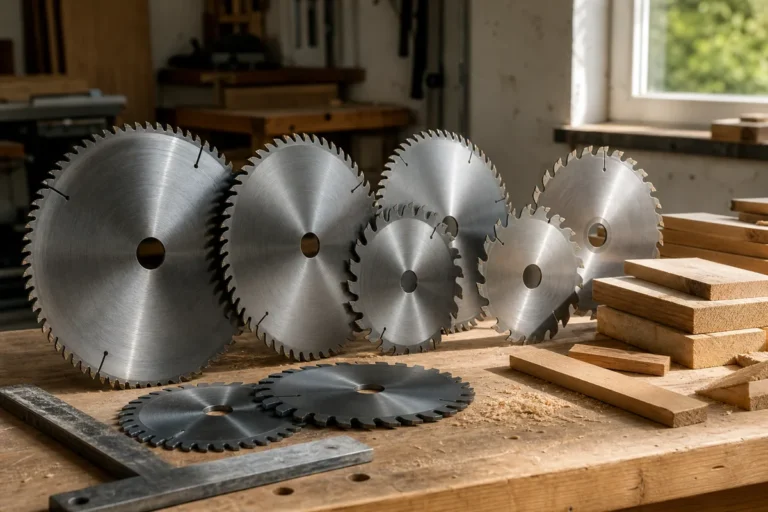
Box joints are a repeatable-cut job. A dado stack or single blade cuts a series of parallel slots; a shop-made indexing jig advances the board by one slot width after each cut. The saw needs a table that supports the work, a fence that stays put, and a throat opening and arbor setup compatible with the cutter you plan to use. A more powerful motor is useful, but it cannot compensate for a loose jig or inconsistent indexing.
For ordinary boxes, stock is often 1/2 to 3/4 inch thick. The cutter width and indexing distance must match: a 1/4-inch slot, for example, needs the jig to advance the work by 1/4 inch each pass. Test the setup on scrap from the same stock before cutting final pieces. Small errors accumulate across a wide joint, leaving fingers too loose or too tight.
Which kind of table saw?
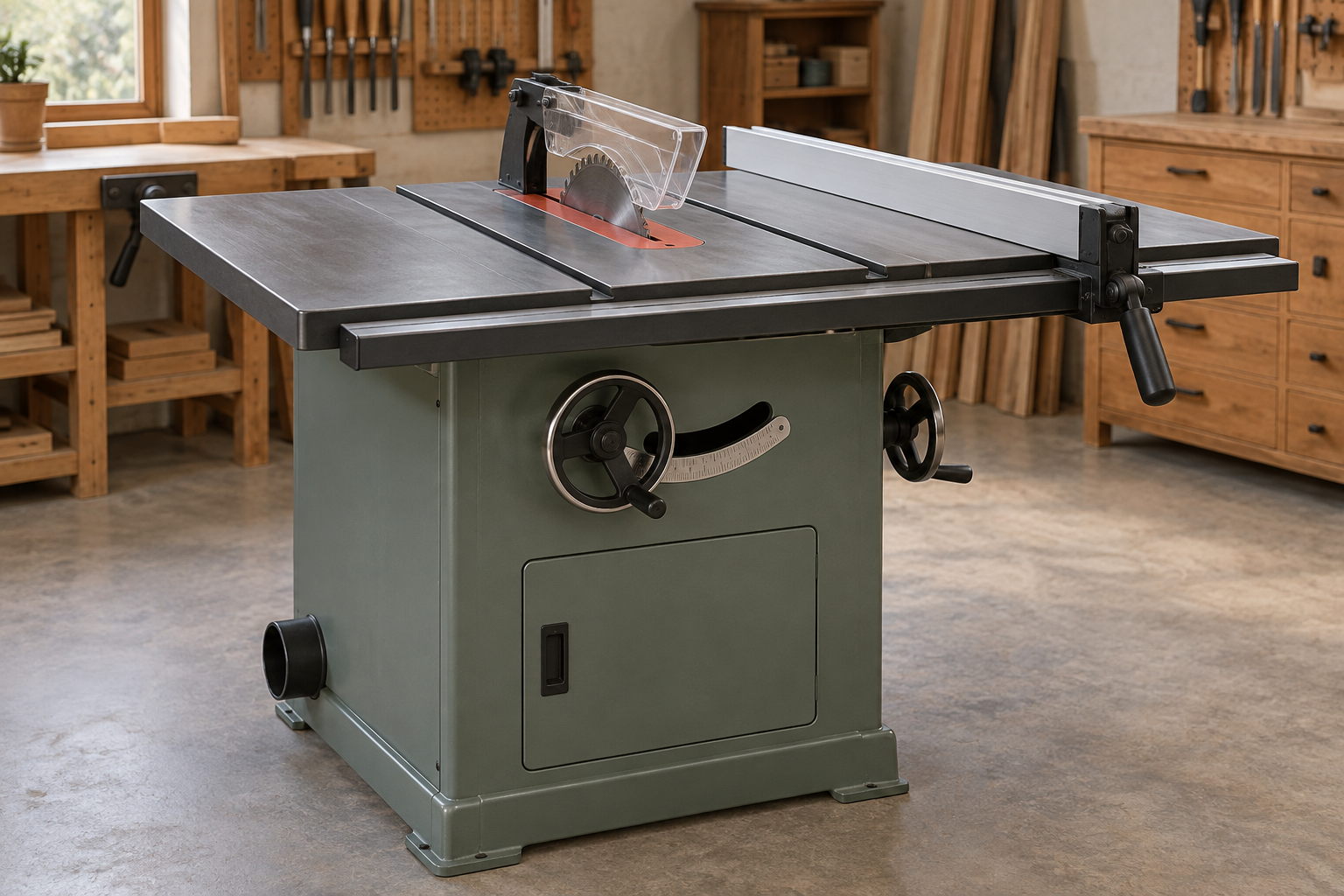
A contractor-style or cabinet saw is a good fit for a permanent shop, especially if you regularly cut wide panels or dense hardwood. Its weight and larger table make it steadier, but it takes more floor space and typically costs more. A jobsite saw is easier to store and move; it can cut box joints well with a sound jig, though its smaller table may need an outfeed support or auxiliary surface for long boards.
Before buying, check the arbor length and the manufacturer’s instructions for dado blades. Some compact saws do not accept a dado stack, or need a separate throat plate. Do not assume that an included insert will fit a wide cutter. If the saw is not approved for dado use, use a single-blade method or choose a different saw rather than improvising an unsafe setup.
Saw categories compared
| Category | Best fit | Trade-off for box joints |
|---|---|---|
| Jobsite saw | Small shops, occasional projects, portability | Compact support can make indexing long stock awkward; verify dado compatibility. |
| Contractor-style saw | Regular home-shop use and moderate-size work | More stable support, but still needs room and careful setup. |
| Cabinet saw | Frequent use, heavy stock, dedicated shop | Stable and powerful, but expensive, heavy, and often more saw than occasional box making requires. |
Features worth paying for
Prioritize a fence that locks parallel to the blade and a table that stays flat and aligned. A fence that shifts under pressure can change the slot position; a poor miter slot fit can let a jig yaw and produce tapered fingers. Look for a usable miter slot compatible with the jig runner, accessible blade-height and tilt controls, and a stable stand. A riving knife and effective blade guard matter too, although the guard may need to be removed for some jig setups; follow the saw and jig instructions and reinstall safety equipment when the operation allows.
Motor power is a secondary consideration for typical box-joint stock. A sharp, suitable blade and a controlled feed reduce burning and tear-out. Dado stacks remove more material at once and put more load on the saw than a standard blade, so feed steadily and avoid forcing the cut. A slower single-blade approach may be preferable on a smaller saw or when making only a few joints.
For a permanent shop, compare contractor-style table saws with dado capacity with cabinet saws before paying for a heavier machine. If portability and storage matter more, consider jobsite table saws that explicitly support your planned cutter. Confirm capacity in the manufacturer’s specifications, not just the retailer’s headline.
The jig matters as much as the saw
A simple indexing jig can make accurate joints on a modest saw, but its fit must be snug without binding. Make the runner fit the miter slot with minimal side play, then square the jig fence to the blade. The indexing pin needs to match the cut width closely. If it is undersized, fingers become loose; if oversized, the board may not seat fully and the next cut can drift. A test joint reveals these problems before they spoil a project.
Keep the work flat against the jig fence and support long pieces so their weight does not pull them out of alignment. Cut mating pieces with the same setup and orientation where practical. Mark the reference face and edge, and make a note of the jig position. Reversing a board or changing the fence setting partway through a set can create mismatched joints.
Common failures and how to avoid them
Burn marks often indicate a dull cutter, a feed that is too slow, or resin buildup. Clean or replace the cutter and use a steady pace; do not push harder to hide a poor setup. Chipped edges can come from tear-out, especially on cross-grain cuts. A sharp cutter, backing board, and test cuts help. If fingers vary in width across the joint, check jig squareness, runner play, and whether the stock is seated consistently against the indexing pin.
For occasional small boxes, a lower-cost saw is usually fine if it holds alignment and safely supports the cutter you intend to use. Spend extra for a larger, heavier saw when you routinely work with long or heavy stock, need a more substantial table, or have a dedicated shop where portability is irrelevant. In either case, a carefully fitted jig and a scrap test are better investments than buying more horsepower to fix an indexing error.