How to Plane Short Stock Without Tearout or Kickback
What's inside
As an Amazon Associate I earn from qualifying purchases. This post may contain affiliate links at no extra cost to you.
Contents
Why short stock is different
Planing short pieces is risky because the rollers and cutterhead may not control the board at the same time. A piece that loses contact with the infeed roller can lift or shift; one that loses contact with the outfeed roller can tip into the cutterhead. That can leave a gouge, launch the workpiece, or cause a serious injury. Short boards can also suffer more snipe, the shallow dip often cut near the ends of a board.
Do not treat a planer as a way to make any offcut usable. Check the manual for your machine’s minimum workpiece length and thickness, and follow it. The maker’s limit takes precedence over any general rule: cutterhead design, roller spacing, and safety features differ. If the piece is below that minimum, use a safer method or keep it longer until after planing.
Start with the right machine
A thickness planer makes one face parallel to the opposite face, but it does not reliably flatten a bowed or twisted board on its own. First establish a flat reference face, typically with a jointer or a suitable planer sled. A short board that rocks on the bed can feed unevenly, even if it meets the planer’s length limit.
For pieces that are too short for your planer, the practical options are to leave them long and cut them to final length afterward, or use a different method suited to the stock and task. A drum sander or hand plane may be appropriate for some work, though each has its own limits. A benchtop planer is not a safe substitute for those methods just because it is convenient.
Check the stock and settings
Remove loose knots, embedded grit, screws, and other metal before feeding lumber. Reject stock with loose or broken sections that could come free in the cutterhead. Mark the grain direction and feed with the grain where practical; reversing direction can worsen tearout, especially in figured wood or around reversing grain. If tearout persists, take a lighter cut or change the approach rather than forcing the board through.
Set the depth of cut conservatively. For an uncertain short piece, begin around 1/32 inch or less, then inspect the surface and listen for bogging. A heavier cut may be acceptable on a long, straight board in a powerful planer, but it leaves less margin for irregular stock and can increase tearout, snipe, and motor strain. Keep hands away from the feed opening, stand out of the direct line of the stock, and never push a piece into the cutterhead by hand.
Safer methods for short pieces
If the finished part must be short, plane it while it is still attached to a longer board or while there is ample sacrificial length, then crosscut to final size. This is often the simplest answer: the longer stock remains supported by the rollers, and you remove the vulnerable ends after planing. Allow extra length for snipe and the final cut.
A purpose-built carrier or sled can help support small stock, but only when it is appropriate for the machine and allowed by its manual. The work must be restrained against sliding or lifting, and the carrier itself must have adequate length and stability. Do not assume that double-sided tape, a loose backing board, or a homemade wedge makes an undersized piece safe. If the setup can shift, tip, or enter the cutterhead separately from its support, do not use it.
For repeat work, a rigid, well-fitted carrier may save time, but it adds setup and inspection. The carrier’s bottom needs to ride flat on the planer bed, and its height must stay within the machine’s capacity. Check that clamps or stops cannot contact the cutterhead or rollers. Test the setup with the machine unplugged, then follow the manufacturer’s instructions for feeding it. If those instructions do not cover the arrangement, choose another method.
Compare your options
| Method | Best use | Main trade-off |
|---|---|---|
| Plane long, then crosscut | One-off parts that can start oversize | Requires extra stock and allowance for end waste |
| Approved carrier or sled | Repeat work within the planer’s stated limits | Needs a rigid, secure setup; not a fix for unsafe dimensions |
| Hand plane or suitable sander | Pieces too short for the planer | Slower or less suitable for removing substantial stock |
| Joint one face, then plane | Stock needing a flat reference face | Requires enough length for safe support on the jointer too |
Equipment worth buying
If you routinely process short parts, a planer with a clearly stated minimum workpiece length and accessible support accessories is more useful than one chosen only by motor power. Compare cutterhead type, available feed rates, dust collection requirements, and the cost of knives or inserts. A helical-style cutterhead can leave a clean surface on difficult grain and may be quieter, but it does not make undersized stock safe or eliminate the need for light cuts.
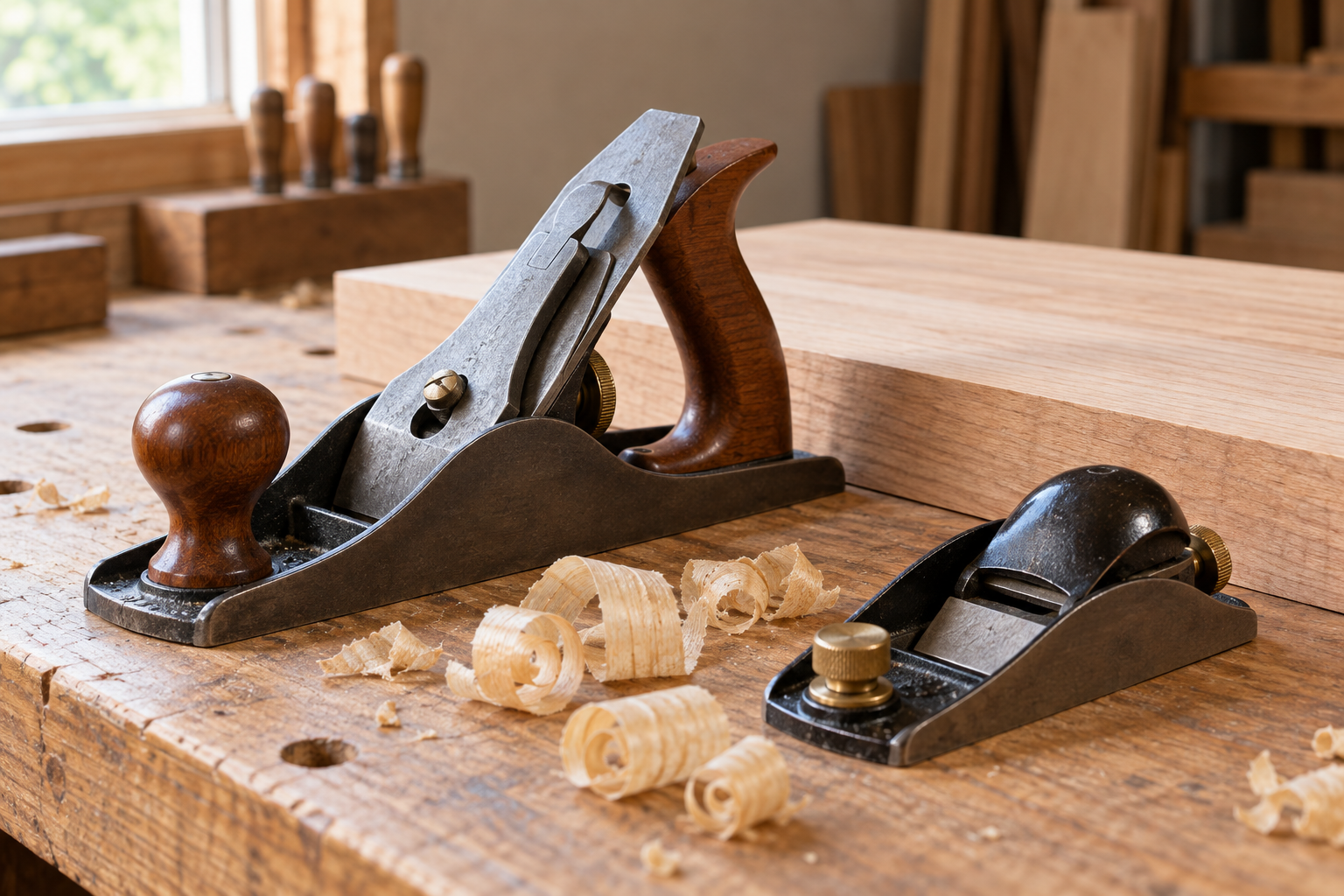
For occasional work, the least expensive safe option may be to leave parts long and trim them later. If you need a separate machine for stock the planer cannot accept, compare a benchtop drum sander with hand-planing tools for your workload. A sander removes material more slowly and creates fine dust, so effective dust collection matters. A hand plane costs less to start with, but needs a sharp iron and practice to produce an even surface.
If your main problem is tearout rather than stock length, cutterhead upgrades may be worth investigating for a compatible machine. Check fit and manufacturer guidance before buying a replacement helical cutterhead. It can improve finish on challenging grain, but it is an expensive fix if the real cause is a dull knife, excessive cut depth, or feeding against the grain.
Diagnose the finish
Inspect the full face after each light pass. Torn, lifted fibers usually point to grain direction, dull knives, or too deep a cut. A dip at an end is snipe; support long infeed and outfeed stock level with the planer bed, and use the manual’s procedure for roller pressure or table adjustment. A sudden gouge or a board that jumps is not a finish problem: stop, unplug the machine, and find the cause before continuing.
Do not try to correct a bad cut by reaching into the machine or feeding another small piece behind the first as a makeshift pusher. Clear chips only with the planer stopped and disconnected. If the stock is below the specified minimum, cannot be held securely, or has a defect likely to break loose, the right decision is to use another method—not to make the planer do a job it was not designed to handle.