How to Choose a Table Saw Blade for Crosscutting Hardwood
What's inside
As an Amazon Associate I earn from qualifying purchases. This post may contain affiliate links at no extra cost to you.
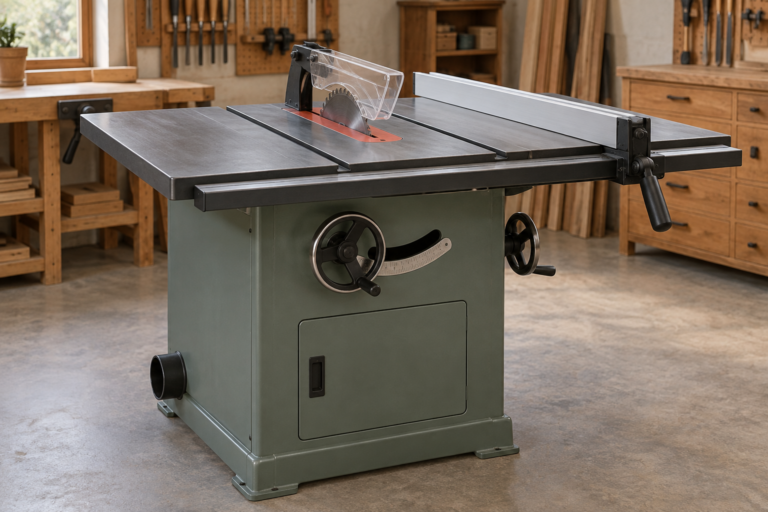
Crosscutting hardwood on a table saw puts different demands on a blade than ripping along the grain. The blade needs enough teeth to leave a clean edge across the fibers, but tooth count alone won’t prevent burning, tear-out, or a dangerous cut. Match the blade to your saw, the wood, and the finish you need.
Contents
Start with the cut and the saw
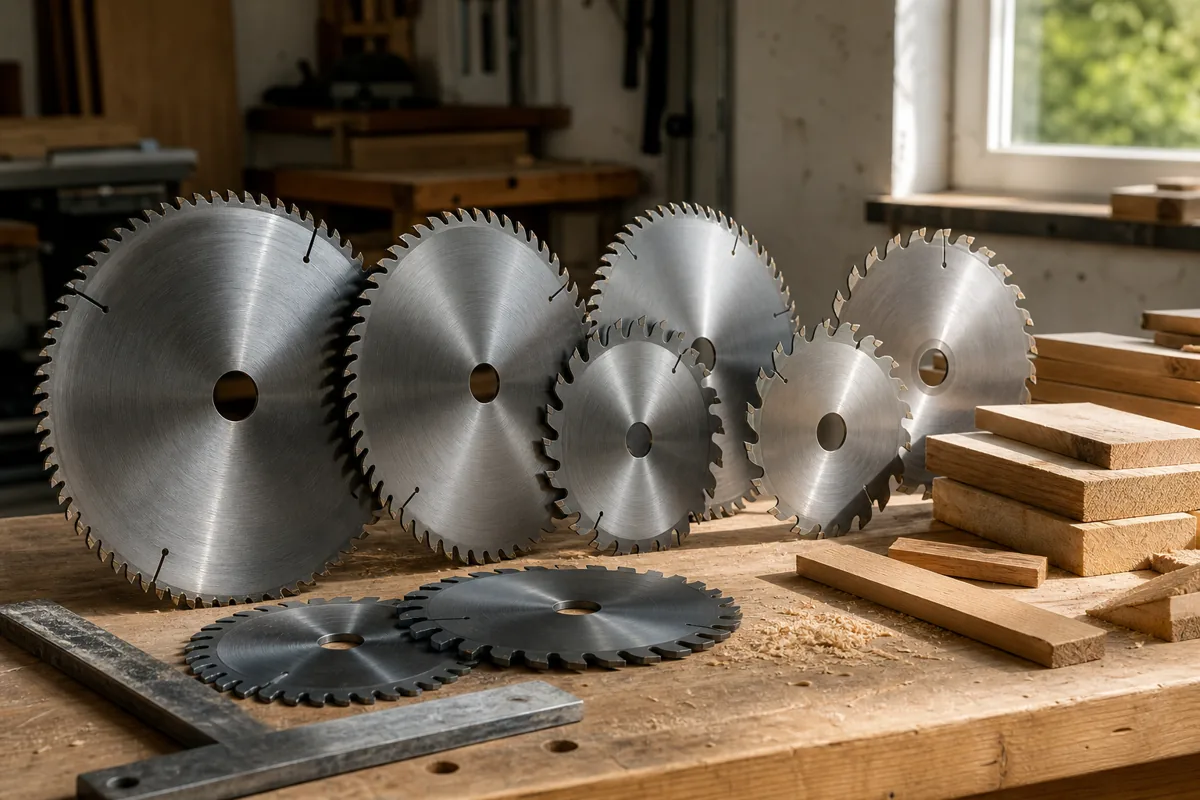
For solid hardwood crosscuts, a quality 10-inch blade with roughly 60 to 80 teeth is a useful starting point. On a 12-inch saw, look in the 80-to-100-tooth range. These are guidelines, not rules: tooth shape, grind, blade condition, and feed rate also matter.
Check your saw’s manual before buying. The blade’s diameter and arbor hole must match the machine, and the blade’s maximum RPM rating must meet or exceed the saw’s no-load speed. Most 10-inch table saws use a 5/8-inch arbor, but verify rather than assume. Also check the blade’s kerf against the saw’s riving knife. A full-kerf blade is often about 1/8 inch wide; a thin-kerf blade is commonly around 3/32 inch. The riving knife must be compatible with the blade’s kerf.
Consider the saw’s power, too. A thin-kerf blade removes less material and can be easier on a small motor, especially in dense hardwood. A full-kerf blade is generally stiffer and may track more steadily, but asks more of the motor. Neither is automatically the better choice if it does not suit your saw.
Tooth count, grind, and cut quality
More teeth usually mean smaller gullets and a smoother cut at a controlled feed rate. A 24-tooth ripping blade can crosscut hardwood, but it is more likely to leave a rough edge that needs extra sanding. An 80-tooth blade can make a clean crosscut, but pushing it too slowly or using it for long rip cuts can cause heat and burning.
For a general-purpose crosscut blade, look for an alternate top bevel (ATB) grind, where neighboring teeth bevel in opposite directions. This geometry shears wood fibers cleanly and is common on crosscut and combination blades. A high-ATB blade can improve finish in brittle or figured wood, but its sharp corners wear faster and are more vulnerable to damage than less aggressive tooth shapes.
Tooth count is not a promise of a particular finish. A dull blade, poor alignment, vibration, or a rushed feed can spoil the cut regardless of how many teeth the blade has. If a blade starts burning wood that it cut cleanly before, inspect it for resin buildup, dull teeth, and runout before changing your technique.
Which blade type makes sense?
| Blade type | Typical use | Trade-off |
|---|---|---|
| Dedicated crosscut | Frequent crosscuts and cleaner edges in hardwood | Can feed slowly in thick stock; not a good choice for long ripping runs |
| Combination | Mixed ripping and crosscutting without frequent blade changes | Convenient, but may not match a dedicated blade’s finish or speed on its preferred cut |
| General-purpose | Occasional crosscuts and everyday shop work | Performance varies; check the tooth design and cut quality rather than relying on the label |
If most of your table-saw work is crosscutting hardwood, a 10-inch, 80-tooth ATB crosscut blade is a sensible category to compare. For occasional crosscuts mixed with ripping, a 40-tooth combination blade is often a better-value choice than keeping two blades on hand. It may leave more sanding than a dedicated crosscut blade, but that can be acceptable for framing, rough stock, or edges that will be machined again.
Kerf, thickness, and hardwood species
Dense woods such as hard maple can expose a weak match between blade and saw: a small motor may bog down with a full-kerf blade, while a dull blade can burn the cut or leave a glazed edge. Feed steadily and let the blade do the work. Do not force the stock if the motor slows, and never stop with the blade buried in a binding cut.
For thin, figured, or splinter-prone stock, a sharp high-tooth-count blade can reduce breakout, but a zero-clearance insert often matters just as much. It supports the fibers beside the blade and can reduce tear-out on the bottom face. A zero-clearance insert is useful only if it is made for your saw and installed safely; follow the saw maker’s instructions when first cutting the opening.
Very thick hardwood puts more tooth surface in contact with the wood, raising heat and load. If the cut is well beyond the blade’s comfortable capacity or the saw struggles, use another method or make multiple safe passes where appropriate. Keep the work supported, and use a miter gauge or crosscut sled for crosscuts rather than holding a loose board against the rip fence.
Setup, safety, and common problems
Before changing blades, unplug the saw. Clean the arbor flanges and blade, seat the blade fully, and tighten the arbor nut according to the manual. Check that the blade is installed in the direction shown on the saw or blade, and that the guard and riving knife are back in place. Keep hands clear of the blade path and use a push device when the workpiece or your grip calls for one.
For accurate crosscuts, set the blade square to the table and check the miter gauge or sled for square. A fence and miter gauge should not trap a crosscut piece between the blade and fence; that setup can pinch the offcut and kick it back. Use a stop block positioned so the offcut can fall free rather than being captured.
Burn marks often point to a dull or dirty blade, a slow feed, or misalignment. Tear-out may call for a sharper ATB blade, a zero-clearance insert, or a scoring cut on fragile stock. A rough edge on a correctly set-up saw may simply mean the blade is a general-purpose design rather than a dedicated crosscut blade. If the cut suddenly pinches or the saw labors, stop and investigate; forcing the stock can turn a minor setup problem into kickback.