Best Table Saws with Overarm Dust Collection for Fine Woodworking
What's inside
As an Amazon Associate I earn from qualifying purchases. This post may contain affiliate links at no extra cost to you.
An overarm guard is useful when a table saw needs to do accurate work without filling the shop with airborne dust. It captures chips and fine particles above the blade, where a cabinet’s lower dust port cannot reach them. But a saw is only a good fit if its guard stays aligned, clears the stock you cut, and connects to a dust collector with enough airflow.
For fine woodworking, compare the whole setup—not just the saw. The options below cover the main buying paths: a cabinet saw sold with an overarm guard, a compatible aftermarket guard, or a lower-cost saw paired with a retrofit. Check current configurations carefully; guards and dust ports are often sold separately.
Contents
What to look for
Guard movement and visibility: The hood should rise easily over thick stock and return without dragging. Clear panels make it easier to see the blade, but they can scratch or collect dust. A guard that is awkward to remove is likely to be left off for narrow rips—the very situation in which a riving knife and push stick matter most.
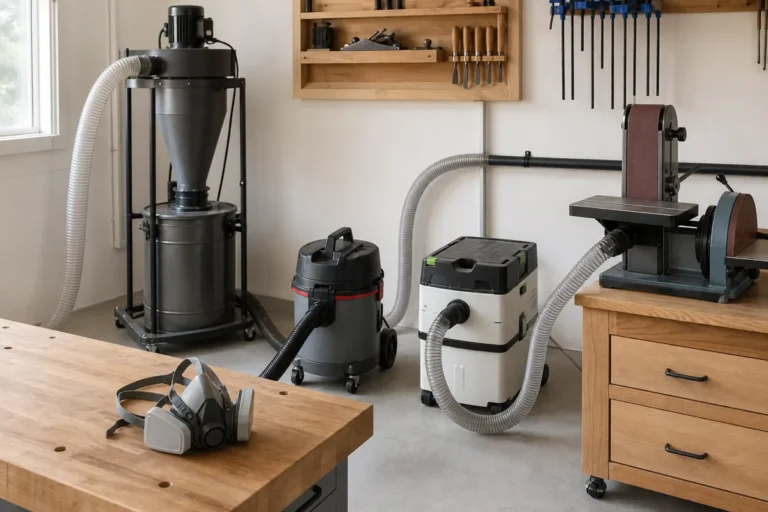
Dust connections: Many overarm hoods use a 4-inch hose. A small shop vacuum may connect with an adapter, but it usually cannot move the volume of air a hood needs. A dust collector rated around 600–1,000 CFM is a more practical starting range for a dedicated saw connection; actual airflow at the machine falls with hose length, bends, filters, and restrictions. Use smooth hose where possible, keep the run short, and follow the guard maker’s port requirements.
Saw and guard compatibility: Check the table’s rear rail, fence travel, blade tilt, and maximum stock height. A post-mounted guard can obstruct long or wide panels, while a rail-mounted model may conflict with a fence or outfeed setup. Confirm that the guard works with the saw’s riving knife and blade changes, and that it does not force you to remove safety equipment for routine cuts.
Compare the main options
| Option | Best fit | Main trade-off |
|---|---|---|
| Cabinet saw with compatible overarm guard | Frequent ripping and crosscutting in a permanent shop | Higher upfront cost and substantial floor-space needs |
| Contractor or hybrid saw plus retrofit guard | Shops that want a capable saw but need to control the budget | Fit, mounting, and dust performance depend on the specific combination |
| Cabinet saw with standard blade guard only | Occasional work or a shop with limited overhead clearance | Less dust capture above the table |
Best for a permanent fine-woodworking shop: cabinet saw
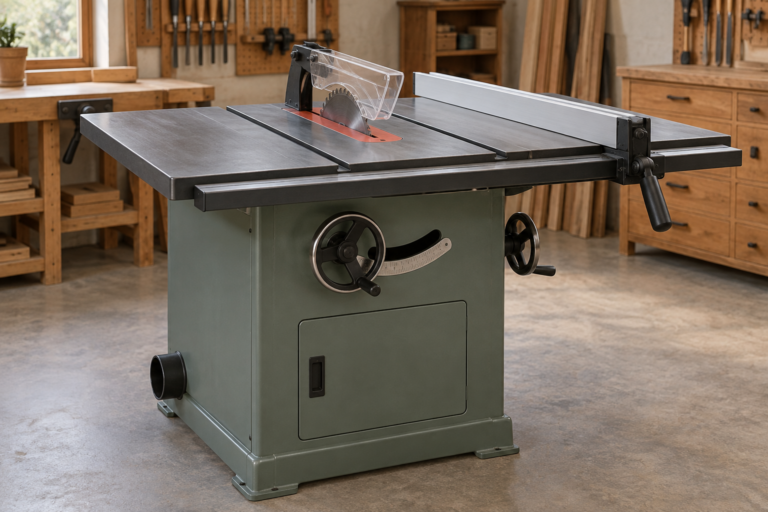
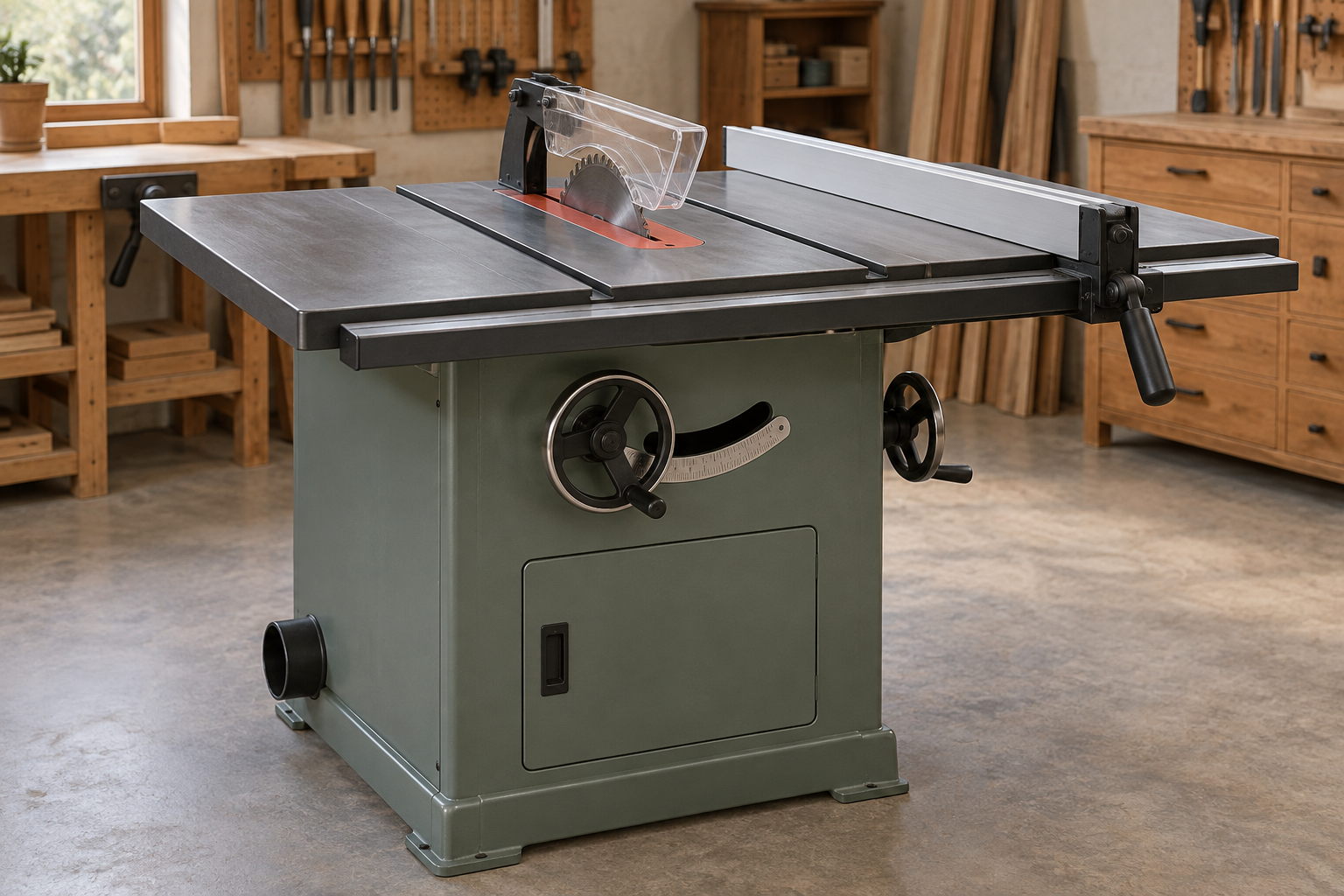
A cabinet saw is the strongest starting point if you work with hardwood regularly, cut sheet goods, and have room for a dedicated machine. Its enclosed base gives lower dust collection a better chance of working, while a properly fitted overarm hood captures dust thrown upward by the blade. Look for a stable fence, a riving knife, a tilt mechanism that remains accurate, and a guard arrangement designed for that saw rather than adapted as an afterthought.
This is not automatically the cleanest or safest choice. A poorly adjusted hood, leaky cabinet, or undersized collector can still leave dust on the table and in the air. Check whether the overarm assembly is included, optional, or unavailable for the exact configuration. For this category, compare cabinet table saws and overarm dust-collection setups.
Best value: retrofit an overarm guard
If your current contractor or hybrid saw cuts accurately and has enough power for your work, replacing it just to gain overhead collection may not make sense. A retrofit can be a reasonable middle ground. Check the mounting method before buying: a floor post needs clear space and a secure base, while a table- or rail-mounted arm can interfere with fence movement or outfeed supports. Allow room for the hood to swing away and for long boards to pass without striking it.
Retrofitting works best when the hood is easy to position and the hose does not pull it out of alignment. A long, heavy hose can make a light arm frustrating to use. Measure from the mounting point to the blade, then verify the hood covers the blade’s likely dust plume without blocking the cuts you make most. Browse overarm table-saw dust guards only after checking the maker’s fit requirements.
When the standard guard is enough
You may not need an overarm system if you use the saw occasionally, make mostly short cuts, and already have effective lower collection. A standard blade guard with a dust port can be the sensible choice in a small shop where an overhead arm would obstruct work or take up valuable space. It costs less, is simpler to remove, and may be easier to live with day to day.
The compromise is weaker capture of dust that escapes above the table, especially during ripping. If you regularly process MDF, plywood, or dry hardwood, that airborne dust is worth addressing. Do not compensate by removing the guard: use the riving knife, suitable push devices, and the correct guard for the cut. If you choose a lower-cost saw, search by both saw type and guard compatibility rather than assuming a universal fit: hybrid saws and compatible overarm guards.
Setup checks before buying
Bring a tape measure to the decision. Note the saw’s height, fence travel, distance behind the blade, ceiling height, and the path needed to move full-length boards. A guard that suits 1-inch stock may need more clearance for a tall resaw-style cut; confirm its maximum opening rather than guessing. Also check whether the hood can be parked safely when a cut requires it to move, without leaving a hose across the operator’s path.
After installation, test with the collector running. Make a few representative cuts in scrap, including a rip and a crosscut, then inspect the table, cabinet, and nearby floor. Dust escaping at the hood’s front or sides can point to poor positioning; weak suction can indicate a clogged filter, undersized collector, leaking connection, or restrictive hose. Adjust one factor at a time. The best setup is the one that captures dust while keeping the guard in place and the saw comfortable to use.