Best Dog Grooming Tables for Safe Home Grooming
What's inside
As an Amazon Associate I earn from qualifying purchases. This post may contain affiliate links at no extra cost to you.
Contents
Best Dog Grooming Tables for Safe Home Grooming
The best dog grooming table for home use is a stable, correctly sized table with a nonslip top, a secure adjustable grooming arm, and a capacity comfortably above your dog’s weight—not simply the largest or cheapest model. For small dogs and occasional trims, a folding tabletop around 30 inches long is usually practical; larger dogs need a longer, wider platform and a base designed for their weight and movement.
Choose by dog size and grooming setup
Table dimensions and weight capacity are related but not interchangeable. A table may support a dog’s weight yet still be too short for the dog to stand comfortably. Measure your dog from the front of the chest to the base of the tail while standing, then compare that length with the usable tabletop. Leave room for all four paws without placing them near the edges.
As an Amazon Associate we earn from qualifying purchases at no extra cost to you.
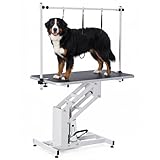
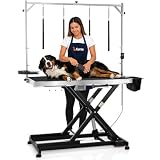
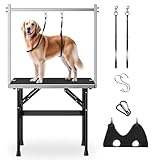

Capacity should include more than the dog’s scale weight: dogs shift, lean, and sometimes resist. As a practical home-buying margin, choose a table rated for at least 1.5 times your dog’s weight. This is a cautious selection guideline, not a guarantee that every table will remain stable under every movement. Follow the manufacturer’s limits and don’t sit, kneel, or place heavy equipment on the table unless it is designed for that use.
| Dog and use | Useful tabletop target | Capacity target | Best fit |
|---|---|---|---|
| Toy dogs, under 10 lb; occasional grooming | About 24–30 in long × 18–24 in wide | At least 25 lb | Compact folding table or tabletop model secured to a suitable bench |
| Small dogs, 10–25 lb; regular trims | About 30–32 in × 20–24 in | At least 40 lb | Folding table with a firm base and adjustable arm |
| Medium dogs, 25–50 lb | About 36 in × 22–24 in | At least 75 lb | Full folding table with locking legs and a broad stance |
| Large dogs, 50–90 lb | About 42–48 in × 24–30 in | At least 135 lb | Heavy-duty table; prioritize frame stability over portability |
These are shopping targets, not standardized industry categories. Check the actual usable surface, maximum load, table height, and assembly instructions for each model. For a dog near the upper end of a size range—or one that is difficult to keep still—move up in both surface area and capacity.
What matters most for safe home grooming
Surface grip and edges
A textured rubber or similar nonslip mat helps paws stay planted, but grip cannot compensate for a rocking frame or a nervous dog. Look for a mat that lies flat, covers the main standing area, and can be wiped or removed for cleaning. A raised or rounded perimeter can help contain loose hair, but it should not create a trip point or reduce usable space. Never groom on a wet, soapy surface.
Arm, loop, and restraint quality
The grooming arm should lock firmly to the frame and resist rotating when lightly pressed. Height adjustment is useful for dogs of different sizes, but a quick-release knob or clamp should still tighten securely. Inspect the included grooming loop for intact stitching, a working buckle or clip, and smooth edges that won’t snag the coat.
A restraint is a positioning aid, not a way to suspend a dog or leave one unattended. Keep the loop appropriately loose, remain beside the table, and stop if the dog struggles, coughs, or shows distress. For a dog that panics, bites, has mobility limitations, or cannot safely stand, ask a veterinarian or qualified groomer about appropriate handling rather than relying on a stronger restraint.
Frame, height, and folding storage
Steel frames tend to suit heavier use, while lighter aluminum designs can be easier to carry. Material alone doesn’t determine stability: leg spread, bracing, joints, and locking mechanisms matter too. Set the table on a level, dry floor and check that every leg is locked before placing the dog on it. At a comfortable working height, you should be able to brush and trim without leaning heavily over the dog.
Folding tables save storage space, but the folded weight and shape determine whether you will actually put yours away after each session. Check the packed dimensions, carry handle, and whether the arm detaches. Repeated folding can loosen fasteners; inspect hinges and locks periodically and tighten them according to the manufacturer’s instructions. Don’t use a table with a bent leg, cracked mat, or lock that slips.
Match the table to your situation
| Your situation | What to prioritize | Likely choice |
|---|---|---|
| First-time groomer, tiny dog, limited budget | Simple setup, stable legs, easy-clean top; avoid paying for features you won’t use | Basic folding table in the 24–30 in range with a rated arm |
| Small home with little storage | Folded footprint, carry weight, removable arm | Compact folding model; confirm it still fits your dog when open |
| Weekly grooming of a medium dog | Firm frame, durable nonslip mat, replaceable loop | Full-size folding table with a capacity margin and locking legs |
| Large or strong dog | Wide platform, high capacity, broad and braced base | Heavy-duty table; choose stability before portability |
| Several dogs of different sizes | Adjustable arm, generous surface, easy-to-clean mat | Full-size model that accommodates the largest dog safely |
For occasional home touch-ups, general market prices often fall around $50–$120 for basic folding tables, $120–$250 for sturdier midrange models, and $250 or more for heavy-duty or specialized designs. Treat those as broad ranges: dimensions, materials, and included accessories affect cost, and a higher price by itself does not establish a safer table.
Set up and maintain it for longer use
- Check fit before grooming: Compare your dog’s standing body length with the open surface and verify the capacity label. This avoids discovering that the dog has to brace against an edge.
- Secure the empty table first: Open and lock every leg, test for rocking, and place it on a level floor. If it moves under a firm hand press, don’t add the dog.
- Attach and check the arm: Tighten the clamp, adjust the height, and test the loop and connections before use. Replace frayed or damaged restraint parts rather than improvising a repair.
- Clean after each session: Brush away hair, wipe the mat with a product compatible with its material, and dry it fully. Hair and grooming-product residue can reduce grip, while trapped moisture may damage some surfaces or joints.
- Inspect wear points: Check mat edges, seams, leg locks, hinges, fasteners, and arm clamps. These parts experience repeated friction and folding; stop using the table if any component becomes loose, split, or unreliable.
Good value comes from a table that fits your dog, stores where you need it, and remains stable through routine setup and cleanup. When two models appear similar, favor the one with clearer capacity information, a more secure arm attachment, and replaceable or readily maintainable contact parts.