Best Mini Tripods
What's inside
As an Amazon Associate I earn from qualifying purchases. This post may contain affiliate links at no extra cost to you.
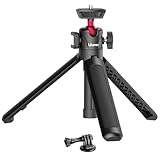
The best mini tripods are the ones whose folded size, head movement, and load rating match your camera rather than simply having the tallest legs: choose the Manfrotto PIXI EVO for a compact camera, the JOBY GorillaPod 325 for a phone or light action camera, and a stronger metal tabletop tripod such as the Ulanzi MT-08 when you need more height and payload.
As an Amazon Associate we earn from qualifying purchases at no extra cost to you.


Contents
Best mini tripods by shooting situation
- Best for phones and small action cameras: JOBY GorillaPod 325, especially when flexible leg positioning or wrapping around a rail is useful.
- Best for compact cameras: Manfrotto PIXI EVO, whose rigid folding legs and adjustable angle are more stable on a table than flexible legs.
- Best for more height and heavier gear: a metal mini tripod such as the Ulanzi MT-08, provided your camera and lens remain within its stated load limit.
- Best for the smallest travel kit: a basic folding phone tripod with a built-in Bluetooth remote, if you only need self-timers, video calls, or occasional static shots.
- Best for unusual mounting positions: a flexible-leg tripod, because it can grip branches, posts, and railings that ordinary tabletop legs cannot.
Mini tripod comparison
The figures below are useful for narrowing the field, but check the current specification for the exact kit. Heads, phone holders, and supplied plates can change the weight and folded length.
| Tripod | Folded length | Maximum height | Weight | Rated load | Head and leg design |
|---|---|---|---|---|---|
| JOBY GorillaPod 325 | About 18 cm | About 18 cm | About 190 g | 325 g | Flexible legs; integrated ball head |
| Manfrotto PIXI EVO | About 20.5 cm | About 20 cm | About 267 g | 2.5 kg | Rigid folding legs; two leg angles; ball head |
| Ulanzi MT-08 | About 25 cm | About 28 cm | About 250 g | Up to about 3 kg, depending on configuration | Metal folding legs; ball head; often supplied with phone or camera accessories |
| Basic folding phone tripod | About 15–20 cm | About 10–25 cm | About 100–250 g | Usually 0.5–1 kg | Plastic or light aluminum legs; fixed or small ball head |
Maximum load is not the same as ideal load. For stable photography, keep the camera and lens at roughly half the stated capacity when possible. A tripod rated for 2.5 kg may hold that weight without breaking, but a lighter camera placed high or extended forward can still make the system vibrate or tip.
Which head movement matters?
Ball heads
A ball head is the most versatile choice for a mini tripod. One control can release tilt and rotation, allowing quick changes between horizontal and vertical framing. Its weakness is creep: with a large camera, tightening the knob may not fully prevent the camera from slowly drooping. A separate pan lock or a captive phone clamp can make a noticeable difference for video.
Fixed or tilt-only heads
Simple phone tripods often use a hinged tilt head. This is adequate for a webcam, video call, or front-facing phone recording, but it offers less control when the tripod is on an uneven surface. For landscape orientation, confirm that the hinge can hold the phone without its center of gravity moving outside the leg footprint.
Flexible heads and mounting threads
Some flexible tripods use a fixed 1/4-inch mounting screw rather than a sophisticated head. That is fine for a lightweight action camera, but you may need to rotate the entire tripod to change composition. If you frequently switch between a phone and a camera, a removable plate or a dependable phone clamp is more convenient than repeatedly unscrewing equipment.
Rigid legs versus flexible legs
Rigid folding legs are generally steadier for long exposures, macro work, and cameras with a moderate zoom lens. They spread their load predictably and are faster to place on a level tabletop. The PIXI EVO is a good example of this approach.
Flexible legs win when the surface is irregular or when you need to attach the tripod to something. A GorillaPod can wrap around a post and its rubberized foot sections can grip smooth surfaces. However, each bend introduces another possible movement point. Do not assume a wrapped tripod is secure merely because the legs feel tight; check for sag and twisting before leaving the camera unattended.
Leg stiffness also affects video. A flexible tripod may absorb a small bump, but it can transmit slow oscillation when you pan or touch the camera. For a static talking-head shot, either style can work. For deliberate camera movement, a mini tripod with rigid legs and a smooth head is usually easier to control.
Match folded size to the way you travel
- Coat pocket or small sling: target a folded length under 20 cm and a weight below 250 g. This suits a phone, compact camera, or action camera.
- Camera insert in a backpack: 20–26 cm is reasonable, especially if the tripod can support a mirrorless camera with a small prime lens.
- Carry-on kit: prioritize a low-profile body and a metal mounting plate. A tripod that fits inside the camera compartment is less likely to be left behind or damaged.
- Desk or studio use: folded size matters less than leg spread, head adjustment, and whether the feet leave enough clearance for cables.
Maximum height is often misunderstood. A mini tripod that reaches 28 cm is still a low-angle support; it will not replace a full-height tripod for eye-level portraits. Its advantage is putting the camera above a tabletop, ledge, or rock while keeping the kit small.
A practical decision matrix
| Your priority | Recommended design | What to accept | What to avoid |
|---|---|---|---|
| Lowest cost and occasional use | Basic folding phone tripod | Limited height and modest load capacity | Using it with a large camera or long lens |
| Frequent phone video | Rigid legs with a strong adjustable clamp | More bulk than a pocket stand | Loose plastic hinges and clamps with no locking screw |
| Action camera and outdoor travel | Flexible legs with rubberized feet | Some movement under touch or wind | Placing it near an edge without a safety strap |
| Compact camera or small mirrorless setup | Metal rigid tripod rated at least twice the camera weight | Usually 200–350 g of extra luggage | Very small plastic ball heads |
| Long exposures | Rigid legs, low center of gravity, lockable head | Less flexible placement | Fully extended flexible legs on a narrow surface |
How to set up a mini tripod without making it unstable
- Find the widest safe surface. Put all three feet fully on the table, ledge, or ground rather than letting one foot hang over an edge.
- Point one leg toward the lens. This commonly gives better resistance to forward tipping, especially with a heavier camera.
- Keep the camera centered. A phone mounted sideways or a long lens extending beyond the legs can move the center of gravity outside the footprint.
- Set the composition before tightening the head. Avoid forcing the ball head while the camera is already near its maximum tilt.
- Remove unnecessary extensions. If a center column or extra arm is available, use the shortest configuration for the most stable result.
- Test for vibration. Tap the surface lightly and wait until the image settles before recording or making a long exposure.
For a simple sizing check, calculate the total payload: camera body plus lens, plate, microphone, light, and any cable pulling on the camera. For example, a 420 g camera, 280 g lens, and 100 g microphone total 800 g. A tripod rated at 1 kg technically qualifies, but a 2 kg or higher rating gives a more useful stability margin, particularly when the camera is mounted vertically.
Durability and ownership realities
The first parts to wear are usually head locks, plastic leg hinges, rubber feet, and flexible leg joints—not the metal mounting screw. Repeatedly overtightening a ball-head knob can damage threads or flatten friction surfaces. Tighten only until the camera stops moving.
After outdoor use, brush grit from hinges and wipe salt or moisture from metal parts with a slightly damp cloth. Let the tripod dry before folding it into a camera bag. Do not add oil to flexible rubberized joints unless the manufacturer specifically allows it; oil can reduce grip and attract dust.
Inspect the 1/4-inch screw and the camera’s mounting socket before every trip. A loose screw can make an apparently stable tripod wobble, while a damaged thread can prevent the camera from seating flat. Replace worn rubber feet or a cracked phone clamp rather than compensating by over-tightening the head.
Final buying advice
Choose the Manfrotto PIXI EVO when predictable tabletop stability and a 2.5 kg class load rating matter more than wrapping capability. Choose the JOBY GorillaPod 325 for a phone, action camera, or other lightweight setup that benefits from flexible mounting. Choose a metal mini tripod such as the Ulanzi MT-08 when extra height and a stronger platform justify a little more folded length. For occasional phone use, a simple folding model is enough—but spend the savings on a firm clamp, because a weak clamp can make even good legs useless.