Best Track Saws for Woodworking
What's inside
As an Amazon Associate I earn from qualifying purchases. This post may contain affiliate links at no extra cost to you.
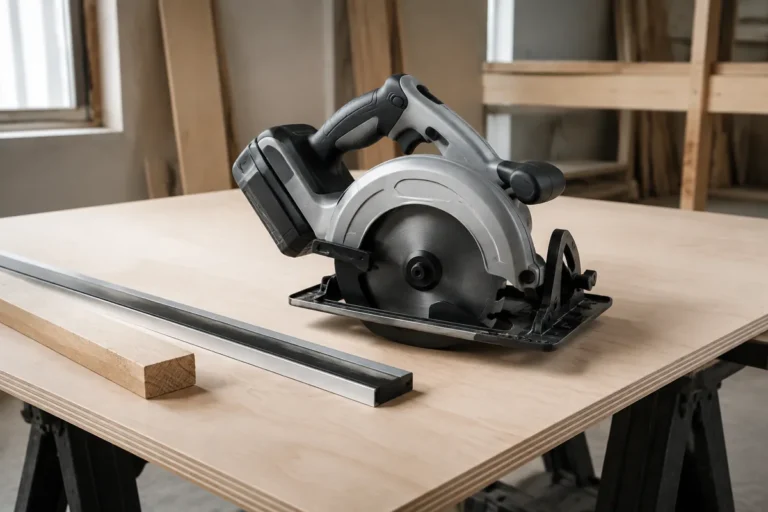
Track saws for woodworking solve a problem that every serious woodworker eventually hits: the standard circular saw wanders, leaves chipped edges, and cannot produce the dead-straight panels that furniture-grade plywood demands. A proper track system clamps a guide rail to the workpiece and locks a plunge-cut saw to that rail, turning crosscut accuracy into a repeatable process rather than a skill you pray about. The gap between a good system and a mediocre one shows up in plunge precision, blade quality, and how tightly the saw carriage grips its rail without flexing under load.
That said, “track saw” has become a loose label. Some entries are complete saw-and-rail kits, others are standalone saws that rely on universal guide rails, and a few are the rails themselves. Owner feedback consistently separates systems with solid plunge mechanisms and smooth-edge blade support from those that chatter, drift, or strip. We compared published specs, current prices, and aggregated owner reports across eight options popular among woodworkers in 2026.
As an Amazon Associate we earn from qualifying purchases at no extra cost to you. Product prices and availability are accurate as of the date shown and are subject to change.



Quick Picks
| Product | Best for | Price |
|---|---|---|
| WEN CT1274 | Variable-speed control on a budget | $169.60 |
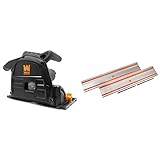
| WEN Plunge Saw Bundle (100″ Rail) | First complete kit under $175 | $171.89 |
| Makita SP6000J | Pro-grade corded plunge saw | n/a |
| VEVOR 6-1/2″ Plunge Saw Kit | Lowest entry price into track saws | $99.90 |
| Milescraft 1409 | Upgrading an existing circular saw | $119.99 |
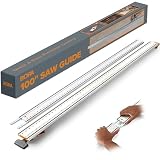
| BORA NGX 100″ Rail | Long cuts with a clamp guide | $69.99 |
| WEN CT1065 | Bare plunge saw at a low price | $99.90 |
| Makita XPS01PTJ (36V) | Jobsite cordless accuracy | $680.60 |
How We Picked
We focused on four criteria: plunge and rail engagement quality as reported by owners, cutting depth and angle range relative to price, whether the listing includes a guide rail or requires a separate purchase, and long-term durability signals in reviews (motor load, rail wear, blade retention). We ranked by value within each category rather than raw performance, because a $680 system that outperforms a $100 system by five percent is not automatically the better buy for most woodworkers.
The 8 Best Track Saws For Woodworking
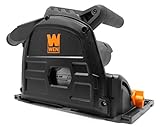
WEN 7.25-Inch Track Saw (CT1274)
The CT1274 targets hobbyists and semi-professionals who need variable-speed control — rare at this price — for materials like laminate-topped plywood or plastics where a fixed-RPM saw scorches edges. Owners praise the 7-1/4″ blade diameter for deeper cuts than competing 6-1/2″ models and note the plunge action feels solid for the money.
- Pro: Variable-speed dial is uncommon below $200 in this category.
- Pro: 7-1/4″ blade gives extra cutting depth for thicker stock.
- Con: Requires a compatible rail purchased separately; not a standalone system.
Skip this if you want a plug-and-play kit with rail included, or if you need cordless mobility for panel work on-site.
WEN Plunge Cut Circular Saw Bundle with 100-Inch Track
This bundle gives you saw, 100-inch guide rail, and adapters in one box, making it the fastest route from purchase to first accurate cut for shop-based woodworkers. Owner reports highlight that the rail’s anti-slip strip holds well on smooth plywood faces and that the plunge mechanism aligns cleanly with the rail channel.
- Pro: Complete system at under $175; no second purchase needed to start.
- Pro: 100-inch rail handles most full-sheet panel breakdowns.
- Con: Adapters for other saws work but do not match the native carriage fit.
Skip it if you already own a high-end plunge saw and only need a replacement rail — buy the rail alone instead.
Makita SP6000J 6-1/2-Inch Plunge Circular Saw
The SP6000J is the professional benchmark in corded track saws for woodworking. Published specs show a 12-amp motor, variable speed, and a 56-inch cutting capacity on its dedicated rail. Owner feedback emphasizes long-term durability and clean cuts in hardwood plywood without blade deflection, even at full-depth plunge starts.
- Pro: Build quality and motor longevity exceed every budget option in this list.
- Pro: Rail engagement is tight with no measurable slop over years of use.
- Con: Price is significantly higher than all WEN and VEVOR alternatives.
Skip it if your project volume is low enough that a $100 system meets your accuracy needs.
VEVOR 6-1/2-Inch Plunge-Cut Circular Saw Kit
VEVOR’s entry into this market undercuts most competitors at $99.90 and includes a 48-tooth carbide blade with 0-45° angle adjustment and 2.16-inch cutting depth. Owners report it handles softwoods and sheet goods adequately, but expect some learning-curve chatter on the rail interface and slightly less repeatable plunge depth than pricier saws.
- Pro: Lowest price for a dedicated plunge saw with angle adjustment.
- Pro: 48-tooth blade delivers reasonably clean edges on plywood for the cost.
- Con: Guide rail not included; you must budget for a separate rail or straightedge.
Skip it if you need a complete out-of-box system or plan daily professional use where rail engagement tolerance matters.
Milescraft 1409 Track Saw Guide
This is not a saw — it is a universal guide rail designed to convert any standard 7-1/4-inch circular saw into a track-saw system. At a 50-inch cutting range and 2-inch depth, it suits woodworkers who already own a quality circular saw and want panel accuracy without buying a dedicated plunge saw. Owner feedback notes solid aluminum construction and straightforward clamping.
- Pro: Works with existing circular saws, so no new motor to evaluate.
- Pro: Aluminum rail is rigid and resists flexing during long cuts.
- Con: No plunge capability — you start cuts at the edge, not mid-panel.
Skip it if you need interior cutouts or plunge-start features that a dedicated track saw provides.
BORA NGX Circular Saw Guide Rail, 100-Inch
BORA’s NGX rail offers 100 inches of straight-edge guidance with integrated clamps, making it a budget-friendly way to extend cutting range for panel work. It pairs well with the Milescraft system or other clamp-style adapters. Owners like the lightweight profile and the rubber-backed clamps that grip without marring finished surfaces.
- Pro: 100-inch length covers most full-sheet rip and crosscut needs.
- Pro: Integrated clamps eliminate the need for separate bar clamps or C-clamps.
- Con: No native saw; depends entirely on a compatible saw and adapter setup.
Skip it if you lack a circular saw or adapter system — it solves half the problem only.
WEN CT1065 6.5-Inch Plunge Cut Sidewinder Circular Track Saw
The CT1065 is a bare plunge saw that undercuts most branded track saws in price while offering a 10-amp motor and 6-1/2-inch blade. It is essentially WEN’s answer to the VEVOR at the same price point, and owners note similar trade-offs: capable plunge action for the money, but rail quality and long-term wear remain unknown compared to established brands.
- Pro: 10-amp motor provides more power than typical budget plunge saws.
- Pro: Widely available with straightforward parts and warranty support.
- Con: Rail sold separately; total system cost approaches the CT1274 at this price.
Skip it if the variable-speed feature on the CT1274 matters to you — the price difference is minimal.
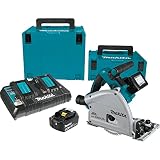
Makita XPS01PTJ 36V Brushless Cordless Plunge Circular Saw Kit
This is the premium cordless track saw for woodworking, pairing two 18V LXT batteries for 36V output with a brushless motor and 6-1/2-inch blade. The 199140-0 39-inch guide rail is sold separately, bringing total system cost above $680. Owner feedback is overwhelmingly positive: cut quality matches the corded SP6000J, runtime supports a full day of panel work, and the compact form factor makes on-site breakdowns far less cumbersome than dragging cords across jobsites.
- Pro: Brushless cordless freedom with pro-grade plunge accuracy and no compromise on cut quality.
- Pro: Compatible with the broader Makita LXT ecosystem if you already own batteries and chargers.
- Con: Guide rail sold separately; total out-of-pocket is the highest in this roundup.
Skip it if your shop already has outlet access and you do not cut panels on-site — the corded SP6000J delivers similar accuracy for less.
Buying Guide
Plunge Mechanism and Rail Engagement
The defining difference between a true track saw and a circular saw on a straightedge is the plunge action. Look for a saw whose carriage locks to the rail with minimal lateral play — owners of quality systems report zero drift across full-length cuts, while budget units may develop slop after repeated use. Angle adjustment from 0 to 45 degrees is common but verify that the mechanism holds firm when tilted.
Blade Diameter and Cutting Depth
A 6-1/2-inch blade handles 2-1/8-inch stock, which covers most 3/4-inch plywood and two-by material. A 7-1/4-inch blade like the WEN CT1274 extends depth by roughly a quarter-inch, useful for denser hardwoods or stacked cuts. If you regularly break down 1-1/2-inch hardwood boards, the extra diameter saves a re-pass.
Rail Length and System Completeness
Decide before buying whether the listing includes a rail or expects a separate purchase. A 100-inch rail accommodates 4×8 sheet goods in one pass; a 50-inch rail requires repositioning or flipping the workpiece. Factor the total system cost — a $100 saw plus a $70 rail plus adapters can exceed a $170 bundle that includes everything, defeating the purpose of “saving” on the saw alone.
Our Verdict
The WEN Plunge Cut Circular Saw Bundle with 100-Inch Track is the best overall value for woodworkers building a shop-based track saw capability under $200. For budget buyers willing to source a rail separately, the VEVOR at $99.90 is the cheapest way to evaluate whether a plunge saw earns its place in your workflow. The Makita XPS01PTJ wins outright if you routinely break down sheet goods on job sites without convenient power access — no other option in this list matches its combination of cordless range and pro-grade cut quality.
FAQ
Can I use any circular saw on a track saw rail?
No. True track saws have a molded base designed to lock into a specific rail channel. Universal guide rails like the Milescraft 1409 work with standard 7-1/4-inch circular saws but rely on clamping the saw’s flat shoe to the rail edge, which introduces more tolerance than a dedicated plunge system.
Is a track saw the same as a plunge saw?
The terms overlap. All track saws are plunge saws, but not all plunge saws are optimized for a rail. A dedicated track saw has a narrower base with grooves that ride the rail’s anti-slip strip, while a general plunge circular saw may lack the engagement geometry for a clean guided cut.
What blade should I use for plywood?
A 48-tooth or higher carbide-tipped blade with alternating top bevel (ATB) or triple-chip grind teeth minimizes tear-out on veneer faces. Several options in this list, including the VEVOR kit, ship with appropriate blades — verify tooth count before buying a bare saw.
Do I need both a table saw and a track saw?
A table saw excels at repeatable small parts and dado cuts; a track saw excels at large-panel breakdown, on-site work, and cuts in materials too unwieldy for a bench. Many woodworkers find that one high-quality track saw and a router table cover 80 percent of what a full table saw setup handles, freeing significant floor space.