Best Wood Routers Under $300 for 2026
What's inside
As an Amazon Associate I earn from qualifying purchases. This post may contain affiliate links at no extra cost to you.
Contents
Best Wood Routers Under $300 for 2026
The best wood router under 300 for most people is a variable-speed, 2¼-horsepower plunge-and-fixed-base kit such as the Bosch 1617EVSPK; choose the compact DeWalt DWP611PK if control and lighter handling matter more than power, or a fixed-base router such as the Porter-Cable 7518 only if your work calls for a dedicated table setup.
Prices vary by retailer and kit contents, but these models and configurations generally fall below $300. Check what is included: a plunge base, edge guide, collet, and case can make a kit better value than a lower-priced bare tool.
As an Amazon Associate we earn from qualifying purchases at no extra cost to you.



Router comparison: power, bases, and bit capacity
Horsepower ratings are not perfectly comparable between brands. For practical use, consider motor size alongside speed control, base options, and how comfortably you can guide the router. The table below uses published specifications; weights can vary by configuration and whether the base is included.
| Router | Motor / speed | Base and bit capacity | Approx. tool weight | Typical market range | Best fit |
|---|---|---|---|---|---|
| Bosch 1617EVSPK | 2¼ HP; variable speed, 8,000–25,000 rpm | Fixed and plunge bases; ¼-in. and ½-in. collets | About 7.7 lb for motor; bases add weight | About $220–$300 | One adaptable router for a shop or furniture work |
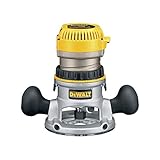
| DeWalt DWP611PK | 1¼ HP; variable speed, 16,000–27,000 rpm | Fixed and plunge bases; ¼-in. collet | About 4.6 lb with fixed base | About $180–$250 | Small-shop routing, trim, and lighter hands-on work |
| Makita RT0701CX7 | 1¼ HP; variable speed, 10,000–30,000 rpm | Fixed and plunge bases in the kit; ¼-in. collet | About 3.9 lb for motor; bases add weight | About $150–$230 | Compact edge work and users prioritizing low weight |
| DeWalt DW618PK | 2¼ HP; variable speed, 8,000–24,000 rpm | Fixed and plunge bases; ¼-in. and ½-in. collets | About 7.2 lb for motor; bases add weight | About $230–$300 | Heavier cuts with the flexibility of two bases |
Published motor weights are not directly comparable to complete-kit weights. Before buying, confirm the included collets and bases, and check that the manual supports your intended bit diameter and application.
Which router suits your work?
Best all-around choice: Bosch 1617EVSPK
The Bosch 1617EVSPK balances a full-size motor with fixed and plunge bases. Its ½-inch collet can hold larger-shank bits, which are often a better match for demanding cuts because the shank is more rigid than a ¼-inch one. The variable-speed range also helps when a bit’s size or the material calls for a lower speed.
It is a substantial setup, especially with the plunge base. That is useful for stable work and table mounting, but tiring if you are trimming edges for long stretches. Dust collection also depends on the base and accessory arrangement; don’t assume every cut will capture dust without a compatible collection attachment.
Best for lighter handling: DeWalt DWP611PK
The DWP611PK’s compact motor and two included base types make it easier to guide around edges and use for shallow plunge cuts. It suits roundovers, hinge mortises, and template work with appropriately sized bits. Its ¼-inch collet limits bit selection, and its smaller motor is not the right choice for routinely taking deep, wide cuts in hard stock.
The clear base can help with visibility, though dust can still obscure the cut line. For clean edges, use a sharp bit, secure the work, and take multiple shallow passes rather than forcing the router.
Best compact kit: Makita RT0701CX7
The Makita RT0701CX7 is a good fit where low weight and maneuverability matter more than maximum cutting capacity. The broad speed range is useful with small bits and edge work. Its ¼-inch collet and compact motor make it less suitable for large-profile bits or sustained heavy routing. Verify the exact kit’s included bases before ordering, since Makita sells related trim-router configurations with different accessories.
Best full-size alternative: DeWalt DW618PK
The DW618PK offers a 2¼-horsepower motor, variable speed, two bases, and both ¼-inch and ½-inch collets. It is worth considering against the Bosch if the DeWalt kit is more affordable locally or better matches tools and accessories you already own. Like the Bosch, it is heavier than a trim router, so it is better for a bench or substantial workpiece than prolonged overhead use.
Make the choice by situation
| Your situation | Good starting choice | Why |
|---|---|---|
| First router; occasional shelves, edges, and joinery | Bosch 1617EVSPK | Two bases and two collet sizes cover a wide range of work |
| Limited storage or frequent edge trimming | DeWalt DWP611PK or Makita RT0701CX7 | Compact motors are easier to store and steer |
| Regular deep cuts or larger bits | Bosch 1617EVSPK or DeWalt DW618PK | Full-size motor and ½-inch collet offer greater capacity |
| Mainly shallow edge profiles, with occasional plunge work | DeWalt DWP611PK | Lightweight motor plus fixed and plunge bases |
What matters beyond the headline horsepower
Speed control: A large bit generally needs a lower speed than a small one. Follow the bit maker’s maximum rpm and the router manual; slowing down is not a substitute for a sharp bit or a safe cut. Variable speed is especially useful if you expect to use different bit diameters.
Collet size: A ½-inch shank is stiffer and offers more choices in larger bits, but the router must have a matching collet. Never improvise with a reducer or use a shank the collet does not support. Insert the bit to the depth specified by the manual, then tighten the collet securely without overtightening.
Dust collection and visibility: Plunge and fixed bases may have different dust ports or accessory options. Check compatibility before buying if you already own a shop vacuum hose. Dust extraction helps, but eye protection and a respirator appropriate to the material remain important.
Handling: A heavier router can feel steadier on a large panel, while a compact router is easier to control on narrow edges. For either type, clamp the work securely and keep both hands in the intended grip positions. Make a test cut in scrap to confirm depth, direction, and finish.
Ownership realities: keep the router cutting cleanly
Collets and bits are wear items; a dirty or damaged collet can let a bit slip or run off-center. Clean the collet and nut periodically, and replace them if they show damage or no longer grip properly. Resin buildup on bits increases friction and can worsen cut quality, so clean bits with a product intended for that purpose. Keep motor vents clear of dust, and inspect the cord and base fasteners before use.
A common mistake is trying to remove too much material in one pass. Deep cuts can strain the motor, overheat the bit, and leave a rough edge. Use several controlled passes, letting the router and bit do the work. If you will mount the router in a table, confirm base compatibility, above-table adjustment needs, and safe switch access before choosing a model.
Bottom line
For the broadest capability under $300, start with the Bosch 1617EVSPK or compare it with the DeWalt DW618PK. Choose the DWP611PK or Makita RT0701CX7 when low weight and edge control matter more than ½-inch-bit capacity. The best wood router under 300 is the one whose base, collet, and handling match the cuts you actually make—not simply the one with the biggest horsepower number.