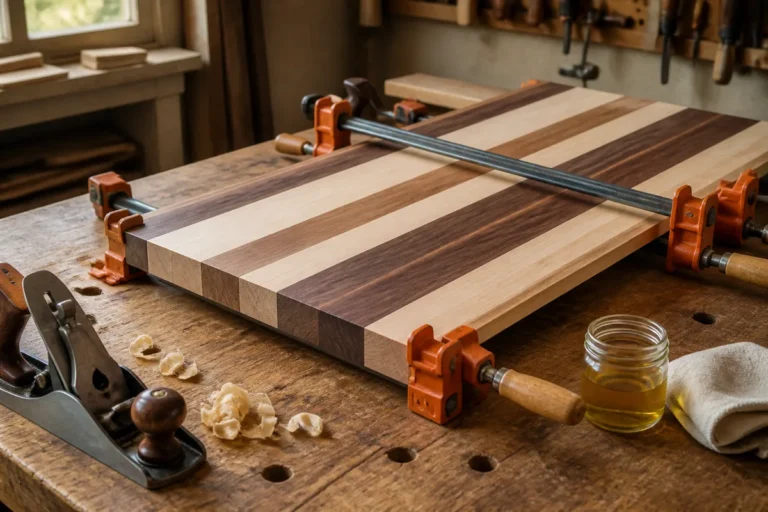
Kreg Tools Worth Buying: Best Jigs and Shop Accessories
What's inside
- How to Prioritize Any Kreg Tool: 4 Decision Filters
- Spec Comparison: The Pocket-Hole Jigs That Matter Most
- Head-to-Head: Which Kreg Tools Earn Space in a Small Shop
- Decision Matrix: Pick Your First (and Next) Kreg Tool by Situation
- Ownership Realities: Durability, Consumables, and Common Mistakes
- Bottom Line: A Buy Order That Avoids Regrets
- How to Prioritize Any Kreg Tool: 4 Decision Filters
- Spec Comparison: The Pocket-Hole Jigs That Matter Most
- Head-to-Head: Which Kreg Tools Earn Space in a Small Shop
- Decision Matrix: Pick Your First (and Next) Kreg Tool by Situation
- Ownership Realities: Durability, Consumables, and Common Mistakes
- Bottom Line: A Buy Order That Avoids Regrets
As an Amazon Associate I earn from qualifying purchases. This post may contain affiliate links at no extra cost to you.
For most home shops in 2026, the only Kreg tools worth buying right away are the Pocket-Hole Jig 720 or 720PRO for fast joinery, an Automaxx face clamp or two for assembly, and either the Rip-Cut or Accu-Cut system if you break down sheet goods without a table saw; everything else from Kreg woodworking tools is best added only when you have a specific project need.
Contents
- How to Prioritize Any Kreg Tool: 4 Decision Filters
- Spec Comparison: The Pocket-Hole Jigs That Matter Most
- Head-to-Head: Which Kreg Tools Earn Space in a Small Shop
- Decision Matrix: Pick Your First (and Next) Kreg Tool by Situation
- Ownership Realities: Durability, Consumables, and Common Mistakes
- Bottom Line: A Buy Order That Avoids Regrets
How to Prioritize Any Kreg Tool: 4 Decision Filters
Before comparing models, use these four filters to avoid buying a single-purpose jig you will rarely use. Every Kreg tool solves a different bottleneck, so match it to your actual constraint.
- Material compatibility: Does it work with the thickness and material you build with most? Standard pocket-hole jigs handle 1/2″ to 1-1/2″ solid wood and plywood, but you need the HD jig for 2x4s and doubled plywood, and the Micro jig for 1/2″ thin stock and drawer boxes.
- Joint strength required: Pocket screws are strong in shear and for face frames, cabinets, and utility furniture. For fine furniture, panel glue-ups, or joints that will see racking force, they are best as reinforcement with glue, not as the sole structural joint.
- Setup time saved: The value of a Kreg jig is repeatability. If a jig cuts layout and clamping time from 15 minutes to 2 minutes every time you drill a row of shelf pins or hang a door, it pays for itself quickly.
- Accessory and consumable cost: Consider screws, drill bits, and stop collars. Standard SML and SPS screws are affordable in bulk, while HD, Micro, and specialty screws cost more per joint and have fewer local stocking options.
Spec Comparison: The Pocket-Hole Jigs That Matter Most
Any discussion of a Kreg tool starts with pocket-hole jigs, but not all jigs drill the same hole. The differences are automating thickness setup, capacity, and included clamping.
| Model | Material Thickness Range | Setup Method | Drill Guides | Weight (Approx.) | Key Included Accessories |
|---|---|---|---|---|---|
| Kreg Pocket-Hole Jig 320 | 1/2″ to 1-1/2″ | Manual spacer slider, manual depth collar | 2 hardened steel | 0.6 lb (jig body only) | Stepped drill bit, depth collar, hex wrench |
| Kreg Pocket-Hole Jig 720 | 1/2″ to 1-1/2″ | Automaxx auto-adjusting clamp | 2 hardened steel (front-mounted) | 3.1 lb | Automaxx clamp, dust collection port, stepped bit |
| Kreg Pocket-Hole Jig 720PRO | 1/2″ to 1-1/2″ | Automaxx auto-adjusting clamp + Docking Station | 2 hardened steel | 4.3 lb with Docking Station | 720 jig + docking station with storage, material support wings |
| Kreg Pocket-Hole Jig HD (Heavy-Duty) | 1-1/2″ to 2-1/2″ | Manual depth collar, separate clamp required | 1 large diameter | 1.2 lb | HD stepped bit, guide spacer for 2x material |
| Kreg Pocket-Hole Jig Micro | 1/2″ to 3/4″ (optimized for 1/2″) | Manual spacer, 3-hole guide block | 3 compact guides | 0.8 lb | Micro stepped bit, 3/4″ and 1/2″ spacers |
For general furniture and cabinet work, the 720 hits the sweet spot. The auto-adjusting clamp eliminates the trial-and-error of setting collar depth and clamp pressure for different thicknesses, which is the single biggest time saver over the 320. The 720PRO is worth the premium only if you drill dozens of holes per session and want the docking station to hold stock level. The 320 remains a good value as a portable, bag-friendly Kreg tool for jobsite repairs, while the HD and Micro are specialty upgrades, not starters.
Head-to-Head: Which Kreg Tools Earn Space in a Small Shop
Pocket-Hole Jigs vs. Doweling and Biscuits
Pocket holes win on speed and not needing long clamp time. A face frame that takes 30 to 40 minutes with biscuits and bar clamps can be assembled in under 10 minutes with pocket screws and a face clamp, with no waiting for glue to cure before handling. Dowels and Dominos create stronger edge-to-edge alignment and a cleaner exterior with no visible holes, but require more precise layout and longer setup. Use pocket holes for hidden joints, cabinet carcasses, and shop jigs; use dowels or floating tenons when the joint itself is the design feature.
Automaxx Face Clamps and 90 Degree Corner Clamps
The Automaxx face clamp (2″ or 3″ reach) is arguably the most useful Kreg woodworking tool beyond the jig itself. It self-adjusts to material thickness from 0 to about 2-7/8″ depending on model, applies even pressure without marring, and doubles as a jig clamp. The Kreg 90 Degree Corner Clamp and Automaxx 90 Degree Clamp hold corners for cabinets and boxes without a full assembly table. If you own one pocket-hole jig, own at least two face clamps. They are used on almost every assembly and reduce joint creep while driving screws, which is the most common cause of misaligned pocket joints.
Sheet Goods Systems: Rip-Cut, Accu-Cut, and Adaptive Cutting System
These three solve the same problem at different price and precision levels. The Rip-Cut is a universal edge guide for your existing circular saw that rips sheets up to 24″ wide with repeatability around 1/32″ when set carefully. The Accu-Cut is an aluminum guide rail system (typically 48″ to 50″ rails, expandable to 100+”) that converts a left-blade circular saw into a straight-line cutter for crosscuts and long rips with less freehand error. The Adaptive Cutting System is a plunge saw plus track and table, designed to replace a table saw for breakdowns with integrated measuring and repeatable stops.
For a shop with a table saw, none are essential. For a garage or apartment shop without one, the Rip-Cut plus Accu-Cut pair covers 90% of plywood breakdown for a modest general market range, while the Adaptive Cutting System is a larger investment that makes sense only if you will regularly process full sheets without a table saw.
Specialty Jigs: Shelf Pin, Concealed Hinge, and Drawer Slide Jigs
The Kreg Shelf Pin Jig drills 1/4″ holes on 32mm centers for adjustable shelves, with hardened steel guides spaced for 5mm or 1/4″ pins. The Concealed Hinge Jig bores 35mm Euro hinge cup holes without a drill press, and the Drawer Slide Jig holds slides flush for frameless and face-frame cabinets. These are excellent but narrow. Buy them when you have a kitchen, closet, or built-in project on the calendar, not in anticipation. Each saves about an hour of measuring per cabinet and prevents the most expensive mistake: drilling hinge holes out of square or shelf holes out of alignment.
Decision Matrix: Pick Your First (and Next) Kreg Tool by Situation
| Your Situation | Best First Kreg Tool | Why It Fits | Skip For Now |
|---|---|---|---|
| Beginner, limited budget, building face frames and bookshelves | Pocket-Hole Jig 320 + 1 Automaxx Face Clamp | Lowest entry cost, covers 1/2″ to 1-1/2″ material, clamp prevents joint shift | 720PRO, Adaptive Cutting System, HD jig |
| Frequent cabinet and plywood projects, 2-3 builds per month | Pocket-Hole Jig 720 or 720PRO + 2 Face Clamps | Auto-adjust cuts setup time by 60-70% per hole change; docking station speeds batch drilling | Micro jig unless doing 1/2″ drawers |
| No table saw, small shop, breaking down 4×8 sheets | Rip-Cut + Accu-Cut | Straight, repeatable cuts with a circular saw you already own | Concealed Hinge Jig until you build doors |
| Building outdoor furniture, workbenches, 2x material | Pocket-Hole Jig HD + HD 2-1/2″ screws | Standard jigs cannot clamp or drill 1-1/2″+ stock reliably for strong lag-style pocket joints | Micro jig, Shelf Pin Jig |
| High-volume drawers and 1/2″ plywood boxes | Micro Pocket-Hole Jig | Smaller screw and pilot prevents blowout on thin stock | Standard jig alone (too aggressive for 1/2″) |
Ownership Realities: Durability, Consumables, and Common Mistakes
Kreg jigs use hardened steel drill guides that last thousands of holes, but the stepped drill bits and driver bits are wear items. A standard stepped bit typically stays sharp for 400 to 800 holes in softwood plywood, fewer in MDF or particleboard, which dulls the cutting edges faster. Keep a spare bit and depth collar on hand; a slipping collar is the fastest way to blow through a workpiece.
The Automaxx clamp mechanism needs occasional cleaning. Sawdust packed in the auto-adjust screw causes inconsistent clamping pressure. Blow out dust and add a single drop of dry lubricant to the threads every few months, not oil that attracts more dust.
Accessory cost math matters more than the jig price. A typical cabinet box uses 32 to 40 pocket screws. If a 500-count box of 1-1/4″ fine-thread screws sits in a general market range of $25 to $35 and a coarse-thread box is similar, your cost is roughly $0.05 to $0.07 per screw or $1.60 to $2.80 per box. Specialty HD or Micro screws run higher per piece, often $0.09 to $0.14 each, so batch building with the wrong jig gets expensive fast. Buying screws by material match (fine thread for hardwoods, coarse thread for softwoods and plywood) also reduces splits and stripped holes, which wastes more material than the screw savings are worth.
Three mistakes account for most failed pocket joints: failing to set the jig, collar, and screw length for the actual measured thickness, not the nominal thickness; driving screws without a face clamp so the pieces creep up to 1/16″; and over-torquing with an impact driver, which strips the pocket. Use a drill/driver on a low clutch setting and stop when the joint just pulls tight, then add glue if the joint needs long-term strength.
Caring for Kreg woodworking tools also means dust collection. The 720 series collection port fits a standard 1-1/4″ to 1-7/8″ hose and clears 90% of chips, which keeps guides cool and extends bit life. Empty the bag and tap out the jig after each session, especially when drilling MDF.
Bottom Line: A Buy Order That Avoids Regrets
Start with the problem you face weekly. If it is joining 3/4″ plywood and 1x lumber quickly, a 720 with two face clamps is the most versatile Kreg tool combination and covers everything from shelving to cabinet face frames. Add the Rip-Cut or Accu-Cut if sheet breakdown is your bottleneck, then add the HD, Micro, Shelf Pin, or Concealed Hinge jig only when the project calls for that thickness or hardware. That sequence keeps accessory costs predictable, maximizes setup time saved, and ensures each kreg tool you own gets used rather than stored.