Band Saw Resaw Fence vs High-Fence Guide for Wide Boards
What's inside
As an Amazon Associate I earn from qualifying purchases. This post may contain affiliate links at no extra cost to you.
Contents
Band Saw Resaw Fence vs High-Fence Guide for Wide Boards
Resawing a wide board on a band saw is easier when the fence matches the way you control the cut. The two common choices are a dedicated resaw fence and a tall auxiliary, or “high,” fence attached to the stock band saw fence. Both can work well, but they solve slightly different problems.
A resaw fence is usually tall, narrow, and purpose-built for guiding a board through a blade while you steer it. A high fence gives the workpiece more side support, which can feel safer with wide or unstable boards, but it also increases friction and makes alignment more important. The best choice depends on board width, blade setup, and how much adjustment you want during the cut.
As an Amazon Associate we earn from qualifying purchases at no extra cost to you.
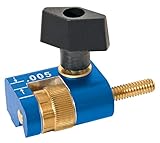
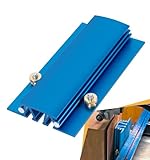
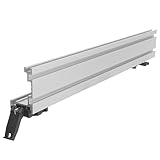
What a Resaw Fence Does
A dedicated band saw resaw fence commonly has a face around 4 to 6 inches high and a relatively small contact area. The narrow face lets you pivot the board slightly as you feed it. That matters because the blade may not track perfectly parallel to the miter slot or fence rail, even when the saw is adjusted correctly.
Resaw fences are particularly useful when the board has internal stress. As the blade removes material, the kerf can open or close and push the board sideways. With a narrow fence, you can steer the board into the blade without fighting a large flat surface. This is one reason experienced users often prefer a resaw fence for making veneer or splitting a board into two thinner pieces.
Many resaw fences also have a rounded or replaceable wooden face. Waxing the face or fitting a smooth hardwood strip reduces drag. A simple fence can be enough if it is straight, square to the table, and securely clamped. It does not need complicated adjustment hardware to produce good results.
What a High Fence Does
A high fence is a taller face, often 8 to 12 inches high, attached to the existing fence. It supports more of the board’s side and is useful when resawing wide stock that wants to tip away from the table. A tall fence can also help with ordinary ripping, cutting tapers, and guiding irregular boards.
The trade-off is that a high fence gives you less freedom to correct the cut by rotating the board. If the blade drifts, the board can press against the fence over a large area. That creates friction and can force the cut farther off line. A tall fence also exposes alignment errors: if it leans even 1/16 inch from bottom to top, a 10-inch board can rub heavily near the upper edge.
For a high fence, use straight, stable material such as 3/4-inch plywood with a hardwood or melamine face. Check it with a straightedge before use. If the face is bowed, the board may rock or pinch as it passes the blade.
Resaw Fence vs High Fence
| Feature | Dedicated resaw fence | High auxiliary fence |
|---|---|---|
| Typical height | 4 to 6 inches | 8 to 12 inches |
| Best use | Steering through resaw cuts and veneer work | Supporting tall, unstable, or wide boards |
| Steering control | Good; allows slight board rotation | Limited; more surface contact resists correction |
| Friction | Usually lower | Higher unless the face is smooth and waxed |
| Cost | Moderate for adjustable versions; low for simple shop-built versions | Often inexpensive to build from plywood |
Choosing for Board Width
For boards up to about 6 inches wide, either setup is usually adequate if the blade is sharp and the fence is square. A high fence is convenient when the board is narrow enough that the extra support does not create much drag. A simple shop-built version is often the cheaper option.
From 6 to 10 inches, a dedicated resaw fence becomes more attractive. Wide boards can develop significant tension as they are cut, and steering control helps prevent the blade from wandering. If you regularly resaw expensive hardwood, consider an adjustable band saw resaw fence that lets you set the fence angle to match the blade’s natural drift.
Above 10 inches, fence choice cannot compensate for an underpowered or poorly adjusted saw. You need adequate resaw capacity, a rigid blade guide system, and a blade wide enough for the cut. On many 14-inch saws, a 3/4-inch, 2-3 teeth-per-inch resaw blade is a practical starting point, although the correct blade depends on the saw’s wheel size and manufacturer limits.
Setup and Cutting Technique
Before comparing fences, tune the saw. Install a sharp blade, tension it correctly, set the thrust and side guides close to the stock, and check that the table is square to the blade. A dull blade produces heat, burns the cut, and encourages you to push harder. Excessive feed pressure is a common cause of blade deflection.
Set the fence so the board contacts it without forcing the blade sideways. Make a test cut in scrap at the same height as the actual work. If the blade consistently travels toward the fence or away from it, adjust the fence angle rather than muscling the board through the cut.
Keep both hands on the feed side of the blade and use push handles when the board approaches the blade area. For a board wider than roughly 8 inches, a featherboard or infeed support can reduce tipping, but do not use a featherboard so aggressively that it prevents you from steering through natural blade drift.
Which One Should You Buy?
Choose a dedicated resaw fence if your main work is making veneer, book-matched panels, or consistent halves from valuable boards. Its lower profile and steering control are worth paying for, especially if it includes a solid mounting system and a replaceable face.
Choose a high fence if you resaw only occasionally and also need support for tall ripping or narrow workpieces. A carefully built plywood fence can perform well and may cost almost nothing. Search for band saw auxiliary fence hardware only if your existing fence lacks a reliable way to clamp the added face.
There is no advantage in making the fence taller than the board requires. Extra height adds friction, can block your view of the cut, and makes a crooked fence more difficult to control. For most woodworking shops, a 5-inch resaw fence plus a removable 10-inch high fence covers more situations than either design alone.