Best Planers with Segmented Cutterheads for Difficult Grain
What's inside
As an Amazon Associate I earn from qualifying purchases. This post may contain affiliate links at no extra cost to you.
A segmented cutterhead can make a real difference when a planer is working figured maple, reversing-grain cherry, or other stock that tends to tear out. Its small carbide inserts shear the fibers at an angle instead of presenting one long knife edge across the board. The result is often a cleaner surface and quieter cutting, though it is not a cure for poor setup, blunt inserts, or an overly aggressive cut.
As an Amazon Associate we earn from qualifying purchases at no extra cost to you.

Contents
What “segmented” means
These heads are commonly sold as helical or spiral cutterheads. They use rows of small, replaceable carbide inserts mounted around a cylinder. Depending on the design, inserts may be arranged in a true spiral or in angled rows. Both differ from a conventional straight-knife head, which uses long blades spanning the cutterhead width.
The angled inserts cut a narrower path at a time. Many are also slightly radius-edged, leaving fine scallops rather than a perfectly flat surface. Those marks are usually shallow enough to remove with a light sanding pass. Inspect the maker’s insert layout and finish claims rather than assuming every “helical” head cuts identically.
What to prioritize when buying
Start with the machine’s capacity and rigidity. A 13-inch benchtop planer is easier to move and costs less than a 20-inch floor model, but its shorter bed and lighter frame offer less support for long, heavy boards. For furniture work on stock under 12 inches wide, a benchtop machine can be adequate. For regular wide-panel work, a floor-standing planer with a longer bed and stronger feed system is a more practical choice.
Check whether the cutterhead is factory-installed, a standard configuration, or an aftermarket conversion. A factory-equipped machine avoids questions about fit, alignment, and warranty coverage. If replacing a straight-knife head, confirm the exact planer model, cutterhead diameter, bearing arrangement, and drive requirements before ordering. A head advertised for a planer’s brand may still fit only certain generations.
Also compare feed speed, available cut depth, dust-port size, and insert replacement cost. A planer that can take a deep bite is not necessarily the right choice for figured stock: begin with cuts around 1/32 inch or less, then adjust based on the machine and wood. Heavy cuts increase tear-out risk, motor load, and the chance of snipe at board ends.
Planer types compared
| Type | Best fit | Trade-offs |
|---|---|---|
| Benchtop planer with segmented head | Small shops and boards up to about 12 inches wide | Lower cost and compact size; limited bed support and capacity |
| Floor-standing planer with factory segmented head | Frequent use, wider stock, and demanding hardwood work | Higher purchase price, more floor space, and heavier electrical demands |
| Planer with straight knives | General dimensioning where figured grain is occasional | Lower initial cost; knives need sharpening or replacement and may tear out more |
| Aftermarket segmented-head conversion | Owners of a suitable planer who want to upgrade its cut | Can cost less than replacing the machine, but fit and installation must be verified |
Which planer makes sense?
For a small shop that mostly planes ordinary lumber, a benchtop unit is often the sensible buy. A segmented head is useful if difficult grain shows up regularly, but it adds cost that may not pay back for occasional work. Compare benchtop planers with helical cutterheads by width, parts availability, and the cost of a full insert set—not just the advertised cut quality.
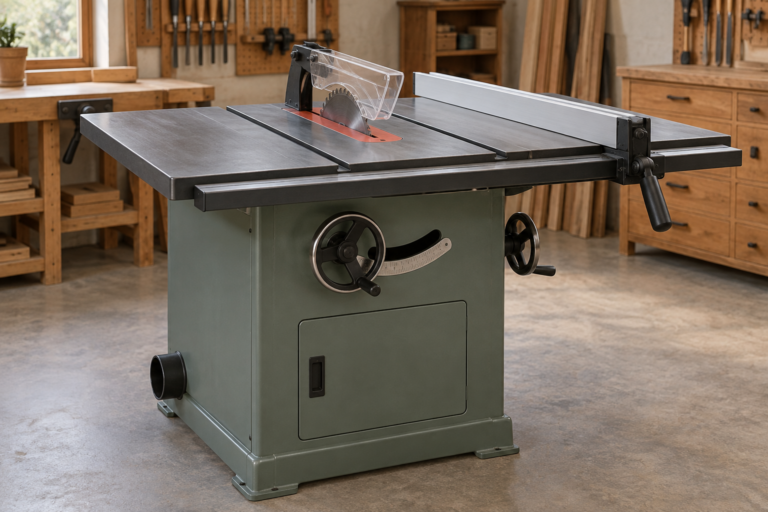
If you routinely surface wide hardwood, work in production, or need a sturdier machine for long boards, look at a floor-standing planer with a factory-installed head. Its larger table, heavier frame, and feed system matter as much as the cutterhead. Search among floor-standing planers with segmented cutterheads, then check the manufacturer’s service support and electrical requirements. Some machines need a 240-volt circuit; do not assume a standard household outlet will work.
Already own a capable straight-knife planer? An upgrade may be a better use of money than replacing the whole machine. A compatible aftermarket helical cutterhead can reduce tear-out and make insert maintenance simpler, but installation can involve removing the tables, drive components, and old head. If you are not comfortable with that work, price professional installation before buying.
Getting a clean surface on difficult grain
Even a segmented head can leave torn fibers in strongly figured wood. First, reduce the depth of cut and feed the board slowly and steadily. If the planer allows a faster and slower feed rate, the slower setting may improve finish quality, though it reduces throughput. Keep the board flat on the bed and support long stock at both ends; a board that rocks or lifts can produce snipe or an uneven cut.
Pay attention to grain direction where the grain is consistent, but expect reversing figure to change direction within one board. Take light passes from both ends only if the board’s shape and safety allow stable feeding; never force a short, narrow, or unstable piece through the machine. Use a jointer, sled, or other appropriate method to flatten stock before planing—thickness planers do not reliably flatten a twisted board on their own.
When the surface shows repeated raised fibers, inspect insert edges and rotate or replace damaged inserts according to the manual. Many heads use four-sided inserts, so a chipped edge can often be turned to a fresh cutting edge. Keep a record of which inserts have been rotated; replacing only one insert in a poorly aligned pattern can leave a visible track. Vacuum chips from the head and cabinet with the machine disconnected, and wear eye and hearing protection. A segmented head may be quieter than straight knives, but a planer remains a loud, high-speed machine.
Choose for your workload
Buy a segmented-head planer when difficult grain is a recurring problem, not because the cutterhead label guarantees a flawless finish. For occasional figured boards, a lower-cost straight-knife planer with careful, shallow cuts may be enough, followed by scraping or sanding. For frequent work, prioritize a rigid machine, reliable insert supply, and serviceable construction. A clean test cut on your own species and grain pattern is more useful than a broad promise about “tear-out-free” planing.